

Pharmaceutical E-commerce: Tightened Regulations Set to Define Market Landscape, with Leaders Gaining Dominance | 2016 Annual Review
As 2016 draws to a close, VCBeat’s flagship annual event, the “Top 100 Future Healthcare Companies” list, is arriving as scheduled. The selection process is currently in full swing, but the excitement doesn’t end there. Before the unveiling of the Top 100 list, we have meticulously curated a series of year-end reviews focused on specific healthcare subsectors. Targeting the hot medical niches of 2026, these articles systematically examine the current status of companies, highlight key events, and analyze development trends within each field over the past year, delivering a rich and engaging content feast for our readers.
It is generally believed that China’s pharmaceutical e-commerce sector was launched in 2005, when the China Food and Drug Administration (CFDA) issued the Interim Provisions on the Approval of Internet Drug Transaction Services. This marked the advent of purely online drug sales and distribution. Over the subsequent decade-plus, the industry experienced a highly tortuous development path, characterized by periods of rapid growth interspersed with sudden regulatory halts that stifled many initiatives. Today, if one word were to describe the current state of pharmaceutical e-commerce, “ascendant” would be the most apt description.
The current status of pharmaceutical e-commerce development can be glimpsed from the following sets of data.
752 sheets: According to data from the official website of the China Food and Drug Administration, as of the end of November, a total of 752 Internet Drug Transaction Service Qualification Certificates were available for query. Among these, there were 29 Class A certificates for third-party B2B pharmaceutical platforms, 170 Class B certificates for B2B pharmaceutical qualifications, and 553 Class C certificates for self-operated B2C pharmaceutical qualifications. The number of all three types of certificates has increased significantly in recent years. Notably, 159 Class C certificates were issued or renewed in 2015, representing the largest increase.
47.6 billion: According to the "2015 Statistical Analysis Report on the Operation of the Pharmaceutical Circulation Industry" released by the Market Order Department of the National Bureau of Statistics, "based on incomplete statistics, the total sales volume of pharmaceutical e-commerce in the Ministry of Commerce's direct reporting system reached RMB 47.6 billion in 2015. Among this, the B2B market size amounted to RMB 44.4 billion, accounting for 93.3% of the total pharmaceutical e-commerce sales, while the B2C market size reached RMB 3.2 billion, accounting for 6.7%. The total number of orders exceeded 40 million, with an order conversion rate of over 81%, a on-time delivery rate of 99%, and both the return rate and customer complaint rate remaining below 1%."
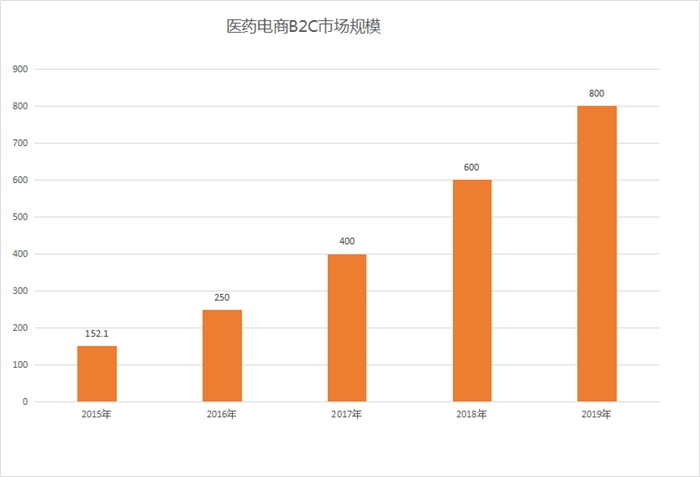
Additional data show that the total size of the pharmaceutical B2C market in 2015 was RMB 14.42 billion, of which platform-based B2C accounted for RMB 7.79 billion (55.4%), self-operated B2C for RMB 5.25 billion (36.4%), and pharmaceutical O2O enterprises and others for RMB 1.18 billion (8.2%).
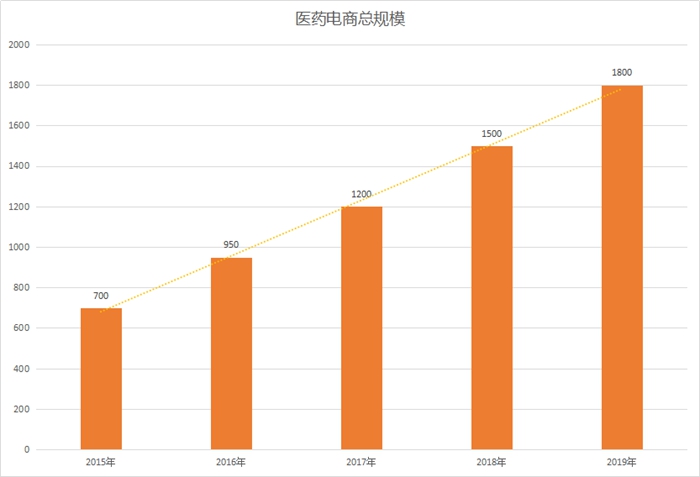
The overall pharmaceutical market is estimated at approximately RMB 1.5 trillion, with less than one-tenth of drugs distributed through online channels. This not only indicates the slow development of pharmaceutical e-commerce but also foreshadows explosive growth in the future.
The two most significant constraints on pharmaceutical e-commerce are issues related to prescription drugs and integration with medical insurance. We are pleased to observe some policy relaxations this year, including explicit provisions in healthcare reform documents that do not restrict the outflow of hospital prescriptions, pilot programs for electronic prescriptions, and the commercialization of medical insurance. These developments indicate growing national recognition of online drug sales. Meanwhile, the models of pharmaceutical e-commerce are becoming increasingly diversified. Our analysis reveals that previously isolated concepts such as B2B, B2C, and O2O are beginning to converge. Some companies have integrated medication purchasing and delivery into health management and smart hardware solutions, creating a closed loop encompassing health management, medical consultation, and medication procurement and delivery, thereby achieving deeper penetration across the entire industry chain.
As previously mentioned, the pharmaceutical e-commerce market is in a period of rapid growth. This is evident from the increasing number of enterprises obtaining qualifications for online drug distribution, indicating that competition in this market is becoming increasingly fierce. In terms of industry share and market size, traditional pharmaceutical distributors and offline chain pharmacies are the main forces in the pharmaceutical e-commerce market, such as Jointown Pharmaceutical Group, Laobaixing Pharmacy, and Gongxinwang. There is also a batch of online sales platforms directly operated by pharmaceutical manufacturers, such as Renhe and Kangze. The B2C market is primarily dominated by internet-based companies, such as Ali Health, Jianke, and 111.com. Although there are few enterprises in the O2O sector, as an emerging concept, the marketing efforts and brand awareness of participating companies are very high, including Kuai Fang, Dingdang Medicine, and Songyao 360. These companies essentially aim to transform the medicine delivery market into an O2O consumption model similar to food delivery and group buying. Currently, factors such as drug sourcing, logistics, and consumer demand still constrain this market, making explosive growth unrealistic in the short term. Additionally, there are more niche approaches, such as integrating drug sales with health management, medical insurance cost control, and smart hardware. Due to their limited target audience, these models have a relatively low market share. However, as pharmaceutical e-commerce moves towards diversification and deeper integration across the upstream and downstream supply chains, such companies are likely to be acquired or join major pharmaceutical e-commerce platforms. The future trend will see the "strong get stronger" effect become more pronounced. The following section provides a brief overview of the pharmaceutical e-commerce market.
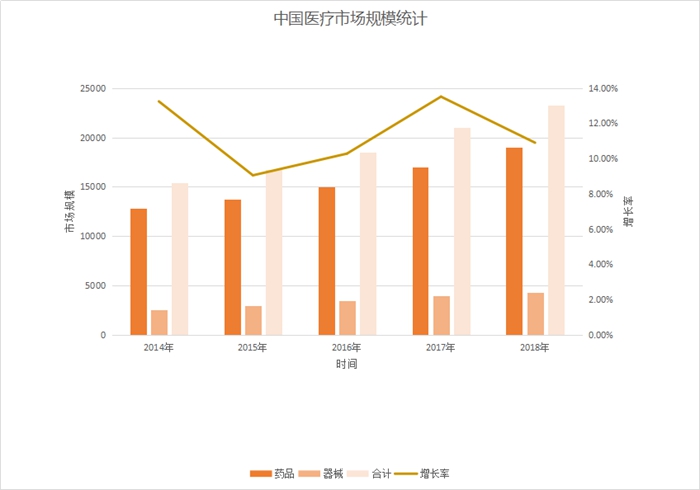
In terms of overall market size, China’s healthcare market is primarily composed of pharmaceuticals and medical devices. Based on data from government statistical yearbooks and major consulting firms, we have consolidated an estimate of the total size of China’s pharmaceutical market; slight deviations may exist due to differences in data selection and measurement methodologies.
(Data source: compiled from public information and research reports)
Driven by population aging and the transition into a stage of affluence, residents’ healthcare demand has been steadily expanding. We project that the total market size for pharmaceuticals and medical devices will reach approximately RMB 1.7 trillion this year, surpassing RMB 2 trillion in the following two years, with a compound annual growth rate (CAGR) of around 11%. In terms of product categories, medical devices are growing at a faster rate than pharmaceuticals, which undoubtedly presents significant opportunities for the online sales of medical devices. This trend also suggests that the focus of previous investments in internet healthcare may shift toward medical devices, and investors and entrepreneurs should seize this emerging opportunity.
Amid the overall positive trend in the pharmaceutical market, the scale of pharmaceutical e-commerce is expected to continue expanding. However, for both drugs and medical devices, offline channels remain the mainstream. Taking drug retail as an example, since the online sale of prescription drugs has not yet been fully liberalized and issues regarding integration with medical insurance remain unresolved, coupled with the fact that drugs, unlike general consumer goods, have stringent requirements for sourcing and safety, the overall online drug market accounts for less than one-tenth of the total pharmaceutical market. Furthermore, this online segment is dominated by pharmaceutical manufacturers and wholesalers, while the scale of drug retail targeting end consumers amounts to only a few hundred million yuan.
Pharmaceutical E-commerce | B2B | Pharmaceutical Terminal Network Herbal Medicine Trading Network, etc. |
B2C | Jianke.com 1Drug.com, etc. | |
O2O | KuaiFang Medicine Delivery Dingdang Express Medicine, etc. | |
B2B2C | Gongxin Network Alibaba Health, etc. | |
Information Services | Rainuo Information Yaomaitong, etc. |
Categories of Pharmaceutical E-commerce and Representative Enterprises
(Data source: Government yearbooks and research reports from China Business Industry Research Institute)
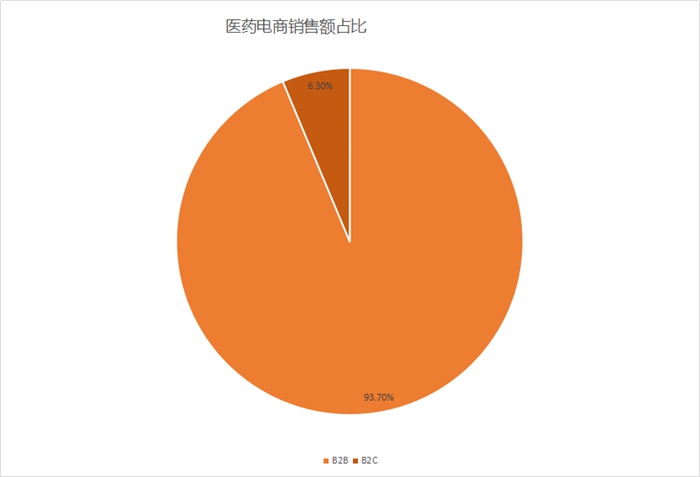
Proportion of Pharmaceutical E-commerce Sales (Source: Market Statistics Department of the National Bureau of Statistics)
(Data source: Government Yearbook and CBIS Research Report)
From the perspective of product categories, OTC drugs, health supplements, and family planning products are the mainstream traded commodities; however, there are also intermediaries specializing in traditional Chinese medicinal materials and proprietary Chinese medicines. Additionally, medical devices deserve mention, including hospital-grade medical devices, home-use medical devices, health management devices, and medical consumables.
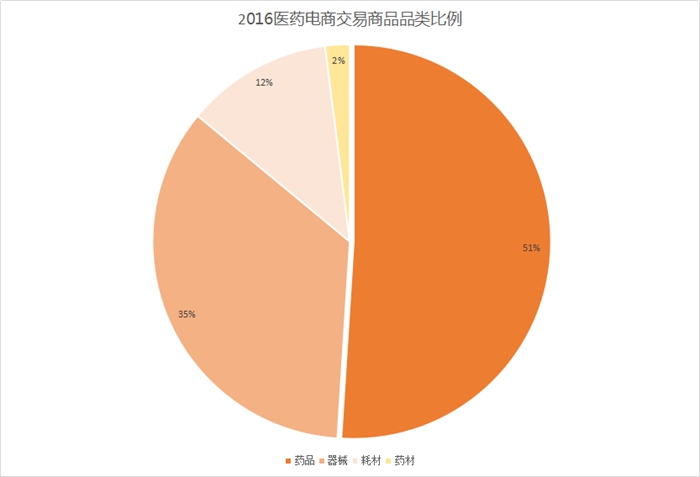
Data Source: AskCI Research Institute
We focused on startups in the pharmaceutical e-commerce sector, excluding companies that are already publicly listed or directly controlled by listed companies. The remaining 60 companies had accumulated a total financing amount of $893 million (RMB 5.894 billion) by the end of November. Including investments received by listed companies and subsidiaries not included in the list, the total cumulative financing for startups or newly established companies in the pharmaceutical e-commerce sector exceeded RMB 10 billion amid the capital winter. This demonstrates investors' confidence in the development of pharmaceutical e-commerce and indirectly proves that the sector is currently undergoing a "fierce competition period." Those who can secure follow-on investment will be able to survive the downturn. Unfortunately, while reviewing the data, we found that many startups have transitioned from "operational" to "deregistered." Some companies suffered from inherent deficiencies and lacked viable business models, while others experienced business standstills due to tight funding. Their teams and areas of focus remain worth further exploration.
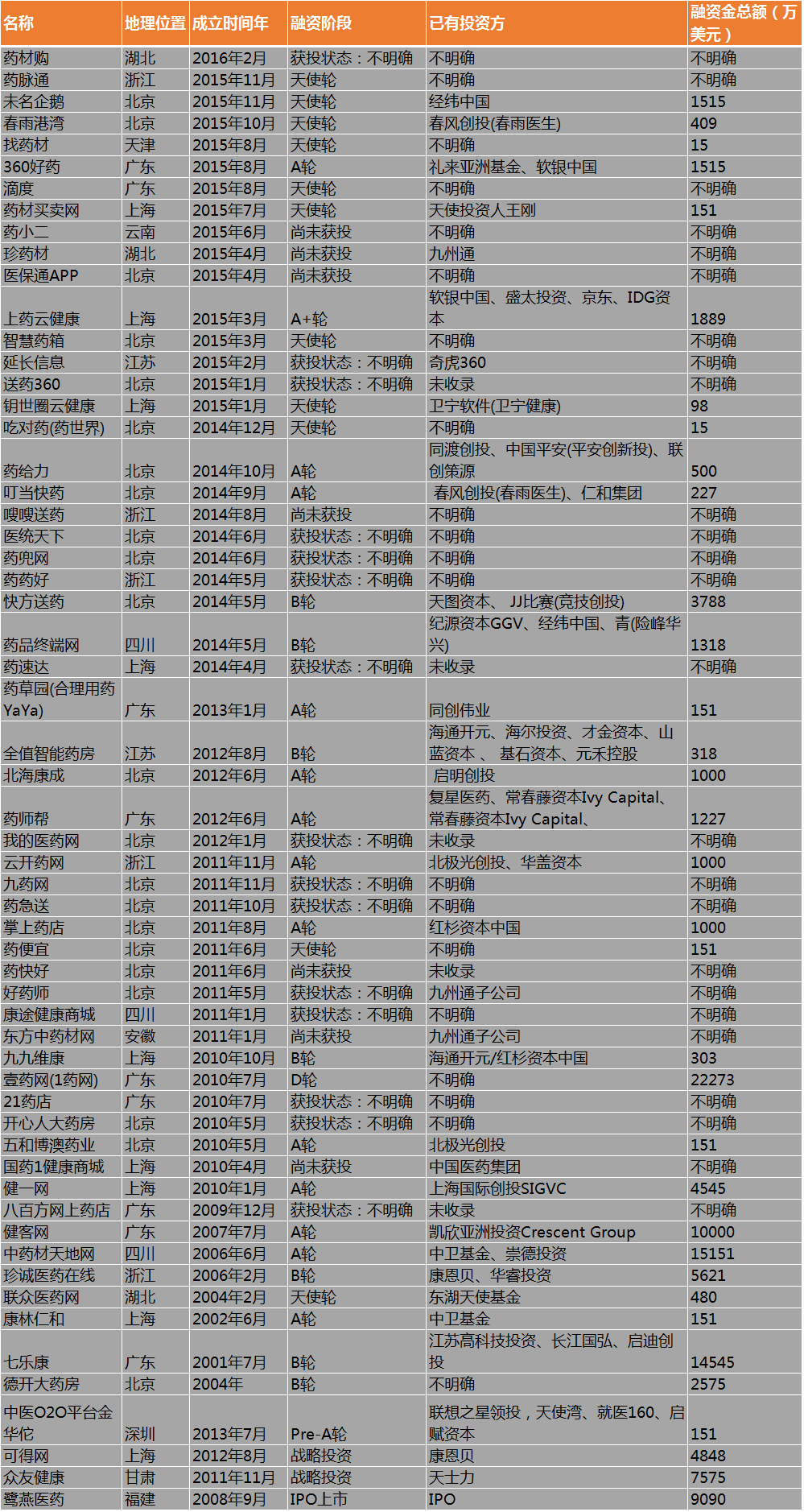
It is generally believed that the development of pharmaceutical e-commerce in China began in 2005. In September of that year, the China Food and Drug Administration (CFDA) issued the Interim Provisions on the Approval of Internet Drug Transaction Services, ushering in the era of online drug sales. However, few enterprises were involved at that time. It was not until around 2012 that the sluggish state of pharmaceutical e-commerce began to change, with a growing number of companies entering the market. This shift was driven by two main factors: first, the overall e-commerce environment had matured; although consumers remained accustomed to offline purchases, especially for products like medicines that require substantial information for decision-making, health supplements and over-the-counter (OTC) drugs started to be sold online. Second, the increasing scale of online drug sales attracted capital attention, making start-up pharmaceutical e-commerce companies an attractive investment direction.
Subsequently, the market size of pharmaceutical e-commerce entered a period of rapid growth. Our review reveals that B2C pharmaceutical e-commerce targeting end consumers remains dominated by several major e-commerce platforms, particularly those selected as third-party pilots for online retail pharmaceuticals (Tmall Medicine, 800 Fang Pharmaceutical Health City, and Yihaodian). Statistics indicate that platform-based B2C accounts for approximately three-quarters of the overall B2C market size. Driven by these platforms, numerous pharmaceutical companies have joined the pharmaceutical e-commerce sector by establishing e-commerce divisions or investing in and taking controlling stakes in e-commerce companies. Offline pharmacies have also begun to recognize this channel, either integrating with existing platforms or building their own online pharmacies, thereby intensifying competition in the pharmaceutical e-commerce field. Accordingly, pharmaceutical e-commerce has progressed through stages of inception, growth, maturity, and diversified exploration.
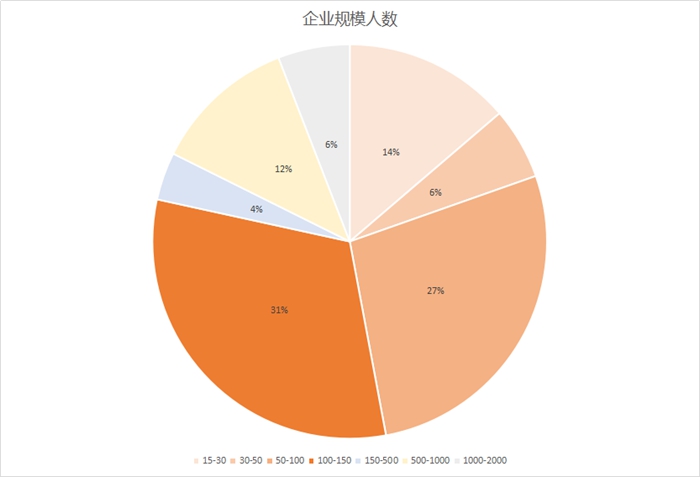
(Source: VCBeat)
We analyzed the employee headcount of the companies included in our statistics and found that the 100–150 and 150–500 employee ranges were the most concentrated. Additionally, seven companies had 15–30 employees; most of these were startups founded last year. Fewer than ten companies had more than 500 employees, indicating that pharmaceutical e-commerce businesses do not require large-scale manpower accumulation. Overall, the median headcount for pharmaceutical e-commerce companies likely falls within the 50–100 employee range. On one hand, pharmaceutical e-commerce firms are technology-driven companies with mature systems for drug procurement and logistics distribution, resulting in high operational efficiency. On the other hand, some pharmaceutical e-commerce companies with over 100 employees are O2O (online-to-offline) drug delivery platforms, such as Kuaifang, Dingdang, and Sousou. Unlike web-based e-commerce companies, these firms require offline direct-operated stores and delivery teams to ensure rapid medication delivery. It is not an exaggeration to describe them as “asset-heavy” companies, as they require substantial investment in physical stores, delivery vehicles, and warehousing and distribution infrastructure, leading to higher management costs.
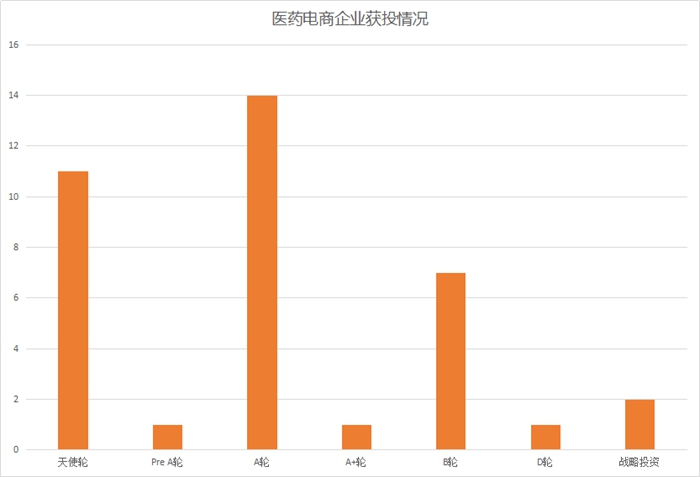
Our statistics show that there are a total of 37 companies with publicly disclosed financing information. Among them, Angel and Series A rounds are the most prevalent, accounting for 25 companies. The total investment amount for these rounds reached USD 243.53 million, representing 27% of the total financing amount. This figure is unsatisfactory compared to the large number of funded enterprises. The primary reason is that strategic investments and investments made through subsidiaries constitute a significant portion of the total invested amount. Examples include Tasly’s investment in Zhongyou Health, Conba’s investment in Kede.com, and Zhencheng Pharmaceutical Online.
One issue this reveals is that although traditional pharmaceutical companies and chain pharmacies are prioritizing their e-commerce operations, their predominant investment strategy remains focused on leading the pharmaceutical e-commerce market through more direct and controllable means. Their investments in pharmaceutical e-commerce are primarily aimed at ensuring they do not fall behind in the “Internet Plus” era.
Startups that have entered Series B and later stages secure significantly larger follow-on investment amounts. For instance, Kuai Fang Song Yao received $37.8787 million in investment from Tiantu Capital and Jingji Venture Capital; Yihaodian.com secured a total of $222.72 million in investment. The reason is straightforward: companies that have completed Series B financing have weathered the trials of market competition and established a certain position in the marketplace. Their business models and future development trajectories are more predictable, resulting in lower risk for follow-on investors and, consequently, relatively larger capital injections.
However, this does not mean that emerging pharmaceutical e-commerce enterprises will fail to gain capital recognition in the future. Currently, the primary investment focus in pharmaceutical e-commerce remains on pharmaceuticals, health supplements, and family planning products. There are relatively few e-commerce companies specializing in categories such as traditional Chinese medicine (TCM) materials, medical consumables, and medical devices. Based on the funding received by the existing companies operating in these segments, their initial investments have already seen significant growth compared to those of pharmaceutical-focused e-commerce platforms. We anticipate that in the near future, as the pharmaceutical e-commerce market becomes saturated, e-commerce in the fields of medical devices, consumables, and TCM materials will experience rapid growth. This is because the pharmaceutical e-commerce model has been proven viable, and the existing experience from pharmaceutical e-commerce can be transferred to these aforementioned sectors, presenting substantial opportunities for start-ups in these areas.
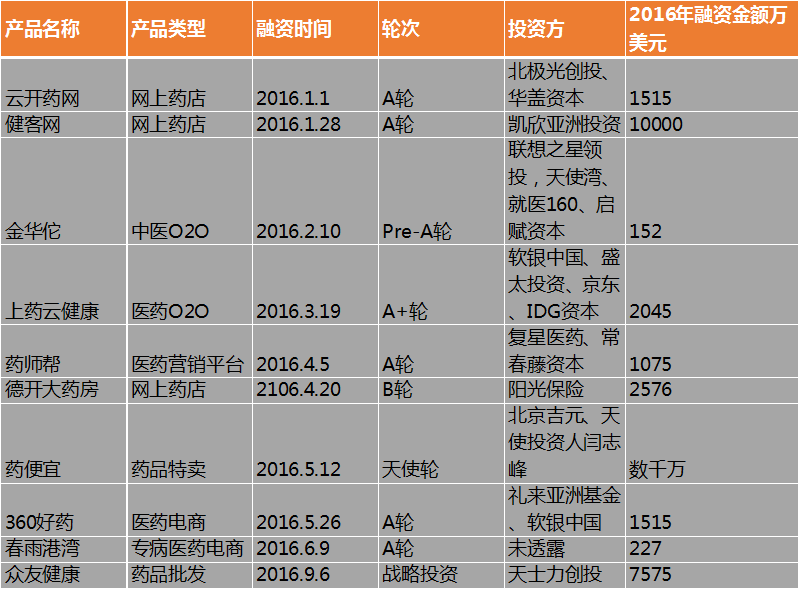
Based on our statistical results,As of the end of November, cumulative financing in the pharmaceutical e-commerce sector this year has reached $266.818 million (approximately RMB 1.76 billion).Generally, the end of the year is a slack season for investment and financing, with a low probability of large-scale deals occurring thereafter; thus, current figures essentially represent the full-year results. By comparing this year’s investment and financing landscape with that of previous years, a distinct characteristic emerges: there has been an increase in large single-ticket investments this year, whereas previous years were characterized by numerous smaller, dispersed investments. We attribute this trend to a shrinking pool of investable targets. As companies transition from the growth stage to maturity, the number of viable investment opportunities in the pharmaceutical e-commerce sector has diminished. Coupled with the so-called “capital winter” in the investment community, accumulated substantial capital has concentrated on suitable targets, resulting in the frequent announcement of large-scale investments.
On January 1, 2016, Yunkai Yamei disclosed the completion of its RMB 100 million Series A financing., with Aurora Venture Capital and Huagai Capital as the investors. Yunkai Yamei is a wholly-owned subsidiary of Hisun Pharmaceutical, established in 2011. It operates as an e-commerce platform for medications and products targeting major chronic and special diseases. Yunkai Yamei distinguishes itself through its focus on chronic and special conditions, in-house trained pharmacists, and self-operated offline stores. Following this round of financing, Yunkai Yamei will continue to deepen its “service” offerings by strengthening its pharmacist team and offline store network.
On January 28, Xie Fangmin, CEO of Jianke.com, disclosed that the company had secured $100 million in Series A financing from the fund “Kaixin Capital.”Previously, Jianke.com had not undergone angel-round financing; securing $100 million directly in its Series A round set a record for the largest single financing amount in the pharmaceutical e-commerce sector. The investor, Kaixin Capital, had previously invested in several publicly listed companies, including Baoxin Auto, Tudou.com, and Baozun E-commerce. Its rationale for investing in Jianke.com was to capitalize on the company’s rapid growth potential in the pharmaceutical e-commerce space. Jianke.com’s financing case illustrates that pharmaceutical e-commerce enterprises require capital support to sustain operations once they reach a certain stage of development. Similar to fast-moving consumer goods (FMCG) and 3C product e-commerce, pharmaceutical e-commerce is highly capital-intensive. Collaboration with investors enables faster customer acquisition and cultivates user habits more effectively. Following the financing, Jianke.com focused its operational efforts on mobile healthcare. In fact, the integration of “medical services + pharmaceuticals” represents the mainstream future model for pharmaceutical e-commerce. By entering through consultation services, combined with online drug sales and post-sale health management, a closed-loop consumption ecosystem can be established, significantly enhancing customer stickiness. This foundation can then facilitate the expansion into commercial insurance and offline store operations, ultimately forming a comprehensive service chain covering the entire pharmaceutical industry.
On March 9, the TCM O2O platform Jin Huatuo disclosed that it had completed a tens-of-millions-yuan Pre-A financing round in February., the investors in this round were Legend Star, Angels Bay, and Qifu Capital, with Qifu Capital participating as a follow-on investor. The angel round previously raised RMB 6 million. Jin Huatuo is one of the leading companies in the TCM (Traditional Chinese Medicine) O2O sector. Following this round of financing, it will continue to intensify its online promotion and user acquisition efforts. One of the investors, Jiuyi 160, will open up traffic channels for Jin Huatuo. The company will also strengthen collaborations with firms in the maternal and infant care, women’s health, and home-service sectors, transforming from a pure online appointment and consultation platform into an entry point for TCM pharmaceutical e-commerce. In addition, Jin Huatuo’s offline clinics operate their own HIS (Hospital Information System), which has been integrated with the online platform, enabling information flow among doctors, patients, and clinics. With the capital injection, Jin Huatuo aims to standardize this model into a systematic process, potentially opening it up to other clinics.
On March 19, Shanghai Pharmaceuticals Cloud Health announced the completion of its RMB 135 million Series A+ financing round., the investors in this round were SoftBank China and Shengtai Investment, each contributing RMB 67.5 million in cash. In fact, compared to this round of financing, the background of Shanghai Pharmaceuticals Cloud Health (SPH Cloud Health) is more noteworthy. Established in March 2015 with an initial cash investment of RMB 70 million by Shanghai Pharmaceuticals, it later received a capital increase of RMB 1.112 billion from SPH Holdings, JD.com, and IDG Capital. SPH Cloud Health operates on an O2O e-commerce model for prescription drugs, integrating online solutions with offline retail resources. Its three core platforms are electronic prescriptions, pharmaceutical data, and patient data. Offline, SPH Cloud Health has integrated Shanghai Pharmaceuticals’ retail resources and extensively deployed retail outlets. Following this round of financing, SPH Cloud Health will accelerate the development of its e-commerce platform and improve its end-to-end medical services, including prescription referral, drug sales, health management, and appointment scheduling for follow-up visits.
On April 5, the mobile pharmaceutical marketing platform “Yaoshibang” announced the completion of its Series A financing round, raising RMB 71 million.The investors in this round are Fosun Pharma and Ivy Capital. Founded in January 2012, Yaoshibang targets end-user pharmacies and the tertiary healthcare sector (clinics and health stations). Leveraging an e-commerce platform combined with SaaS services as its entry point, the company is reshaping the pharmaceutical supply chain through mobile marketing strategies. Following this round of financing, Yaoshibang will continue to expand its offline marketing network and aggregate terminal resources through features such as its Yaoxuexi learning platform, professional communities, and the “Zhao Yaoyi” drug-search tool, thereby strengthening its capabilities in pharmaceutical distribution to end-terminals.
On April 20, Dekai Pharmacy announced that it had secured RMB 170 million in Series B financing.The investor is Sunshine Insurance. Following this round of financing, the valuation of Dekai Pharmacy will reach RMB 1 billion. Founded in January 2012, Dekai Pharmacy was acquired by Kangfu Zhijia, a chain enterprise specializing in medical devices, in early 2014. After this financing round, Dekai Pharmacy will strengthen its offline presence, continue to leverage the resources of its parent company, Kangfu Zhijia, to promote remote prescribing via internet hospitals, and explore a China-specific pharmaceutical benefit management (PBM) model.
On May 12, Yao Pianyi confirmed the completion of its tens-of-millions-level angel investment round., with investors including Beijing Jiyuan Pharmaceutical Information Consulting Center and angel investor Yan Zhifeng. Founded on January 1, 2016, Yao Pianyi is positioned as a B2B platform focusing on the pharmaceutical distribution sector. Compared to other B2B pharmaceutical e-commerce platforms, Yao Pianyi adopts a differentiated “flash sale” strategy. Its business model involves moving traditional offline pharmaceutical ordering conferences online. Through a “curated selection” plus “guided purchasing” approach, it screens high-quality products from manufacturers, consolidates terminal ordering demand, and reduces costs in intermediate links of pharmaceutical distribution. This provides end-users with high-quality, affordable medicines and financial services, optimizes supply chain processes, and enhances efficiency and industry consolidation. Following this round of financing, Yao Pianyi plans to launch features such as electronic contracts and credit payment services (“Baitiao”) to better serve pharmaceutical wholesale and retail enterprises.
On May 26, 360 Haoyao announced the completion of its RMB 100 million Series A financing round., with Lilly Asia Ventures and SoftBank China as investors, valuing the company at $1 billion in this round. 360 Haoyao was renamed from the former “360 Health” and was established last October. Currently, 360 Haoyao operates two major business segments: an e-commerce platform and technical support services for pharmaceutical companies. The e-commerce platform adopts an open-platform model, having attracted pharmaceutical e-commerce players such as Laobaixing Pharmacy, Haoyaoshi, and Yifeng Pharmacy to join. On the technical front, it provides pharmaceutical companies with support solutions including store management, ERP systems, inventory and sales management systems, and supply chain management.
On June 9, Chunyu Gangwan disclosed that it had secured RMB 15 million in Series A funding., having previously completed a RMB 12 million angel round of financing led by Chunfeng Venture Capital (Chunyu Doctor); the investors in this round were not disclosed. Harbor Health is a company focused on chronic disease management, currently specializing in vertical e-commerce for specific diseases. Its flagship product is the Harbor Smart Medicine Box, and it is committed to building a C2B business model centered on the integration of hardware and software, services, e-commerce, and insurance.
On September 6, Zhongyou Health disclosed that it had secured a RMB 500 million strategic investment from the Tasly Healthcare Industry Fund., acquiring less than 10% equity in Zhongyou Health, which is valued at RMB 5–10 billion in this funding round. Zhongyou Health is a chain pharmacy company focused on the pharmaceutical and healthcare sector. In 2015, it rapidly acquired and integrated more than 30 chain pharmacy enterprises across Shaanxi, Gansu, Ningxia, Qinghai, and Xinjiang, achieving annual revenue of RMB 2.56 billion and operating over 800 stores. The funds raised in this round will be primarily used for mergers and acquisitions to expand market scale. Beyond its Northwest China base, Zhongyou Health has extended its expansion strategy to the national market, selecting one to three high-quality small- and medium-sized chain pharmacies in target provinces and employing equity swaps to facilitate their listing.
A review of the year’s investment and financing activities reveals several distinct characteristics:First, financing rounds are concentrated after Series A.Among the 10 startup financing deals included in our statistics, eight were at Series A or later stages. The remaining deal was a strategic investment in a company with a substantial presence in pharmaceutical logistics and offline operations. This indicates that the pharmaceutical e-commerce sector has entered a mature phase, with the market having consolidated and few new entrants emerging.Second, the single transaction limit is relatively high.The cumulative funding has nearly reached the total for the entire previous year (approximately RMB 3 billion). Among these significant financing rounds, Yunkai Yaowang, Jianke Wang, Dekai Pharmacy, 360 Haoyao, and Yao Pianyi primarily operate as online pharmacies; Shangyi Yun Health and Zhongyou Health are pharmaceutical distribution enterprises; while Yao Pianyi and Jin Huatuo are pharmaceutical O2O (Online-to-Offline) companies. This indicates that a key development trend in pharmaceutical e-commerce is diversification and multifunctionality. Purely online pharmacies have entered a mature stage; future growth depends on expanding service extensibility. The direction forward lies in developing across the entire pharmaceutical industry chain, integrating online and offline operations, combining marketing with e-commerce thinking, merging professionalism with guided shopping, linking pharmaceutical e-commerce with medical hardware, and integrating chronic disease management with discounted medications. The depth to which pharmaceutical e-commerce can penetrate corresponds to the depth of the entire physical pharmaceutical industry chain. Furthermore, since pharmaceutical e-commerce teams are predominantly technology-driven, there is significant potential in integrating e-commerce and internet technologies into traditional pharmaceutical sales. Notable examples include Yaoshibang, where terminal pharmacy drug demand reversely dictates manufacturer allocation, and 360 Haoyao, which provides supply chain management for chain stores and online pharmacies, as well as customer acquisition and fan management for chain pharmacies. Diverse business models and product strategies have already emerged in the pharmaceutical e-commerce sector. Due to their deeper digital integration, these entities are more receptive to technology-led industry transformation.
Based on this year’s investment and financing trends, we anticipate that few new startups will emerge in the pharmaceutical e-commerce sector next year. Capital will continue to focus on the aforementioned pharmaceutical e-commerce companies that have already achieved a certain scale. Following this round of financing, these companies will allocate funds toward team restructuring and product line expansion, leading to closer collaborative relationships among them. On another front, pharmaceutical e-commerce platforms are increasingly shifting their development strategies offline. Offline chain pharmacies will become the most attractive targets for these platforms. A significant portion of next year’s investment and financing will be directed toward chain pharmacies, with capital—often behind pharmaceutical e-commerce entities—pursuing mergers and acquisitions or partnerships with offline pharmacies to jointly build an integrated online-offline business model, thereby enhancing service effectiveness.
E-commerce in the pharmaceutical sector is closely tied to public medication safety and health, prompting regulators to adopt an increasingly stringent policy stance. For online drug sales, companies must obtain both the "Internet Drug Transaction Service Qualification Certificate" and the "Internet Drug Information Service Qualification Certificate." The former is further categorized into Class A, B, and C certificates: Class A applies to third-party service platforms facilitating B2B transactions among pharmaceutical manufacturers, wholesalers, and medical institutions; Class B covers self-built e-commerce websites operated by pharmaceutical manufacturers or wholesalers for conducting internet drug transactions with other enterprises; and Class C pertains to online pharmacies established by brick-and-mortar pharmacies to sell non-prescription drugs directly to consumers. Nationwide, Class C certificates are the most numerous. Notably, over the past year alone, 159 Class C certificates were issued or renewed, reflecting a growing number of enterprises entering the pharmaceutical e-commerce market.However, on the whole, policies for pharmaceutical e-commerce are still primarily focused on "control."
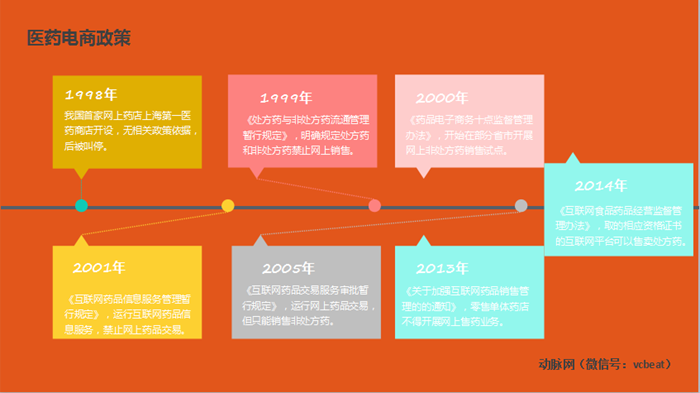
Source: China Food and Drug Administration, AskCI Consulting
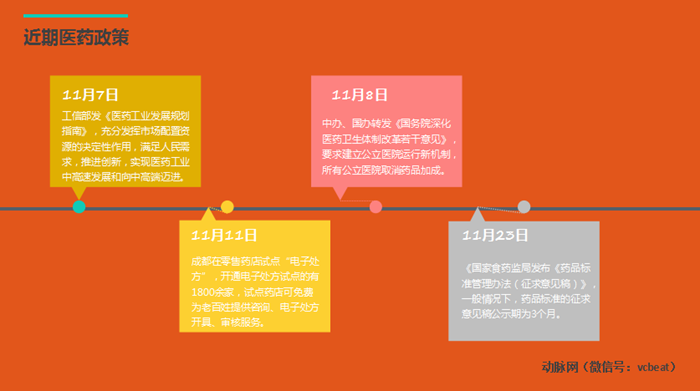
In addition to the aforementioned policies, the most “shocking” policy in the pharmaceutical e-commerce sector this year is undoubtedlyHalting Online Drug Transactions on Third-Party Platforms, the pilot program for online retail of pharmaceuticals via third-party platforms commenced in 2013. Hebei Huiyan Pharmaceutical Technology Co., Ltd.’s “95095” platform (later acquired by Ali Health), Guangzhou Babafang Information Technology Co., Ltd.’s “Babafang” platform, and Newhai E-Commerce’s “Yihaodian” were successively approved as pilot third-party platforms for the online retail of pharmaceuticals, with a pilot period of one year. During the pilot period, the performance of these third-party online pharmaceutical retail platforms was highly commendable; according to data from the Southern Institute of Pharmaceutical Economics,Last year, the total size of the B2C pharmaceutical e-commerce market reached RMB 14.42 billion, with third-party platforms accounting for RMB 7.79 billion in sales, representing 55.4% of the market; self-operated B2C sales amounted to RMB 5.25 billion, accounting for 36.4%.
The suspension of third-party online drug transactions does not mean that the platform's pharmaceutical e-commerce business has ceased.The original process of direct online transactions has shifted to a model involving online request submission, offline pharmacy fulfillment, and cash-on-delivery payment, with limited actual impact. However, under the pressure of this policy, many pharmaceutical e-commerce companies have pivoted toward self-operated models or intensified their efforts in building official channels. Companies such as 111.com (Yiyaowang) and Jianke.com have shifted their operational focus to official channels, while chain pharmacies like Laobaixing Pharmacy and Yifeng Pharmacy have strengthened their own websites. After the first major test following the policy implementation—the Double 11 shopping festival—the aforementioned companies achieved commendable results, demonstrating that while third-party platforms are important, they are not indispensable.
On the other hand, Alibaba Health and JD.com have begun direct operations through acquisitions or by directly applying for licenses. In March this year, JD.com invested in Shangyi Yunjiankang, a pharmaceutical O2O platform, and launched its self-operated JD Pharmacy in June. Alibaba Health acquired Guangzhou Wunian Pharmaceutical Chain in July to obtain License C, and the newly launched Alibaba Health APP includes services such as drug procurement, B2C drug transactions, and O2O medication delivery.
Overall, the challenges in pharmaceutical e-commerce policies are concentrated in three areas: the lack of separation between medical services and drug sales, restrictions on the outflow of prescription drugs, and integration with medical insurance systems.。The "Measures for the Supervision and Administration of Online Food and Drug Operations (Draft for Comments)," released by the China Food and Drug Administration in May 2014, proposed lifting restrictions on the online sale of prescription drugs. However, due to lack of cooperation from hospitals and issues with prescription drug supply, the outflow of prescription drugs has not truly been unleashed. Currently, a key focus of China’s healthcare reform—"separating pharmaceuticals from medical services"—has not yet been fully realized. The distribution channels for prescription drugs remain concentrated in hospitals and clinics. If healthcare reforms continue to advance the separation of pharmaceuticals from medical services and eliminate drug markups, pharmaceutical e-commerce will see significant benefits. A third challenge is the difficulty of enabling online payments via medical insurance accounts. Medical insurance accounts consist of individual accounts and pooled accounts. Cities such as Shenyang, Hangzhou, and Guangzhou have begun piloting online payments using individual medical insurance accounts. However, the pooled account, which constitutes the largest portion of medical insurance funds and is managed by the Medical Insurance Center, is generally restricted to use within hospitals. Online payments using pooled funds have not yet been implemented.
Regarding the relationship between pharmaceutical e-commerce policies and the market, we have a basic understanding:Policies may be lagging, but enterprises are already making active efforts to drive policy progress through market-driven attrition.At the macro-policy level, the overarching direction is to encourage “Internet Plus” initiatives and promote the development of pharmaceutical e-commerce. Healthcare reforms emphasize the separation of prescribing from dispensing and the implementation of tiered diagnosis and treatment systems. Within this framework, telemedicine—an important component of tiered care—significantly benefits the growth of pharmaceutical e-commerce. However, at the operational level of drug and food regulation, relaxing controls on pharmaceutical e-commerce remains challenging, whether due to concerns over medication safety or the complexities of regulatory oversight.
Nevertheless, explorations at the intersection of pharmaceuticals and the internet are becoming increasingly prevalent, with more diverse approaches being attempted. Examples include “Internet + Pharmaceutical Marketing,” “Internet + Drug Procurement,” “Internet + Pharmacies,” and Internet Hospitals, all aiming to break through the final barriers restricting the pharmaceutical industry across multiple levels—diagnosis, treatment, medication, and services.
Let us examine the impact of policy on pharmaceutical e-commerce from several fundamental perspectives. The first is the separation of prescribing and dispensing. Previously, China’s pharmaceutical landscape was characterized by the “drug-revenue-subsidized healthcare” model. As aforementioned data indicate, the total pharmaceutical market stands at approximately RMB 1.4 trillion, with less than one-twentieth transacted through internet channels. Of this small online share, less than one-fifth consists of B2C transactions. With online pharmaceutical consumption accounting for less than 1% of the total market, the vast majority comprises over-the-counter (OTC) drugs; in effect, there is virtually no online market for prescription drugs. Although dozens of leading pharmaceutical e-commerce enterprises have made significant noise, they have had negligible impact on the existing pharmaceutical market structure, amounting to much ado about nothing.
We are accustomed to bottom-up reforms, and the same holds true in the field of pharmaceutical e-commerce.If the online sale of prescription drugs is not deregulated, the industry will remain confined to the tens of billions in over-the-counter drug sales, resulting in limited influence. However, once policy restrictions are lifted, the scale of pharmaceutical e-commerce will expand by tens or even hundreds of billions—an unimaginable magnitude that current pharmaceutical e-commerce players are certainly unable to absorb alone. Therefore, we predict that a policy “ice-breaking” moment for pharmaceutical e-commerce will not occur in the short term. Nevertheless, beneath the ice, steady streams are flowing, which will eventually converge into a powerful force over time.
So, from which aspects can prescription drugs achieve breakthroughs? One is hospitals, especially public hospitals., healthcare reform has promoted the separation of prescribing and dispensing in public hospitals to eliminate corrupt practices such as bribery and extortion, prevent pharmaceutical corruption and over-treatment, and consider both reducing diagnosis and treatment costs and controlling medical insurance expenditures. If prescribing and dispensing are separated, will hospitals readily release prescriptions? The answer is not necessarily. A key reason is the lack of alternative revenue streams to compensate for the loss. Although public hospitals do not excessively pursue profitability, this channel represents a significant interest point, making its liberalization difficult. Once prescriptions from public hospitals flow out, the primary beneficiaries are offline pharmacies, with only limited conversion to online channels. A direct reason is that patients who need to visit hospitals require timely access to medications, a convenience provided by hospital pharmacies or external brick-and-mortar pharmacies but not by online platforms. However, this presents opportunities for medicine-delivery e-commerce platforms. Currently, these platforms operate through direct sales or partnerships with chain stores, enabling rapid delivery of specialized medications or products that are difficult to source from individual stores, thereby serving as a supplement to offline pharmacies.
The internet hospitals that have gained popularity this year have also significantly driven the development of pharmaceutical e-commerce.Within internet hospitals, several sub-concepts, such as electronic prescriptions and remote consultations, have varying degrees of impact on the development of pharmaceutical e-commerce. Taking electronic prescriptions as an example, the core issue lies in qualifications: who is authorized to issue electronic prescriptions, how these prescriptions are circulated after issuance, what purposes they serve, how they are ultimately handled, and who holds the rights to process the associated data. These represent key “pain points” and “challenges” in the circulation of electronic prescriptions. Judging by current attempts made by medical and pharmaceutical institutions, progress remains at a very preliminary stage. Regarding remote consultations, current models are limited to physician-assisted remote care, such as video consultations, second-opinion consultations, and remote specialist consultations. In these scenarios, the question of who issues the prescription does not arise, thereby effectively circumventing restrictions on the online sale of prescription drugs. However, upon further reflection, in remote areas or in cases of remote consultations without offline physician assistance, issues related to prescriptions and prescription drugs do emerge. The former can help compensate for local shortages in pharmaceutical resources through the online sale of prescription drugs, while the latter truly realizes remote healthcare in its fullest sense.
Other policy impacts on pharmaceutical e-commerce are concentrated in the payment sector, namely: (1) integration with medical insurance and social security systems; and (2) reimbursement issues related to commercial health insurance.Unlike offline pharmacies, pharmaceutical e-commerce platforms are not integrated into the unified medical insurance payment system, meaning purchases cannot be reimbursed. In contrast, at offline pharmacies, consumers can even use their medical insurance cards to purchase non-pharmaceutical products (leveraging accumulated medical insurance funds; data indicates that current accumulated medical insurance funds may reach RMB 500 billion). If pharmaceutical e-commerce platforms were uniformly integrated into the medical insurance payment system, it would effectively change consumers’ purchasing habits. If online and offline channels offered equivalent experiences, or if online channels provided superior services and pricing, online platforms would naturally become the primary sales channel (similar to the e-commerce transformation seen in other sectors). Signs of relaxation are already emerging, as the Ministry of Human Resources and Social Security has initiated explorations into medical insurance payments. In the future, medical insurance payments may collaborate with commercial payment institutions. A more long-term scenario involves deeper integration between the medical insurance payment sector and e-commerce platforms, thereby utilizing accumulated funds and opening up medical insurance settlement and reimbursement channels. Another factor is commercial health insurance. Although its relationship with pharmaceutical e-commerce may not be particularly close at present, the growing scale of commercial health insurance as a supplement to basic medical insurance could reshape the existing structure of pharmaceutical e-commerce. We estimate that if commercial health insurance becomes a significant component of residents’ health coverage and achieves full integration with pharmaceutical e-commerce settlement systems, it will serve as a parallel channel for residents seeking medical care and purchasing medications, thereby further promoting the development of pharmaceutical e-commerce.
Overall, the pharmaceutical e-commerce sector remains heavily reliant on policy support. A relaxation of regulations would spur significant growth, whereas continued restrictions would confine development to a limited market space. Even established pharmaceutical e-commerce companies with substantial market share would face crises if policy conditions were to deteriorate.
In fact, we can benchmark the market size of pharmaceutical e-commerce against that of the United States. The U.S. pharmaceutical market is highly liberalized, and its pharmaceutical e-commerce sector is relatively mature, with online pharmacies (B2C) accounting for approximately 30% of the entire pharmaceutical retail market. In contrast, our figure stands at 8%. In the U.S., prescription drug sales constitute more than 50% of the total online pharmacy market, whereas we have yet to make significant headway in this area. Overall, if we use the U.S. as a benchmark, China’s pharmaceutical e-commerce sector (even considering only over-the-counter drugs) still has room for growth worth tens of billions of yuan. In the future, pharmaceutical e-commerce will become one of the primary distribution channels for medicines, alongside hospitals and chain pharmacies, forming one of the “three carriages” driving the pharmaceutical market.
At the corporate level, after years of exploration, the pharmaceutical e-commerce sector has entered a mature stage. The remaining opportunities lie in three key policy relaxations: integration with medical insurance payments, deregulation of prescription drug sales, and the adoption of electronic prescriptions. Beyond these, pharmaceutical e-commerce players can only deepen their services and integrate further into the existing industry chain, thoroughly penetrating the pharmaceutical e-commerce market and expanding into comprehensive, end-to-end medical services. An analysis of the revenue, profits, and strategic plans of both start-ups and listed-company-controlled pharmaceutical e-commerce platforms reveals several distinct characteristics likely to define the future of this sector.
First, the increase in industry concentrationHere, industry concentration is primarily reflected in platforms’ ability to drive traffic. Although the suspension of the third-party online retail pilot program for pharmaceuticals in August had a certain impact on these platforms, it did not undermine their core operations. The channels for purchasing medications remain intact, with only changes to the payment process. Moreover, as e-commerce platforms increasingly launch self-operated pharmaceutical businesses, their market share may well expand.
Second, the level of specialization and service penetration will be significantly strengthened.Taking Yunkai Yamei, a company included in our inventory, as an example, it emphasizes employing its own pharmacists and operating self-owned stores. These practices are designed to enhance the professionalism of its services. By leveraging in-house pharmacists, the company can provide consumers with comprehensive advice on medication use, administration, and health management, which is an ideal approach to improving service perception and consumer stickiness. Following this year’s financing round, Yunkai Yamei has further strengthened its pharmacist team. Across the industry, many pharmaceutical e-commerce platforms have announced plans to reinforce their pharmacist and health consultation teams, integrating more deeply into service delivery and health management, thereby significantly enhancing professional standards. In the future, the differences between online and offline pharmacies, in terms of both function and service, are expected to become minimal. The choice of channel for purchasing medications will ultimately depend on consumers’ own judgment.
Third, e-commerce platforms specializing in chronic and special-disease medications, as well as differentiated pharmaceutical e-commerce players, will thrive.Among the companies we reviewed, some offer “special sale” pharmaceuticals, while others provide services and products specifically tailored to patients with chronic and special diseases. From a financing perspective, the primary reason these companies have attracted investor interest is their differentiation. Due to the absence of geographical and temporal constraints, pharmaceutical e-commerce platforms can more easily aggregate users with similar medication needs, thereby scaling up by targeting these specific demands.
Fourth, mobile penetration will surpass that of PCs., in fact, this is also one of the main characteristics of the entire e-commerce sector. Data released by Analysys shows that in the pharmaceutical e-commerce market structure in 2015, PC terminals accounted for a larger share than mobile terminals in the first two quarters, while mobile terminals surpassed PC terminals in the last two quarters. On a more granular level, the market share of platform-based mobile channels exceeded that of self-operated mobile channels; in the first three quarters of this year, the market share of platform-based mobile channels was over 75%, significantly leading self-operated mobile channels. Pharmaceutical consumption is low-frequency in nature, and integrating it into platform apps offers a lightweight solution. However, embedding health management services and light consultation features into e-commerce platforms may increase the open rate of e-commerce apps. Online pharmacies such as 1 Drug Store (1 Yao Wang), Jianke.com, and Kang Aiduo have all launched “medicine + healthcare” models. For instance, 1 Drug Store’s Yizhen App starts with online consultations and then guides users to purchase medications, demonstrating significant traffic conversion effectiveness.
Fifth, the integration of online and offline channels, a trend that is already emerging.For instance, Alibaba Health, in collaboration with multiple pharmacies, established the “China Pharmaceutical O2O Pioneer Alliance.” Leveraging mobile internet and data technologies, it integrates the upstream and downstream segments of the healthcare and pharmaceutical services industry. This is directly manifested by users placing orders via the Alibaba Health app, with nearby pharmacies handling drug delivery, thereby creating an online-offline synergy. Many O2O drug-delivery enterprises have also entered this sector, including Kuai Fang Song Yao, Ding Dang Kuai Yao, and Song Yao 360. However, their business models differ slightly: Alibaba Health provides order traffic redirection to offline pharmacies, whereas Kuai Fang operates self-owned pharmacies. The former aims to integrate the entire pharmaceutical industry, while the latter seeks to control the procurement and delivery processes to enhance service quality and customer satisfaction. Regardless of the distinct characteristics of each model, “O2O” is indeed a development direction for pharmaceutical e-commerce. Recently, several chain pharmacies and online pharmacies have announced their entry into the O2O market to achieve online-offline integration.
Copyright Notice
This report is produced by VCBeat. All text, images, and tables contained herein are protected by applicable trademark and copyright laws. Portions of the text and data have been sourced from publicly available information, with ownership retained by the original authors. No organization or individual may reproduce or distribute this report in any form without the prior written consent of our company. Any unauthorized commercial use of this report shall constitute a violation of the Copyright Law of the People's Republic of China, other relevant laws and regulations, and applicable international conventions.
Disclaimer
This research report is based on information that VCBeat considers reliable and currently publicly available. VCBeat strives to, but does not guarantee, the accuracy and completeness of such information. Due to limitations in research methodologies, sample sizes, and the scope of data collection, the data presented herein only reflects the basic conditions of the surveyed population during the survey period and serves solely for the current research purposes, providing a general reference for the market and clients. Furthermore, VCBeat does not guarantee that the views or statements contained herein will remain unchanged; at different times, VCBeat may issue reports with data, opinions, and projections inconsistent with those presented in this report.
VCBeat does not consider recipients of this report as its clients by virtue of their receipt thereof. This report is distributed only where permitted by applicable laws and regulations and solely for informational purposes; it shall not constitute any form of advertising. Under no circumstances shall the information contained herein or the opinions expressed therein be construed as investment advice to any person. Where permitted by law, VCBeat and its affiliated entities may hold equity interests in the companies mentioned in this report and may provide or seek to provide fundraising, financial advisory, or other related services to such companies.
Note: I am Gao Kangping, an author at VCBeat. If you are an investor interested in the pharmaceutical industry and pharmaceutical e-commerce, or if you are engaged in pharmaceutical-related entrepreneurship and seeking media coverage, please feel free to contact me. We also welcome any tips on relevant companies.
WeChat: changyoudashijie
Email: gao.kp@vcbeat.top