

Zigong City in Sichuan Province Fully Launches Resident Health Cards and Unveils 'Healthy Zigong' Mobile App
On the morning of November 23, the launch ceremony for the comprehensive activation of the Zigong Resident Health Card and the unveiling of the “Healthy Zigong” APP, hosted by the Zigong Municipal Health and Family Planning Commission, the Zigong Central Sub-branch of the People’s Bank of China, and the Zigong Municipal People’s Government Informationization Office, was held at the Ziliujing District Government Conference Center. This event marks the transition of the city’s health informatization efforts from the infrastructure development phase to the full-scale application phase. It is expected that by the end of 2018, the Resident Health Card will cover all urban and rural residents in the city.
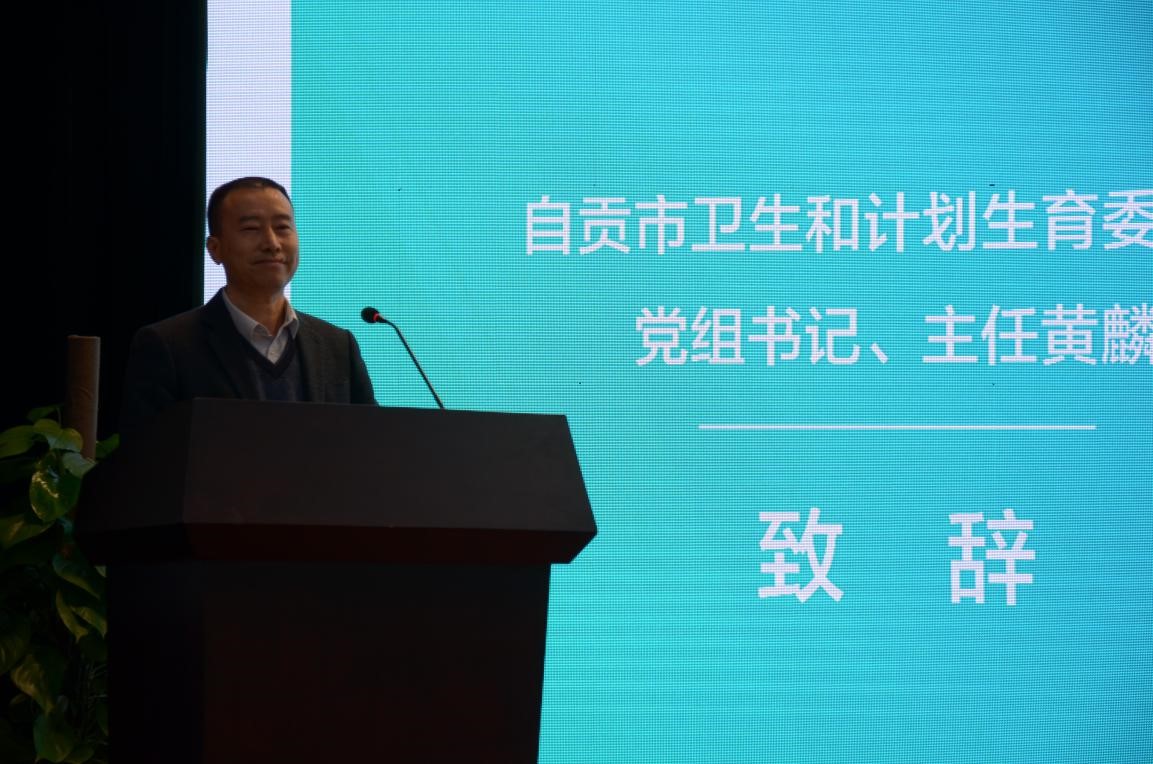
Address by Huang Lin, Party Secretary and Director of the Zigong Municipal Health and Family Planning Commission
Huang Lin, Party Secretary and Director of the Municipal Health and Family Planning Commission, stated in his address: “Accelerating the development of the Resident Health Card is not only a requirement for building a Healthy China, but also a concrete measure to implement the mass line, deliver tangible benefits to the public, and address the need for cross-regional, cross-institutional medical care and real-time settlement with ‘a single card.’ The launch ceremony for the full-scale activation of the Resident Health Card, alongside the debut of the ‘Healthy Zigong’ APP, marks the transition of the city’s health informatization efforts from the infrastructure-building phase to the comprehensive application phase.”
In the past, patients often had to navigate complex medical consultation processes and obtain multiple hospital-specific cards for visits to different hospitals. Now, all procedures can be completed seamlessly with just one Resident Health Card. It has been reported that the Resident Health Card integrates multiple functions into a single card, serving as an identification tool, storing personal health and clinical records, enabling self-service registration and consultation, facilitating point-of-care payments, allowing self-service inquiry and printing of test results, and supporting nationwide networked use.
It is reported that the Resident Health Card also functions as the “Southern Sichuan Transit Card” and the “Zigong Citizen Card (Type B).” The overall objectives are: by the end of 2017, for the number of issued Resident Health Cards to account for more than 80% of the city’s permanent resident population, and for all public medical and health institutions to fully adopt the use of the Resident Health Card; by the end of 2018, to basically achieve universal coverage, ensuring that every urban and rural resident in the city possesses a Resident Health Card.
With the full-scale launch of the Resident Health Card, the “Healthy Zigong” app will also go live simultaneously. By downloading and logging into the “Healthy Zigong” app, residents can browse information related to healthcare services and the Resident Health Card, link their health cards, and access online services such as appointment registration, personal health record inquiries, and convenient lifestyle information searches.

Issuance of Resident Health Cards to Representatives of the Impoverished Population
This year, the Provincial Health and Family Planning Commission issued the "Notice on Accelerating the Construction and Application of Resident Health Cards for the Impoverished Population," requiring comprehensive promotion of the issuance and use of health cards for impoverished individuals. More than 70,000 impoverished residents in Zigong City will receive their health cards by the end of December. As of November 22, the city’s card issuance efforts for the impoverished population have progressed smoothly. The cleanup of data for establishing health records for all impoverished individuals has been basically completed, with 72,000 cards already produced and ready for distribution to the targeted recipients.
The principal official of the Zigong Municipal Health and Family Planning Commission stated that all public medical institutions in the city have been fully integrated into the municipal platform, achieving full coverage of the private network for population health information. Furthermore, 64% of public hospitals at Grade II and above have passed the Sichuan Provincial Digital Hospital Assessment, the utilization rate of the Sichuan Provincial Management Information System for Primary Healthcare Institutions has reached 100%, and the volume of remote imaging diagnostic services has exceeded 80,000 cases.
The widespread adoption of resident health cards and the launch of the “Healthy Zigong” mobile application will facilitate the transformation of traditional healthcare service models, enhance service quality and efficiency, and promote population-wide health management. These initiatives will better enable comprehensive, lifecycle-oriented health services for residents, reduce patient waiting times, improve the healthcare experience, and alleviate the difficulty of accessing medical care. They play a crucial role in advancing informatization in the public service sector and driving the development of the health information service industry.