

Maternal and Child Health Industry: Unicorns Emerge, E-commerce Platforms Become the Biggest Winners | 2016 Annual Review
By Yang Qiyuan, Liu Zongyu
As 2016 draws to a close, VCBeat’s flagship annual event, the “Top 100 Future Healthcare Companies,” is arriving as scheduled. The selection process is currently in full swing, but the excitement doesn’t end there. Prior to the unveiling of the Top 100 list, VCBeat has meticulously curated a series of year-end reviews focused on specific healthcare subsectors. Targeting the hot healthcare niches of 2016, these articles systematically examine the current landscape of companies, highlight key events, and analyze development trends within each field over the past year, delivering a rich feast of insightful content to our readers.
How to Reshape the Maternal and Child Health Industry in the Era of Mobile Internet, New Technologies, and New Business Models?Like the broader healthcare sector, the maternal and child health industry is relatively traditional. Traditionally, suppliers in this sector have primarily provided maternal and child healthcare products and related items to consumer (C-end) users, while supplying medical devices, pharmaceuticals, and diagnostic reagents to business (B-end) clients, such as hospitals. However, startups in the maternal and child health sector operating within the modern mobile internet landscape differ significantly from traditional suppliers. These differences are mainly reflected in their business models, as well as in their products and methods of product delivery.
In terms of business models, the most significant distinction between mobile internet entrepreneurs and traditional entrepreneurs lies in user-centric thinking. Traditional entrepreneurs view users merely as customers who pay for products and services, whereas mobile internet entrepreneurs regard users as individuals who engage with and utilize these offerings. Consequently, their primary focus is on how to acquire and connect with a larger user base, as well as how to enhance user stickiness and activity levels. Compared with traditional approaches, this traffic-driven business model offers greater potential, enabling both the integration of established corporate business frameworks and the creation of entirely new business models.
Compared with traditional startups, new ventures place greater emphasis on consumer-end (C-end) users and the connectivity between C-end and business-end (B-end) users. Currently, the most popular mobile applications and smart hardware devices are primarily designed for C-end users and to facilitate C-to-B connectivity. Through these apps and devices, C-end users can access their personal health data, monitor their health status in real time, and communicate with B-end providers for consultations at any time. Compared with the past, the mobile internet era has empowered C-end users to manage their health more autonomously, while also enabling B-end users to improve the efficiency of service delivery.
The rapid development of the maternal and child health sector in recent years has spurred the emergence of numerous startups. We have compiled an overview of 51 companies in this field, detailing their project names, founding dates, geographic locations, and financing histories. The data is current as of November 2016.

In the maternal and child health sector, commonly known as the mother-and-baby industry, numerous unicorn companies have emerged, with five or six enterprises boasting market capitalizations exceeding RMB 3 billion. Most of these unicorns have achieved such high valuations by incorporating mother-and-baby e-commerce operations into their business models.Among the companies included in our statistics, pure maternal and infant e-commerce platforms such as Mia.com and Beibei.com were excluded; only maternal and child health enterprises related to healthcare and pregnancy were counted.
Geographic Distribution Across Four Major Regions
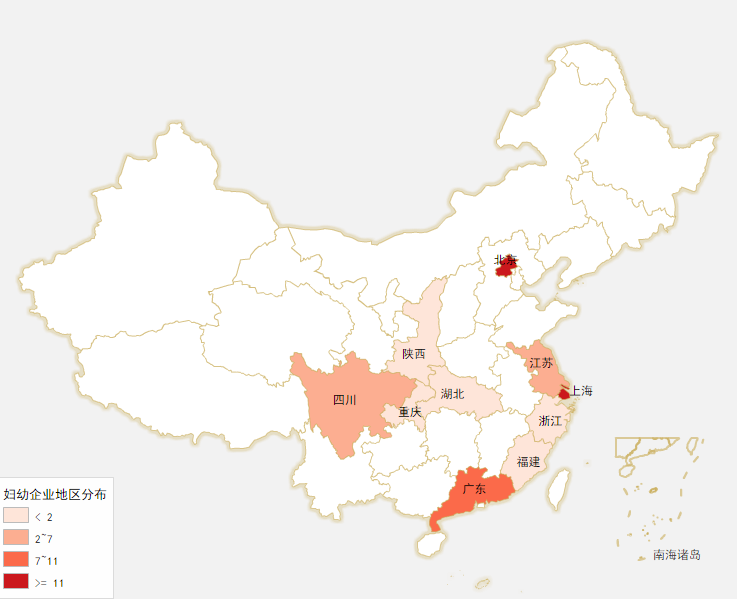
We conducted a statistical analysis of the geographic distribution of 51 startups in the maternal and child health sector, revealing that these enterprises are primarily concentrated in the developed eastern regions of China. The startups can be categorized into four major regions: North China, East China, South China, and West China, with North China and East China serving as the primary hubs for startups in the maternal and child health industry.
From the perspective of provincial-level regional distribution, startups in China’s maternal and child health sector are currently concentrated in Beijing, Shanghai, and Guangdong, with Beijing emerging as the preferred location for entrepreneurship, accounting for over 40% of the total. This predominance is primarily driven by multiple factors, including high per capita income, strong demand for maternal and child health services, an abundant pool of entrepreneurial talent, and well-developed supportive infrastructure for startups. In contrast, other regions are mainly constrained by inadequate startup support systems. For instance, capital markets in western and central China are less developed, with investors and investment institutions far less active than those in coastal areas. Coupled with a shortage of entrepreneurial talent, these factors have resulted in a relatively sparse distribution of related startups in these regions.
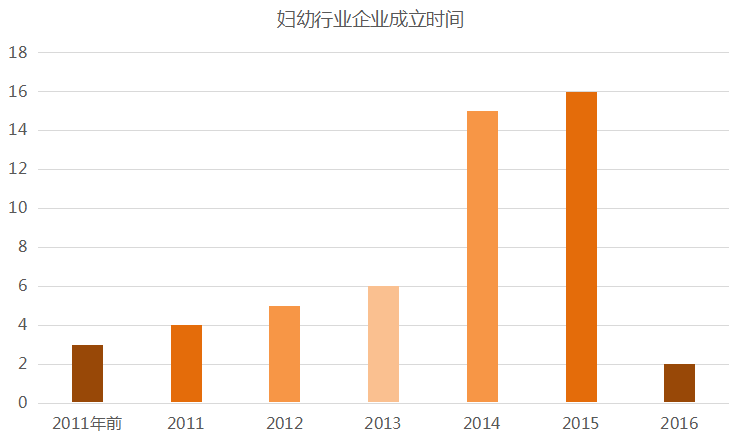
Startups in the maternal and child health sector emerged relatively late. Among the 51 companies we analyzed, the earliest founded was Shanghai Zhending Computer Technology Co., Ltd. (Yunyuqiao), established in 2002. Early startups in this sector were primarily focused on the PC internet space, mainly operating forums and online communities, such as Babytree. Starting in 2011, driven by the surge in mobile internet, the number of startups in the maternal and child health sector began to grow rapidly, peaking in 2014 and 2015. There were 15 startups founded in 2014, followed by 16 in 2015. This increase was mainly attributable to the rise of mobile internet and heightened public attention to maternal and child health following the national relaxation of the one-child policy to allow two children. Entrepreneurial activities during this period were predominantly concentrated in the mobile internet sector, with intelligent and data-driven business models poised to become the major future trend in healthcare within the maternal and child health industry.
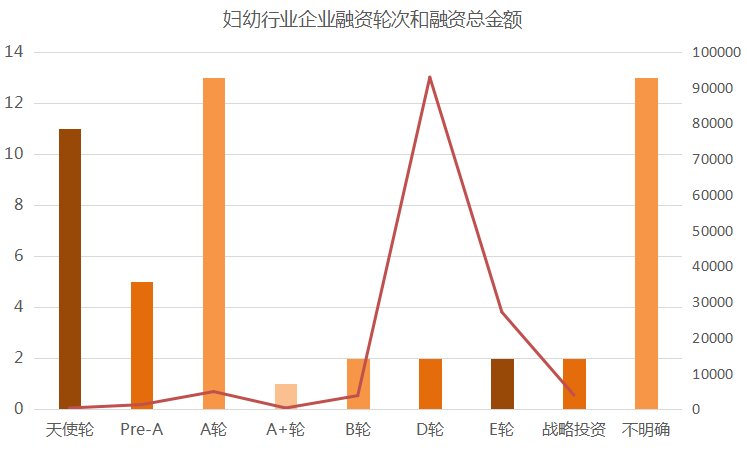
Among the 51 companies we compiled statistics on,Thirty-eight companies disclosed detailed investment and financing information, with total funding reaching $1.344 billion. Of this, approximately $650 million was raised in 2016, accounting for 48% of the total, indicating that the maternal and child health industry is currently experiencing a concentrated surge in development.China’s maternal and child health sector is dominated by angel and Series A investments, which account for more than three-quarters of all investment cases. Investment in this sector shows a trend where later-stage funding rounds involve larger individual investment amounts. There are four companies that have reached beyond Series D, with substantial investment sums; all of these are comprehensive female health and mother-and-baby mobile applications. The average funding amount for Series A is $3.76 million, for Series B it is $18.83 million, for Pre-Series A it is $2.49 million, while the average for angel rounds is only $0.28 million. The predominance of angel and Series A deals indicates that entrepreneurship in the maternal and child health sector is still in its early stages, although corresponding unicorn enterprises have already matured.
In January 2016, Hyacinth announced the completion of its Series A financing round, raising tens of millions of U.S. dollars. The round was led by Shanghai Trust Investment Management Co., Ltd., a prominent investor in the industry, sparking significant反响 within the sector. This development signals that “Internet + maternal and child healthcare services” will become increasingly mature and convenient in the future, with the Hyacinth – Private Maternal and Child Physician APP poised to serve as a benchmark in the “Internet + Healthcare” field.
In January 2016, Daoming Optics completed a strategic investment of RMB 50 million in Sunshine Women and Children, a company operating in the mobile healthcare sector for women and children. Reportedly, the funds raised in this round will be primarily allocated to product research and development, market promotion, and operational management.
In February 2016, Lv Guotao, Founder and CEO of iBaby, a medical service platform focused on obstetrics, announced that the company had completed its Series A financing round, raising tens of millions of RMB by the end of February. The investor was a domestic securities investment firm. The funds from this round will be primarily used for product iteration, content integration and production (such as educational resources for physicians, prenatal classes, and pregnancy-related videos), and user acquisition.
In February 2016, “Quyun” APP (Jiahao Technology), a one-stop preconception care service platform targeting individuals facing fertility challenges, announced that it had secured RMB 60 million in Series A financing from BlueRun Ventures.
In March 2016, Rainbow Parenting, a platform providing in-home pediatric healthcare services, secured RMB 3.8 million in angel-round financing from Jino Medical and Kuai Chuangying. The funds were primarily allocated to platform development and physician training.
In March 2016, the online mother-and-child consultation platform “Mami Zhidao” secured RMB 100 million in Series B financing, led by Fosun Kunzhong Capital, with participation from existing investors SoftBank China and Morningside Venture Capital, as well as new investor Hawthorn Capital. Mami Zhidao is a mobile healthcare company specializing in women’s and children’s health. Following this round of financing, the company will further expand its innovative “online + offline” medical services, with its offline pediatric outpatient clinics currently under development.
In March 2016, Evolution Era’s Yuejing high-precision Bluetooth digital thermometer secured tens of millions of yuan in Pre-A series financing. The device can accurately predict ovulation days, menstrual periods, early pregnancy, and miscarriage, thereby assisting women with contraception or conception planning.
In April 2016, Chengzhangbao, an online child development advisory platform, announced the completion of its RMB 10 million Pre-A financing round. The round was led by Dark Horse Fund, with participation from Hong Kong Fuying Holdings and Weimai Holdings. Following this investment, Chengzhangbao will simultaneously advance its three strategic pillars—vertical markets, community engagement, and brand building—with a primary focus on the post-early-education market for children aged 2 to 6 years.
In May 2016, ChildCare Cloud Auscultation, a manufacturer of smart stethoscopes, secured millions of yuan in angel-round funding from Beike Club. Its smart stethoscope is dedicated to providing cardiopulmonary health monitoring and management for children aged 0–5 years. Following this round of financing, Cloud Auscultation will continue to enhance its R&D capabilities, consolidate its technological advantages, and strengthen its core competitiveness.
In May 2016, Yiguo Doctor announced that it had secured tens of millions of RMB in Series A+ financing, led by Youchuang Capital with participation from multiple other institutions. The funds raised in this round will be primarily used for urban and hospital expansion, online insurance sales, and enhancing user experience.
In May 2016, the light-consultation platform for maternal and child health, “Yu Er Wen Yi Wen,” announced the completion of its Pre-A financing round, raising tens of millions of RMB. The round was led by Zeqing Capital, with Licheng Venture Capital participating as a co-investor. The funds will be used for team building, channel promotion, and product optimization.
In June 2016, BabyTree, the unicorn enterprise in the maternal and infant community sector, completed its Series D financing of over RMB 3 billion. This round was led by Fosun Group, with participation from existing USD-denominated shareholders’ onshore RMB entities, such as TAL Education Group and Matrix Partners, as well as new investors including Chenshan Capital, China Merchants Wealth, Zhaojin Investment, Binchuang Investment, and Danfu Investment. This substantial financing round marks the completion of a critical step in BabyTree’s return to the domestic capital market.
In July 2016, Miyuejia, a postpartum care home-service platform, announced that it had secured millions of yuan in angel-round funding from Maker 100 Fund. The proceeds will be used to integrate online and offline service workflows and establish a standardized operational system.
In July 2016, Niunai Mama, an O2O platform for postpartum recovery, completed a Pre-A financing round worth tens of millions of yuan. Investors in this round included Qianshan Capital and two other publicly listed companies. The funds raised will be primarily used for geographic expansion into new cities and marketing promotion.
In August 2016, Meiyou announced the completion of its Series E financing round of RMB 1 billion and the dismantling of its VIE structure, marking its formal return to the Chinese domestic capital market. According to Meiyou, all existing shareholders participated in the follow-on investment, although the lead investor has not yet been disclosed. The proceeds from the financing will be used not only to facilitate the exit of USD-denominated capital but also to support the company’s development.
In August 2016, Jin Xueming, CMO of Hamigua Technology, revealed that the company had completed a RMB 15 million Pre-A financing round this month, with Zhonglu Capital as the investor. Jin Xueming stated that Hamigua Technology would focus deeply on the fields of maternal and infant intelligence and scientific parenting.
In October 2016, WeDoctor Group issued an announcement stating that it had completed a strategic investment in Beilian Technology, which deploys intelligent commercial Wi-Fi systems in maternal and child health hospitals across China, thereby becoming its largest shareholder. Following the investment and integration, Beilian Technology was renamed “WeDoctor Beilian.” WeDoctor stated that WeDoctor Beilian holds the only license for an internet-based maternal and pediatric hospital currently available in China. It aims to build an internet maternal and child health hospital, establish a maternal and child health industry investment fund, create a closed-loop online-to-offline service model, and ultimately realize an ecosystem for the maternal and child health industry.
In November 2016, Aiding Doctor, a provider of preconception and fertility assistance services, completed its Series A financing round amounting to tens of millions of RMB. The round was led by T&H Capital, with continued participation from Shunwei Capital. The funds will be used to further accelerate the expansion of its service network and enhance its service capabilities.
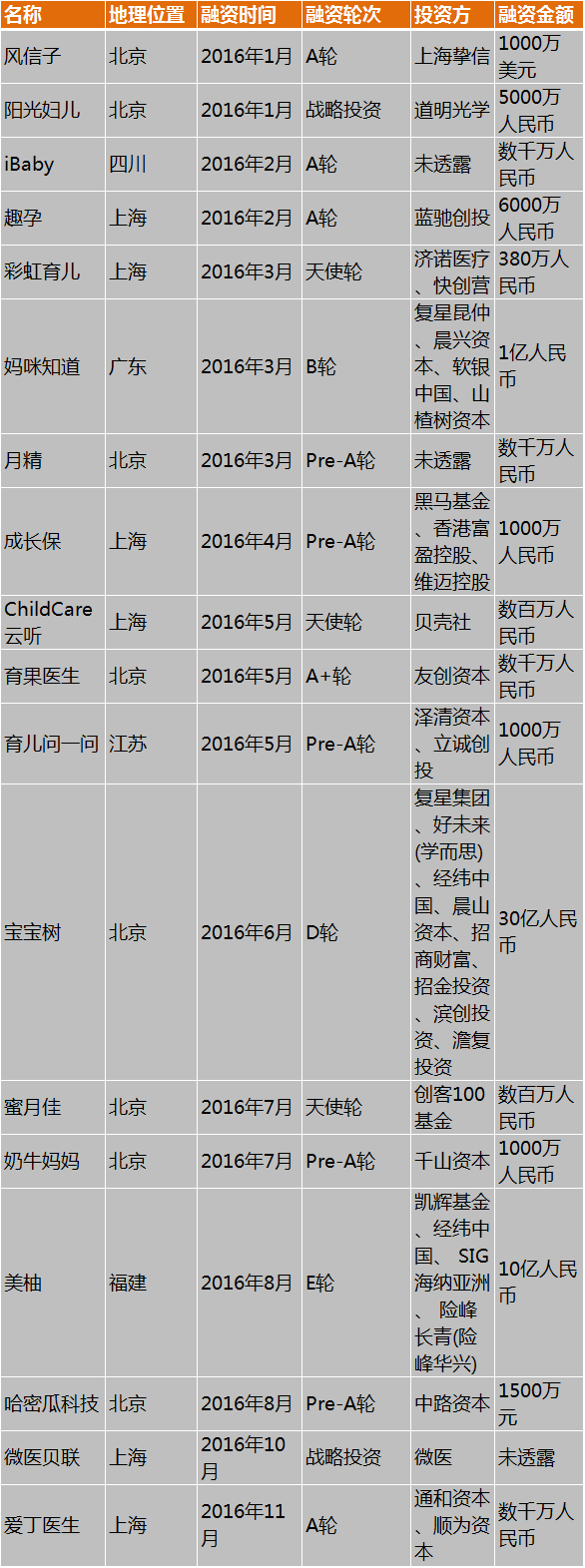
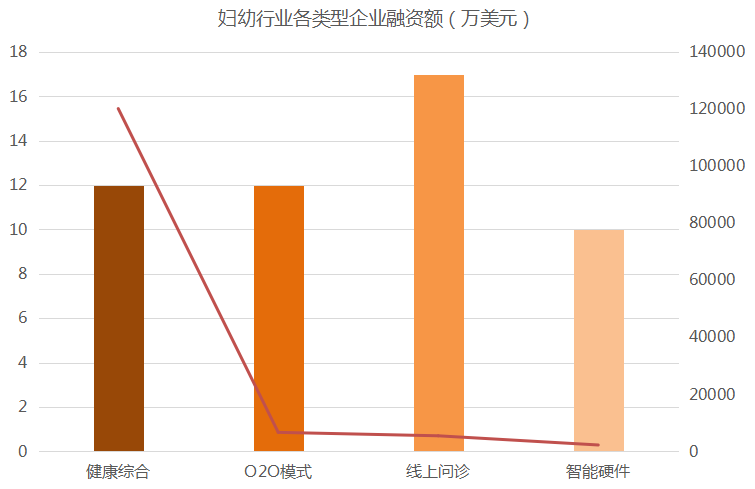
Based on the collected data, a total of 17 financing events occurred in the maternal and child health sector in 2016, with the total financing amount exceeding RMB 4.3 billion. The financing stages were primarily in the early stages, pre-Series A. Overall, while there were numerous financing events in the maternal and child health industry, the distribution of financing amounts and geographic regions was uneven. Unicorn companies within the industry secured significant funding this year; notably, Babytree raised RMB 3 billion in its Series D round, while Meiyou and Mammy Know-How raised RMB 1 billion and RMB 100 million, respectively. Other startups raised relatively smaller amounts. The key sub-sectors attracting investment were primarily comprehensive maternal and infant services, O2O (Online-to-Offline) models, and online consultation communities.
On the afternoon of October 29, 2015, the communique of the Fifth Plenary Session of the 18th Central Committee of the Communist Party of China announced the comprehensive implementation of the policy allowing each couple to have two children. The “universal two-child” policy officially took effect on January 1, 2016. Its implementation is expected to further expand the market size of the maternal and child health industry, creating more opportunities for entrepreneurs and investors.
On March 28, 2016, the Provisions on Prohibiting Non-Medical Fetal Sex Determination and Sex-Selective Artificial Termination of Pregnancy were reviewed and approved at the executive meeting of the National Health and Family Planning Commission, and concurred with by the State Administration for Industry and Commerce and the China Food and Drug Administration. These provisions came into effect on May 1, 2016. This will impose stricter supervision over the production, sales, and use of products by manufacturers of related medical devices and pharmaceuticals.
On October 25, 2016, the Central Committee of the Communist Party of China and the State Council issued the “Outline of the ‘Healthy China 2030’ Plan.” The Outline provides important guidance on improving maternal and child health, proposing to strengthen comprehensive prevention and control of birth defects and establish a birth defect prevention and control system that covers urban and rural residents and encompasses the pre-conception, prenatal, and neonatal stages. It also aims to increase the screening rates for common diseases among women and improve the rates of early diagnosis and treatment. Furthermore, it calls for the implementation of projects to safeguard maternal and child health and family planning services, thereby enhancing the capacity for emergency care of critically ill pregnant women and newborns. The introduction of the Outline will drive greater demand for medical devices, diagnostic reagents, and new testing technologies related to early screening, diagnosis, and treatment of maternal and pediatric diseases, creating more opportunities for entrepreneurs in this field.
To better assess investment trends in the capital market, we excluded companies with unclear financing status and analyzed 38 startups that had disclosed their funding details. The analysis was conducted across three dimensions: financing round, funding amount, and company type. Although the number of funded projects in the comprehensive health sector was relatively small, it attracted the highest total investment, reaching $1.20133 billion, with all financings occurring at Series A or later stages. In contrast, O2O (Online-to-Offline) projects had the highest number of funded companies, totaling 10, with a relatively high investment amount of $66.32 million; these financings were primarily concentrated in early-stage rounds prior to Series A. There were 12 funded online consultation projects, a relatively large number, with total investments reaching $54.28 million. Smart hardware startups followed, with 9 funded companies and a total financing amount of $22.07 million, predominantly at the Angel and Pre-A rounds, indicating that this sector is still in its early entrepreneurial stage. Overall, the comprehensive health sector is more favored by investors. Within this category, companies focusing on integrated parenting platforms and menstrual cycle management have emerged as the leading startups. However, in terms of the number of funded companies, O2O projects and online consultation services also represent key directions for future investor interest.
The maternal and child health sector primarily focuses on the health issues of women and children. Traditional enterprises in this sector mainly provide products and services offline, such as maternal and child hospitals, postpartum care centers, and companies offering various related products and services. The main drawbacks of this model are that various medical and rehabilitation institutions operate as information silos, hindering information sharing and increasing information costs. Additionally, users cannot promptly access their own health information and must visit hospitals or other institutions in person for consultations when needs arise, leading to a disconnect between user demand and service supply. In recent years, addressing the current state of the traditional maternal and child health industry, entrepreneurial hotspots have concentrated on four major areas: comprehensive health services, O2O (Online-to-Offline) models, online consultations, and smart hardware.
Health & Wellness
Integrated Health StartupsAs the name suggests, integrated health startups are enterprises that provide various products and services to women and children. These companies primarily rely on mobile internet platforms, first accumulating a massive user base through hit applications, and then expanding their product and service offerings based on this large user foundation. Among the collected startups, representative integrated health companies include BabyTree, LamaBang, Meiyou, and Dayima. The first two entered the market with parenting platforms and communities, while the latter two started with female menstrual tracking tools, eventually growing into industry giants. In the parenting community sector, both BabyTree and LamaBang are maternal and child enterprises that originated from online communities, successfully adopting a “community + e-commerce” model in their subsequent development. Consequently, after achieving profitability in their e-commerce operations, these two companies secured significantly higher funding amounts, far surpassing those in the other three sectors. Dayima and Meiyou hold an absolute advantage in the overall female health management market; Dayima has the highest industry user coverage, while Meiyou leads in monthly active users (MAU). Although both are comprehensive female health enterprises, their focuses differ: Dayima emphasizes building a medical-health ecosystem encompassing tool-based management, medical consultation services, content, and health-scenario consumption, whereas Meiyou focuses more on tool-based management and lifestyle information content, featuring a business model centered on low-priced products and shopping guides.
O2O Model
The O2O (Online-to-Offline) model seamlessly connects users with medical resources through platform-based operations. Products in this category typically adopt an “APP + location-based services” model, enabling users to book appointments online for offline services. Most startups in this sector emerged relatively late, primarily after 2014, with representative companies including WeDoctor Beilian and Fengxinzi.WeDoctor Beilian is a maternal and child health service company. By deploying Wi-Fi infrastructure in maternity and children’s hospitals, it provides products and services such as appointment registration, queue management systems, and online consultations. The company aims to build a mobile internet-based big data platform for maternal and child health that integrates hospitals, physicians, and patients.Fengxinzi is a mobile healthcare service provider focused on addressing medical consultation and appointment scheduling challenges for women and children. In the maternal and child healthcare sector, O2O prenatal check-up services are particularly prevalent due to factors such as limited mobility among pregnant women and the high frequency of required prenatal examinations. This model not only enables online medical consultations but, more importantly, allows users to promptly locate nearby medical services.
Online Consultation
The online consultation model primarily consists of doctor-patient communication, patient communities, and health education. Among these, doctor-patient communication is the core of online consultations. However, unlike O2O (Online-to-Offline) projects, such startups provide only lightweight consultations and community interactions, without offering offline medical services; essentially, they operate as lightweight consultation platforms. A representative example is “Mami Zhidao” (Mommy Knows), which integrates online consultations with private doctors from top-tier (Grade 3A) hospitals in Beijing, Shanghai, Guangzhou, and Shenzhen, popularizes knowledge on pregnancy and pediatrics, and offers personalized baby growth records. The platform has 3.6 million users and 1,000 registered doctors, with an average of over 10,000 daily consultations. In 2016, Mami Zhidao launched an online emergency service. In early March, it partnered with commercial insurance providers to introduce “Mami Bao” (Mommy Insurance). It is reported that Mami Zhidao is currently preparing to establish offline outpatient clinics.
Smart Hardware
Smart hardware is a new technological product concept that emerged after smartphones. It upgrades traditional IT hardware by integrating hardware with software to achieve intelligent functions. The rise of smart hardware has developed alongside the maturation of sensor, network, and cloud technologies. Products in this field feature significant functional innovation, with rapid progress and frequent updates. Smart medical hardware is a branch of smart hardware, referring collectively to smart hardware applications in the medical field. It monitors human physiological data, stores it in the cloud, and provides users with real-time data feedback services of medical and healthcare value through analysis. Although the smart hardware industry started relatively early, its development in the maternal and child health sector began later; most startups in this niche were founded after 2014. Smart hardware in the maternal and child health sector primarily detects physiological data from women, fetuses, and children, then leverages big data analytics to provide real-time decision-making information for users and healthcare providers. A typical representative among the collected enterprises in this sector is Happy Mommy. Its main products include smart maternal-infant scales, fetal heart rate monitors, and the Happy Mommy mobile app. Through these smart maternal-infant devices, it collects health data from pregnant women and infants, offering services such as health-data-based consultations and personalized pregnancy and parenting information, thereby building a maternal and infant platform for the mobile internet era. This health management model, based on "smart hardware + apps," is gaining traction worldwide and is poised to become a new paradigm for personal health management. However, due to long development cycles and challenges in customer acquisition, the hardware sales segment has not attracted significant capital interest.
From the perspective of user needs, we can categorize the demands in the maternal and child health industry into two major groups: consumer-side (C-end) user needs and business-side (B-end) user needs. C-end users primarily consist of women and children, while B-end users mainly include institutions such as maternal and child health hospitals, insurance companies, pharmaceutical companies, postpartum care centers, and rehabilitation centers.
C-End User Needs: In addition to the demand for traditional maternal and child products, C-end users’ needs also manifest in self-managed healthcare and convenient medical nursing services across various stages, including preconception, pregnancy, postpartum, and childcare. Expectant mothers and young mothers seek immediate solutions to their concerns while maintaining real-time oversight of their own and their babies’ health status. This has driven demand for online consultations, real-time offline services, and personal data management. While the traditional maternal and child industry only provided products to C-end users, entrepreneurs in the maternal and child sector during the mobile internet era also offer personal health data management services, enabling users to monitor their health conditions through visualized data. This is essentially a new demand spawned by the mobile internet era, with the advent of the internet and smartphones serving as the foundation for the surge in these needs.
B-side User Requirements: For hospitals, healthcare institutions, and rehabilitation centers that directly provide products and services to C-end users, there is a need for more data-driven products and services to assist in diagnosis, treatment, and decision-making, in addition to traditional medical products. In the era of mobile internet, both software and hardware serve as sources of health data. These institutions can leverage big data analytics on medical data generated during their service delivery, as well as data from other companies, to provide evidence for clinical decision-making. Meanwhile, insurance companies, pharmaceutical firms, and pharmacies can also participate. Medical big data analytics can help insurers achieve precise pricing and refine risk control models, while pharmaceutical companies and pharmacies can accelerate drug development and sales through such analytics.
From the demand side, consumer users place greater emphasis on convenient access to medical services and real-time management of their health status. Business users, including healthcare providers, prioritize leveraging mobile internet platforms to achieve rapid diagnosis and treatment as well as clinical decision support, thereby enhancing diagnostic and therapeutic efficiency. Meanwhile, insurance companies seek to utilize data analytics to reduce premium expenditures, while pharmaceutical companies and pharmacies aim to accelerate new drug development and boost drug sales through data analysis. These emerging needs are all underpinned by big data management, indicating that the essence of the modern healthcare industry lies in medical data management. For startups, beyond providing products and services, the more critical task is to employ innovative approaches to connect various stakeholders, enhance user experience, and create value through data.
Although startups in the internet-based maternal and child health sector continue to emerge, and capital markets remain optimistic about the industry’s prospects, these ventures face several pressing challenges. These include inaccurate identification of user pain points, unclear profitability models, concerns regarding data validity and security, and ambiguity in external regulatory policies.
Inaccurate Grasp of User Pain Points
China’s healthcare sector faces numerous pain points, such as uneven distribution and low utilization efficiency of resources, poor information sharing, and suboptimal user experience. The maternal and child health sector is no exception. For instance, online consultation platforms designed to alleviate difficulties in scheduling appointments and accessing medical care have inadvertently directed more patients to already overcrowded large maternal and child hospitals, thereby failing to resolve these issues on a systemic level. Furthermore, due to the inherent lack of face-to-face interaction between doctors and patients, online consultations tend to have lower diagnostic accuracy. Admittedly, these challenges cannot be addressed by startups alone; sustained national efforts to advance tiered diagnosis and treatment reforms are essential to achieving comprehensive solutions.
Unclear Profit Model
Unclear profitability models are a common issue among internet startups. Although capital markets remain enthusiastic about investing in mobile health, some companies still lack a clear and viable path to profitability even after completing Series A, B, and even C funding rounds. If early-stage investments cannot be recouped effectively, these companies face the risk of being eliminated from the market. Furthermore, the three primary monetization models currently adopted by internet startups—advertising, value-added services, and online consultations—are still immature. Additionally, as mobile health services have not yet been included in national medical insurance coverage, they struggle to meet users’ demand for reducing healthcare costs through mobile platforms. Some companies are gradually exploring viable strategies; Meiyue has achieved relative success by leveraging its large accumulated user base to enter the female-focused e-commerce sector. However, given the intense competition in this segment, Meiyue’s e-commerce revenue may decline if it fails to maintain higher user stickiness.
Validity and Security of Data
Data validity refers to whether the data generated by startups’ mobile apps and smart hardware platforms can meet medical-grade standards. As currently understood, most data produced by such apps and smart devices cannot serve as a basis for medical diagnosis and clinical decision-making. In addition to the inherent performance limitations of the products themselves, the absence of standardized data protocols is a significant contributing factor. Furthermore, user data privacy and security issues must not be overlooked. Healthcare-related mobile apps and smart hardware continuously and dynamically collect and receive comprehensive records of users’ entire health journeys. As the user base expands and data accumulates, the volume of big data stored on servers will continue to grow. The ability to ensure data security and protect patient privacy will become a critical determinant of an app’s survival and success.
Unclear Regulatory Policies
In the era of mobile internet, both technological advancements and business model innovations are progressing at an extremely rapid pace. Policies and laws in related fields invariably lag behind industry development. While this regulatory lag affords startups greater operational freedom, it also introduces significant risks, such as uncertainties regarding which data can be shared with third-party enterprises and which cannot, as well as which business domains are permissible to enter and which are not.
Although there are still many challenges facing entrepreneurship in China’s maternal and child health sector, including issues inherent to startups themselves as well as external environmental factors, the country’s large population base, coupled with the comprehensive implementation of the two-child policy in 2016, will undoubtedly expand the market size of the maternal and child health industry, thereby creating more entrepreneurial opportunities for startups. Against the backdrop of the Healthy China initiative and smart healthcare, the maternal and child health sector is also poised to embrace smart healthcare solutions. Future entrepreneurship in this field is expected to exhibit several key trends: vertical specialization, scenario-based applications, intelligence, data-driven operations, professionalization, and medicalization.
Trend 1: Verticalization and Scenario-based Application
The maternal and child health industry encompasses numerous specialized segments, such as maternal and infant care products, mental health, smart hardware, physical health, health consulting, postpartum rehabilitation, and childcare. Each segment represents a substantial market, and no single company can achieve a dominant advantage across all of them. Future internet-based startups in this sector must focus deeply on a specific niche, delving into users’ daily life scenarios within that niche to uncover their needs and deliver professional, personalized services. For instance, period-tracking apps like Meiyou and Dayima initially entered the market by focusing exclusively on women’s physiological health, achieving excellence in this area before expanding into other domains. Similarly, future startups can concentrate on a particular field, strive for perfection, and ultimately establish a closed-loop ecosystem within that domain, thereby building their core competitive advantage.
Trend 2: Intelligence and Data-Driven
Intelligentization and datafication represent the major trends shaping the future of the entire healthcare sector. At its core, healthcare is fundamentally about the management of medical data; this characteristic has become increasingly prominent in the modern era due to the ease of generating and collecting big healthcare data. In the maternal and child health sector, medical big data originates not only from hospital electronic medical records and medical devices but also from various maternal and child health applications and smart hardware. These big data reflect authentic information about users’ health status, holding value not only for the platforms that generate them but also carrying significant importance for advancing intelligentization and datafication across the entire maternal and child health industry. Healthcare providers can leverage big data analytics to assist in diagnosis and treatment; pharmaceutical companies can utilize it for scientific research and drug discovery; insurance companies can employ it to establish reasonable cost-control models, thereby reducing premium expenditures; and government agencies can use medical big data as a basis for formulating relevant policies.
Trend 3: Specialization and Medicalization
One of the most critical metrics for internet startups is user stickiness, which is sustained by the user experience and professionalism of their products and services. In the maternal and child health sector, the core product is service; when service quality is high, user stickiness naturally follows. Currently, many startups in this sector offer products that do not meet medical-grade standards. For instance, while smart hardware and healthcare wearable devices are now commonplace, the data they generate cannot be applied in clinical settings, primarily due to inaccuracies. Startups should focus on enhancing product professionalism, as high-quality products form the foundation of any viable business model. In the near future, medical-grade products will continue to emerge, enabling users to manage their own health and transmit data to healthcare providers for professional advice.
Copyright Statement
This report is produced by VCBeat. All text, images, and tables contained herein are protected by applicable trademark and copyright laws. Portions of the text and data are sourced from publicly available information, with ownership retained by the original authors. No organization or individual may reproduce or distribute this report in any form without prior written permission from our company. Any unauthorized commercial use of this report shall constitute a violation of the Copyright Law of the People's Republic of China, other relevant laws and regulations, and applicable international conventions.
Disclaimer
This research report is based on information that VCBeat considers reliable and currently publicly available. VCBeat strives for, but does not guarantee, the accuracy and completeness of such information. Due to limitations in research methodologies, sample sizes, and the scope of data collection, the data presented herein reflects only the basic conditions of the surveyed population during the survey period and serves solely the purpose of the current research, providing a general reference for the market and clients. Furthermore, VCBeat does not guarantee that the opinions or statements contained in this report will remain unchanged. At different times, VCBeat may issue reports with information, opinions, and projections inconsistent with those contained in this report.
VCBeat does not consider recipients of this report as clients merely by virtue of their receipt thereof. This report is distributed only where permitted by applicable laws and regulations, solely for informational purposes, and shall not be construed as advertising in any manner. Under no circumstances shall the information contained herein or the opinions expressed constitute investment advice to any person. Where permitted by law, VCBeat and its affiliated entities may hold equity interests in the companies mentioned in this report and may provide or seek to provide fundraising, financial advisory, or other related services to such companies.