

Kang Health Files IPO Prospectus to Launch AI-Powered Symptom Checker and Combat Online Health Anxiety
We’ve all likely experienced this: feeling that something is off with our health, we look up our symptoms online, only to become increasingly convinced that we are on the brink of death?
Online forums and health websites can cause considerable unnecessary distress. While they may offer some utility for searching diseases by symptoms, they are far less effective than in-person consultations with medical experts. Nevertheless, many people still choose to self-diagnose online when feeling unwell, thereby exposing themselves to the risk of being misled.
A new company called Kang Health aims to transform the chaotic landscape of self-diagnosis searches, preventing users from spiraling into anxiety over disorganized search results. By leveraging advanced search engine technology, the company will conduct detailed comparisons between user-reported symptoms and historical patient data, enabling individuals with similar symptoms to learn about the treatments others received and how they achieved recovery.
There are many online symptom diagnostic tools available, such asCompanies such as WebMD and Everyday Health have launched disease diagnostic tools. However, this type ofThe website, due to frequently providing inaccurate search results, nowIt appears to be losing users’ trust. For instance, a search for “WebMD” on Google Trends reveals a steady decline in its traffic.
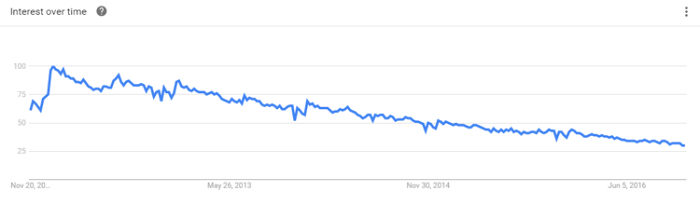
WebMD’s traffic continues to decline, as users appear to have become aware of the potential risks associated with using such self-diagnosis platforms.
Kang Health, however, differs significantly from these platforms. It does not merely retrieve similar answers through keyword searches, nor is it limited to a simple Q&A format between doctors and patients.Kang Health aims to leverage artificial intelligence to precisely correlate symptoms with diseases. The system engages in dialogue with users to gather detailed symptom information, while simultaneously retrieving data from other patients who have presented with similar symptoms. By synthesizing this collective information, the system assesses the patient’s condition and provides treatment recommendations.
Only more accurate search results can restore people's trust in medical information query platforms; now, investors seem to be betting onOn Kang Health. CompanyInIn mid-November this year, the company secured $3.3 million in seed funding, a considerable sum compared to its peers. Moreover, Kang Health’s investors are all heavyweights: Bessemer Venture Partners, Comcast Ventures (the venture capital arm of U.S. telecommunications giant Comcast Corporation), Mangrove Capital (lead investor), Lerer Hippeau Ventures, and Primary Ventures. Additionally, Adam Singolda, CEO of the Israeli content recommendation company Taboola, has invested in Kang Health and will join its board of directors.
Adam Singolda, an investor who has newly joined the board of directors, stated in a press release: “For the past nine years, I have not served on the board or advisory committee of any company other than Taboola. Today, I am pleased to announce that I have joined the board of directors of a consumer health information company. I believe this company will lead a revolution in online self-diagnosis services, providing assistance to users worldwide.” Singolda also praised Kang Health’s technologyCompared with Siri and Alexa, expressing extremely high expectations for it.

Allon Bloch, Founder of Kang Health
Company founder Allon Bloch has a rather legendary background, having previously served as CEO of Vroom, the largest online car retailer in the United States; MySupermarket, an online grocery shopping marketplace; and Wix.com, a website-building service provider. Kang Health was established this January and is headquartered in New York State, currently employing 10 staff members across New York City and Tel Aviv. According to Bloch, the company’s name is derived from Labuche Kang, one of the world’s highest peaks that remains unclimbed. The name appears to symbolize Kang Health’s ambition to scale new heights in the healthcare industry—uncharted territory yet to be conquered.
The company’s model sounds somewhat like a medical version of Google Waze: users anonymously input their gender, age, and symptoms, with options to include lifestyle factors and medication history in the future. Based on this information, Kang’s system provides analytical feedback. For instance, among 80,000 individuals of the same age and gender presenting with similar symptoms, 30,000 were diagnosed with a specific disease, while the remaining 50,000 had other conditions. Users can then explore various treatment options for relevant diseases, patient prognosis and recovery outcomes, potential side effects, and more.
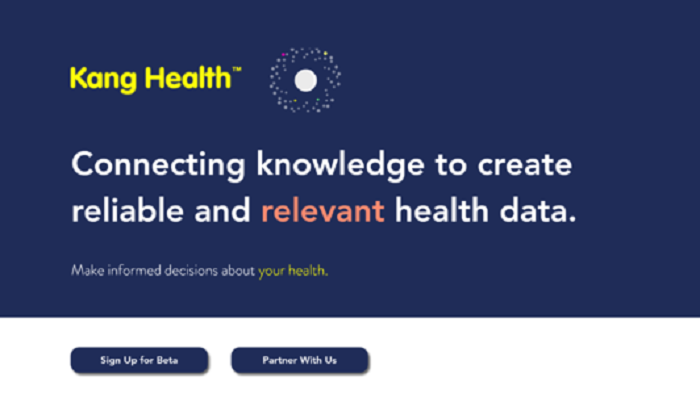
The website platform is still under testing.
Much of Kang Health's information will largelyUser-triggered, however, during the initial phase when there were no users, data from a large health maintenance organization (HMO) was used for activation (the founder declined to disclose its name), providing tens of millions of data points for each medical category in Kang. In addition to using algorithms to assess conditions, the company also employs human assistance for diagnosis—there are two full-time physicians on the team who double-check the diagnostic results.
Founder Bloch stated, “We don’t want you to simply pull up a slew of incomprehensible medical jargon from online searches; rather, we aim to help you understand what is going on with your body. Some symptoms may resolve with increased water or chicken soup intake, while others require medication. The Kang platform is designed to guide you on the next steps. Our users gain greater autonomy before, during, and after medical consultations, enabling them to ask more targeted questions and share their treatment experiences with the platform.”
In an interview with the renowned technology website Business Insider, Bloch stated that Kang Health does not intend, nor is it able, to fully replace medical advice or professional physicians; rather, it aims to provide people with a reference for decision-making through big data analytics.
In fact, Kang is not only not intended to replace doctors, but also plans toLeveraging the Advantages of Artificial Intelligence to Assist Physicians in Diagnosis, rapidly correlating patients’ symptoms with potential diseases. Founder Bloch stated that there is a lack of intuitive and user-friendly diagnostic software for physicians on the market. He has tried all automated diagnostic systems designed for doctors, but none can provide insights like the Kang platform, such as indicating that 100,000 individuals present with Symptom A and that Symptom A is highly correlated with Symptom B.
The more people share information on the Kang platform, the more powerful its system becomes through continuous learning and error correction. Once the user base reaches a certain scale, users can even check on the Kang platform whether there are recent local trends in seasonal influenza or allergies. This application helps healthcare institutions quickly understand public health conditions and has the potentialFacilitate Medical Research。
Bloch revealed that Kang Health is planning its market entry and may launch consumer-facing products in six months. As for revenue, he believes it will take at least one to two years before profitability can be discussed.
The Kang Health platform still has some major unresolved issues. The first isUser TrafficThe challenge is that Kang, much like platforms such as Google Waze, relies on stable and substantial volumes of user data. Only by securing a large base of active users can the platform’s artificial intelligence technology deliver practical value. According to Bloch, once Kang Health reaches tens of thousands of users, it can provide meaningful data; however, if its user base grows to millions, the platform’s diagnostic results will become increasingly accurate through iterative corrections, while also offering a diversified perspective on disease patterns across the United States.
Secondly, if one is to perform like a physicianAccurately interpret patients’ descriptions of pain severity or clinical condition, the company would likely need to develop a highly advanced natural language processing technology. If pain intensity is rated on a scale of 1 to 10, no existing technology can adequately interpret the difference between a patient’s self-reported pain levels such as “7” and “9,” let alone assess their medical condition. Yet, common sense holds that physicians, relying solely on their clinical experience, can infer relevant diseases, symptoms, and injuries by asking just a few simple questions, such as those regarding pain intensity.
Furthermore, the market for machine learning-powered medical diagnostics chosen by Kang Health is actually aHighly Fragmented Sector. In the area of consumer disease diagnosis, WebMD and the Mayo Clinic are already active; in terms of machine learning technology, Google’s DeepMind AI laboratory is collaborating with the UK’s National Health Service (NHS) to diagnose acute kidney injury, while IBM Watson Health is leveraging cognitive computing systems to accelerate cancer diagnosis and care.
But CEO Bloch believes that despite the presence of several heavyweight players in the market, there is still room for the services offered by Kang Health. “In the future, many different types of companies will exist across all segments of the value chain, as there is a global call for more refined options in the healthcare sector.”