

48.98 Million: Post-Suspension Performance of Ali Health's Third-Party Traceability Platform
Recently, Ali Health announced its interim report for the six months ended September 30, 2016. The report showed that revenue for the period reached RMB 55.02 million, a 220% increase from RMB 17.19 million in the same period last year. Pre-tax losses amounted to RMB 104 million, slightly higher than the RMB 103 million recorded in the corresponding period of the previous year. Breaking down by specific business segments, the Electronic Supervision Network was the primary source of revenue, generating RMB 48.983 million during the period, accounting for 89% of total revenue. Revenue from outsourcing and value-added services provided to the Tmall entity stood at RMB 3.07 million, while B2C pharmaceutical business contributed RMB 1.38 million. This highlights the significant importance of the Electronic Supervision Network within its business portfolio.
According to information provided by Alibaba Health to VCBeat (WeChat ID: vcbeat), after the China Food and Drug Administration (CFDA) released the “Opinions on Further Improving the Food and Drug Traceability System (Draft for Comments),” the drug electronic supervision code system previously operated by Hebei Huiyan Medicine, a subsidiary of Alibaba Health, was suspended. In response, Alibaba Health decided to build an open, market-oriented third-party traceability platform. Leveraging its experience and technical capabilities in traceability system development, Alibaba Health aims to collaborate with regulatory authorities, pharmaceutical companies, industry organizations, third-party technology service providers, and the public to establish a traceability ecosystem designed to prevent counterfeit drugs.
Alibaba Health stated that the new platform will be fully compatible with the technical standards of the “China Drug Electronic Supervision Code.” Meanwhile, it will provide free access to medical institutions and pharmaceutical enterprises originally registered on the former China Drug Electronic Supervision Network. Furthermore, over the next three years, Alibaba Health will waive fees for basic traceability services—such as code issuance and distribution tracking—for participating enterprises, charging only for technical support services including data storage and API calls.

Wang Peiyu, Vice President of Ali Health, stated that while ensuring the technical support costs of the new traceability platform are covered, Ali Health will continue to increase its technological investment. The company plans to gradually upgrade multiple technical indicators, including code standards, interface openness, and platform security, thereby lowering operational costs, enhancing scalability, and enriching functionality. Ali Health has previously demonstrated robust technical capabilities in the operation and maintenance of the Drug Electronic Supervision Network. Reports indicate that in 2015, following architectural restructuring and optimization by Ali Health, the network handled nearly four times the data volume compared to three years earlier, while system processing speed increased twentyfold, significantly improving efficiency and reducing costs.
In mid-June, Alibaba Health launched the “Code for Assurance” traceability platform. This platform is compatible with the technical standards of the “China Drug Electronic Supervision Code.” It also offers free onboarding services to healthcare institutions and pharmaceutical companies that were previously registered on the former China Drug Electronic Supervision Network. For distributors, “Code for Assurance” claims to assist them in recording or labeling purchased products, tracking product sources and sales destinations, meeting national and local regulatory requirements, and enabling refined enterprise management.
According to reporters, over 100 pharmaceutical manufacturers have already joined the “Ma Shang Fang Xin” platform. On August 18, Panlong Yunhai signed an agreement with Alibaba Health to list its “Notoginseng Powder” on the Ma Shang Fang Xin platform; users can scan the product code via Alibaba’s shopping and payment apps to view information on origin, sales, and distribution channels. On September 26, Mayinglong also announced its entry into the Ma Shang Fang Xin platform, with traceability codes applied to its various pharmaceutical products to enable authentication of product authenticity.
In conjunction with the series of announcements regarding Alibaba Health’s partnerships with branded pharmaceutical manufacturers, its interim report has finally been released. The figure of 48.98 million can be regarded as the first “report card” for Alibaba Health’s product traceability system following the suspension of the drug regulatory code. This performance not only demonstrates Alibaba Health’s strategic layout in pharmaceutical traceability but also reflects the level of recognition and adoption of this system by pharmaceutical companies.
In fact, besides Alibaba Health’s product traceability system, there are several other institutions engaged in this business. On November 15, Oracle Supercode Co., Ltd. was listed on the National Equities Exchange and Quotations (NEEQ). Its prospectus revealed that its revenue for the previous year was RMB 37 million, with a net profit of RMB 3.3628 million. Its core business consists of the integration, development, and sales of anti-counterfeiting and traceability systems. According to its official website, its anti-counterfeiting and traceability system also covers the pharmaceutical sector, providing pharmaceutical companies with records of raw material input during production, factory inspection records, and distribution logistics. Traceability code application methods include labels, inkjet printing, heat-transfer stickers, and labeling, accompanied by comprehensive equipment and technical support. When journalists contacted Oracle Supercode under the pretext of interviewing about this business segment, the company stated that the volume of such business was small and deemed an interview unnecessary. Journalists identified several other companies involved in pharmaceutical traceability services; they likewise claimed that interviews were unnecessary. Only one company informed the journalists that this business segment is still immature, with limited capabilities to demonstrate.
In fact, this also reflects the reality of electronic supervision in the pharmaceutical industry. Since the introduction of electronic supervision codes in 2008, stakeholders in the pharmaceutical sector have held varying attitudes toward them.
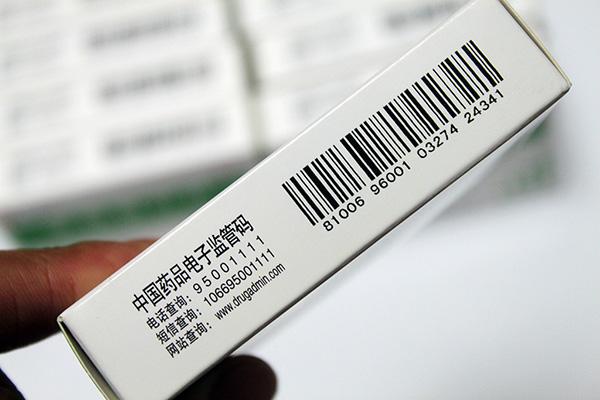
The so-called electronic drug supervision code, which is the digital barcode on drug packaging, allows consumers to access production and distribution information by scanning the code with a query system, serving as an "ID card" for the medication. Meanwhile, once the drug enters the distribution channel, relevant information should be entered into systems used by distributors and pharmacies to facilitate regulatory oversight and enable batch processing in the event of issues. From the perspectives of practical effectiveness and medication safety, the electronic supervision code is essential.
However, the implementation of the drug supervision code was far from satisfactory. As it was not a mandatory measure, pharmaceutical companies showed little enthusiasm. According to data provided by industry insiders, only about 40% of drugs entering the distribution channel previously carried electronic supervision codes, while more than 60% of drugs had never been included in the electronic drug supervision system. This indicates that the electronic supervision system had limited impact from its inception to its suspension.
One reason is the redundancy within the regulatory system. Under the current pharmaceutical regulatory framework, there are a series of certifications and inspections, including Good Manufacturing Practice (GMP), Good Supply Practice (GSP), and unannounced inspections. Although the electronic drug supervision code advocates for end-to-end traceability to the terminal level, this system has not played a significant role within the regulatory framework, rendering it “well-received in theory but poorly adopted in practice.”
Another reason is the issue of profitability. According to calculations, the hardware investment for pharmaceutical manufacturers and distributors to install electronic supervision code systems ranges from tens of thousands of yuan. When labor and operational costs are included, the annual expenditure is actually substantial. However, the benefits are limited. Regarding the most concerning safety issues, products can be recalled using production batch numbers and other identifiers if problems arise, making electronic supervision codes unnecessary. An unexpected effect of electronic supervision codes is their ability to reflect a company’s inventory, sales, and purchase data. If this data is controlled by commercial entities, it could play a decisive role in competition between companies.
Consequently, a group of enterprises dominated by chain pharmacies began to oppose the drug supervision code, leading to lawsuits directly targeting the China Food and Drug Administration (CFDA) and Ali Health. Under pressure, the drug supervision code was suspended. The subsequently issued Good Supply Practice for Pharmaceutical Products stipulated that “enterprises shall establish computer systems that meet operational and quality management requirements and fulfill drug traceability obligations.” Primary responsibility was thus assigned to pharmaceutical companies, which could either build their own systems or collaborate with platform-based enterprises such as Ali Health. This marked the advent of commercialized electronic regulatory systems, prompting Ali Health to launch its “Ma Shang Fang Xin” (Code for Peace of Mind) service—essentially a continuation of the original electronic drug supervision code system.
However, the newly launched system incorporates an additional layer of commercial application logic beyond the original government-endorsed pure regulatory framework. According to the official website of the “Ma Shang Fang Xin” platform, in addition to overseeing production and distribution channels, the system can integrate enterprise marketing, campaign operations, value-added services, and more, thereby serving as another “entry point” beyond the product itself.
From this perspective, the electronic regulatory code system, under the guise of product traceability, still constitutes a viable business venture.
Following the China Food and Drug Administration’s last-minute policy reversal, Alibaba Health covertly established a third-party product traceability system, which effectively serves as a cornerstone of its strategic layout in the healthcare sector. Previously, insiders at Alibaba Health told VCBeat that the company’s business operations are divided into four segments: pharmaceutical e-commerce, medical networks, health management, and product traceability. How to create synergy among these segments has been a key consideration for Alibaba Health. It now appears that the drug regulatory code system could serve as the integrating mechanism to achieve this cohesion.
In the pharmaceutical e-commerce sector, even before the suspension of the pilot program for third-party online retail of drugs on August 1, Alibaba Health had already obtained the Class C "Internet Drug Transaction Service Qualification" certificate, enabling it to conduct online pharmacy business targeting individual consumers. In terms of its medical network, Alibaba Health’s internet hospital has integrated with institutions such as Wuhan Intermediate People's Court (Note: Likely a typo in source; should be Wuhan Central Hospital or similar), Sanbo Brain Hospital affiliated with Capital Medical University, and Southwest Hospital. It currently covers multiple departments including general practice, traditional Chinese medicine, internal medicine, surgery, pediatrics, and stomatology. Patients can book appointments with renowned physicians through Alibaba Health’s internet hospital, which also facilitates remote consultations between hospitals. Regarding health management, users can sign up for family doctor services through Alibaba Health, allowing contracted physicians to manage family members’ health data and chronic disease rehabilitation.
So, how does product traceability integrate these sectors? The most critical element is pharmaceuticals. Regardless of the aforementioned stages, drugs are indispensable. By onboarding pharmaceutical manufacturers and distributors to obtain first-hand drug data, this approach provides supportive benefits for the subsequent business operations.
Furthermore, the newly added marketing, management, and campaign features of the product traceability system can integrate with Alibaba’s e-commerce and enterprise resource planning (ERP) operations, enabling synergy across Alibaba Business Groups. This offers immense potential for growth, leveraging Alibaba’s platform and big data advantages to create synergistic effects. However, it is foreseeable that transitioning from modest success to large-scale commercial viability in the realm of product traceability will still take time.