

Oncology Industry 2016 Annual Review: Light-Model Apps Nearly Extinct, Core Medical Integration Gains Traction
On December 12, 2014, VCBeat and Eggshell Research Institute published a review report titled “Detailed Analysis of Oncology Apps in Internet Healthcare,” which surveyed 25 oncology apps. Two years later, VCBeat conducted a follow-up investigation on these apps and found that only a handful remain operational, with a survival rate of less than 20% (an app is considered no longer in operation if it has not been updated within six months).
As the oncology app market undergoes consolidation, a growing number of companies are emerging from new fields—such as genetic testing, big data, artificial intelligence, targeted therapies, and doctor-patient service platforms—to prevent and treat cancer. New technologies are gradually addressing the root causes of cancer.
We often encounter such plotlines: a patient experiences severe physical discomfort, seeks medical examination at a hospital, and is diagnosed with a tumor, mostly in its advanced stages. The only options available are chemotherapy and pain-relieving medications to alleviate symptoms, while the probability of cure remains slim. This represents the traditional model of tumor detection and treatment.
Nowadays, with the declining cost of genetic testing, the growing prominence of artificial intelligence and big data, the validation of targeted therapies, and the emergence of multi-site practice models for physicians, a new paradigm for cancer prevention, detection, treatment, and rehabilitation has emerged. Individuals can assess their disease risk through genetic testing and implement targeted preventive measures. The availability of in vitro diagnostic kits has increased the likelihood of early cancer detection. Targeted drugs have reduced the pain and side effects associated with chemotherapy. Internet-based doctor-patient platforms have facilitated patient recovery. Meanwhile, seeking medical care overseas has provided people with entirely new healthcare options. The collection and standardization of patient data, in turn, provide a data foundation for drug development and physician training.
This article reviews 88 primary market companies in the oncology-related industries (not listed on the A-share market), hoping to provide useful insights for relevant professionals.
![NP2_]3R51F@IUERNOQ`12]D.png](https://cdn.vcbeat.top/upload/image/45/41/62/1f/7d2f8155655ade099ff52ee3fb59a0c2.png "1480395475226520.png")
Development of Startups in the Oncology Industry
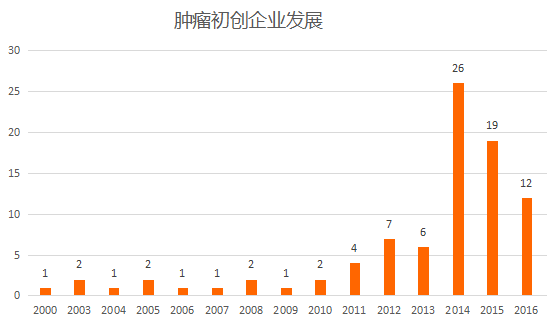
Statistics on the Founding Years of Startups in the Oncology Industry
Data Source: VCBeat, VCBeat Database
Prior to 2014, startups in the oncology sector were primarily engaged in drug development and genetic testing. Drug development efforts have remained continuous. The surge of interest in genetic testing has been driven by the implementation of the Human Genome Project, leading to a gradual increase in the number of companies specializing in oncology genetic testing.
By 2014, driven by capital inflows, the maturation of big data, artificial intelligence, and second-generation gene sequencing technologies, as well as the surge in interest in internet healthcare, there was a sharp increase in startups operating in oncology-related fields. However, since many healthcare startups failed to achieve profitability in 2014, investor sentiment cooled, leading to a decline in the number of new ventures. Nevertheless, technological entrepreneurship did not wane, thanks to continuous breakthroughs in AI and big data. Furthermore, after 2015, with the market landscape for general practitioner-patient platforms largely established, startups began to emerge in specialized medical fields. Consequently, although the number of startups decreased, it did not experience a cliff-like drop.
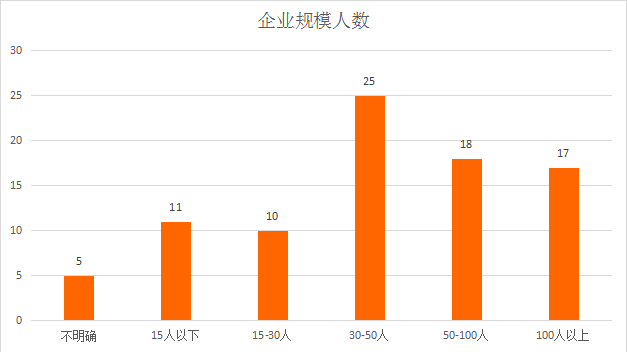
Startup Scale
Data source: VCBeat, VCBeat Database
In the oncology sector, whether engaged in genetic testing or oncology drug development, significant human resources are required. For instance, Beta Pharma, which recently went public with only one marketed product—icotinib—has a workforce of over 500 employees. The companies included in this analysis are all start-ups not listed on China’s A-share market. While the majority of their staff are research and technical personnel, headcount typically reaches 50–100 after securing Series A financing, and stabilizes at around 100 employees following Series B funding.
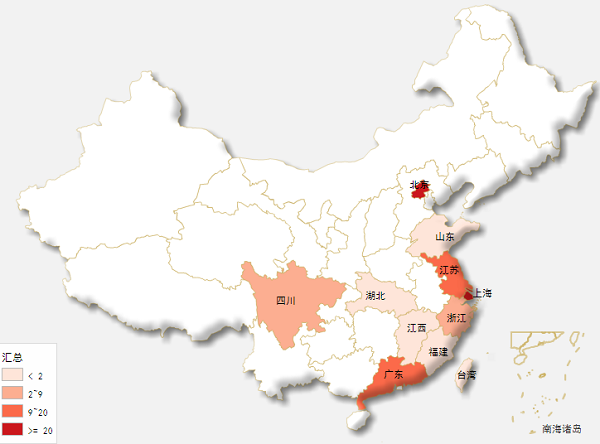
Geographic Analysis of Startups
Data Source: VCBeat, VBInsight Database
Among regions where oncology-focused startups are located, Beijing and Shanghai have the highest numbers, with 32 and 20 companies respectively. Guangdong and Jiangsu follow, with 13 and 9 companies respectively. The product offerings of these startups primarily include cancer genetic testing, oncology big data solutions, and oncology communication platforms. These innovative enterprises require funding for growth, access to data from large cancer hospitals as a foundation for research and development (R&D), and partnerships with major hospitals for clinical pilot studies. In cases involving oncology drug development, collaboration with university-affiliated research institutions is sometimes necessary to reduce R&D costs. The basic needs of these startups can be met in Beijing, Shanghai, and Guangzhou.
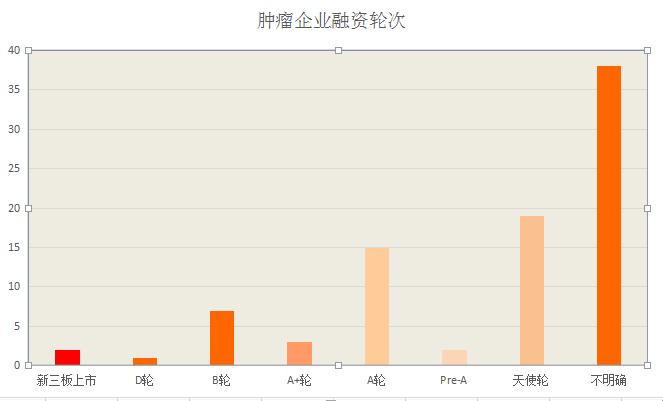
Startup Funding Rounds
Data Source: VCBeat, VBInsight Database
Among the 88 startups included in our statistics, 50 have publicly disclosed financing information. Of these, two are listed on the National Equities Exchange and Quotations (NEEQ), one has completed Series D financing, seven have completed Series B, three have completed Series A+, fifteen have completed Series A, two have completed Pre-A rounds, and twenty have completed angel rounds. The total financing amount for these companies reached USD 335.556 million, with USD 178.13 million raised in 2016, accounting for 53% of their total financing.
Most of these companies are still in the angel or Series A funding stages, with only two listed on the National Equities Exchange and Quotations (NEEQ). One is Shanghai Dingjing Biology, a provider of personalized cancer medical services based on molecular testing; the other is Youzhiyou Technology, which is dedicated to the research, development, and commercialization of products for personalized cancer diagnosis and treatment. Both companies operate in the oncology and genomics-related industries.
Fields such as oncology big data and doctor-patient communication platforms for cancer care are still in their developmental stages, requiring further market education, and no unicorns have yet emerged. In contrast, within the oncology drug sector, the presence of large pharmaceutical companies with substantial financial resources means that any new drug candidate reaching Phase II or Phase III clinical trials is highly likely to result in the acquiring company being acquired.
In March 2016, the General Office of the National Health and Family Planning Commission and the General Office of the National Administration of Traditional Chinese Medicine jointly issued the "Notice on Strengthening the Standardized Diagnosis and Treatment Management of Tumors," which put forward work requirements in four aspects for strengthening the standardized diagnosis and treatment management of tumors. The main contents include:
I. Enhance the capacity for cancer diagnosis and treatment. All regions are required to strengthen the development of oncology departments and related disciplines in medical institutions; conduct training for professionals involved in cancer diagnosis and treatment, incorporating such training into standardized residency programs and continuing education for healthcare personnel; alleviate shortages of qualified personnel in pathology, pharmacy, nursing, radiation therapy, and other related fields; and encourage scientific research on cancer prevention and control.
II. Standardize oncology diagnosis and treatment practices. Implement clinical guidelines and clinical pathways for cancer care to ensure standardized diagnosis and treatment; control the variety and specifications of antineoplastic agents and adjuvant medications, and continuously reduce the proportion of adjuvant medication use; regularly conduct monitoring and evaluation of antineoplastic agents and adjuvant medications; and implement prescription review and public disclosure systems.
III. Optimize cancer diagnosis and treatment models. Integrate the concepts of individualized medicine and precision medicine into cancer diagnosis and treatment, and promote a “single-disease, multidisciplinary” care model; enrich the scope of oncology services by providing comprehensive rehabilitation guidance, pain management, long-term nursing care, nutritional support, and psychological support; and address patients’ psychological and social needs.
IV. Establish Scientific Management Approaches. Strengthen coordination between rehabilitation hospitals, nursing facilities, and hospice care institutions with higher-level hospitals to gradually build a whole-process management model for cancer that spans from diagnosis and treatment to rehabilitation, and from hospitals to communities. Enhance cancer registration, reporting, and surveillance. Implement systems such as critical illness insurance for urban and rural residents and medical assistance for severe and catastrophic diseases, thereby alleviating poverty caused by or resulting from cancer treatment costs.
In January 2016, SiMai Network announced that it had secured a multi-million-dollar investment from F-Prime Capital (formerly Fidelity Asia Ventures), the F-Prime Fund (formerly Fidelity Biosciences), both affiliates of Fidelity Investments, as well as Ping An Capital, a subsidiary of Ping An Insurance Group. In June 2016, the company closed a Series B financing round worth tens of millions of US dollars, led by Tencent, with continued participation from its Series A investors: F-Prime Capital, the F-Prime Fund, and Ping An Capital.
In February 2016, Health 580 secured RMB 3 million in angel investment, with the investors undisclosed.
In March 2016, Cognitive Care completed an angel financing round worth tens of millions of yuan, with investment from Puhua Capital and Sinocare. The company is committed to applying artificial intelligence in the medical field to create a Chinese version of Watson for Oncology.
In March 2016, U-Med CARE, a platform connecting oncology patients with healthcare providers, secured RMB 12 million in Series A financing from Jinmao Capital.
In March 2016, Kangai Doctor secured RMB 20 million in Series A financing, with investors including Chunfeng Venture Capital and Fude Venture Capital. “Kangai Doctor” is the patient education, management, and interaction platform designated by the Professional Committee on Cancer Rehabilitation and Palliative Care of the China Anti-Cancer Association.
In April 2016, LinkDoc, a China-based medical big data company specializing in oncology, announced that it had secured tens of millions of U.S. dollars in Series B financing, led by Broadband Capital, with participation from Huiqiao Capital, Qianji Capital, and NEA.
In May 2016, Taiwan-based cancer diagnostics company ACT Genomics announced the completion of its $12.5 million Series B financing (listed as NT$400 million on ACT Genomics’ official website). The round was led by Hetong International and CDIB Capital (the overseas investment arm of China Development Financial Holding), with participation from Eminent II VC, Huannan Venture Capital, President International Development, and UMC Capital (the investment arm established by United Microelectronics Corporation). The funds will be used to continue building a robust molecular testing platform and an innovative bioinformatics engine, integrating a genomics-guided medical database.
In May 2016, Shuidi Mutual Aid was launched, having secured RMB 50 million in angel-round financing prior to its launch. The investment was jointly provided by Gaorong Capital, IDG Capital, ZhenFund, Tencent, Meituan-Dianping, and Lights China Fund. The business model of Shuidi Mutual Aid involves members paying a low fee to join a pooled fund. When a member is diagnosed with a critical illness, the community members provide mutual assistance and share the financial burden, thereby offering risk protection rather than generating investment returns.
In June 2016, Beilu Pharmaceutical issued an announcement stating that it would increase its capital investment in Geneseeq by RMB 30 million, thereby acquiring a 22.73% equity stake in Geneseeq upon completion of the capital increase. Additionally, Dongfang Venture Capital and Dongzi Fund also invested RMB 30 million in Geneseeq. In total, Geneseeq received RMB 60 million in investments.
In June 2016, ZhiNuowei secured an angel round of financing amounting to several million RMB, with investors including ZhenFund and Lingshi Investment.
In July 2016, Lianxin Medical secured millions of yuan in angel-round funding, with the investors undisclosed. Lianxin Medical is a healthcare technology company specializing in oncology big data, focusing on building oncology data platforms and conducting medical data analysis.
In August 2016, Genetron Health completed its Series A financing round of RMB 200 million, marking the largest Series A investment to date in China’s precision medicine sector, specifically in the field of liquid biopsy. The round was led by BGI Genomics, with participation from Volcanic Stone Investment and Sinopharm Capital, among others. The funds are primarily allocated to launching the cfDNA Baseline Project and establishing a tumor baseline database for the Chinese population. A portion of the capital will also be dedicated to the research and development of tumor genetic testing reagents, regulatory submissions, and the expansion of commercial marketing systems and market promotion.
In August 2016, E-Health (Yi’an Jishi) completed a $14 million Series A2 financing round in the United States. Led by the Bill & Melinda Gates Foundation, the round saw participation from Lilly Asia Ventures, Merck & Co., and ARCH Venture Partners, who co-invested in the $14 million raise. The funds will be used to build new R&D laboratories and pilot-scale production facilities, as well as to enhance GMP manufacturing capabilities, thereby accelerating the development and production of biologics.
In August 2016, QuanYu Medical completed its Series A financing round of RMB 180 million, led by Zhenghe Cixi Capital and Lian Fund. QuanYu Medical is an oncology service provider specializing in precise cloud-based radiotherapy technology. By leveraging the mdaccAutoPlan radiotherapy planning algorithm and focusing on enhancing medical communication, collaboration, and management, the company utilizes advanced technologies such as interoperability, big data, and cloud computing to improve survival rates for cancer patients in China and elevate the standard of oncology care.
In August 2016, Yihe Yunchuang secured an angel investment of several million RMB from Zhongshan Capital. The funds were allocated to market expansion and product development in the field of remote telepathology services for oncology.
In September 2016, Genetron Health (Beijing) completed a Series B financing round amounting to hundreds of millions of RMB. The round was led by Vcanbio Cell & Gene Engineering Corp., with participation from New Horizon Capital and existing Series A investors including Fenxiang Investment, Joincare Venture Capital, and Jiadao Gongcheng, among others. The proceeds will be used to accelerate expansion across the upstream and downstream segments of the industry chain, consolidate and further expand market presence and distribution channels, enhance the product portfolio, and advance big data infrastructure development.
In September 2016, Youzhiyou Medical received a RMB 65 million equity investment from Hokuriku Pharmaceutical, acquiring a 10% stake in Youzhiyou Medical upon completion of the capital increase. Wuhan Youzhiyou’s main products include personalized medication gene diagnostic kits and circulating tumor cell detection equipment.
In September 2016, Anhui Anke Biotechnology (Group) Co., Ltd. increased its capital investment in Xiyuan Biotechnology by RMB 30 million, acquiring a 20% equity stake in the company. The funds raised from this financing round will be used to strengthen drug research and development capabilities and advance industrialization in the field of oncology.
In September 2016, “Kang’ai Quan,” a platform that recommends treatment plans for cancer patients, completed its angel-round financing, raising RMB 3 million from individual investors.
In September 2016, YiLiu Assistant announced that it had completed tens of millions of yuan in Series A financing in August, with investors including Puhua Capital, Yarui Capital, and Fenxuan Capital. YiLiu Assistant will integrate modules for patient education, doctor-patient interaction, and consultations, connecting the pre-diagnosis, during-diagnosis, and post-diagnosis stages. It is committed to building a comprehensive management platform for oncology care and promoting standardized cancer treatment.
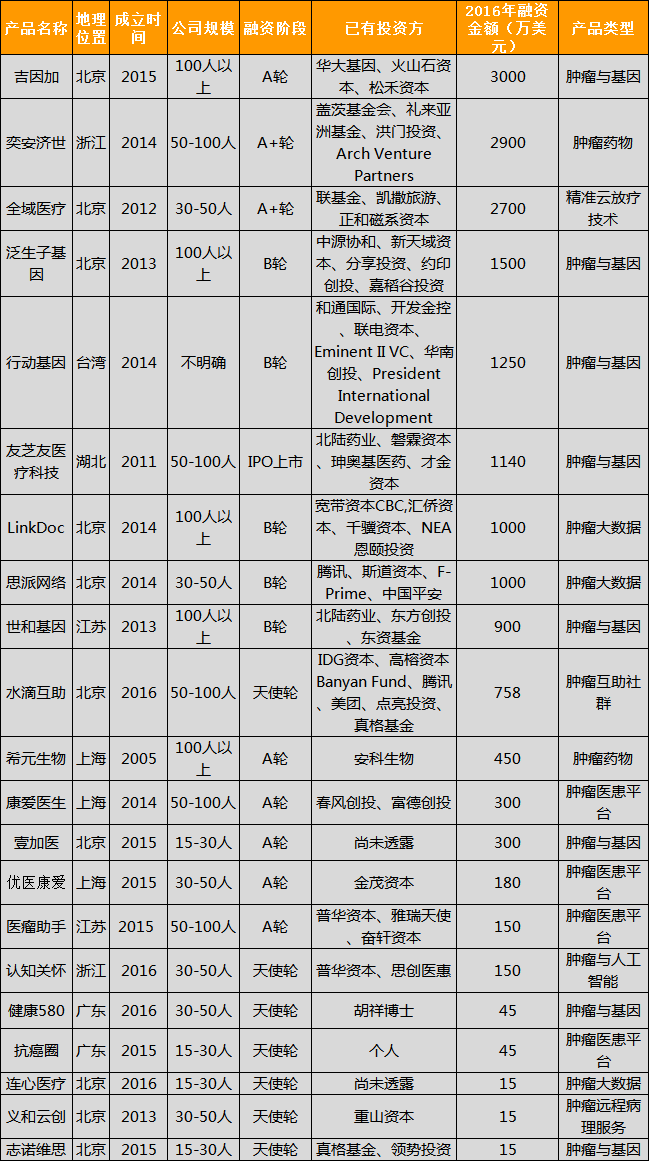
A Review of Oncology Companies That Raised Funding in 2016
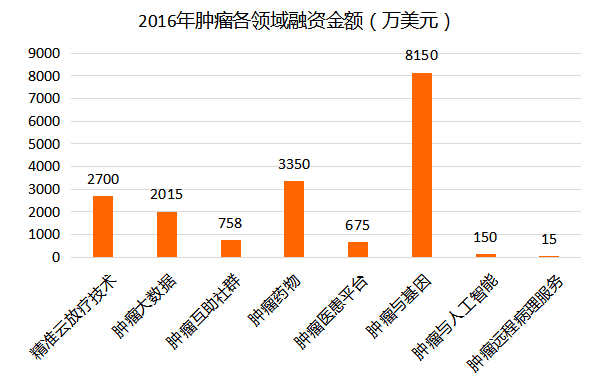
Data source: VCBeat, Eggshell Research Institute database
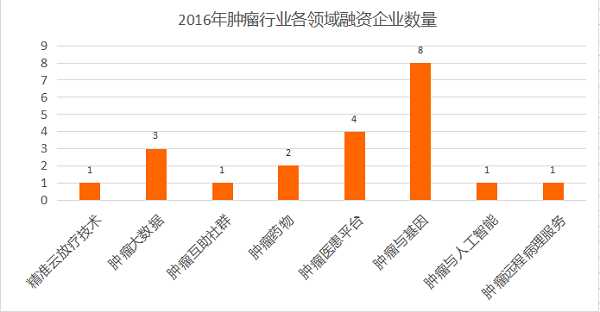
Data Source: VCBeat, VCBeat Database
Statistical data shows that in 2016, a total of 21 oncology startups secured financing, with the total amount reaching $178.13 million. Among them, eight companies specializing in cancer genetic testing raised a combined $81.5 million, accounting for 45% of the total financing, with an average of $10 million per company. Two oncology drug R&D companies received funding, totaling $33.5 million, with an average of $16.75 million per company.
The funding amounts for oncology patient–physician platforms and remote oncology pathology services are relatively low. This suggests that companies in the oncology sector with high technological barriers tend to secure larger financing rounds. Furthermore, the author believes that oncology big data serves as the foundation for R&D in other areas of oncology; therefore, companies specializing in oncology big data are poised for long-term growth.
Oncology and Genetic Testing
Genetic testing involves extracting and sequencing genetic material from human blood, body fluids, or cells. The detection of cancer-related genes can indicate the potential risk of developing the disease. Personalized genetic testing enables the establishment of an “individual genetic database” for each patient, providing critical therapeutic targets, predicting treatment efficacy, assessing the risk of drug-related complications, and estimating the likelihood of disease recurrence.
As shown in the figure above, among the 21 companies in the oncology sector that secured financing in 2016, eight were gene-related, accounting for 38% of all funded enterprises and 45% of the total financing amount.
On June 8, 2015, the National Development and Reform Commission (NDRC) issued the "Notice of the National Development and Reform Commission on Implementing Major Engineering Packages for Emerging Industries," which stated that priority should be given to developing new medical technologies such as genetic testing. The notice also outlined plans to establish 30 demonstration centers for the application of genetic testing technology within three years, so as to accelerate the clinical adoption of genetic testing and promote the domestic production of genetic testing instruments and reagents.
Key Highlights of 2016Implement the construction of the second batch of demonstration centers for the application and promotion of genetic testing technologies. Continue to select and launch the construction of approximately 10 provincial and municipal demonstration centers, and rapidly advance the application of genetic testing technologies in large-scale screening for genetic diseases. Relying on demonstration centers for genetic testing technology applications that are qualified in personalized medical testing, develop new disease-related genetic testing technologies, and explore the industrial application of genetic testing technologies in emerging fields such as personal genomic testing and “gene ID cards.”
Key Focus Areas in 2017Continue to implement the construction of the third batch of demonstration centers for the application and promotion of gene testing technologies, and promote the application of achievements in independently developed gene testing instruments and reagents. Guide leading enterprises in gene testing instruments, equipment, and reagents to advance the industrial application of gene testing instruments, equipment, and reagents with independent intellectual property rights in China through upstream-downstream linkage and collaborative efforts, thereby enhancing the competitiveness of China’s gene testing industry.
These policy-driven openings and incentives have spurred the rapid development of genetic testing. New enterprises have emerged in large numbers. Industry giants such as BGI, Berry Genomics, and Daan Gene lead the field, while numerous pharmaceutical companies are vying to enter the market, and small and medium-sized enterprises are closely watching for opportunities to capture a share. According to VCBeat (WeChat ID: vcbeat)There are 135 startups in China involved in genetic testing, of which 64 are related to oncology, accounting for approximately 50%., primarily distributed across provinces and municipalities including Beijing, Shanghai, Guangzhou, Shenzhen, Hangzhou, and Wuhan.
Currently, the major medical product categories offered by domestic gene sequencing companies include assisted reproduction, prenatal testing for pregnant women, newborn screening, monogenic disease testing, personalized cancer therapy, hereditary cancer risk prediction, and early cancer screening.
These broad product categories also encompass several subcategories. For instance, personalized oncology therapy can be divided into individualized medication testing and drug resistance testing, chemotherapy guidance testing, gene polymorphism testing, and gene mutation testing. Currently available genetic tests for personalized oncology therapy include both tumor-specific assays and comprehensive panels covering all cancer-related genes, representing relatively effective and mature products.
Hereditary TumorsThere are more than a dozen types of cancer, including colorectal cancer, lung cancer, breast cancer, gastric cancer, esophageal cancer, liver cancer, endometrial cancer, nasopharyngeal carcinoma, and retinoblastoma. Individuals with a family history of these tumors may undergo genetic testing to enable early detection and timely treatment. A typical example is Angelina Jolie, whose mother battled cancer for ten years. After genetic testing revealed her high risk for breast cancer, she underwent preventive mastectomy and has since recovered her health.
Oncology Big Data
Among the 21 companies in the oncology sector that secured financing in 2016, three were gene-related, accounting for 14% of all funded enterprises and 11.3% of the total financing amount. According to the Global Healthcare Provider Analysis Report released by McKinsey, big data analytics in healthcare will save the global economy $190 billion by 2020.
Oncology big data refers to a category of companies that collect treatment data from cancer patients, and through data mining, analysis, and structured processing, help pharmaceutical companies or physicians identify patterns in disease treatment and discover new therapeutic approaches, ultimately improving treatment success rates for cancer patients.
Data sources for big data companies generally fall into two categories: manual entry or integration with Hospital Information Systems (HIS) for data ingestion. The analytical insights derived from oncology big data serve multiple stages, including drug research and development, clinical trials, pharmacoeconomics, and academic promotion, thereby enabling pharmaceutical companies to allocate resources more precisely and accelerate the development and market launch of new drugs.
Big data in oncology can also enhance the work efficiency of oncologists. Customized data structure modules are established for each type of cancer, enabling each department to record tumor case data according to its specific needs and to query and share relevant data at any time during research, clinical practice, and case discussions.
Oncology Pharmaceuticals
Among the 21 companies in the oncology sector that secured financing in 2016, two were involved in oncology drugs, accounting for 10% of the total number of funded enterprises and 18.8% of the total financing amount.
A key trend in the future oncology market is the increasing share of targeted therapies. Due to their superior efficacy and lower side effects, targeted anti-tumor drugs have become the mainstay of cancer treatment in Europe and the United States, while chemotherapy agents are being gradually replaced and phased out. Consequently, the development of targeted therapies has emerged as a global trend in oncology drug research and development.
In China, as issues related to medical insurance coverage are resolved, technologies become more mature, and competition drives down prices, the proportion of targeted drugs is expected to increase further. Immunotherapy and molecular targeted drugs are key areas of research and development. Currently, no immunotherapy drugs have been approved in China; however, several domestic innovative companies are developing CAR-T and PD-1/PD-L1 inhibitors, with some candidates already entering clinical trials.
Oncology Patient-Physician Service Platform
In China, the incidence rates of many cancers are close to the global average, yet the mortality rates remain significantly higher. This disparity stems from two primary factors: At the physician level, nearly all clinical departments are involved in cancer treatment; however, the academic standards and standardized care for oncology in China are still far from adequate and require urgent improvement. On the other hand, patients are exposed to a vast amount of fragmented and often conflicting information, lacking the ability to discern its validity, which frequently leads them astray.
This statistical analysis includes only doctor-patient service platforms specializing in oncology; generalist platforms such as Chunyu Yisheng, WeDoctor, and DXY are excluded. Among the 21 companies that secured financing in the oncology sector in 2016, four were oncology-focused doctor-patient service platforms, accounting for 19% of the total number of funded enterprises but only 3.7% of the total financing amount.
This phenomenon is primarily due to the smaller user base of specialty care service platforms compared to primary care service platforms. Additionally, the technical barriers for doctor-patient service platforms are relatively low, making it easier to enter the oncology field through this approach than through other avenues. Currently, oncology-focused doctor-patient service platforms fall into the following categories:
1. Doctor-Patient Platforms—These primarily offer functions such as online consultations, appointment scheduling, and post-consultation follow-ups. Examples include Yijiayi, which focuses on pre- and post-consultation services, and Dongdong Oncology, a consultation platform specializing in second medical opinions.
2. Oncology Consultation Platform—Providing authoritative information on cancer prevention and treatment for physicians and patients. Taking the Liangyihui Oncology News mobile platform as an example, it addresses this serious medical and social issue by building China’s most authoritative and scientific platform for cancer prevention and treatment information. It delivers curated, cutting-edge scientific information to oncologists and patients, reducing learning costs for physicians and healthcare costs for patients, while promoting correct concepts of cancer prevention and treatment.
The two-year survival rate for tumor APP is 11%.
On December 12, 2014, VCBeat and Eggshell Research Institute published a review report titled “Detailed Analysis of Oncology Apps in Internet Healthcare,” which surveyed 25 oncology apps. Two years later, VCBeat conducted another investigation into these apps and found that only three remain operational: Tumor Time (now renamed Medical Time), Oncologist, and Anti-Cancer Guardian. The survival rate is merely 11% (apps with no updates within six months are considered no longer in operation).
This phenomenon is partly due to the fact that the development of mobile apps inherently follows a “survival of the fittest” pattern. Behind every app is a company, and its operations require funding. Many oncology-focused apps have exhausted their initial capital; with light-touch online consultations as their primary revenue source, they are unable to sustain their business operations and are consequently forced to cease services.
Surviving apps each have their own revenue streams; for instance, Anti-Cancer Guardian and Tumor Time operate their own e-commerce platforms. Another app, Oncologist, is a paid application that charges RMB 30 per download. It enhances user engagement through gamification, allowing users to assume the role of physicians caring for virtual patients.
Oncology patients are reluctant to rely on online diagnoses and surgical treatment plans provided by physicians. Consequently, oncology-focused apps are inherently limited in their ability to penetrate the core medical domains of diagnosis and surgical intervention. However, by enabling physicians to better manage patient care and facilitating online follow-up consultations, these platforms can offer a suite of post-treatment services—including electronic health records, online pharmaceutical marketplaces, and medication monitoring. This approach not only enhances user retention but also creates revenue opportunities within the pharmaceutical segment.
As mentioned above, Liangyihui provides free comprehensive services to doctors and patients. Its primary business model involves collaborations with third parties and pharmaceutical companies, enabling it to achieve break-even within less than a year.
Oncology and Cross-Border Healthcare
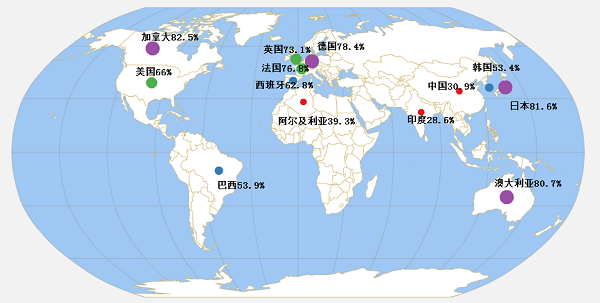
Five-Year Cancer Survival Rates by Country
Due to the delayed approval of new drugs in China, relatively low overall treatment standards, and gaps in medical services, seeking medical care abroad has become a new option for some high-end oncology patients. Currently, many affluent cancer patients in China are turning to intermediaries to seek more personalized treatment regimens and access novel therapies not yet available in the domestic market by traveling to countries such as the United States and Japan.
In its article “Cross-Border Healthcare: Entering a Phase of Platform-Based Development, with Capital Not Yet Fully Flowing In | 2016 Annual Review,” VCBeat listed 49 cross-border healthcare companies, whose service offerings fall into three categories: critical care referrals, assisted reproduction, and medical aesthetics. Among them,The proportion of companies involved in oncology treatment services is 73%.
Evaluation and treatment are the two phases of seeking medical care abroad. During the evaluation phase, patients travel overseas to consult with physicians, undergo diagnostic tests, and participate in multidisciplinary consultations. Based on these assessments, physicians provide a definitive diagnosis and treatment plan. Patients may then choose, according to their needs, to return to their home country for treatment or receive care abroad.
China’s five-year cancer survival rate stands at only 30.9%, significantly lower than that in developed regions worldwide. The coverage of early cancer screening and diagnosis, as well as the proportion of patients undergoing surgical treatment, remains relatively low. Therefore, there is substantial room for improvement in cancer prevention and control efforts in China.
From a policy perspective, state support for the healthcare sector is unquestionable; however, accelerating the approval processes for drugs and medical devices would further benefit enterprise development.
From a technical perspective, in recent years, many Chinese scientists have chosen to return to China to start businesses. After two years of research and development, they have begun to catch up with Europe and the United States in high-tech fields such as genetic testing, artificial intelligence, and targeted drug development. However, there is still a gap between the number and scale of these high-tech enterprises in China and those in developed countries. In a few years, when drugs are developed and marketed, artificial intelligence becomes more mature, and genetic testing becomes more affordable, a large number of listed companies will emerge.
From a market perspective, market education for new drugs and new technologies is not as widespread as in developed countries. Taking genetic testing for cancer prevention as an example, the cost ranges from 1,000 to 5,000 yuan. Although China’s middle class now exceeds 100 million people and can afford this expense, their awareness and adoption rate of genetic testing for cancer prevention remain far from sufficient, let alone among other population groups.
If the cost of genetic testing were to decrease further and such tests were covered by national health insurance, the cancer population in China would be significantly reduced, thereby alleviating the burden on large hospitals.
In terms of business model, physician groups have achieved rapid development this year, with their service and technical advantages gaining public recognition. In the future, specialized physician groups will become the preferred healthcare choice for many patients.
Copyright Notice
This report is produced by VCBeat. All text, images, and tables contained herein are protected by applicable trademark and copyright laws. Some of the text and data have been collected from publicly available sources, with ownership retained by the original authors. No organization or individual may reproduce or distribute this report in any form without prior written permission from our company. Any unauthorized commercial use of this report shall constitute a violation of the Copyright Law of the People's Republic of China, other relevant laws and regulations, and applicable international conventions.
Disclaimer
This research report is based on information that VCBeat considers reliable and currently publicly available. VCBeat strives to, but does not guarantee, the accuracy and completeness of such information. Due to limitations in research methodologies, sample sizes, and the scope of data collection, the data presented herein only reflect the basic conditions of the surveyed population during the survey period and serve solely for the current research purposes, providing a basic reference for the market and clients. Furthermore, VCBeat does not guarantee that the opinions or statements contained in this report will remain unchanged. At different times, VCBeat may issue reports with data, opinions, and projections that are inconsistent with those presented in this report.
VCBeat does not consider recipients of this report as clients merely by virtue of their receipt thereof. This report is distributed only where permitted by applicable laws and regulations, solely for informational purposes, and shall not constitute any form of advertising. Under no circumstances shall the information contained herein or the opinions expressed herein be construed as investment advice to any person. Where permitted by law, VCBeat and its affiliates may hold equity interests in the companies mentioned in this report and may provide or seek to provide financing, financial advisory, or other related services to such companies.
Note: I am Wang Xiaohang, an author at VCBeat. If you are an investor interested in the oncology sector, or an entrepreneur in the oncology industry seeking media coverage, please feel free to connect with me. We also welcome any leads on relevant companies. WeChat: wxh-666-666; Email:wang,xx@vcbeat.top