

HEMAY Healthcare Acquired by Taikang Insurance for HK$1.2 Billion, Re-files IPO Prospectus
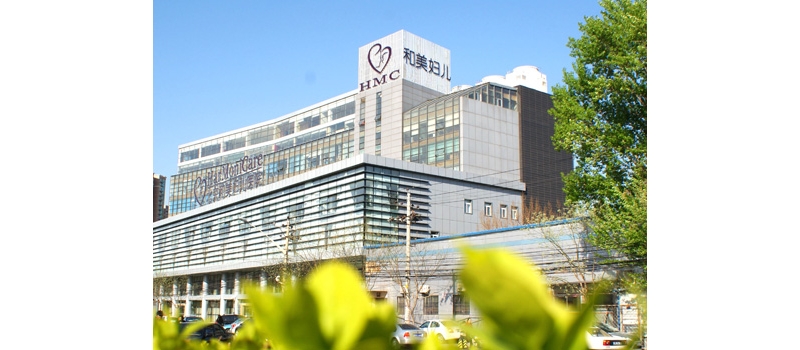
Taikang Insurance Welcomes New Member.
According to the official website of Harmony Medical, Taikang Insurance acquired a total of approximately 200 million shares from four shareholders of Harmony Medical at an average price of HK$6.54 per share. The breakdown is as follows: CDH transferred 79 million shares (10.37%), Honeycare transferred 62 million shares (8.23%), Harmony Care transferred 13 million shares (1.77%), and Mighty Sky transferred 46 million shares (6.07%). As early-stage financial investors, CDH and Mighty Sky divested their entire holdings to Taikang Insurance to achieve exit, while Honeycare and Harmony Care will continue to hold 62 million shares (8.15%) and 46 million shares (6.10%) in Harmony Medical, respectively.
As China’s first publicly listed specialist hospital group focused on women’s and children’s healthcare, Hemei Medical specializes in medical investment, hospital management, and healthcare brand operations. Committed to delivering high-quality gynecological, obstetric, and pediatric healthcare services to Chinese families, it currently operates 11 hospitals and one pharmaceutical and medical device supply chain company in core cities including Beijing, Shenzhen, Guangzhou, and Chongqing.
Taikang Insurance Group is committed to providing comprehensive health and wealth management services to the growing middle-class population and their families. The company’s core business spans three major sectors: insurance, asset management, and healthcare and eldercare.
In recent years, Taikang has made significant investments in the physical healthcare sector. In 2015, it invested in Nanjing Xianlin Drum Tower Hospital; in 2016, it initiated the construction of Taikang Tongji International Hospital; and it took equity stakes in leading domestic and international healthcare companies such as BGI Genomics, Beijing Children’s Hospital (Kyoto Children’s Hospital), and Parkway Pantai. Furthermore, Taikang has established strong partnerships with numerous prestigious medical schools and Grade-A tertiary hospitals, deepening collaboration between insurance and healthcare providers. These efforts are grounded in the mission to make insurance more accessible and affordable, thereby promoting greater health, longevity, and prosperity for all.
Recently, following last week’s announcement of its investment of over RMB 1 billion to acquire a stake in Parkway China and its joint investment with NorthStar Real Estate Finance in a high-quality portfolio of UK and US healthcare and senior living assets with total asset value exceeding USD 6.1 billion, Taikang Insurance Group announced that it had invested more than RMB 1.1 billion to acquire shares of Harmony Medical Healthcare Ltd., a Hong Kong-listed company (stock code: HK.01509), bringing its shareholding to 26.44% and making it the company’s second-largest shareholder. This investment was jointly executed by Taikang Asset Management and Taikang Community, both subsidiaries of Taikang Insurance Group, marking another significant move under Taikang’s grand health strategy. On the same day, senior executives from Taikang Insurance Group and Harmony Medical Healthcare held a meeting in Beijing to engage in in-depth discussions on key matters regarding their future cooperation.
Hemei Medical was founded in 2003, holds a controlling stake in China’s largest private obstetrics and gynecology hospital group, and was listed on the Hong Kong Stock Exchange in 2015. With medical investment, hospital management, and clinical medical services as its core businesses, Hemei Medical is committed to providing high-quality gynecological, obstetric, and pediatric healthcare services to Chinese families. Currently, it operates 11 branded chain obstetrics and gynecology hospitals and one pharmaceutical and medical device company in core cities including Beijing, Shenzhen, Guangzhou, and Chongqing, employing nearly 4,000 staff members, including over 800 senior medical professionals.
Chen Dongsheng, Chairman and CEO of Taikang Insurance Group, stated, “Upholding the core values of respecting, caring for, and celebrating life, Taikang is actively advancing its initiatives in comprehensive health, public welfare, and happiness. As the largest chain of obstetrics and gynecology hospitals in China, Harmony Medical is committed to providing high-quality healthcare services for women and children. With a strong foundation for business collaboration, Taikang is willing to serve as a key strategic shareholder, offering long-term support to Harmony’s development. Moving forward, Taikang Insurance Group aims to establish an all-encompassing strategic partnership with Harmony Medical, leveraging Taikang’s advantages in capital, brand reputation, customer base, and physical medical resources, to jointly deliver superior healthcare services to women and children in China.”
Lin Yuming, Chairman of the Board and President of Hemei Medical Group, stated, “Hemei Medical warmly welcomes Taikang as a key strategic shareholder. We look forward to establishing a comprehensive strategic partnership in the next phase to drive better and faster business growth. In the future, Hemei will continue to focus on the specialty field of obstetrics and gynecology, implementing a development strategy that differentiates it from public hospitals through a mid-to-high-end market positioning, thereby ensuring its continued leadership in China’s private obstetrics and gynecology sector.”
Hemei has been committed to providing high-quality gynecological, obstetric, and pediatric services to Chinese families. Strictly adhering to the internationally recognized JCI standards and integrating the 15 core hospital management requirements stipulated by the National Health and Family Planning Commission, we continuously improve medical quality and service levels to comprehensively ensure patient safety. By offering top-tier resource allocation in terms of medical technology, clinical environment, and facilities and equipment, and by establishing the Hemei Medical Expert Committee with renowned specialists, each of our hospitals employs the most outstanding medical and nursing staff. We are dedicated to delivering specialized, internationalized, and family-oriented premium healthcare services, ensuring that our clients enjoy a secure and comfortable medical experience.
Since its inception, Hemei has pioneered the hospital brand chain operation model across China. In 2008 and 2010, it secured investments from CDH Investments and CCB International Medical Fund, respectively. In 2010, Hemei established a strategic partnership with the Partners Harvard Medical International (PHMI), introducing advanced international healthcare service concepts. In 2011, Shenzhen Hemei Women’s and Children’s Hospital achieved Joint Commission International (JCI) accreditation. Beijing Hemei Women’s and Children’s Hospital is among the few medical institutions in China that implement “preoperative consultations” for all surgical procedures.
Behind these impressive achievements lies the dedication of a strong team. Lin Yuming is the Founder, Chairman of the Board, and President of Hemei Medical Holdings Co., Ltd. Committed to advancing China’s healthcare industry, Mr. Lin began his career in medical device trading in 1996. In 2003, he opened his first hospital and pioneered the chain-hospital business model under a Chinese brand. To date, he has established 11 mid-to-high-end women’s and children’s hospitals in cities including Beijing, Shenzhen, Chongqing, Wuhan, Guangzhou, Guiyang, and Fuzhou. The “Hemei” premium women’s and children’s health brand he founded has become a leading name in China’s high-end healthcare sector.
Zhao Xingli, Director and Vice President of Hemei Medical Holdings Co., Ltd., is responsible for the Group’s investment and information technology development. Mr. Zhao graduated from Taiyuan University with a major in Public Relations and completed the Executive Program in Modern Hospital Management at Tsinghua University in September 2010. Mr. Zhao joined the Company in 2003 and has previously served as General Manager of Guangzhou Women’s Hospital, Shenzhen Hemei Women’s and Children’s Hospital, and Beijing Hemei Women’s and Children’s Hospital.
Regarding the share subscription agreement with Taikang Insurance, Lin Yuming stated that Hemei Medical strategically introduced Taikang Insurance primarily due to the significant complementarity between the two parties. There is substantial potential for future collaboration in areas such as hospital project investment and M&A, participation in the restructuring of public hospitals, medical talent training, and the development and sales of insurance products related to women’s and children’s health. Furthermore, Hemei will strengthen its footprint in the women’s and children’s healthcare sector by building new high-end specialized hospitals, investing in and acquiring high-quality hospital projects, and extending its upstream and downstream industrial chain. These initiatives aim to accelerate growth and maintain the company’s leadership position in the industry.
As early as December 10 last year, Hemei Medical Holdings Limited announced that it had entered into a strategic cooperation framework agreement with Phayathai Hospital Group (“PHG”), Shenzhen Hanhai Gene Biotechnology Co., Ltd. (“Shenzhen Hanhai”), and Health TV Limited (Hong Kong) (“Health TV”). The Group plans to promote and expand its in vitro fertilization (“IVF”) business in China in collaboration with PHG, develop and implement advanced genetic testing services with Shenzhen Hanhai, and upgrade network information technology and media services while building smart hospitals in partnership with Health TV. Additionally, it is reported that Shenzhen Hemei Women’s and Children’s Hospital, a subsidiary of Hemei Medical, had previously collaborated with Ho Wing Chiu, a renowned fertility specialist from Hong Kong known as the “Master of Childbirth,” to provide assisted reproductive services to infertile women in mainland China.
Following the execution of the Strategic Cooperation Framework Agreement, PHG will leverage its extensive experience and expertise in hospital management, particularly in in vitro fertilization (IVF), to assist the Group in promoting and expanding its IVF business in China; Shenzhen Hanhai will support the Group in developing more advanced genetic testing services; and Health Satellite TV will aid the Group in upgrading its internet information technology and media services, with the aim of establishing an effective and comprehensive smart hospital system in China.
In the view of Lin Yuming, “To further consolidate the leading position of the Group’s existing hospitals and increase the Group’s market share, as well as to expand the Group’s services and enhance the quality and efficiency of its medical services, entering into framework agreements with PHG, Shenzhen Hanhai, and Health TV will help the Group establish long-term relationships with strategic partners, provide high-quality services to pregnant women and infants, and ensure that customers receive the most appropriate care and attention. We will seize market opportunities, actively strengthen the Group’s market position, further expand our customer base, increase market share, and deliver greater returns to shareholders.”
A hospital with an initial investment of approximately RMB 100 million, primarily allocated to medical equipment and renovation, is expected to reach the break-even point within three to five years after opening. Once operations mature, the hospital will generate annual revenue of RMB 100 million, with a net profit of around RMB 10 million. In terms of cost structure, labor accounts for approximately 35%, pharmaceuticals and materials for 15%, advertising and promotion for 15%, rent for 8%, and depreciation for 5%. After deducting other miscellaneous costs and corporate income tax, the net profit margin stands at 10%.
The most challenging aspect of this business is the extremely long payback period. Investing in a single hospital typically takes 3–5 years to break even, and another 10 years to recoup the initial investment, resulting in a payback period of approximately 15 years—a timeframe that is beyond the reach of ordinary capital.
First, this is a business with long-term sustainability. Industrial investments typically struggle to accept projects with payback periods exceeding five years, as profitability beyond that timeframe is often unpredictable. In contrast, hospitals represent a business model characterized by high certainty in revenue and profitability over the long term. Similar to the Hong Kong Stock Exchange, which continues to command valuation multiples of 30–40x despite years of stagnant growth, hospitals benefit from exceptionally strong earnings sustainability.
Secondly, profitability improves continuously after the investment. New hospitals often struggle to gain patient trust, making business development challenging and requiring substantial marketing expenditures; consequently, initial profitability is poor. However, as business volume grows and reputation gradually builds, operations become easier and marketing costs decline.
In particular, when opening the second or third Tong-brand hospital in the same city, promotional expenses can remain virtually unchanged. This will drive future patient growth and improve utilization rates.
Third, obstetrics is a department where private hospitals have the potential to establish a competitive advantage over public hospitals. While obstetrics appears to be medical care, it is essentially closer to a service industry: the technical medical requirements are not particularly high, as childbirth assistance can be performed by midwives; however, there is significant variation in the quality of service provided.
Women are generally more sensitive, so it is relatively easy for private obstetrics hospitals to gain recognition from expectant mothers by leveraging their service advantages. Any woman who has visited both the obstetrics departments of public hospitals and private obstetrics hospitals will have a keen personal awareness of this difference. Even in terms of medical expertise, private hospitals often recruit many physicians from public hospitals to provide consultations. Among the nearly 500 physicians at Hemei, more than 200 are either currently employed by or retired from public hospitals. When comparing obstetrics with surgery, expectant mothers clearly perceive the distinction: the quality of service in obstetrics significantly impacts their experience, whereas surgical patients prioritize medical technical proficiency above all else, seeking out the hospitals and doctors with the highest clinical skills regardless of poor service.
With the national implementation of the universal two-child policy, the annual number of newborns is expected to continue rising, alleviating concerns about limited market size. Additionally, obstetrics departments can expand into postpartum care services and pediatrics. It is relatively easy to establish a closed-loop industry chain spanning prenatal checkups, delivery, postpartum care centers, and pediatric services, potentially offering even greater profit opportunities in the future.