

Gangling Group Launches Central China Pharmaceutical Exchange to Integrate Medical and Pharmaceutical Ecosystem
On the 29th, Gangling Group (which owns 111.com.cn, No. 1 Mall, and the online hospital 1Zhen) announced the launch of the “Central China Pharmaceutical Exchange.” This trading platform is designed to provide product display, transaction matching, and Internet-plus pharmaceutical supply chain services for upstream and downstream players in the pharmaceutical industry.
Yu Gang, Chairman of the Board and Co-Founder of Gangling Group, stated that the Central China Pharmaceutical Exchange is market-led and driven by value-added services. It does not charge enterprise users additional fees for transactions, with the aim of improving pharmaceutical trading efficiency and reducing costs in the pharmaceutical distribution process.
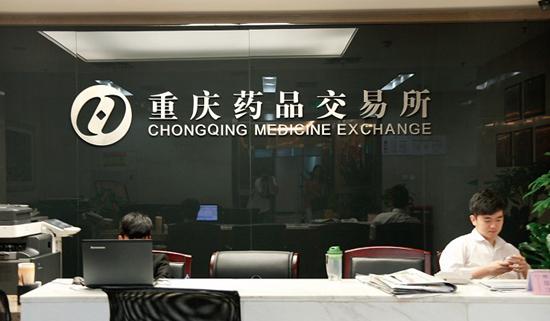
Against the backdrop of China’s healthcare reforms, including the “two-invoice system” and the “Internet Plus” pharmaceutical distribution model, many provinces and enterprises have made proactive attempts to innovate in the circulation of pharmaceuticals and medical devices. Chongqing and Guangdong have successively launched pharmaceutical exchanges, achieving notable results. Building on the experience gained from these earlier initiatives, what innovations can the pharmaceutical exchange initiated by Gangling Group bring to the table?
In fact, whether it is the Guangdong Pharmaceutical Exchange, the Chongqing Pharmaceutical Exchange, or the Central China Pharmaceutical Exchange initiated by the Gangling Group this time, the desired solution is to address the issue of inflated prices for drugs and medical devices caused by redundancies in the distribution chain. The core objectives of healthcare reform—reducing drug prices, ensuring supply, improving efficiency, and promoting fairness—pose the greatest challenge to the distribution of drugs and medical devices. The current mechanism still relies primarily on provincial-level tendering and centralized procurement, resulting in multiple distribution links and widespread practices of extortion and bribery.
Price inflation is even more prevalent within the non-public hospital system. A local agent with years of experience in pharmaceutical distribution previously stated that for pharmaceutical and medical device companies to access retail and clinic terminals, their products must first pass through provincial-level distributors, then regional master distributors, and finally reach smaller distributors, who then liaise with grassroots pharmacies and clinics to ensure market entry. Throughout this entire distribution chain, the cumulative markups are ultimately passed on to consumers. While pricing for drugs included in the National Essential Medicines List remains relatively reasonable, premiums for over-the-counter (OTC) medications and health supplements can exceed 50%.
This phenomenon is evident from the compensation structure of pharmaceutical sales representatives. Taking the aforementioned local agents as an example, more than 70% of their income derives from year-end bonuses and kickbacks provided by pharmaceutical companies. At its most extreme, manufacturers would make regular payments to incentivize agents to increase drug volumes, with final distribution prioritized based on the highest bids. A key problem arising from this practice is the oversimplification of terminal demand, which becomes entirely driven by the interests of manufacturers and intermediaries, thereby establishing an entrenched system of vested interests.
The key to dismantling this vested interest system lies in reducing distribution channels. By establishing a platform, the Pharmaceutical Exchange provides communication channels for pharmaceutical companies, hospitals, retail pharmacies, and primary healthcare institutions, enabling direct docking between supply and demand parties and the signing of electronic contracts, thereby ensuring simplified distribution processes and reduced drug markups.
The aforementioned local agent further stated that they have now transitioned to a “distribution + retail pharmacy” model, centralizing procurement through the Pharmaceutical Exchange and assuming responsibilities for drug distribution and delivery. The Pharmaceutical Exchange has also initiated and established online B2B and B2C pharmaceutical platforms, attracting equity investments from multiple local chain pharmacies and small-scale pharmaceutical wholesalers. This structure enables the platform to provide logistics and channel services for pharmaceutical distribution primarily through wholesale entities, while delivering O2O medication delivery services to end consumers (B2C) primarily through retail pharmacies.
One advantage of this model is that small pharmaceutical distribution enterprises and retail terminals have become a community of shared interests, thereby disrupting the existing interest structure. Taking the Chongqing Drug Exchange as an example, it has been in operation for five years. According to publicly released data, drug procurement prices in Chongqing Municipality are 9.22% lower than the average drug prices across all provinces and municipalities in China, with the average transaction prices of both essential and non-essential medicines decreasing by nearly 30%.
Central China Pharmaceutical Exchange obtained the Internet Drug Transaction Service Qualification Certificate (Class A License) issued by the China Food and Drug Administration in August this year. This license permits the operation of a third-party B2B trading platform for transactions among pharmaceutical manufacturers, drug wholesalers, and medical institutions, but prohibits sales to individual consumers. Approved by the Hubei Provincial People's Government, the exchange is a trading center that integrates both financial and pharmaceutical attributes. Jointly invested and established by Gangling Group and Zhuoer Group, it aims to create a transparent online trading platform for pharmaceuticals in Central China and to establish an innovative, lawful, open, and transparent price competition mechanism.
Previously, Gangling Group’s business portfolio already included the B2C pharmaceutical platform 1YaoWang, the B2B online pharmaceutical wholesale platform “1YaoCheng,” and the online hospital “1Zhen.” Yu Gang stated that the launch of the Pharmaceutical Exchange would play a significant linking role across the group’s various business units. For consumers, this would primarily translate into reduced medication costs through streamlined distribution channels, ultimately integrating with the group’s diverse business segments to create a one-stop platform for medical consultations and pharmaceutical purchases.
At the launch ceremony of the Central China Pharmaceutical Exchange, Yu Gang defined the development of China’s pharmaceutical distribution sector into three stages: the industrialization stage (1.0), the informatization stage (2.0), and the internet stage (3.0). He noted that the 1.0 era, which occurred in the late 20th century, was characterized by a mismatch between drug supply and demand, opaque information, multiple logistics links, and low efficiency. In the early 21st century, driven by national emphasis and investment, the pharmaceutical distribution sector entered the 2.0 era. The rapid advancement of information systems and logistics modernization enabled point-to-point information exchange within the pharmaceutical distribution market. However, companies still struggled to access data on product sales and supply chains; supply and demand information remained siloed across enterprises, making efficient matching difficult and regulatory oversight highly challenging.
“The advent of the Internet era has ushered us into the 3.0 era of pharmaceutical distribution. Internet-based trading platforms can flatten the distribution chain, enable real-time multi-point supply and demand interactions, and facilitate real-time integration of product transactions with associated services,” said Yu Gang. He noted that the Central China Pharmaceutical Exchange is a product of this 3.0 era in China’s pharmaceutical distribution sector. As a high-efficiency online drug trading platform, it will provide multidimensional services to both pharmaceutical manufacturers and healthcare end-users, making drug distribution more efficient, transparent, open, and secure. Ultimately, it aims to deliver tangible benefits to the general public and address the prevailing challenges of “difficult access to medical care and high medication costs” faced by the Chinese population.
Furthermore, the Huazhong Pharmaceutical Exchange platform assumes the responsibility of reviewing the market entry qualifications of trading entities. Trading entities are managed under a membership system for both buyers and sellers, complemented by a multi-tier evaluation framework. Platform members must be pharmaceutical, health supplement, and medical device manufacturers, distributors, and healthcare institutions with valid legal credentials. The quality of service and contract performance of all parties can be evaluated, and the assessment results of members are fully disclosed to facilitate industry and public oversight. Chen Ruoqi revealed that the platform’s operations have successfully passed the testing phase and are poised to immediately support Hubei Province’s medical insurance procurement tenders and local bidding processes.
A careful analysis reveals that the establishment of the Central China Pharmaceutical Exchange will occupy a pivotal position in Gangling Group’s overall business layout. While 111.com, No. 1 Mall, and 1Zhen Online Hospital correspond to its B2C pharmaceutical e-commerce, B2B pharmaceutical e-commerce, and online hospital initiatives, respectively, the Pharmaceutical Exchange provides another core component of its “medical network”—the circulation of pharmaceuticals and medical devices—thereby attracting cooperation from enterprises in the intermediate links of the healthcare supply chain.
Platformization is the core of Gangling Group’s strategic layout. Its previous business initiatives established the foundational framework for pharmaceutical e-commerce, but the entire pharmaceutical supply chain remained fragmented. From hospitals to patients, Gangling Group aims to create an all-encompassing ecosystem where every segment of the pharmaceutical value chain operates within its platform, achieving comprehensive scale and scope.
In fact, numerous domestic pharmaceutical e-commerce enterprises have adopted this strategic layout, including Ali Health and Jianke.com. The former has disclosed business segments encompassing pharmaceutical e-commerce, medical networks, health management, and product traceability, with implemented projects such as its self-operated online pharmacy, pharmaceutical wholesale, internet hospitals, and drug traceability platforms. The latter, through initiatives like introducing consultation centers and establishing the Internet Drug Authenticity Alliance, aims to attract more enterprises to collaborate on the basis of its existing business, generate synergies, and address market competition through a platform-based approach.
From the current perspective, the strategic approach of the aforementioned enterprises holds broad prospects. However, the key challenge lies in sustaining long-term competitiveness and delivering tangible benefits to dependent entities during the market integration process. Although it is premature to judge ultimate success or failure, the notion of “too big to fail” may not apply to pharmaceutical companies.