GNS Healthcare Files IPO Prospectus: Harnessing Big Data and AI as the Ultimate Healthcare Prognosticator
In an era where big data is integral to every aspect of daily life—from basic needs like food, clothing, housing, and transportation to social activities such as dating and networking—the healthcare industry has increasingly recognized a critical insight: in many areas, including diagnostic decision-making and information retrieval, big data analytics can accomplish tasks that no manual analytical method can match. Furthermore, big data can be used to “feed” artificial intelligence systems. After undergoing trillions of self-correcting training iterations on vast datasets, these machines can instantly determine the optimal treatment plan for a patient’s condition or predict how a specific drug will perform within a population.
GNS Healthcare is a company specializing in data analytics for the healthcare industry. It integrates big data, machine learning, and simulation technologies to predict disease prognosis and assist healthcare providers in making market-driven decisions. Founded in 2000 in Cambridge, Massachusetts, GNS now boasts a multidisciplinary team of experts including physicists, actuaries, geneticists, engineers, business professionals, and computer scientists.
GNS Healthcare’s model applies computational modeling to complex biological systems, grounded in the theoretical foundations of systems biology, chaos theory, statistical physics, artificial intelligence, and Bayesian statistics. This approach gave rise to GNS’s causal machine learning model, REFS (Reverse Engineering and Forward Simulation), which serves precision medicine and population health.
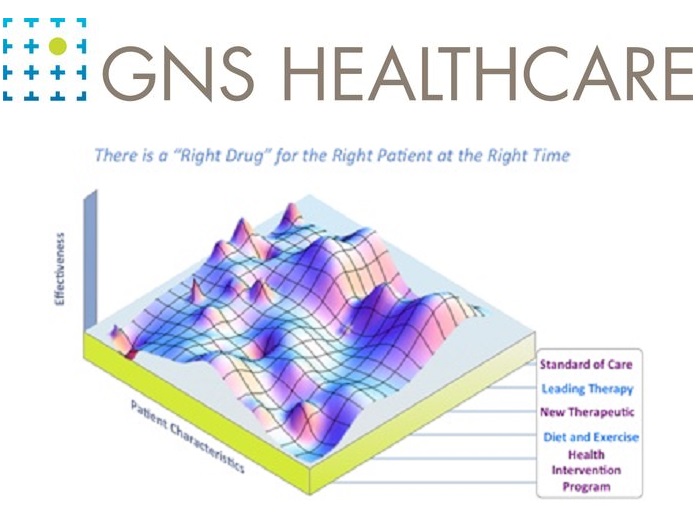
GNS Healthcare: Using Computer Modeling to Match the “Right Drug” with the “Right Patient”
The operational workflow of the REFS platform is as follows: The first step involves the extensive collection of every data “fragment” generated during patient interactions with the healthcare system—including electronic medical records, medical device data, pharmaceutical reimbursement claims, and genomic information. Every adverse drug reaction constitutes a valuable data point worthy of retention; likewise, all beneficial effects and side effects resulting from any therapeutic intervention within the process are systematically incorporated into the REFS database.
Step 2: Inputting data into the computer model. Here, REFS adopts a method called “causal machine learning,” which moves away from the conventional reliance of machine learning on data correlations and instead reverse-engineers personalized medical interventions and medication regimens from causal structures underlying data relationships. By simulating optimal treatment plans, REFS enables healthcare institutions to reduce costs and improve efficiency in disease management, medication adherence, and other areas.
Big data combined with causal machine learning enables more efficient elucidation of relationships from medical data, allowing for the prediction of “what-if” scenarios in diverse clinical settings, rather than making generalized inferences about whether a therapy yields a specific therapeutic effect as was done in the past.
Through reverse deduction, the platform can robustly trace causality; through forward simulation, it can accurately predict the outcomes generated by various variables. This capability of the REFS model offers significant guidance for medical research, pharmaceutical companies, and individual patients.
In medical research, the precision medicine insights provided by the REFS model can be combined with patient information to predict treatment outcomes, thereby eliminating many unnecessary components of clinical trials. Recently, GNS Healthcare collaborated with the Multiple Myeloma Research Foundation (MMRF) to study multiple myeloma treatments, utilizing the REFS system to analyze clinical and genomic data from nearly 800 patients collected over an eight-year period. Additionally, GNS has partnered with institutions such as Dana-Farber Cancer Institute, Icahn School of Medicine at Mount Sinai, and Harvard Medical School on numerous medical research initiatives.
In the pharmaceutical market, REFS’s population health analytics capabilities are well-suited for pharmaceutical companies to assess the prospects of their products or therapies. According to the latest news, GNS Healthcare reached an agreement with Celgene in late November, granting them access to the REFS platform to support drug discovery, clinical development, product commercialization, and market entry. This collaboration will significantly enhance Celgene’s flexibility in management and R&D, enabling comprehensive data monitoring throughout the entire product lifecycle. Similarly, the REFS model is also being applied in the pharmaceutical market through a partnership announced in October by GNS Healthcare, Novartis Pharmaceuticals, and Harvard University, which aims to analyze and predict the market performance of the drug fingolimod.
“Combining machine learning methods for tracking causal relationships with pre-launch data can allow for prospective testing of a product’s potential; this approach may well become the standard for future new drug launches. The practice of rushing products to market without a thorough understanding of market response is likely to become a thing of the past,” said Iya Khalil, Co-Founder, Chief Commercial Officer, and Executive Vice President at GNS.
For the general insured population, GNS has also launched a service that screens for diseases using personal data. In October 2013, the company announced a partnership with Aetna to pioneer a method of leveraging health insurance data for biometric screening, thereby predicting insured members’ risk of developing metabolic syndrome and early-stage diabetes.
GNS Healthcare has long employed computational models for medical analysis, but its journey into big data and artificial intelligence is also rooted in a personal story of one of its founders. This experience led Colin Hill, a co-founder of GNS, to deeply recognize the critical need for intelligent treatment selection in clinical care four years before big data technologies became widespread in the healthcare industry.
In 2012, Hill’s father was diagnosed with advanced prostate cancer. Genetic analysis revealed a mutation that rendered him intolerant to Lupron, a common hormonal therapy for prostate cancer; nevertheless, the hospital continued to administer this treatment day after day. Fortunately, his condition eventually improved. However, this experience solidified Hill’s conviction that the one-size-fits-all approach to disease treatment, which ignores individual differences, is fundamentally flawed. He is committed to leveraging GNS Healthcare’s data-driven capabilities to predict the optimal treatment regimen for each patient.
GNS has now largely realized this vision and is at the forefront of a data revolution. Dr. Atul Butte of Stanford University, one of the pioneers of the big data movement, has stated that what sets GNS Healthcare apart most is its ability to predict outcomes. By leveraging data aggregated from thousands of cases to determine which treatments are likely to yield breakthrough results, GNS directly applies the most promising therapeutic approaches to patients. This approach saves time and money while improving efficacy—in stark contrast to the low-tech, trial-and-error methods prevalent in the healthcare industry, where ineffective therapies are sequentially replaced, needlessly delaying optimal treatment.
However, GNS has found that while the collection of such data is becoming increasingly easier, genomic data—the type most capable of deeply revealing health information—remains difficult to obtain due to cost constraints. “To truly achieve precision medicine for cancer patients like my father, it is necessary to collect extensive medical information at the molecular level,” said Hill. Nevertheless, the cost of genetic testing has been trending downward year by year. If large-scale genomic information were empowered by causal models, it would undoubtedly drive a significant leap forward in the healthcare industry.
CEO Hill stated that when GNS was initially founded, they were simply relying on intuition to piece together several conceptual elements: chaos theory, data, and healthcare. However, around 2005, as the Human Genome Project drew to a close, they were suddenly inspired by the profound significance behind this monumental endeavor. Just as people once knew nothing about genes, although their work was highly theoretical at the time, they believed that sooner or later, everything would converge, transcending the boundaries of conventional wisdom.
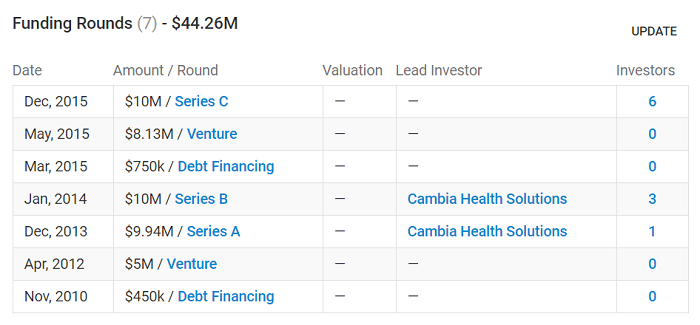
GNS Healthcare began researching medical data analysis and processing technologies more than a decade ago, but the company’s data technology has achieved comprehensive development and full integration of earlier conceptual theories only since big data and artificial intelligence became mainstream trends. The most visible change can be seen in its financing activities—GNS started raising capital precisely during the years when the big data concept first gained widespread popularity. Last December, the company completed a $10 million Series C funding round, bringing its total fundraising to over $44 million to date.