

AI Gains Traction in MedTech, While Surgical Robots Remain Pre-Commercial: 2016 Annual Review
As 2016 draws to a close, VCBeat’s flagship annual event, the “Top 100 Future Healthcare Companies,” is arriving as scheduled. While the selection process is currently in full swing, the excitement extends far beyond this. Prior to the unveiling of the Top 100 list, VCBeat has meticulously curated a series of year-end reviews focused on specific healthcare subsectors. Targeting the hot healthcare niches of 2016, these reviews systematically examine the corporate landscape, key events, and development trends within each field over the past year, delivering a rich and engaging feast of content for our readers.
In modern medicine, the driving force of scientific and technological progress on medical development is quite evident. Over a mere decade, technology has significantly transformed our medical methods, processes, and models. In its 2016 annual review, VCBeat categorized companies in the future healthcare sector into two types. The first type comprises service-driven healthcare enterprises, which are classified based on their target populations and service domains, such as maternal and child health, oncology, dentistry, diabetes management, and medical aesthetics. These sectors have adopted new applications including mobile apps, big data analytics, smart hardware, and online social networking. The second type consists of technology-driven healthcare enterprises, characterized by their application of specific emerging technologies to serve the healthcare industry. Examples include genetic testing, artificial intelligence, smart medical hardware, healthcare informatics, robotics, and VR. These technologies are applied across various medical stages, such as precision oncology treatment, chronic disease management, patient consultation and diagnosis, surgery, and post-operative rehabilitation.
Within the healthcare industry, there are numerous technology-driven subsectors. We have selected key areas—smart medical hardware, genetic testing, healthcare informatization, and medical imaging—for separate, in-depth reviews. Additionally, this article provides a consolidated analysis of emerging technological subfields currently in their nascent stages, encompassing four new technologies: artificial intelligence, robotics, VR, and 3D printing.
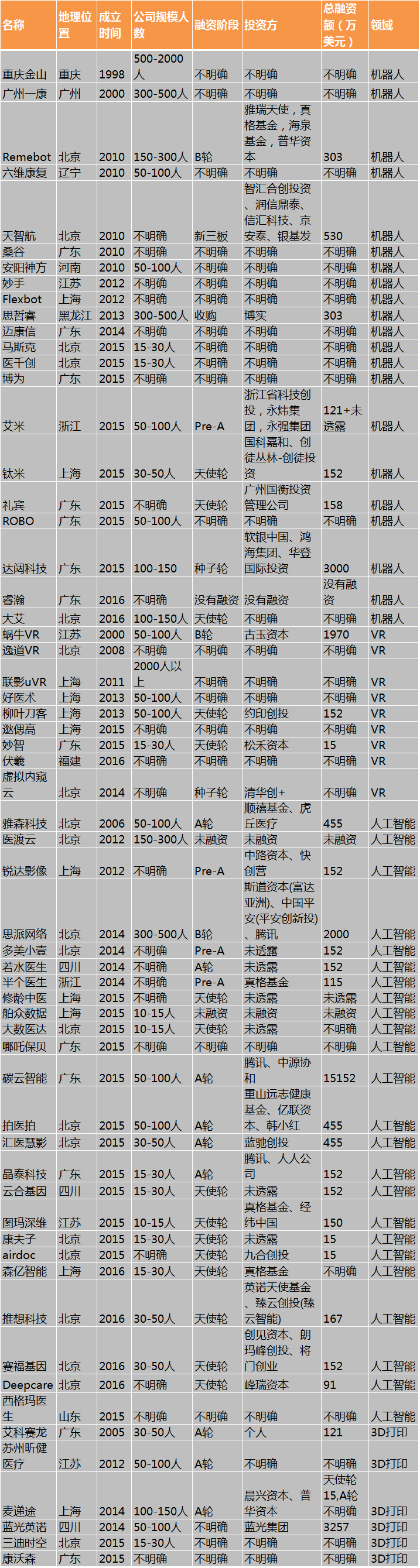
These four emerging technologies share a common characteristic: their application in China’s healthcare sector has been relatively brief, and they remain nascent. Most domestic startups in these related fields were founded between 2014 and 2016. Not only is the number of such startups small, but the proportion that has secured investment is also limited, indicating that capital has not yet fully entered these areas.
Data Source: VCBeat, VCBeat Research Institute Database

Although the concept of artificial intelligence (AI) emerged in the 1950s, its large-scale application in the medical field did not begin until 2011. Since the advent of expert systems in the 1970s, AI has been involved in the diagnosis and treatment of human diseases, albeit in an immature form. With the continuous advancements in deep learning technology since its inception in 2006, AI has gradually transitioned from a cutting-edge innovation to a widely adopted tool. Currently, the role of AI in healthcare is undeniable, having become the most significant technological force shaping the development of the medical industry.
In the healthcare sector, IBM Watson has been the most prominently featured artificial intelligence product and has achieved remarkable success. IBM initiated the development of Watson in 2006, invested $1 billion to establish the Watson Group in 2014, and founded Watson Health the following year to provide AI-driven cognitive solutions specifically tailored for the healthcare industry.
Watson’s first commercial initiative was in the healthcare sector. By partnering with Memorial Sloan Kettering Cancer Center, it gained access to extensive clinical oncology knowledge, molecular and genomic data, and historical cancer case records. After undergoing “training” at the center, it provided evidence-based treatment recommendations to clinicians. The system was subsequently deployed by Watson Health in many leading medical institutions, such as the Cleveland Clinic and MD Anderson Cancer Center, to deliver evidence-based medical decision-support systems.
Currently, there are already numerous AI-based startups compared to those in the other three technology sectors. Application scenarios related to healthcare are primarily categorized into 11 areas: virtual assistants, medical imaging, drug discovery, nutrition, biotechnology, emergency room/hospital management, health management, mental health, wearable devices, risk management, and pathology. The integration of artificial intelligence can significantly enhance the speed of disease assessment, diagnostic accuracy, and drug development progress, while reducing costs.
We have compiled statistics on China’s AI-related startups, the majority of which were founded in 2015 and 2016. Compared with their U.S. counterparts, these companies not only lag in the level of intelligence but also exhibit a significant gap in the breadth of medical specialties covered. Currently, the primary application scenarios for China’s AI healthcare companies are concentrated in three areas: virtual assistants, healthcare big data, and medical imaging.
Virtual assistant systems leverage artificial intelligence technologies—including semantic recognition, patient symptom selection, and comparison with patient databases—to provide users with medical Q&A, consultations, and self-diagnosis services. These systems also assist physicians in diagnosis, thereby improving diagnostic efficiency. However, the challenge with such simple online consultation services lies in their difficulty to generate commercial revenue.
The second category is medical big data services, which leverage artificial intelligence and medical big data mining to provide hospitals and related institutions with integration, mining, and utilization of medical big data, thereby supporting new clinical, research, and hospital management services.
The third category is medical imaging, which utilizes artificial intelligence to analyze and compare clinical data, enabling rapid image interpretation and intelligent diagnosis of medical images.
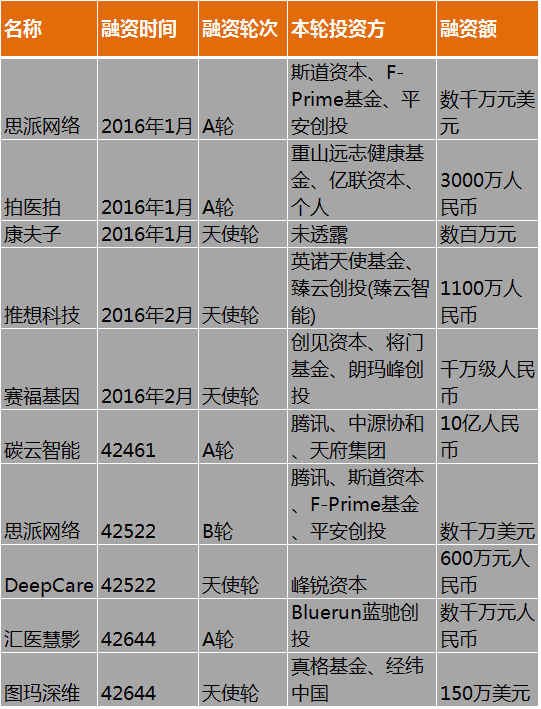
In January 2016, Si Pai Network, a big data company specializing in oncology, completed its Series A financing round, raising tens of millions of US dollars from S Capital, F-Prime Capital, and Ping An Venture Capital. By leveraging deep mining of medical big data and integrating machine learning and artificial intelligence, Si Pai Network aims to establish an intelligent decision support system for cancer diagnosis and treatment with Chinese characteristics.
In January 2016, Paiyipai announced that it had secured RMB 30 million in Series A financing, with investors including the Chongshan Yuanzhi Health Fund, Yilian Capital, and individual investors. Concurrently, Paiyipai officially shifted its product development strategy from a consumer-facing (C-end) model to business-to-business (B-end) partnerships. By leveraging a B2B approach to integrate medical information across various stages, the company aims to address the pain point of inefficient information flow among patients, physicians, hospitals, insurance institutions, and other healthcare applications.
In January 2016, Kangfuzi secured several million yuan in angel funding. Kangfuzi is dedicated to developing automated extraction technologies for unstructured information, rapidly extracting data from medical textbooks, research papers, electronic health records, and healthcare news to construct knowledge graphs that assist physicians in clinical decision-making.
In February 2016, Infervision, a company that provides AI-assisted diagnostic solutions for physicians using image recognition algorithm models, secured RMB 11 million in angel funding. The investors in this round were Inno Angel Fund and Zhenyun Venture Capital (Zhenyun Intelligence). Following the investment, Infervision will continue to collaborate with medical institutions to improve diagnostic accuracy and promote technological breakthroughs and practical applications of artificial intelligence in the healthcare sector.
In February 2016, SafeGene completed an angel investment round worth tens of millions of yuan, securing funding from three institutions: Chuangjian Capital, Jiangmen Fund, and Longma Peak Ventures. SafeGene has built an intelligent gene data analysis platform to achieve automated, high-throughput, and personalized gene interpretation, thereby improving the accuracy and speed of gene data analysis.
In April 2016, iCarbonX secured RMB 1 billion in Series A financing. iCarbonX aims to build a big health data platform that leverages artificial intelligence technologies to process these data, thereby assisting individuals in health management. The lead investors included internet giant Tencent, Zhongyuan Union Cell & Gene Engineering Corp., a leader in the stem cell industry, and Tianfu Group. The funds from this round will be primarily used for data generation and collection, building data analytics capabilities, and developing AI models for data analysis.
In June 2016, six months later, Si Pai Network completed another round of Series B financing amounting to tens of millions of US dollars. This round was led by Tencent, with existing Series A investors—FSD Capital, F-Prime Capital Partners, and Ping An Ventures—also participating in the follow-on investment. Building upon its previously launched multi-center research-oriented database, Si Pai Network upgraded to a comprehensive management database encompassing all personnel, all data, and entire workflows, thereby facilitating the optimization and development of core medical, educational, and research activities in the field of oncology from the most fundamental levels.
In June 2016, DeepCare secured RMB 6 million in angel investment from Fengrui Capital. DeepCare is a technology company that applies artificial intelligence and deep learning technologies to the recognition and screening of medical images, focusing on the research and development of technologies for the detection, recognition, screening, and analysis of medical images.
In October 2016, Huiyi Huiying completed a Series A financing round worth tens of millions of yuan, with Bluerun Ventures as the investor. Established in April 2015, Huiyi Huiying initially entered the market through medical imaging, providing cloud-based imaging systems, image recognition, and intelligent diagnostic services. This round of financing will further strengthen Huiyi Huiying’s exploration in deep learning for image feature analysis, enabling efficient image interpretation and precision medicine.
In October 2016, TomoDeep completed a $1.5 million angel financing round, jointly invested by ZhenFund and Matrix Partners China. TomoDeep has integrated deep learning into computer-aided diagnosis (CAD) systems, which can be applied to the analysis and diagnosis of various medical images, pathological image analysis under microscopy, and the identification of sequence-specific DNA-binding proteins to assist in genomic diagnosis.
Data Source: VCBeat, VCBeat Database
Currently, there are not many startups in the field of artificial intelligence (AI). However, ten financing events involving AI companies have been recorded this year alone, indicating that the AI sector has attracted the attention of the capital market. In particular, iCarbonX, which was founded only six months ago, secured RMB 1 billion in Series A financing, igniting market enthusiasm for AI. Although AI can be applied across a wide range of areas within the healthcare industry, our statistics show that the vast majority of domestic enterprises are concentrated in three sectors: health assistants, medical imaging, and healthcare big data. It is predictable that 2017 will witness an explosion in the number of AI enterprises, with healthcare companies entering a period of rapid AI adoption and expanding into more specialized subfields.
The number of healthcare startups in the field of artificial intelligence (AI) has been increasing in recent years, with their applications expanding into broader domains. However, most AI startups are founded based on the founders’ technical expertise, leveraging their accumulated capabilities in data processing, algorithm development, and model optimization. Despite these advantages, such companies often face two other critical challenges: since AI algorithms serve as a bridge between data and application scenarios, one issue is that the data does not belong to them, and the other is that the application scenarios are not under their control. Lack of proprietary data means the company lacks a sustainable foundation, making it impossible to achieve “deep learning” from larger datasets. Meanwhile, not owning the application scenarios makes business development particularly difficult. The vast majority of AI companies encounter similar obstacles; thus, acquiring sufficient large-scale medical data and effectively penetrating the market have become key hurdles for entrepreneurship.
2016 marked the dawn of artificial intelligence and a pivotal moment in the rapid development of the internet. At this juncture, to emerge as an industry leader, AI startups must possess both commercially viable application scenarios and the ability to establish robust technological barriers. Artificial intelligence is merely a method for data processing and recognition, requiring the integration of data sources with application endpoints. Without the capability to secure adequate data reserves and accumulate data, startups cannot produce meaningful results with algorithms alone—much like trying to cook without rice. Only when equipped with both data and algorithms can one meaningfully discuss application scenarios. The acquisition of medical big data involves highly sensitive issues related to patient privacy and is inevitably subject to strict regulatory oversight.
In June 2016, the General Office of the State Council issued the Guiding Opinions on Promoting and Regulating the Application and Development of Health and Medical Big Data, clearly stating that health and medical big data are important foundational strategic resources for the country. It is necessary to regulate and promote the integration, sharing, open access, and application of health and medical big data. In terms of regulation and security, it is essential to establish and improve laws and regulations governing the opening and protection of health and medical big data, strengthen the development of standards and security systems, reinforce responsibilities for security management, properly balance the relationship between application development and security assurance, enhance technical support capabilities for security, and effectively protect personal privacy and information security.
In terms of openness, the state encourages various medical and health institutions to promote the collection and storage of big data in health and healthcare, strengthen application support and operational and maintenance technical safeguards, and open up channels for data resource sharing. Efforts are being made to explore and advance the standardized integration of data resources generated by wearable devices, smart health electronic products, and mobile health and medical applications into population health information platforms. Meanwhile, non-governmental entities are actively encouraged to strengthen research and development on key technologies such as massive data storage and cleaning, analysis and mining, and security and privacy protection in health and healthcare, foster innovative development of health and medical services, and accelerate the establishment of an industrial chain for big data in health and healthcare.
Given that robots possess unparalleled advantages over humans in terms of precision, stability, strength, and endurance, their application prospects in the medical field, which demands extremely high levels of professionalism, are highly promising. Medical robots can be categorized into four types: rehabilitation robots, surgical robots, bionic prosthetics, and behavioral assistance robots. In terms of market structure, surgical robots hold the largest market share, accounting for more than 60% of global medical robot sales. On the other hand, rehabilitation robots have emerged as the fastest-growing subsector.
Currently, companies in Europe and the United States hold a significant market share and dominate the global medical robotics industry, with the majority of the world’s top 10 medical robotics firms being American or European. The U.S. medical robotics sector leads globally, with more than 30 companies operating in this space. These medical technology companies boast extensive resource networks, comprehensive service offerings, and outstanding R&D teams, enabling them to provide hospitals and other healthcare institutions with more scientific, precise, and safe surgical assistance services. Although China has a considerable number of medical robotics enterprises, there remains a substantial gap between their current development status and that of their foreign counterparts.
In 2014, the total size of China’s domestic medical device market reached nearly RMB 255.6 billion; however, imported medical devices accounted for 40% of the overall market. Import brands dominated the mid-to-high-end medical robotics segment, capturing more than 70% of the market share. Most domestically produced medical robots, particularly surgical robots, remained in the R&D or clinical trial stages, still some distance away from commercialization and widespread adoption.
Compared with other technology-driven healthcare enterprises, companies in China’s medical robotics industry exhibit significant differences in their corporate characteristics. The first distinction is the scarcity of startups and the prevalence of publicly listed companies. Due to the long research and development (R&D) and production cycles, as well as the high costs associated with robotics, startups often struggle to sustain operations. This is particularly true for the R&D and manufacturing of expensive industrial and medical robots, which has led to greater participation by large-scale enterprises. The second distinction is the relatively low number of financing events across the industry; most private enterprises have substantial capital investments and thus lack immediate financing needs. The third distinction is the extensive involvement of universities. Given the high technical complexity of robotics R&D, many universities possess advanced academic R&D capabilities and talent cultivation mechanisms in this field. For instance, Tsinghua University, Harbin Institute of Technology, Tianjin University, and Beihang University are leaders in domestic medical robotics R&D, with their products essentially representing the highest level of medical robotics in China.
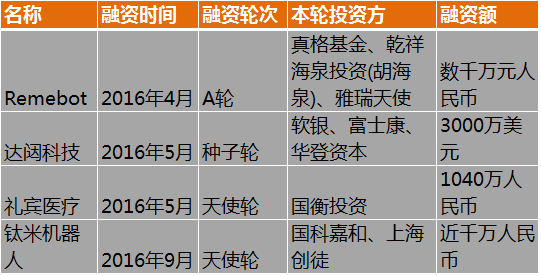
In April 2016, Beijing Baihui Weikang Technology Co., Ltd. secured tens of millions of RMB in Series A financing, with investors including ZhenFund, Qianxiang Haiquan Investment (Hu Haiquan), and Yarui Angels. Leveraging 18 years of technological accumulation, the company launched its next-generation Remebot neurosurgical surgical robot in 2015.
In May 2016, CloudMinds secured $30 million in seed funding from four investors, including SoftBank, Foxconn, and Walden International. By the end of this year, CloudMinds will roll out its interim product—a “secure” mobile information solution—and unveil the world’s first practical AI-powered guide robot for the visually impaired at the 3rd World Internet Conference.
In May 2016, Concierge Medical Technology Company, dedicated to developing robot-assisted home care solutions, secured RMB 10.4 million in angel funding from Guangzhou Guoheng Investment Management Co., Ltd. The company is committed to providing users with robot-assisted home care solutions.
In September 2016, Shanghai Timi Robot Technology Co., Ltd. completed its angel financing round, raising nearly RMB 10 million. The investment was jointly provided by Guoke Jiahe and Shanghai Chuangtu. This round of funding will be primarily used for clinical trials of specialized medical service robots.
Data source: VCBeat, VCBeat database
With the rise of the concept of intelligent manufacturing, the Chinese government has continuously introduced relevant policies to encourage and support the cultivation of the medical robot market. In July 2015, the Legislative Affairs Office of the State Council released the "Regulations on Disability Prevention and Rehabilitation for Persons with Disabilities (Draft)," which covers three aspects: disability prevention, rehabilitation for persons with disabilities, and safeguard measures. The draft explicitly stipulates that governments at all levels shall include persons with disabilities within the coverage of basic medical insurance to pay for their medical expenses; those whose costs cannot be covered by basic medical insurance shall receive medical assistance in accordance with regulations. Special groups of children with disabilities aged 0 to 6, such as those with visual or hearing impairments, will receive free services including surgery, provision of assistive devices, and rehabilitation training. The state will raise rehabilitation funds for persons with disabilities through multiple channels, encouraging and guiding social forces to help persons with disabilities access rehabilitation services through charitable donations and other means.
In April 2016, the Ministry of Industry and Information Technology (MIIT) and two other ministries jointly issued the "13th Five-Year Development Plan for the Robotics Industry," providing top-level design for the development of the service robotics industry. In the field of medical robotics, the plan proposed launching pilot demonstrations of surgical robots in intelligent surgical centers at Grade A tertiary hospitals, and vigorously promoting the application and dissemination of service robots in healthcare, elderly and disability assistance, and rehabilitation.
In October 2016, the State Council issued the "Several Opinions on Accelerating the Development of the Rehabilitation Assistive Devices Industry." The opinions call for the establishment of a number of demonstration industrial parks and production bases for rehabilitation assistive devices, the implementation of intelligent manufacturing projects in the industry, the promotion of "medical-engineering integration," and support for the integrated application of new technologies such as artificial intelligence, brain-computer interfaces, and virtual reality in rehabilitation assistive products. By leveraging government-guided funds for scientific and technological achievement transformation, venture capital guidance funds for emerging industries, and SME development funds to attract coordinated efforts from social capital, the initiative supports innovation in the rehabilitation assistive devices industry that aligns with fund investment directions through market-oriented mechanisms. The opinions propose that by 2020, independent innovation capabilities in the rehabilitation assistive devices industry would be significantly enhanced, with the industry scale exceeding RMB 700 billion.
Although surgical robots have gained recognition in the international market, few domestic enterprises have entered this field, and Chinese-made products have been slow to achieve clinical application. This is due to the long development cycles, high R&D costs, complex certification processes, and certain safety risks associated with the clinical use of surgical robots. China represents the world’s largest potential market for assistive devices for disability rehabilitation. The emergence of intelligent rehabilitation robots—such as smart prosthetics, intelligent rehabilitation training equipment, and smart nursing devices—not only brings greater benefits to individuals with disabilities in terms of rehabilitation, daily living, and learning, but also demonstrates the promising prospects of intelligent technologies in the application of assistive devices, thereby creating new opportunities for innovation in this sector.
An analysis of medical robotics companies in both the primary and secondary markets reveals that the development of rehabilitation robots is currently the mainstream R&D focus for domestic medical robotics enterprises. Among publicly listed companies in the secondary market, Jinming Precision Machinery, Siasun Robot & Automation, Truking Technology, Dima Shares, and Midea Group are all targeting rehabilitation robots or medical service robots. Only Boshi Shares (the industrialization base of the Harbin Institute of Technology Robotics Institute) is engaged in the development of surgical robots.
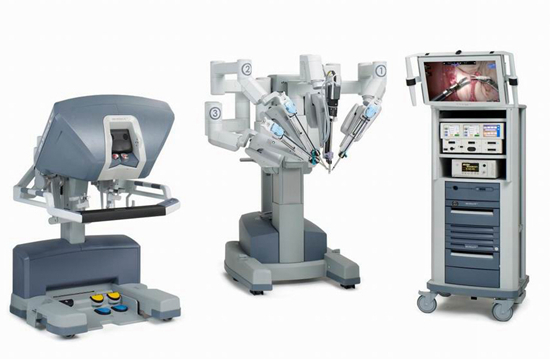
In the primary market, since many founders and researchers of enterprises originate from university research institutions and have been heavily involved in the R&D of surgical robots with hospitals, their post-startup product portfolios tend to feature a higher proportion of surgical robots. For instance, Beijing Baihui Weikang (with a background from Beihang University) focuses on the Remebot neurosurgical robotic system; Harbin Sizherui (with a background from Harbin Institute of Technology) has developed minimally invasive surgical robotic systems; Tianjin MicroHand Robot (with a background from Tianjin University) has developed the MicroHand S minimally invasive surgical robot; and ROBO Medical Robot (with a background from Harbin Institute of Technology) has developed single-port surgical robots. In addition, Chongqing Jinshan and Beijing Tinavi have also launched surgical robots. However, as previously mentioned, most of these companies have remained in the R&D or clinical trial stages for extended periods, which is insufficient to challenge the dominant position of the imported da Vinci Surgical System.
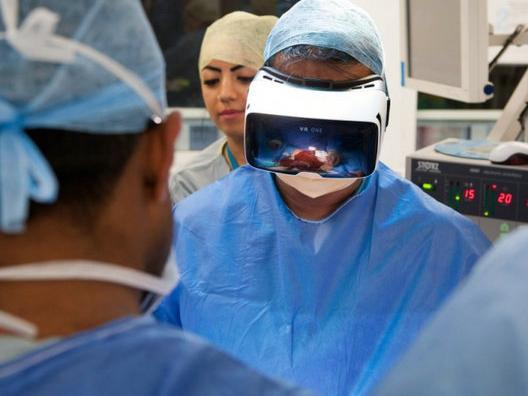
VR and artificial intelligence (AI) are similar in that both technologies originated relatively early, with related research dating back several decades. However, their true maturity and widespread adoption have occurred only in the past two years, accompanied by a rapid surge in attention. Nevertheless, there are distinctions between them. AI is a foundational technology capable of being integrated into a broader range of application models and scenarios. In contrast, VR represents an innovation at the application level, facing greater limitations when implemented across various industries; currently, its primary applications lie in gaming and entertainment. In the healthcare sector, although VR has gained some visibility in recent years, its practical applications remain significantly constrained. Beyond certain fitness applications utilizing virtual environments, the main medical uses of VR are focused on medical training, education, and the treatment of psychological disorders.
Most VR startups have chosen to enter the gaming sector, with few venturing into healthcare. Consequently, VCBeat has identified relatively few VR companies focused on health and medical care. The VR industry chain encompasses multiple sectors—including hardware/devices, software development, applications (content), online and offline distribution platforms, B-end clients, and C-end consumers—which are highly interconnected. The absence of relevant regulatory standards further contributes to the complexity of the entire industry chain. In the healthcare sector, VR primarily serves B-end users, where companies’ main development task is creating applications to assist in physician training, a relatively straightforward endeavor.
In April 2016, the Ministry of Industry and Information Technology (MIIT) released the White Paper on the Development of the Virtual Reality Industry. The White Paper pointed out that industrial applications of virtual reality are expected to be fully rolled out, cultural content will become increasingly prosperous, and the technological system and industrial landscape will begin to take shape. If China fails to make prompt strategic arrangements for its virtual reality industry, it will once again fall behind and be forced into a position of playing catch-up with foreign counterparts. In the future, proactive planning and top-level design should be prioritized; special fiscal support should be provided to promote the industrialization of virtual reality technologies, achieve breakthroughs in core technologies, and strengthen cultural development and brand building.
In August 2016, the National Development and Reform Commission (NDRC) issued the “Notice on Organizing Declarations for Special Projects on Capacity Building in Innovation within the ‘Internet Plus’ Sector,” which pointed out that China should establish a National Engineering Laboratory for Virtual Reality/Augmented Reality Technology and Applications. To address issues such as poor user experience with virtual reality/augmented reality in China, an innovation platform for VR/AR technology and applications will be built to support research, development, and engineering of technologies including content capture, data modeling, sensors, haptic feedback, novel displays, image processing, surround sound, (ultra-)high-definition high-performance terminals, and VR/AR testing, thereby enhancing public service levels across the industry. Currently, China encourages enterprises to take the lead in undertaking related laboratory construction tasks; successful applicant enterprises will receive matching funds or policy support. Given that most VR teams face financial pressures, state-led initiatives to drive the VR industry will play a significant promotional role.
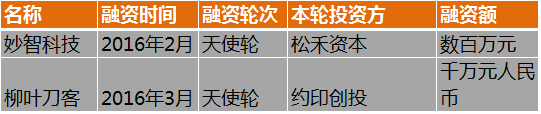
In February 2016, Miaozhi Technology (Shenzhen) Co., Ltd. secured an angel-round investment of several million RMB from Sinovation Capital. The company’s products enable physicians to conduct preoperative planning using three-dimensional patient body models in a VR environment, and allow medical students to practice anatomy and surgical procedures in VR.
In March 2016, Yiweixun secured tens of millions of yuan in angel investment from Yueyin Ventures, a firm specializing in healthcare industry investments. Following this funding, Yiweixun focused on developing “Surgeek” (Liu Ye Dao Ke), an online surgical training platform featuring VR and 3D interactivity, which launched in June. Surgeek is an online surgical training platform that combines VR with 3D interactivity and primarily consists of two components: first, 3D interactive simulations; and second, panoramic surgical videos for surgeons’ educational purposes. The former allows surgeons to simulate surgical procedures in a game-like manner, while the latter provides surgeons with accessible surgical video materials.
Data source: VCBeat, VCBeat database
In the VR sector, hardware development has advanced rapidly this year, with the consumer versions of Oculus Rift, HTC Vive, PS VR, and Daydream View hitting the market, while tech giants such as Google, Microsoft, and Huawei have entered the fray. However, in terms of content, there is still a lack of standards and killer applications. Most VR startups have targeted consumers (C-end), focusing their content on gaming, entertainment, and fitness. Yet, given that the VR market has not yet reached sufficient maturity, these companies face significant survival challenges. In the healthcare sector, VR entrepreneurs have focused their efforts on business-to-business (B-end) solutions, specifically physician training and assisted diagnosis and treatment, which have gained market acceptance more readily. Among the healthcare VR companies we have tracked, firms such as The Lancet Guest, MiaoZhi, and HaoYiShu have already achieved initial success within the industry.
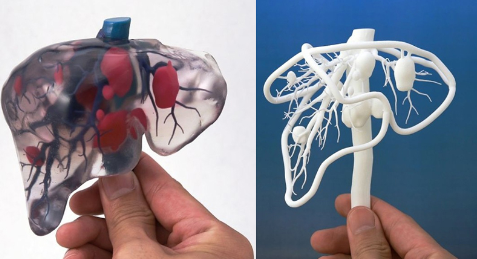
Compared with other high-profile industries such as automotive, aerospace, and industrial manufacturing, 3D printing technology has seen relatively limited adoption in the healthcare sector, and there are few startups dedicated to this field. Nevertheless, 3D printing offers substantial benefits to medical practice, particularly in complex surgical procedures. Given the intricate nature of human anatomy, conventional techniques struggle to accurately reproduce complex anatomical structures in three dimensions. 3D printing effectively addresses this challenge, meeting the demand for medical devices that are precise, complex, and customized.
The application of 3D printing technology in the medical field can be divided into three levels, with the difficulty increasing as the proximity to the human body increases.
The first level is external application on the human body. By using 3D printers to convert 2D images from CT and MRI scans into 3D images and models, physicians can gain a more intuitive understanding of the patient’s condition, facilitating preoperative analysis and planning while reducing surgical risks. In some complex surgeries, hospitals at the forefront of technological adoption have begun leveraging 3D printing technology to reconstruct patients’ blood vessels, organs, and bones in advance, enabling surgeons to conduct preoperative simulations and assessments.
The second layer brings 3D printing closer to the human body, primarily focusing on the fabrication of medical auxiliary tools. This includes printing surgical instruments using biosafe materials, as well as fracture splints and orthotic devices. For instance, in dental implant procedures, 3D printing technology can be used to create a model of the patient’s teeth. The position, angle, and depth of the implant are first simulated via computer, and then a “surgical guide” is printed. With this guide, the dental implant can be placed with high precision.
The third level involves implantation within the human body, such as printing tissues, scaffolds, bones, and organs. Applications at this level require highly advanced technology and are still some distance away from practical clinical use. Furthermore, regulatory breakthroughs are needed for the approval of 3D-printed implants; for instance, in China, they must undergo the approval process for Class III medical devices.
Currently, there are relatively few domestic enterprises engaged in 3D printing within the medical field; however, these companies demonstrate strong R&D capabilities in medical 3D printing technologies. Most of them have achieved notable R&D outcomes in 3D printer hardware, 3D software, and printing materials.
First is the development of medical-grade 3D printers, which require the ability to print a variety of materials suitable for medical applications. Second is 3D printing software. This software falls into two categories: one is medical image reconstruction, which can segment data from CT, MRI, and other medical imaging modalities using various segmentation algorithms and rapidly reconstruct 3D models of the target anatomical structures for printing. The other is medical 3D surgical planning software, which assists physicians in making intelligent decisions regarding surgical plans. Finally, there is the development of printing materials. In medical applications, the reconstruction of various bones, blood vessels, and organs requires different materials to achieve accurate results.
In February 2015, the Ministry of Industry and Information Technology (MIIT), the National Development and Reform Commission (NDRC), and the Ministry of Finance jointly issued the "National Plan for Promoting the Development of the Additive Manufacturing Industry (2015–2016)," elevating additive manufacturing, represented by 3D printing, to the level of national strategy and outlining a comprehensive plan for the development of the 3D printing industry. The plan also provided an objective assessment of the current state of 3D printing in China: the industrialization of additive manufacturing in China is still in its infancy, with a significant gap compared to advanced countries; a complete industrial system has not yet been formed, and there remains considerable distance to achieve large-scale industrialization and engineering applications.
In May 2015, the State Council officially issued the "Made in China 2025" plan. In this plan, 3D printing was mentioned in five sections. As a representative emerging technology, 3D printing (additive manufacturing) occupies an important position and is listed as part of the Manufacturing Innovation Center Construction Project. Together with high-end CNC machine tools, 3D printing is listed as one of the ten key areas requiring breakthroughs.
After securing angel investment from Puhua Capital in early 2016, Maiditu obtained Series A financing from Morningside Venture Capital in November. In its startup phase, Maiditu entered the field of medical 3D printing through orthopedics, providing hospitals with comprehensive solutions that included equipment, consumables, software, and full training packages. It has since expanded to cover various clinical specialties accessible through 3D printing technology.

Data Source: VCBeat, VBInsight Database
From a financing perspective, medical 3D printing companies have attracted relatively little investment (BlueLight Inno is a subsidiary of the listed company Sichuan BlueLight, with its funding provided by the parent company), while Maiditu completed its Series A financing in November. Although the 3D printing industry has garnered significant market attention since its early stages and enjoys positive future prospects, the sector remains in its infancy within the healthcare industry, both in terms of the number of companies and the total investment volume.
Data Source: VCBeat, Eggshell Institute Database
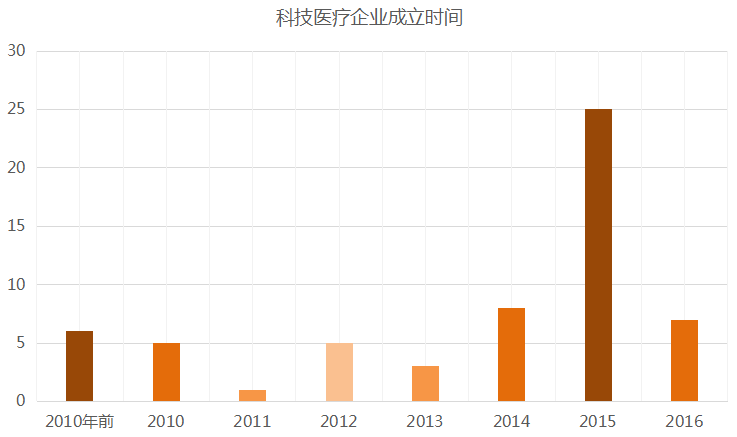
Most technology-driven healthcare companies were established between 2014 and 2016, with a peak in 2015 when 25 companies across four categories were founded. This surge coincided with the maturation of key technologies such as artificial intelligence (AI), virtual reality (VR), 3D printing, and robotics in 2015. Robotics companies tend to have slightly earlier founding dates, as their manufacturing and R&D do not rely solely on recent technological advancements. For the other three categories, most companies established before 2013 were not initially focused on AI, 3D printing, or VR; instead, they integrated these emerging technologies into their business operations during later stages of development.
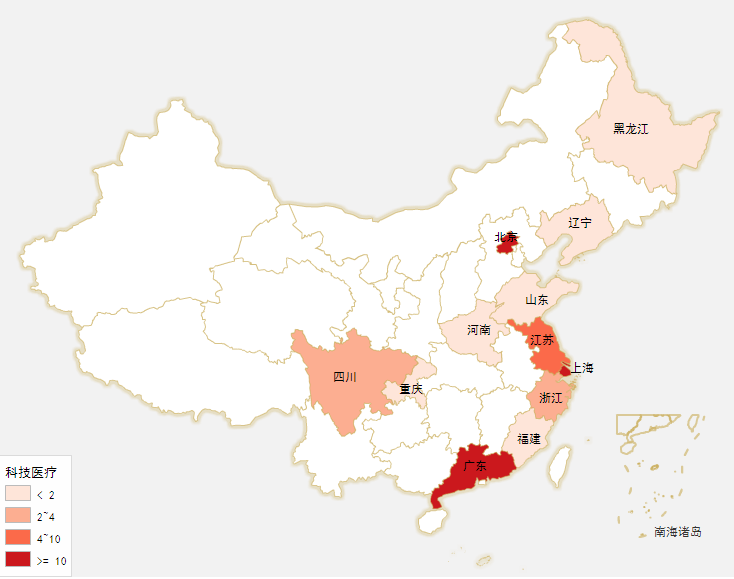
Data Source: VCBeat, VBInsight Database
Compared with other types of enterprises, medical technology companies are more widely distributed geographically. However, the highest numbers are still concentrated in Beijing, Shanghai, and Guangdong, with 20, 11, and 14 companies, respectively. The proportion of tech-medical startups in Guangdong is significantly higher than that of other internet healthcare companies, primarily because there are many manufacturing enterprises in the fields of robotics and 3D printing, and the Pearl River Delta is a major hub for manufacturing.
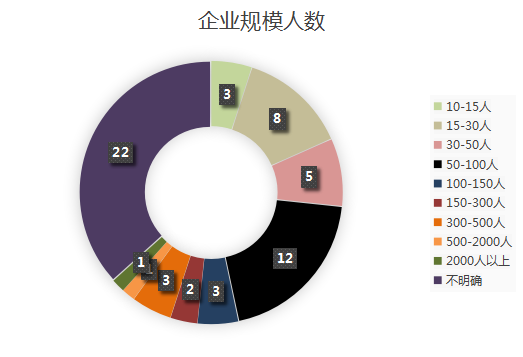
Data Source: VCBeat, Eggshell Institute Database
Due to the relatively recent emergence of medtech companies and limited media coverage, employee headcounts could not be verified for most firms based on available data. Among the 60 medtech companies included in this analysis, headcount information was unavailable for 22 enterprises. For those with confirmed employee numbers, most companies in the robotics sector employed over 100 individuals, with some exceeding 2,000 employees. This is because robotics R&D and manufacturing constitute a capital-intensive, technology-driven, and ecosystem-dependent field, requiring substantial investments in both human resources and technical expertise. The 3D printing sector follows a similar pattern; as it involves multidisciplinary R&D and manufacturing across hardware, software, and materials, its operational scale is also considerable.
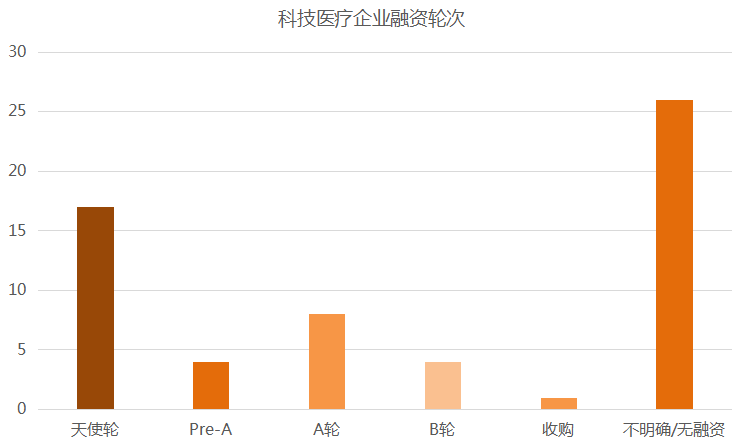
Data source: VCBeat, VBInsight database
Among the 60 medical technology companies across four categories, 35 have recorded financing activities. The robotics sector demands substantial capital and technological investment, supported by a well-developed industrial ecosystem. This “capital-intensive, technology-intensive, and ecosystem-intensive” business model generally deters capital seeking short-term returns. Most participants in the robotics field are large enterprises or publicly listed companies with strong capital reserves and technological accumulation, or universities with technological advantages; they rarely seek external financing. Among the 21 robotics companies, only seven have verifiable financing records. Similarly, 3D printing companies share comparable industrial characteristics, resulting in a lower rate of investment acquisition. Of the six 3D printing manufacturers related to healthcare, three received investment. Notably, one of them, BlueLight Inno, secured RMB 215 million from its parent company, Sichuan BlueLight. Thus, only two companies actually received institutional investment.
Artificial intelligence, medical robots, VR, and 3D printing have long been regarded as the most significant medical technological innovations poised to reshape the future of healthcare. Profound technological transformations will drive the transformation of healthcare enterprises and the upgrading of the medical industry. The practicality and advantages of these four technologies in medical applications are undeniable; however, they are currently mostly in their nascent stages. By comparison, artificial intelligence presents lower barriers to implementation, boasts the broadest range of applications, and attracts the greatest investment opportunities. The field of medical robotics is highly active, yet it features substantial entry barriers and relatively greater challenges in application. Startups in VR and 3D printing generate the least buzz, as these areas are not currently focal points of market attention within the medical sector, resulting in narrower application scopes and fewer startups. Conversely, this landscape offers the greatest potential opportunities.
Technology Disrupts Healthcare, Yet the Process of Disruption Is Arduous.Artificial Intelligence, Medical Robots, VR, and 3D PrintingThe industry remains in its early stages of medical application in China; the road ahead is long, but success will ultimately be achieved.
Copyright Notice
This report is produced by VCBeat. All text, images, and tables contained herein are protected by applicable trademark and copyright laws. Portions of the text and data have been collected from publicly available sources, with ownership retained by the original authors. No organization or individual may reproduce or distribute this report in any form without prior written permission from our company. Any unauthorized commercial use of this report shall constitute a violation of the Copyright Law of the People's Republic of China, other relevant laws and regulations, and applicable international conventions.
Disclaimer
This research report is based on information that VCBeat considers reliable and currently publicly available. VCBeat strives to, but does not guarantee, the accuracy and completeness of such information. Due to limitations in research methodologies, sample sizes, and the scope of data collection, the data presented herein only reflect the basic conditions of the surveyed population during the survey period. It serves solely the purpose of the current research and provides basic reference for the market and clients. Furthermore, VCBeat does not guarantee that the views or statements contained in this report will remain unchanged. At different times, VCBeat may issue reports with data, opinions, and projections inconsistent with those contained herein.
VCBeat does not consider recipients of this report as its clients by virtue of their receipt thereof. This report is distributed only where permitted by applicable laws and regulations, and solely for informational purposes; it does not constitute any form of advertising. Under no circumstances shall the information contained herein or the opinions expressed be construed as investment advice to any person. Where permitted by law, VCBeat and its affiliates may hold equity interests in the companies mentioned in this report and may provide or seek to provide fundraising, financial advisory, or other related services to such companies.
Note: I am Liu Zongyu, an author at VCBeat. If you are an investor interested in the tech-healthcare sector, or an entrepreneur in the tech-healthcare industry seeking media coverage, please feel free to connect with me. We also welcome tips on relevant companies. WeChat: q19930797; Email: liu.zy@vcbeat.top