

Overcoming Seven Key Challenges to Build a New Remote Healthcare Ecosystem
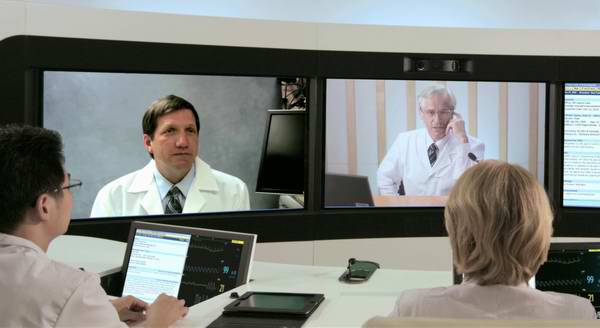
Telemedicine is not a new concept; in fact, it has existed for quite some time. By definition, it constitutes a medical practice; therefore, services such as lightweight online consultations cannot be equated with it. Furthermore, providers of telemedicine services must be qualified medical institutions, not individuals.
Telemedicine is not merely a new model of healthcare delivery; behind it lies a vast industrial chain connecting medical services, health insurance, and pharmaceuticals. Telemedicine itself constitutes a critical link within this chain. When categorized by role, this chain can be simplified as follows: Health Insurance – Large Hospitals – Telemedicine – Primary Care Institutions – Pharmacies – Pharmaceutical Manufacturers. It is evident that telemedicine not only connects upstream and downstream medical resources but also facilitates integration between pharmacies and healthcare institutions. However, realizing this integrated chain will require addressing multifaceted challenges.
The purpose of telemedicine is to facilitate tiered diagnosis and treatment, which involves decentralizing high-quality medical resources to the primary care level. The government is promoting this tiered system with the aim of redirecting patients back to primary care institutions. However, the key to enhancing the service capacity of these grassroots medical facilities lies in talent development. Telemedicine operates as a decentralized model, serving as a mechanism for reallocating resources among the patient population released by tertiary Grade A hospitals following the implementation of tiered diagnosis and treatment.
This is precisely where the real challenge lies. Primary healthcare institutions often view telemedicine merely as a policy-driven mandate. In most cases, vendors adopt a pure sales model, simply selling their products to hospitals. Once the hospital acquires the product, the vendor’s task is essentially complete. After acceptance testing, hospitals rarely have the incentive to continue using the system, causing it to become virtually obsolete over time.
This situation is not without a solution; the outcome depends on how enterprises collaborate with primary healthcare institutions. Remote Vision serves as a prime example. First, it provides fundus cameras and other diagnostic equipment free of charge to institutions lacking such resources. Second, it offers remote system hardware and software services at no cost. Finally, it partners with specialists from major hospitals to provide support and guidance, thereby enhancing the medical capabilities of these institutions. The costs incurred for examinations, remote services, and surgeries are shared with the primary hospitals according to an agreed-upon ratio.
Furthermore, with increased healthcare investment in China and the implementation of favorable policies such as the New Rural Cooperative Medical Scheme, the profitability of primary healthcare institutions has improved significantly. Many county-level hospitals, which previously had annual revenues of only RMB 10–20 million, now report annual revenues exceeding RMB 100 million, giving them the financial capacity to purchase more medical equipment. Coupled with the year-on-year decline in procurement costs for medical devices, the penetration rate of such equipment in primary healthcare institutions has steadily risen. Consequently, the foundation for telemedicine in primary healthcare settings is now mature.
Compared with traditional software sales models, this approach fosters a greater sense of engagement and willingness to collaborate among primary healthcare institutions. However, it merely demonstrates feasibility; to establish a functional tiered diagnosis and treatment system, it is essential to build large-scale medical alliances between tertiary hospitals and primary care providers, akin to Medical Consortiums.
Taking Visionary Telemedicine as an example, it has established various specialty alliances with partner hospitals based on different medical specialties, such as the Asia-Pacific Tele-Ophthalmology Alliance, the China Gynecology Telemedicine Alliance, and the China Oncology Medical Alliance.
Current medical consortiums encompass primary community healthcare institutions, county-level hospitals, municipal general hospitals, and regional collaborative assistance programs. In terms of organizational structure, they are categorized into two types: tightly integrated medical consortiums and loosely affiliated medical consortiums.
Taking Sichuan Province as an example, in tightly integrated medical consortia, the hospital assumes trusteeship over county-level hospitals; these county-level hospitals are granted the right to use the brand of Sichuan Provincial People’s Hospital and become its branch hospitals. In loosely integrated medical consortia, hospitals at various levels form a loose hospital group with this institution, and healthcare institutions at all levels adopt the title “Sichuan Academy of Medical Sciences & Sichuan Provincial People’s Hospital (Group).”
Regional cooperation involves the hospital signing regional cooperation agreements with local governments or health administrative authorities, providing assistance and collaboration to different medical institutions within the region through medical consortiums. However, the loosely affiliated medical consortium model faces numerous limitations in the sharing of personnel, finances, and resources; therefore, Sichuan Province has adopted the trusteeship model for medical consortiums.
Whether it is a medical consortium or a specialty alliance, only by achieving large-scale and intensive industrial operations can medical resources be efficiently integrated,TrueEstablishing Telemedicine Operations from a Medical Perspective.
If classified by business model, telemedicine can be divided into four major categories:
Tele-diagnosis: Refers to the provision of diagnostic opinions by specialists or physicians from tertiary hospitals to clinical staff at primary care facilities, including remote imaging diagnosis and remote pathological diagnosis.
Teleconsultation: Primarily, senior physicians conduct consultations directly with patients at primary care facilities via a teleconsultation system and provide diagnostic opinions to primary care physicians, such as through remote video consultations.
Remote Monitoring: A service that utilizes home medical devices to collect patients' vital signs, transmits the data via networks to a monitoring center, and enables healthcare professionals to monitor and manage diseases for patients at home, such as remote home monitoring and remote disease management.
Distance Education: Refers to continuing education and training provided to primary healthcare workers.
Currently, the vast majority of telemedicine companies are concentrated in the first two categories, opting for a broad and comprehensive market entry strategy. However, this approach has yielded limited success, proving difficult to generate profits from hospitals while also receiving lukewarm responses from patients. Although telemedicine can address certain medical issues, it still lags behind face-to-face consultations between doctors and patients and cannot fully replace traditional in-person examinations by physicians. Therefore, rather than being used for initial diagnoses, telemedicine is better suited for follow-up visits.
Under this market logic, technology-driven B2B telemedicine has taken the lead in development, with electrocardiogram (ECG) services—characterized by their lightweight and compact model—achieving the earliest breakthroughs. In contrast, models such as teleradiology and telepathology, which require substantial offline infrastructure, have yet to gain significant momentum.
Therefore, telemedicine is not suitable for all patients. At this stage, the true focus of telemedicine should be on specialized departments and specific conditions, such as gynecology, cardiology, and oncology. Patients in these categories often have a strong demand for specialists and major hospitals. Due to the long-term nature of disease management, this demand remains intense not only during follow-up visits but also in the postoperative period.
Although the government is currently vigorously promoting tiered diagnosis and treatment policies and telemedicine, the results have been less than satisfactory. The phenomenon of tertiary Grade A hospitals “taking it all,” as described by industry insiders—encompassing patients, medical expenses, and health insurance funds—remains severe. Data show that in major cities such as Beijing and Shanghai, the proportion of hospitalizations at tertiary Grade A hospitals has risen from approximately 50% to 70% of the citywide total. In some coastal cities, tertiary hospitals account for as much as 85% of all hospitalizations.
Is there a conflict between tertiary hospitals and the outflow of prescriptions driven by telemedicine? Not at all. Tiered diagnosis and treatment aim to divert patients from large hospitals. The partial loss of patients is not something large hospitals are reluctant about; rather, it ensures that patients who truly require care at tertiary hospitals have greater access to specialist resources, while allowing specialists to see more patients with genuine medical needs. This represents a true release of efficiency. Therefore, tertiary hospitals and specialists do not reject telemedicine; on the contrary, they welcome its development.
The zero-markup drug policy is an essential measure to dismantle the practice of “funding healthcare through drug sales,” and it has no direct bearing on telemedicine. Under this policy framework, prescribing more expensive or larger quantities of drugs would only increase the workload for pharmacy staff and raise hospitals’ management costs, without providing any financial benefit to physicians or hospitals. Ultimately, this will promote the separation of medical services from pharmaceutical sales and facilitate the outflow of prescriptions.
The key reason hospitals are reluctant to allow prescriptions to flow outside their facilities lies not in “medical practice” but in “pharmaceuticals,” a distinction that must be clearly understood conceptually. Therefore, telemedicine is merely a natural outcome accommodating the outflow of prescriptions, rather than its cause. As a result of this development, competition among hospitals has shifted from the volume of large prescriptions to their own medical expertise and brand reputation, thereby making the improvement of diagnostic and treatment efficiency and innovation in care models the top priority for tertiary Grade A hospitals.
Given the irreversible trend of decoupling hospital revenue from drug sales, physicians have lost their financial incentives from pharmaceuticals. In this context, while telemedicine may impose additional workload, it serves as a compensatory measure in terms of income. Furthermore, with the implementation of tiered diagnosis and treatment, the siphoning effect of tertiary Grade A hospitals has been curtailed, leading to a continuous dilution of offline outpatient volumes. Meanwhile, telemedicine is expected to attract an increasing number of precisely targeted patients.
Definition of Medical Records: Article 2 of China’s “Provisions on the Management of Medical Records in Medical Institutions (2013 Edition)” clearly stipulates that medical records refer to the integrated materials, including text, symbols, charts, and imaging slices, generated by healthcare personnel during medical activities. In other words, all forms of documentation produced during the diagnosis and treatment process should be considered part of the medical record.
The completeness and accuracy of patients’ medical records and imaging data significantly influence the outcomes of telemedicine consultations. However, the prevailing state of electronic medical records (EMRs) in China is characterized not only by fragmented management across hospitals, which hinders information exchange, but also by the proliferation of information silos within individual hospitals due to inconsistent interfaces and standards among health information systems such as HIS and PACS. Therefore, the transmission of electronic medical records constitutes a technicalonChallenges.
With the accelerated development of national regional health informatization, an increasing number of cities have completed the transition from hospital-level to regional-level health information systems. Taking Wuxi City as an example, all hospitals rated at Grade II Class A or above, municipal hospitals, and community outpatient clinics have implemented electronic medical records (EMRs). Notably, the EMR adoption rate at Wuxi No. 2 People’s Hospital has reached 95%. Such a high adoption rate has made information sharing for telemedicine a reality.
In November this year, Sichuan Province, which has been actively advancing telemedicine, also issued relevant policies on electronic medical records (EMRs). Relying on the Sichuan Provincial E-Government Extranet and the e-government cloud platform, the province integrated three major databases—the population database, residents’ electronic health records (EHRs), and EMRs—to fully establish an interconnected provincial-, municipal-, and county-level population health information platform. It further improved and vigorously promoted technical service standards for data exchange, collaborative sharing, and security protection, thereby supporting new models of networked healthcare services that span across institutions, regions, and departments.
The advancement of telemedicine relies on the support of shared data from regional electronic health records; however, this is a phased evolution that simply requires time.
Retail Pharmacies’ Capacity to Absorb Outflowing Prescriptions: Two Key Points Need Clarification—First, How Retail Pharmacies Can Build Their Own Absorption Capacity; Second, How the Relationship Chain for Prescription Outflow Is Formed and Managed.
Telemedicine is one of the sources of e-prescriptions. There are two reasons for discussing e-prescriptions in conjunction with retail pharmacies: first,Retail pharmacies can directly serve as access points for telemedicine; theirII.Retail pharmacies are the primary channels for承接 hospital-based telemedicine and the outflow of prescriptions. Therefore, pharmaceutical care capabilities and medication expertise are essential competencies that pharmacies must possess. In particular, for novel and specialized oncology drugs, professional pharmacists' medication guidance is key to addressing the "last mile" challenge in delivering prescriptions to patients. Here, we are optimistic about the DTP (Direct-to-Patient) pharmacy model.
Traditionally, prescription outflow has largely occurred naturally, with patients themselves carrying prescriptions out of hospitals. The practice of leveraging this natural outflow for pharmaceutical sales is known as retail prescription drug sales. Under this model, retail pharmacies can only passively guide prescription flows through marketing efforts and are unable to establish direct, point-to-point relationships with healthcare institutions.
Another model is known as "out-of-hospital prescription dispensing," which is built on deep collaboration between hospitals and retail pharmacies. Through clinical promotion and telemedicine, hospitals continuously direct physicians' prescriptions to specialized off-site pharmacies. Licensed pharmacists then review and verify the prescriptions before dispensing the medications to patients (or providing home delivery services), while also offering ongoing medication counseling and disease management support.
However, under this model, the relationship between high-quality medical resources and retailers is often one-to-many, with hospitals holding absolute bargaining power. Consequently, pharmaceutical companies are compelled to cede profits to hospitals, meaning that prescription flows and drug-related “dividends” remain tied to medical institutions. As a result, the national objective of achieving separation between prescribing and dispensing through prescription outflow to control costs is difficult to realize.
The primary distinction between electronic prescriptions and electronic medical records lies in the strong "pharmaceutical" nature of electronic prescriptions. Since pharmaceuticals are at the core of various stakeholders' interests, the value of prescriptions has been significantly amplified. How, then, can the flow of hospital electronic prescriptions be regulated? This hinges on whether electronic prescriptions can be decoupled from large-volume in-hospital prescribing. It requires not only controlling incentive-driven medical expenditures through Diagnosis-Related Groups (DRGs), but also verifying and supervising hospital revenues using big data-enabled health insurance cost containment measures, thereby exerting simultaneous control over both revenue and expenditure.
Certainly, this involves a shift in interests. The outflow of prescriptions signifies the release of additional revenue streams for hospitals and physicians; therefore, resistance is inevitable during implementation. To facilitate the normal flow of electronic prescriptions from hospital channels, a third-party data management and sharing platform is required. In this regard, telemedicine companies, which serve as the direct point of contact for patients, are the most suitable entities. By collaborating with pharmacies, telemedicine companies can not only directly supplement the revenue lost by large hospitals due to the zero-markup drug policy at the diagnosis and treatment stage but also achieve patient follow-up and chronic disease management—tasks that are difficult for hospitals to perform effectively—through pharmacies. This fosters a more balanced cooperative relationship and simultaneously helps hospitals escape the "black hole" of drug-related financial interests.
This shift will inevitably lead to a restructuring of staffing in both hospitals and pharmacies. In the future, hospitals are likely to retain clinical pharmacists rather than dispensing pharmacists. Clinical pharmacists guide patients’ clinical care and medication use, while dispensing pharmacists will increasingly transition to retail pharmacies—a trend that is expected to continue.
In the past, telemedicine was not covered by medical insurance, and hospitals set their own prices, leading to a relatively chaotic market. Patients’ enthusiasm was limited due to a lack of clear understanding of telemedicine and sensitivity to its costs. In August 2016, telemedicine in China saw a breakthrough in Guizhou Province, which decided to include telemedicine services within the reimbursement scope of the basic medical insurance fund. This policy took effect on August 1, 2016, with a one-year trial period.
Pursuant to the “Notice on Issues Concerning the Inclusion of Telemedicine Service Items in the Basic Medical Insurance Fund Payment” issued by the Guizhou Provincial Department of Human Resources and Social Security, nine items are included in the scope of basic medical insurance fund payment, such as remote single-specialty consultation, remote multidisciplinary consultation, remote traditional Chinese medicine syndrome differentiation and treatment consultation, and synchronous remote pathology consultation.
Following Guizhou, Sichuan Province also issued the “Notice on Setting Prices for Internet Medical Service Items” and the “Guiding Opinions on Accelerating the Development of ‘Internet + Healthcare’ Services” in October 2016.
According to the “Notice on Setting Prices for Internet Medical Service Items,” Sichuan Province aims to promote the downward flow of high-quality medical resources by integrating regional healthcare resources and effectively extending and amplifying the service capacity of medical institutions. Meanwhile, the “Price List for Internet Medical Service Items Provided by Provincial Public Medical Institutions in Sichuan Province” has been formulated, implementing government-guided pricing for teleconsultation, remote diagnosis, and remote examination services, while market-regulated pricing applies to remote monitoring and other categories.
The successive pilot programs in Guizhou and Sichuan have undoubtedly provided a significant boost to telemedicine by addressing the payment aspect. With regulatory policies and medical insurance support, the enthusiasm of both hospitals and patients will increase, thereby ensuring that the implementation of tiered diagnosis and treatment is effectively realized.
The nature of the telemedicine model makes it inherently difficult to serve as a direct cost-containment tool for payers; instead, it functions primarily as a component for improving medical efficiency and enhancing the capacity of basic medical services. To establish a comprehensive cost-containment mechanism across the entire chain—comprising health insurance, large hospitals, telemedicine, primary care institutions, pharmacies, and pharmaceutical manufacturers—a holistic cost-control framework is required. Pharmacy Benefit Management (PBM) represents an effective approach in this regard.
PBM, translated as Pharmacy Benefit Management, originated in the United States and refers to a specialized third-party organization for healthcare cost management. Institutions providing PBM services typically operate between payers (such as commercial insurance companies and employers), pharmaceutical manufacturers, hospitals, and pharmacies, performing supervisory, regulatory, and coordination functions. Based on the collection and analysis of patient visit data and prescription audits, PBM manages and guides the entire healthcare service process, thereby achieving effective oversight of medical services, controlling healthcare expenditures, and improving treatment outcomes.
The first company in China to introduce this model was Hailong Holdings, which began collaborating with the U.S.-based ESI in 2009 to conduct medical benefit management business.
Based on the operational results in Hangzhou, Haihong Holdings’ PBM model saves the government at least 10% of its medical insurance expenditures annually. On a national scale, this translates to annual savings of hundreds of billions of yuan for the state. (Given that the program “Focus Interview” has twice reported this year on significant loopholes in medical insurance, and against the backdrop of tight local government finances, there is an urgent demand for healthcare reform from local governments and public opinion alike.)
Beyond cost containment, a key point is that PBMs function more as the top-tier regulatory mechanism within the industry chain. They link health insurance (including commercial insurance), large hospitals, primary care institutions, pharmacies, and pharmaceutical manufacturers into a community of shared interests, thereby exerting control over the effectiveness and profitability of telemedicine from the source. Therefore, the introduction of PBMs is both a natural progression and an inevitable trend.
After this extensive discussion, we can summarize the dilemmas facing the formation of a complete telemedicine industry chain into four categories: infrastructure development, business models, benefit distribution, and policy frameworks. It is safe to say that the development and challenges of telemedicine in China are not merely about standard-setting; the real difficulty lies in how various stakeholders ultimately achieve collaborative division of labor amidst the interplay between policy and market forces.
From a broader perspective, the decentralization of medical resources, along with corporate mergers and acquisitions and integration, all signal that healthcare is evolving toward a more efficient model. Telemedicine, leveraging its ownTechnical Connectorrole, is becoming an indispensable part of this new ecosystem.