

Chen Shi, Serial Entrepreneur Who Burned $10M in Three Failed Startups, Launches Sheng Ren Kang with a 90-Day Immersion Among CKD Patients and Files for IPO
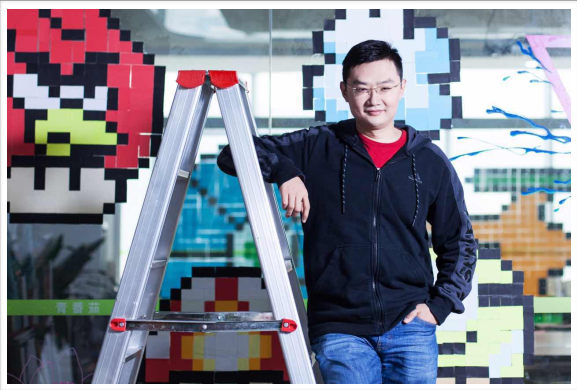
Chen Shi, CEO of Shengrenkang
On November 25, at the 16th floor of Tianfu New Valley in Chengdu, the reporter met Chen Shi, CEO of Shengrenkang. Dressed in casual attire, slim and wearing glasses, he perfectly fit the image of a tech-savvy professional. It was hard to imagine that he had an in-depth understanding of internet healthcare, particularly regarding the needs and pain points of kidney disease patients.
Chen Shi has 12 years of experience in the IT industry, holds three national invention patents and six utility model patents, and serves as a judge and mentor for the second Global Makerathon, as well as a partner of the Sci-Tech Innovation Aerospace Community. How did he successfully transition from the manufacturing sector to the healthcare industry?
To gain a deeper understanding of patients with chronic kidney disease (CKD), Chen Shi once spent days and nights at the hospital, consulting with physicians and CKD patients about their respective needs and pain points.
Initially, both patients and doctors ignored Chen Shi, responding to his inquiries with either perfunctory replies or excuses. Later, one patient was moved by his perseverance and referred him to Ma Benyan, a 36-year-old patient with a 10-year history of chronic kidney disease who had been undergoing hemodialysis for seven years. Ma subsequently became an administrator at Sheng Renkang’s charity base and also emerged as one of the company’s shareholders.
Chen Shi will never forget the scene when he met Ma Benyan. He drove along winding mountain roads to a small town in Yilong County, Nanchong, Ma Benyan’s hometown. Years of treatment for kidney disease had left his family destitute, yet he spared no expense in purchasing a second-hand computer to tinker with the design of a “heat therapy device.” In his spare time, he would sit at his workbench building prototypes, personally handling every step from soldering circuits and calibrating temperature controllers to sewing and cutting materials.
In 2006, he was incidentally diagnosed with nephrotic syndrome while seeking treatment for an injury at a hospital. Having recently married, he chose to continue working to earn money, which exacerbated his condition. By 2009, his disease had progressed to uremia. Forced to return to his hometown in Nanchong, Sichuan Province, for treatment, he has been dependent on dialysis ever since.
Ma Benyan is currently 1.7 cm tall and weighs only 36 kilograms. He has spent most of his life in hospitals, undergoing dialysis three times a week, with each session lasting up to four hours. His monthly medical expenses exceed 4,000 yuan, while his family’s total income is less than 2,000 yuan. Due to the high cost of a certain medication—several hundred yuan per box—which was originally prescribed to be taken with every meal, he has reduced the dosage to just one pill per day.
In patients with uremia, the kidneys have lost their function. Their “kidneys” are effectively externalized: a tube draws blood from an artery and directs it into a hemodialyzer. After undergoing filtration to remove excess toxins and fluid, the cleansed blood is returned to the body’s venous circulation through another tube. Dialysis is a painful process. For severely ill patients like Ma Benyan, each session lasts nearly four hours, during which they must lie rigidly in bed. After a single dialysis session, their bones feel stiff and their muscles ache.
In 2015, China had 480,000 dialysis patients, including those undergoing hemodialysis and peritoneal dialysis. Currently, the national incidence rate of kidney disease is 11%, while the incidence rate of uremia is approximately 3 per 10,000 people. This means that in a county-level city with a population of 500,000, there are more than 100 new cases. As of the end of 2013, China had over 3,600 hemodialysis centers and more than 1,000 peritoneal dialysis centers. With advancements in blood purification technology and improved control over patient mortality rates, the cumulative number of hemodialysis patients in China continues to rise.
The difficulties Ma Benyan encountered during treatment are merely a microcosm of the plight faced by numerous kidney disease patients in China. Most patients lack the financial resources required for treatment at specialized nephrology hospital dialysis centers, as per capita income remains low and health insurance coverage is inadequate, leaving the dialysis-dependent population in a relatively disadvantaged position.
Currently, there are 364,000 dialysis patients in China. The cost per dialysis session ranges from ¥450 to ¥500. The average annual reimbursed amount per patient is ¥50,000–100,000. The dialysis treatment rate stands at 15%, with medical insurance reimbursement covering 70%–90% of the costs.
However, in Japan, patients with kidney disease undergo hemodialysis at night to accommodate their daytime work schedules, and the management of kidney disease is highly effective. For instance, if a physician prescribes 50 grams of beef per day for a patient with kidney disease, the patient will precisely weigh out exactly 50 grams, neither more nor less. Patients in China are unable to adhere to such strict regimens, and the kidney disease management system remains underdeveloped; beyond undergoing dialysis, patients often face a dire prognosis with limited options.
To this end, Ma Benyan hopes to help more kidney disease patients alleviate their suffering during dialysis, which aligns perfectly with Chen Shi’s original intention. He aims to both address the challenges faced by kidney disease patients during treatment and increase their income.
Subsequently, Chen Shi established the “Love Base,” appointing Ma Benyan as its director. The base organized patients to engage in simple labor, such as crafting handmade articles and daily necessities, in exchange for modest service fees to cover their living expenses.
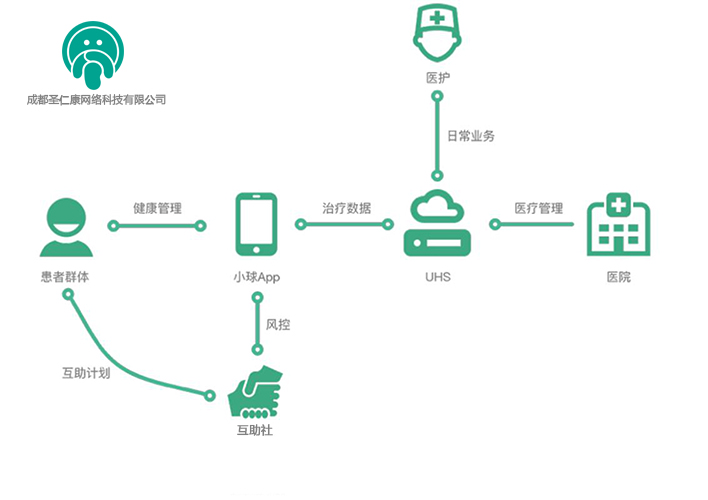
After identifying the pain points of kidney disease patients and hospitals, Chen Shi returned to Chengdu and accelerated the development of the Shengrenkang UHS Dialysis Management System. This is a comprehensive multi-port hemodialysis management solution based on the hospital’s Hospital Information System (HIS). It includes the hospital management terminal (doctor and nurse workstations), the patient user terminal, the mobile terminal for medical staff, and a cloud-based data analysis and processing module. Furthermore, it reserves information data interfaces for medical hardware, enabling hospitals with such needs to connect medical devices such as scales, blood pressure monitors, and dialysis machines, thereby facilitating real-time online monitoring and management.
For healthcare professionals, the UHS Dialysis Management System (hereinafter referred to as "UHS") liberates them from the tedious daily tasks associated with hemodialysis operations, thereby improving operational efficiency and reducing the burdensome manual organization and statistical analysis of paper-based documentation. Through real-time, efficient data interoperability, the system enables more refined patient management. Hospitals can better monitor and control the quality of dialysis care, optimize human resource allocation, and achieve more precise cost management for pharmaceuticals and medical consumables.
UHS liberates patients from complex data entry, enabling them to focus more effectively on their own treatment and management, thereby significantly slowing the progression of chronic kidney disease (CKD). Furthermore, through data integration with the Xiaoqiu App, patients can easily monitor disease progression and access the latest treatment data in a timely manner, facilitating referrals and expert consultations.
Device manufacturers can leverage cumulative data feedback from treatments to improve and optimize their equipment. Given the more refined patient management and treatment data analysis, these insights play a more decisive guiding role in medication selection for thousands of patients. The feedback data can also serve pharmaceutical companies, and even health supplement manufacturers (given that CKD patients have strict standards for diet and the intake of trace elements and minerals, the use of health supplements, particularly dietary supplements, must follow medical advice). Pharmaceuticals and health supplements are thus further integrated into the entire treatment management process.
From the government’s perspective, enabling healthcare providers and hospitals to deliver more precise treatment to patients, while empowering patients with better self-management capabilities, translates into reduced treatment costs and more efficient utilization of medical resources. This not only curbs expenditures on medical insurance and social security but also helps maintain stability among the broad patient population.
UHS Dialysis Management is a B-end tool currently deployed at the First Affiliated Hospital of Chengdu Medical College and Gaoxin Boli Hospital within the group, covering approximately 450 patients with end-stage chronic kidney disease (CKD). Currently, 11 hospitals have signed contracts; upon full deployment, it will cover approximately 1,300–1,400 patients.
“It’s an excellent dialysis management software, especially useful during seasonal transitions when adjusting clothing layers. Previously, we had to estimate the weight of our clothes, which often led to inaccuracies. If the clothing weight was overestimated, insufficient ultrafiltration would result, leading to fluid retention and elevated blood pressure. Conversely, if the clothing weight was underestimated, excessive ultrafiltration would be required, often causing discomfort—such as sweating, muscle cramps, and hypotension—by the midpoint of the dialysis session. This would necessitate fluid reinfusion and glucose administration, and sometimes even premature termination of the session, resulting in inadequate dialysis. Over time, this is highly detrimental to health. With Xiaogiu (Little Ball), I can monitor my blood pressure and weight in real time and access a wealth of educational resources, which is incredibly beneficial. However, I wonder if the dietary recipe database could be expanded. I frequently hear fellow patients saying that certain foods are off-limits, leaving us uncertain about what we can actually eat,” said Diao Yi, a patient with kidney disease.
Kidney Disease Mutual Aid
According to publicly available online data, the prevalence of chronic kidney disease (CKD) in China is as high as 10.8%, with the total number of CKD patients approaching 140 million. The number of hemodialysis patients has reached 339,000 and continues to rise year by year. Furthermore, hemodialysis entails high treatment costs and low medical insurance reimbursement rates, imposing significant financial pressure on patients. In response, Chen Shi has designed two “insurance-like” products for chronic kidney disease: one is a patient mutual aid program among patients, and the other is a commercial insurance mutual aid scheme.
Based on the characteristics of chronic kidney disease (CKD), the Shengrenkang CKD Mutual Aid Plan provides self-protection through mutual assistance and risk-sharing among its members. For instance, with a membership base of one million, if a designated cost-sharing event occurs for one member, each member contributes RMB 0.5, thereby raising RMB 500,000 in mutual aid funds to help the individual overcome financial hardship. “In our design, every member is both a contributor and a beneficiary.”
On the other hand, a mutual aid program has been developed to address the specific needs of patients with chronic kidney disease (CKD), given that such conditions generally progress to uremia. Sheng Ren Kang is the first mutual aid program to cover the population with chronic kidney disease, filling the gap in mutual aid for CKD patients and enabling members to receive lifetime mutual aid medical coverage up to the maximum limit upon diagnosis of uremia.
In the insurance business, the Xiaoqiu App also plays a role in data collection and risk control. “Recently, we have been in close contact with large domestic commercial insurance companies, hoping to expand into commercial insurance and help more patients.”
Chen Shi has launched three startups, burning through more than 70 million yuan in investor capital. For Shengrenkang, his latest venture, his profitability strategy encompasses the following aspects.
One is the sales of pharmaceuticals & health supplements,Pharmacotherapy is integral throughout the entire course of chronic kidney disease (CKD) management, particularly in the early stages, where treatment primarily consists of conservative pharmacological interventions and dietary management. The use of health supplements is mainly guided by personalized dietary management plans tailored to individual patients.
The second is mutual aid plans/commercial insurance,The mutual aid plan has completed product development and is about to go live.This portion constitutes direct revenue. In mutual aid plans and commercial insurance, the sales of pharmaceuticals and health supplements can be incorporated to expand the scope of insurance coverage.
Others: Labor services and hospital services also generate a portion of direct revenue.In terms of hospital services, UHS holds sales value and can be handed over to distributors in the future to handle hospital sales business.
Future Business Extensions: Data accumulated from pharmaceuticals, health supplements, healthcare services, and insurance operations can be leveraged for data-driven business applications. This includes pre-operative management and post-operative rehabilitation for kidney transplant patients. Furthermore, by tracing pathological pathways, these capabilities can extend to the management of diabetes, hypertension, and chronic heart disease.
Currently, the company has assembled a team of over 30 professionals, most of whom are leading figures in the healthcare industry. Huang Chongle, another co-founder and Product Manager (PM) of the company, graduated from the Academy of Art University in San Francisco and subsequently worked at BetAmerica, specializing in interaction and web design. Upon returning to China, he served as a User Experience Designer and Product Manager at a Shanghai-based startup.
Liu Xiaoming, CTO, graduated from the Department of Physics at Shanghai Jiao Tong University. He served as an OS Software Engineer at Shanghai Yitaili Software Technology Co., Ltd., where he participated in the development of multiple products for clients such as Volkswagen, Wyeth, Roche, AstraZeneca, and Bank of China. In 2013, he was involved in the development of the China Merchants Bank Palm Life App.
Xie Niyou, COO, holds a master’s degree from Sichuan University and has five years of frontline operational and management experience in the hemodialysis industry. Ruan Yizhe, CIO, is a resident physician with a Master of Medicine and six years of academic research experience. Peng Jiali, Partner, is an attending nephrologist with nine years of clinical dialysis experience.
In addition, the company has assembled a significant number of shareholders who are also kidney disease patients, such as Ma Benyan, head of the “Love Base” initiative, who has had chronic kidney disease for 10 years and has been on dialysis for 7 years; and Diao Yi, Chief Experience Officer, who has lupus nephritis and has been on dialysis for 10 years.
ren
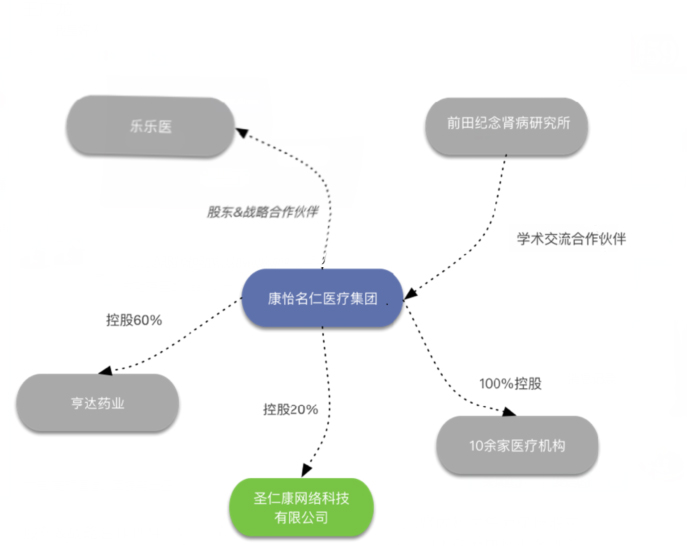
“The company has already secured angel-round financing from Kangyi Mingren Medical Investment Co., Ltd., which acquired a 20% equity stake,” Chen Shi told reporters.
Kangyi Mingren Medical Group Business Map
According to Chen Shi’s forecast, Sheng Ren Kang will accumulate a user base of 500,000 patients undergoing full-cycle chronic kidney disease (CKD) management over the next three years. To date, the company has established labor communities divided into online and offline segments. The online labor community has engaged more than 200 participants, with total compensation exceeding RMB 15,000. The offline labor community is centered around “Love Bases,” which have been set up in four cities—Nanchong, Suining, Nanbu, and Chengdu—to provide patients with manual labor opportunities. Currently, these bases have hundreds of participants, with total compensation disbursed exceeding RMB 30,000. Guided by the philosophy that “it is better to teach someone how to fish than to give them a fish,” the labor community addresses patients’ most urgent needs, aiming to improve their quality of life while facilitating their reintegration into society.
“Our labor community is currently focused on public welfare initiatives and will not pursue profitability in the future. We aim to attract kidney disease patients and foster user cohesion through this labor-focused community.”
Our medical team currently includes nephrology experts from West China Hospital of Sichuan University, Sichuan Provincial People's Hospital, the 452nd Hospital of the Chinese People's Liberation Army, Chengdu Military Region General Hospital, and the First Affiliated Hospital of Chengdu Medical College.
Since September 17, 2015, Shengrenkang has assembled a high-caliber medical team composed of core-level experts, dedicated to clinical research, patent development, training, and talent acquisition in the field of nephrology. The organization collaborates with large public hospitals and internationally renowned Japanese hemodialysis institutions on joint clinical research projects.
The company’s angel investor is Kangyi Mingren Medical Investment Co., Ltd., the largest dialysis chain in Southwest China. Established a decade ago, it operates more than 10 medical facilities across Sichuan Province and the broader western region of China, serving over 1,000 patients.
Since its establishment, Chengdu Kangyi Mingren Medical Investment Management Co., Ltd. has been committed to multi-faceted investment and cooperation in hemodialysis projects, with a focus on the development of hemodialysis services. Currently, the company has established several general hospitals with hemodialysis as their key specialty. Through close collaboration with the nephrology departments of multiple public hospitals in Sichuan Province, it has jointly built a number of robust hemodialysis centers equipped with state-of-the-art facilities and staffed by highly skilled medical teams. This has enabled the company to rank among the leaders in the hemodialysis healthcare market in Southwest China. The company remains dedicated to providing patients with the highest quality and most satisfactory diagnostic and treatment services through top-tier equipment and advanced technology.
“Our partnership with Kangyi Mingren Medical Investment Co., Ltd. has not only provided financial support to the company, but more importantly, it has brought valuable medical resources. Therefore, for the next round of financing, I am more inclined toward resource-based funding.”