

Internet + Traditional Chinese Medicine: Most Companies Still at Concept Stage, OAO Model Emerging as New Trend | 2016 Annual Review
As 2016 draws to a close, VCBeat’s flagship annual event, the “Top 100 Future Healthcare Companies,” is taking place as scheduled. Prior to the unveiling of the Top 100 list, VCBeat has meticulously curated a series of year-end review features focused on specific healthcare subsectors. These reports are designed to help you quickly gain in-depth insights into the hottest healthcare niches of 2016, providing a clear overview of the current landscape, key events, and development trends within each subsector.Registration is now open for the 2016 Top 100 Future Healthcare Forum. Register hereHere!
On February 26, 2016, the “Outline of the Strategic Plan for the Development of Traditional Chinese Medicine (2016–2030),” which guides the development direction of Traditional Chinese Medicine (TCM) over the next 15 years, was released. The Outline explicitly states that by 2020, the standardization, informatization, industrialization, and modernization of TCM should be continuously improved. Meanwhile, the Outline clearly calls for promoting “Internet Plus” TCM medical services and emphasizes the need to substantially enhance the capacity of TCM healthcare services through scientific and technological advancements.
On October 5, 2015, Chinese pharmaceutical scientist Tu Youyou was awarded the 2015 Nobel Prize in Physiology or Medicine in recognition of her contributions to the treatment of malaria. On September 19, 2015, Zhang Tingdong received the “Qiu Shi Outstanding Scientist Award” for his foundational contributions to the use of arsenic trioxide, a traditional Chinese medicine, in the treatment of leukemia. The continuous innovative achievements of Traditional Chinese Medicine (TCM) have not only drawn the attention of the global medical community but also reaffirmed its value to patients, enthusiasts, and professionals alike.
As the traditional Chinese medicine (TCM) sector continues to develop, the Chinese government has consecutively introduced policies in recent years to protect TCM, significantly elevating its strategic status. On November 23, 2016, at a parallel forum of the 9th Global Conference on Health Promotion, Wang Guoqiang, Deputy Director of the National Health and Family Planning Commission and Director of the State Administration of Traditional Chinese Medicine, stated, “The TCM Law is imminent.” The TCM Law will also become China’s first national law specifically drafted for traditional Chinese medicine. The TCM industry has seen considerable development over the past two decades, and compared with previous years, policy and regulatory guidance in 2016 will further accelerate the growth of TCM.
However, traditional Chinese medicine (TCM) remains marginalized within the industry, with limited influence. Over the past two years, internet healthcare has experienced vigorous growth. Despite the onset of a capital winter, investors have continued to pour substantial funds into the sector. Startups in internet healthcare now permeate nearly every segment of the medical service value chain, covering almost all medical specialties. In contrast to the rapid expansion of internet healthcare, TCM’s progress in the early stages of this digital transformation has been relatively sluggish. ButIn 2016, the “Internet + Traditional Chinese Medicine (TCM)” sector witnessed explosive growth, with a surge in TCM-focused startups, continuous financing for TCM-related healthcare projects, and strategic entries by major players in the healthcare industry.
In fact, Traditional Chinese Medicine (TCM) and the Internet share many similarities. TCM entrepreneurship is primarily service-oriented, relying less on large-scale equipment for diagnosis and treatment, thus adopting a leaner business model. Furthermore, both TCM and the Internet are fundamentally human-centric; it is precisely the profound insight into human nature and considerate care that have driven the rapid development of “Internet Plus.” What magical chemical reactions might occur when these two industries, similar yet distinct, converge and collide?
VCBeat compiled a review of 52 domestic “Internet + Traditional Chinese Medicine” startups, detailing their names, locations, founding dates, and financing status, with data current as of November 2016.
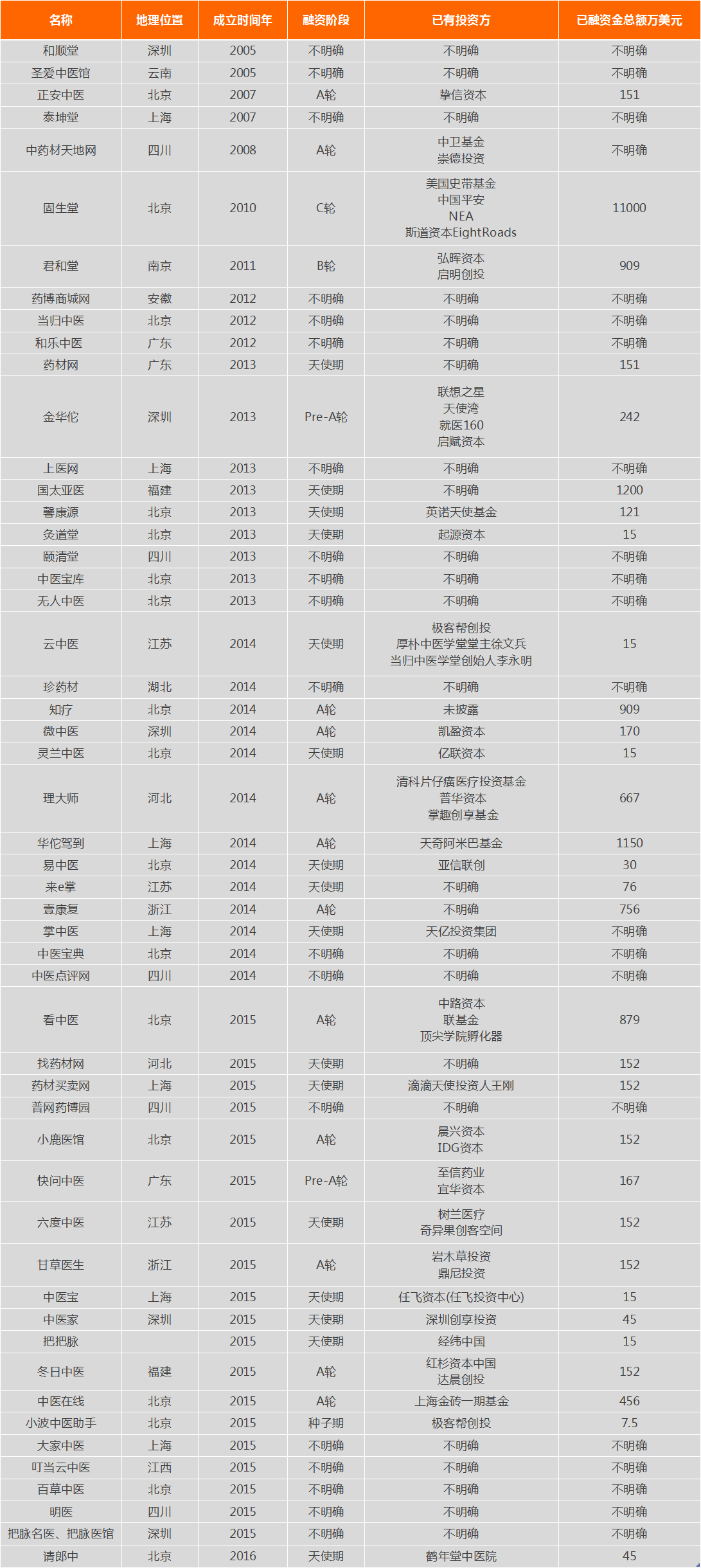
Data source: VCBeat, VBInsight database
In 1991, the Outline of the Ten-Year Plan for National Economic and Social Development of the People's Republic of China proposed the concept of "placing equal emphasis on traditional Chinese medicine and Western medicine," listing it as one of the five major policy guidelines for China's healthcare work, thereby elevating the status of traditional Chinese medicine.
Since 1993, China has vigorously developed the cause of traditional Chinese medicine (TCM) and healthcare, focusing its efforts on the management of TCM medical institutions and the standardization of TCM practitioners. A series of laws and regulations governing TCM have been promulgated successively, including the Law of the People's Republic of China on Licensed Physicians, the Regulations on the Administration of Medical Institutions, and the Regulations on the Administration of Rural Doctors' Practice.
In 2002, the Ministry of Health and six other departments proposed a policy for the participation of traditional Chinese medicine in rural primary health care in the Outline for the Development of Rural Primary Health Care in China (2001–2010).
In 2003, Article 3 of the Regulations on Traditional Chinese Medicine of the People's Republic of China stipulated that the State shall protect, support, and promote the development of traditional Chinese medicine; Article 26 provided that the State shall protect wild resources of traditional Chinese medicinal materials and support the research, development, and utilization of artificial substitutes for endangered animal and plant-derived medicinal materials.
In 2004, the General Office of the State Council forwarded and approved the Notice on the Guiding Opinions on Further Advancing the Pilot Work of the New Rural Cooperative Medical System, jointly issued by the Ministry of Health and nine other departments. This document established policy provisions for the participation of Traditional Chinese Medicine (TCM) in the cooperative medical system, while also formulating policies for TCM community health services and its involvement in public health services.
In 2009, China issued the "Several Opinions of the State Council on Supporting and Promoting the Development of Traditional Chinese Medicine." These measures and opinions provided a sound policy framework for the development of traditional Chinese medicine in China, laying a solid foundation for its advancement.
In November 2012, the "Report to the 18th National Congress of the Communist Party of China" proposed vigorously supporting the development of traditional Chinese medicine and healthcare services, enhancing the service capabilities of medical and health personnel, and strengthening professional ethics and conduct in the medical field.
On December 9, 2015, the State Council executive meeting approved the Draft Law on Traditional Chinese Medicine. On December 21, 2015, the draft underwent its first deliberation at the 18th Session of the Standing Committee of the 12th National People's Congress. Once passed by legislative vote, the draft will become China's first national law specifically enacted to revitalize traditional Chinese medicine.
In February 2016, the “Outline of the Strategic Plan for the Development of Traditional Chinese Medicine (2016–2030)” explicitly stipulated the need to strengthen the inheritance of TCM theories and methods, comprehensively and systematically inherit the academic thoughts and clinical diagnostic and therapeutic experiences of contemporary renowned senior TCM experts, and summarize the basic clinical diagnostic and therapeutic patterns for diseases where TCM demonstrates particular advantages. It also called for conducting a comprehensive census of ancient TCM literary resources and compiling and publishing the Chinese Medical Canon. Furthermore, it emphasized strengthening apprenticeship-based education in TCM and improving the collaborative innovation system for TCM.
On August 11, 2016, the “13th Five-Year Plan” for the Development of Traditional Chinese Medicine was officially released. This Plan elevated the status of the traditional Chinese medicine (TCM) industry to that of a “key pillar industry of the national economy” for the first time. The Plan stated that during the “12th Five-Year Plan” period, the main business revenue of TCM enterprises above designated size grew from RMB 317.2 billion to RMB 786.7 billion, representing an average annual growth rate of 19.92%.
In March 2016, the TCM O2O platform Jin Huatuo announced that it had secured tens of millions of RMB in Pre-A round financing, led by Legend Star and participated by Angels Bay, Jiuyi 160, and Qifu Capital. Following this round of financing, Jin Huatuo plans to focus on three key initiatives: improving the pharmaceutical supply chain, intensifying online promotion, and establishing standardized service processes for its offline clinics.
In March 2016, Li Dashi, a traditional Chinese medicine (TCM) health service platform, announced that it had secured RMB 30 million in Series A financing, led by the Zero2IPO-Pien Tze Huang Medical Health M&A Fund. The funds from this round will primarily be used to expand offline partnerships, enhance market operations and medical team development, and collaborate with Huang Taiji to further develop its internally incubated project, “First Dietary Hall.”
In May 2016, Gancao Yisheng, an “Internet + Traditional Chinese Medicine (TCM)” platform, announced at the “Future of TCM” Summit Forum that it had completed its first round of financing, amounting to tens of millions of RMB. The round was led by Yanmucao Investment, with Dinni Investment participating as a co-investor.Xu Zhiliang, founder of Gancao Doctor, stated that following the completion of this financing round, the company will continue to accelerate its layout in Zhejiang Province and major domestic cities, while prioritizing the establishment of renowned TCM studios in internal medicine, surgery, gynecology, and pediatrics, with the aim of building China’s first physician group focused on traditional Chinese medicine.
In May 2016, Gushengtang held a press conference in Shenzhen to announce its Series C financing round, securing $70 million led by the Starr Foundation from the United States, with Ping An Insurance as a participating investor. Over the next two years, Gushengtang will make significant investments in Shenzhen. On one hand, it will establish demonstration community health centers in Nanshan, Futian, and Bao’an Districts; on the other hand, it will upgrade its renowned TCM physician clinics into national-level TCM hospitals through collaboration with government acceptance procedures.
In June 2016, Junhetang Traditional Chinese Medicine Clinic completed a RMB 50 million Series B financing round, led by Honghui Capital, which focuses on investments in the health industry, with continued participation from its Series A investor, Qiming Venture Partners. Currently, Junhetang has established studios for six physicians, covering multiple disciplines including neurology, moxibustion therapy, gynecology, and pediatrics.
On July 19, 2016, Guangdong Yifanxing Pharmaceutical Technology Co., Ltd., the company behind Yaocai.com, secured angel-round financing in the tens of millions of yuan.
In September 2016, at the Traditional Chinese Medicine (TCM) Entrepreneurs Conference co-hosted by the smart healthcare incubator Kiwi and the TCM non-profit organization TCM Radish Club, Lin Tao, founder of Liudu TCM, announced the completion of a RMB 10 million angel financing round. The lead investor was Shulan Medical, with Kiwi participating as a follow-on investor. Liudu TCM is committed to enabling greater professional freedom for TCM practitioners by addressing the pain point of fragmented patient medical records when doctors practice across multiple clinics.
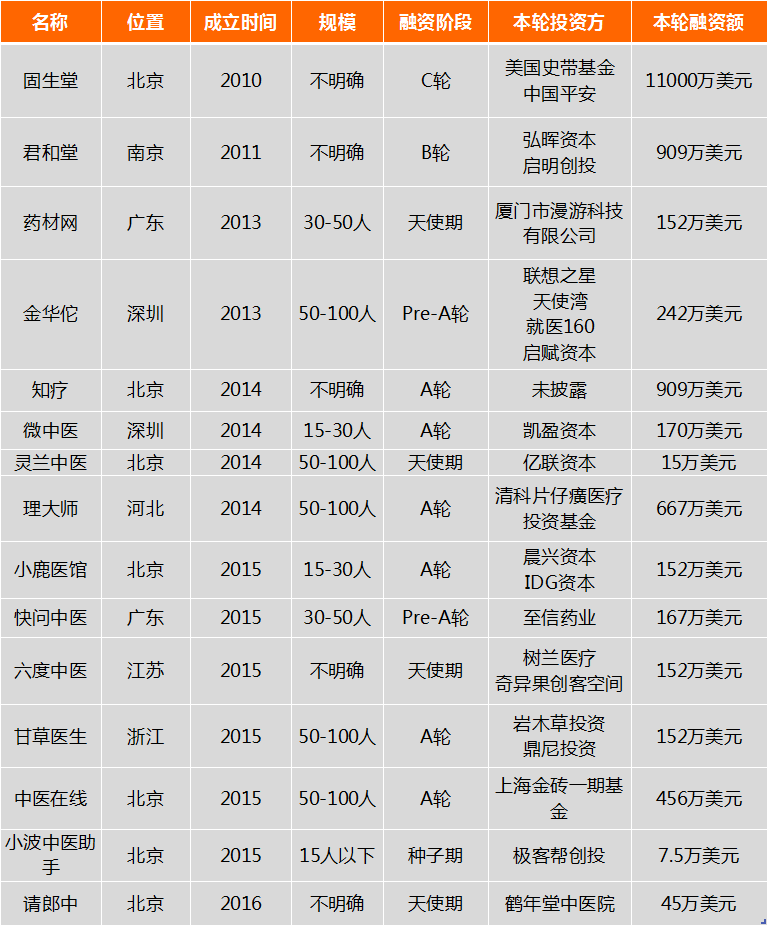
Data Source: VCBeat, VCBeat Database
VCBeat compiled statistics on the establishment dates of internet-based traditional Chinese medicine (TCM) enterprises. Chain TCM clinics, primarily founded between 2005 and 2010, were the earliest entrants into the internet TCM sector. However, the TCM industry formally embraced online operations in 2008 with the launch of TCM Materials TianDi Wang, a B2B platform. According to VCBeat’s analysis, this development was mainly driven by the government’s increased guidance investment in e-commerce in 2008, which elevated national support for the sector to a significant level. Some companies seized this opportunity; for instance, TCM Materials TianDi Wang has grown into a unicorn in the herbal medicine e-commerce field. In 2012, the “Internet + Healthcare” model began to emerge. Influenced by this trend, the TCM industry started exploring the “Internet + TCM” model, leading to an increase in the number of internet TCM enterprises. In 2013, the Draft Law on Traditional Chinese Medicine was included in the legislative plan of the Standing Committee of the National People’s Congress, bringing substantial benefits to the TCM industry. This resulted in explosive growth among internet TCM enterprises, with various models such as TCM O2O and online TCM consultations emerging.
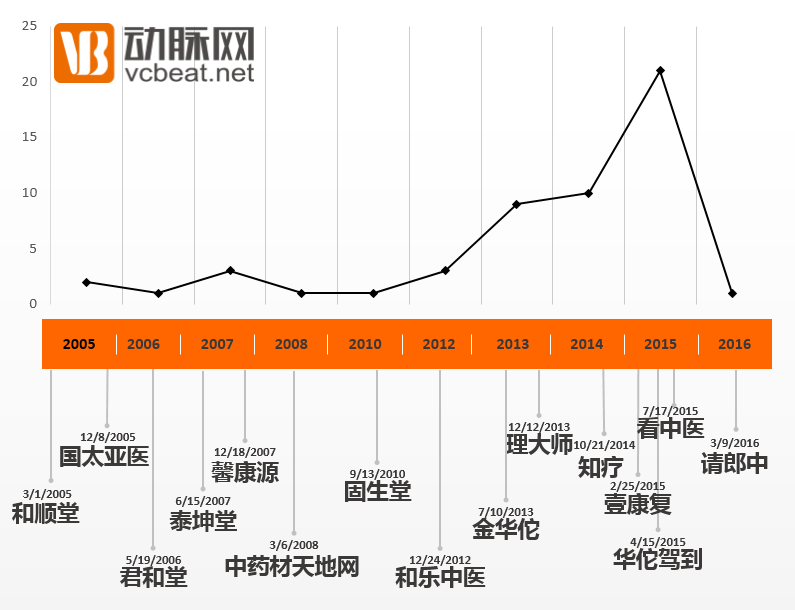
Source: VCBeat Research
The distribution of "Internet + TCM" enterprises is centered in Beijing, Shanghai, Guangdong, and Sichuan, with insufficient penetration into regions such as Gansu that encourage the development of Traditional Chinese Medicine (TCM) and possess advantages in TCM resources. VCBeat analysis suggests that Beijing, Shanghai, and Guangdong have consistently maintained a leading position in the development of the mobile internet industry, providing effective support for local mobile internet startups; consequently, internet healthcare enterprises are relatively concentrated in these three regions. Internet TCM enterprises are also clustered in Sichuan. VCBeat attributes this to two factors: first, Sichuan has long been at the forefront of innovation in "Internet + Healthcare"; second, the Sichuan school of TCM exerts extensive influence. Sichuan is renowned as the "Hometown of TCM" and the "Repository of Chinese Herbal Medicine," with the Sichuan school of TCM having influenced the medical field for over 2,000 years.
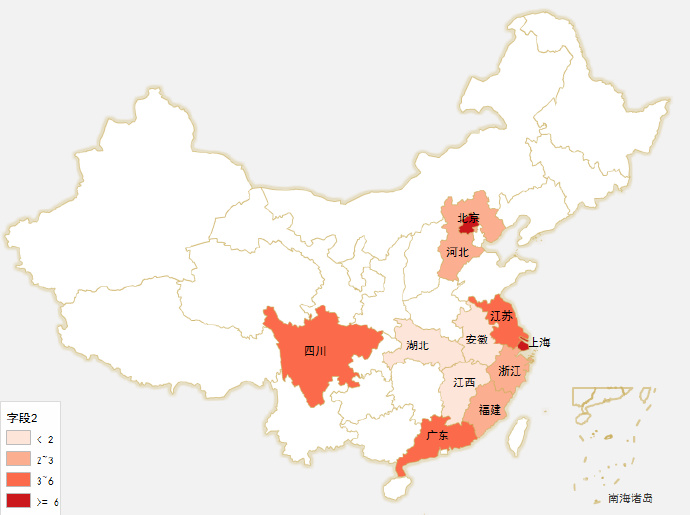
Source: VCBeat's Independent Research and Mapping
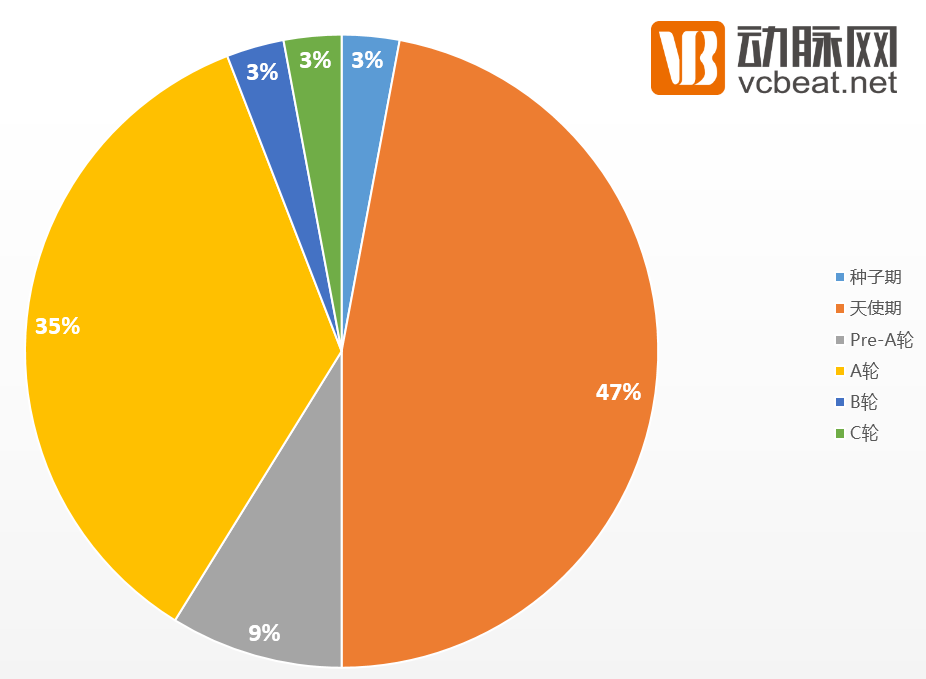
According to VCBeat’s statistics on Internet-plus-Traditional Chinese Medicine (TCM) startups, 33 companies have disclosed their financing information. Among them, 31 companies are at Series A or earlier stages, accounting for over 90%. A total of 17 companies are in the seed or angel stage, representing more than 50%. This indicates that half of the Internet-plus-TCM enterprises are still at the idea stage, with some having completed product prototypes, and their emerging business models remain unclear. In contrast, TCM chain clinics that have adopted online services demonstrate strong offline profitability and clear revenue models, but their exploration of the Internet-plus-TCM model is still in its early stages.
Data Source: VCBeat, VCBeat Database
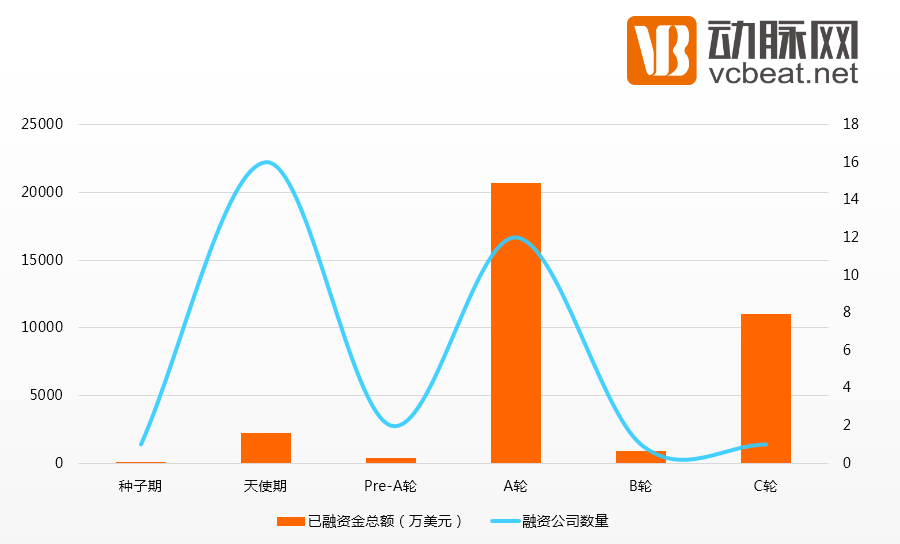
In terms of financing amounts, capital market investments in the internet-based traditional Chinese medicine (TCM) sector are predominantly at Series A. Only one company each has advanced to Series B and Series C. The average financing amount in the “Internet + TCM” industry stands at $11 million. Notably, TCM Materials Tiandi Network secured $151.51 million, accounting for over 70% of the total Series A financing. Overall, enterprises with years of deep industry engagement and substantial TCM backgrounds are more likely to attract investment. This also indicates that the “Internet + TCM” sector remains in an exploratory phase focused on investing in key personnel and industry resources.
Data Source: VCBeat, VCBeat Database
"Internet Plus" TCM Companies Are Relatively Large in Scale
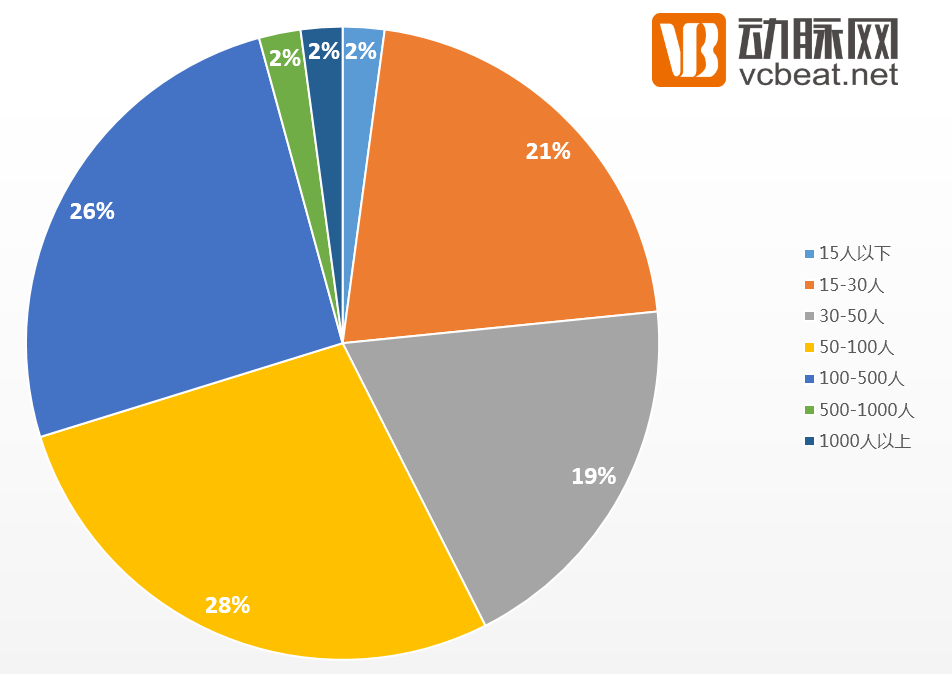
Based on company size statistics, the distribution of internet-based traditional Chinese medicine (TCM) companies is relatively balanced. The segment with more than 100 employees mainly consists of TCM chain institutions. This is primarily due to the chain business model, which requires a larger number of service and sales personnel, resulting in a larger workforce and heavier operational scale. The 30–100 employee segment accounts for nearly 50% of the total. For an emerging “Internet+” industry dominated by angel-stage and Series A companies, this overall scale is relatively large. VCBeat analysis suggests that domestic users’ acceptance of “Internet+ TCM” remains insufficient, necessitating extensive education for both end-users and clients. Consequently, there has been a significant increase in sales and operations staff.
Data Source: VCBeat, Eggshell Research Institute Database
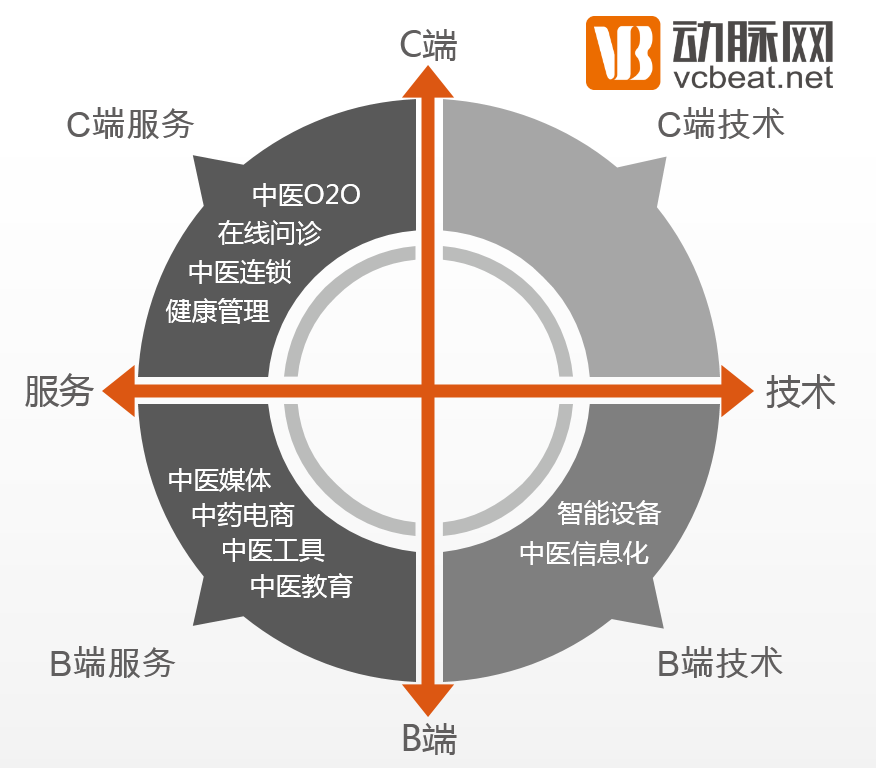
At present, traditional Chinese medicine (TCM) enterprises engaging with the internet primarily adopt several models: e-commerce for TCM herbal materials, online consultations, O2O medication delivery, O2O tuina and wellness services, and internet-based health management. Currently, nearly all such initiatives are concentrated in the marketing segment, with limited participation in the research and production stages.From the perspective of the healthcare delivery process, patients can be simply understood as the consumer-facing (C-end) side, while doctors and medical institutions constitute the business-facing (B-end) side. In terms of driving forces, the sector can be categorized into service-oriented and technology-oriented models. Accordingly, we have established a product matrix based on these two dimensions, classifying “Internet + Traditional Chinese Medicine (TCM)” enterprises into the following categories: TCM O2O, online consultation, TCM chain clinics, health management, TCM media, herbal medicine e-commerce, TCM tools, TCM education, intelligent devices, and TCM informatization.
Source: VCBeat’s independent research and mapping
In terms of the number of investments, Traditional Chinese Medicine (TCM) O2O and online consultation services have received the highest volume of funding. According to VCBeat’s analysis, this is partly because TCM O2O and online consultations have relatively mature development models to draw upon, and partly because the asset-light nature of TCM, which does not require large auxiliary equipment, aligns well with the business models of home-visit O2O and online consultations. TCM chain clinics are ahead in their financing trajectory, primarily because they are asset-heavy businesses with strong profitability stability, and their strategy of developing online services based on offline infrastructure is favored by the capital market.
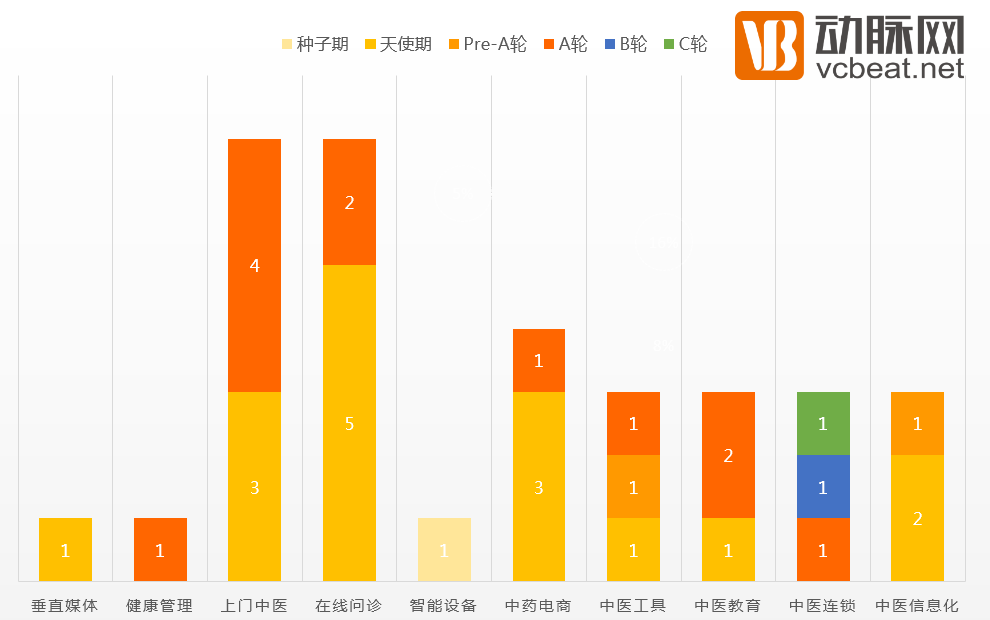
Data source: VCBeat, VCBeat Research Institute Database
To provide a clearer assessment of the funding landscape across different product categories, VCBeat compiled statistics on the average funding amounts for each type. The categories with higher average funding were TCM (Traditional Chinese Medicine) chain clinics, home-visit TCM services, and TCM digital tools. Notably, both TCM chain clinics and TCM e-commerce platforms secured approximately USD 40 million in funding, significantly outperforming other sub-sectors. As TCM chain clinics have already been analyzed above, they will not be discussed further here. Home-visit TCM services, operating under an O2O (Online-to-Offline) model, had an average funding amount of USD 6.81 million, while TCM digital tools averaged USD 3.71 million.
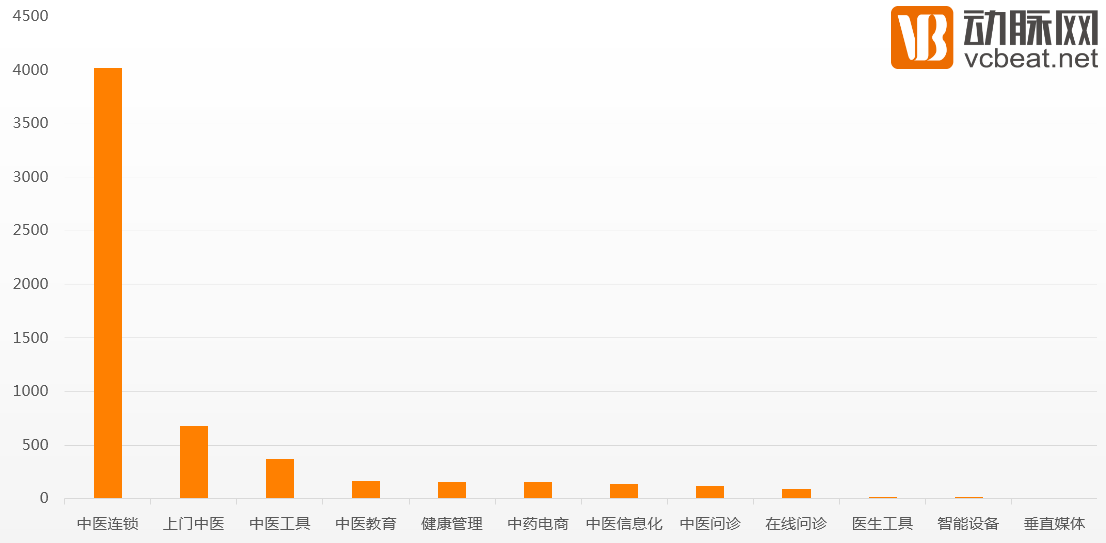
Data Source: VCBeat, VCBeat Database
Financing trends in 2016 offer insights into the development direction of the internet-based Traditional Chinese Medicine (TCM) industry. Therefore, VCBeat compiled statistics on the proportion of financing amounts in each sub-sector relative to the total financing volume in 2016. Notably, all financing activities in health management and smart hardware occurred in 2016, while TCM education, TCM tools, and TCM informatization also accounted for a significantly high proportion of financing that year. This indicates that both capital markets and entrepreneurs are gradually exploring diverse development paths for “Internet + TCM” and seeking greater possibilities.
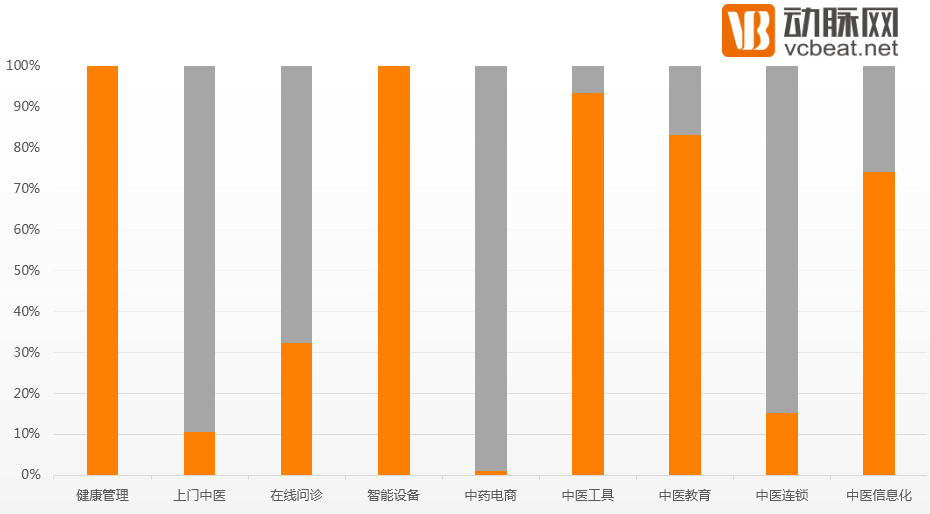
Data Source: VCBeat, VBInsight Database
The traditional Chinese medicine (TCM) industry chain follows a linear development model of cultivation → production → sales. This unidirectional approach has led to issues such as drastic price fluctuations of TCM materials and difficulties in tracing the production origins of TCM products. In contrast, the closed-loop development model of “Internet + TCM” encompasses the entire industry chain. Its forward flow covers production → distribution → sales → services, while its reverse flow involves capital movement. Accompanying this capital flow is the transmission of TCM-related information and pharmaceutical traceability. In terms of vertical deepening of the industry chain, the development of Internet-based TCM services has filled gaps in the traditional TCM industry chain, shifting the overall focus toward a human-centric approach and forming an industry layout centered on patients and physicians. Regarding horizontal expansion of the industry chain, alliances within the herbal medicine sector have been established, thereby enhancing the standardization of TCM production.

Source: Independently researched and charted by VCBeat.
The core issue behind the marginalization of Traditional Chinese Medicine (TCM) lies primarily in its social efficiency; that is, the current TCM system fails to cultivate large numbers of clinically competent medical professionals at the scale achieved by Western medicine. The quality and quantity of TCM practitioners produced under the existing educational framework fall short of meeting societal demands for efficiency. TCM is ill-suited to the current model of mass production. TCM diagnosis relies on inspection, auscultation and olfaction, inquiry, and pulse-taking, while its theoretical foundation centers on pattern differentiation and treatment. TCM education requires both extensive clinical practical experience and the cultivation of a TCM-specific dialectical thinking approach.
The lagging progress in scientific research on Traditional Chinese Medicine (TCM) has resulted in insufficient momentum for its development. The fundamental driver of TCM’s advancement lies in the depth of human understanding of this medical system, necessitating the establishment of an epistemology that aligns modern scientific methodology with the principles of TCM. The extent of progress in TCM research determines the level of human comprehension of TCM; therefore, there is an urgent need to systematically develop modern technologies specific to TCM. Examples include the development of novel technologies for the identification and authentication of Chinese herbal medicines, as well as new techniques for assessing drug efficacy.
Although China is the birthplace of traditional Chinese medicine (TCM), it lags behind countries such as Japan and South Korea in both output value and performance in overseas markets. The global TCM market is valued at approximately $80 billion annually, with China accounting for 10% of this share. In international trade, China exports low-cost TCM raw materials to Japan and Europe, where they are processed into high-value, profitable products. Consequently, Japan and Germany have emerged as the most profitable nations in the TCM market.
Another set of data similarly reveals that, although the global value of traditional Chinese medicine (TCM) is increasingly prominent, China’s share in patents and intellectual property rights remains unsatisfactory. In the overseas TCM market, Chinese entities hold only 0.3% of patents, whereas Japan and South Korea collectively account for more than 70% of TCM-related patents. Based on an overseas TCM market valued at over USD 30 billion, TCM products manufactured in China represent no more than 5% of the market share.
The underlying reasons are twofold. On one hand, there is insufficient momentum for innovation in traditional Chinese medicine (TCM), characterized by a scarcity of robust technological innovation platforms and a shortage of TCM research talent. On the other hand, TCM is often undervalued and disrespected in hospital settings, where it is frequently pitted against Western medicine in a false dichotomy that suggests an either-or choice. In reality, TCM and Western medicine are not mutually exclusive. The scientific development of TCM can benefit from adopting the scientific methodologies used in Western pharmaceutical research to drive progress, rather than relying solely on the *Huangdi Neijing* (Yellow Emperor’s Inner Canon) as a symbol of cultural confidence for contemporary Chinese society.
First is the informatization of traditional Chinese medicine (TCM) materials. Industry insiders are well aware that first-grade medicinal herbs are exported, second-grade ones supply large hospitals, while substandard and inferior third-grade herbs—even herbal residues—are processed into a wide variety of proprietary Chinese medicines. The efficacy of TCM largely depends on the quality of its medicinal materials. On one hand, upstream TCM materials often pass through five or six intermediaries, making it difficult to trace the source when quality issues arise. On the other hand, planting standards for medicinal herbs are not unified; unscrupulous vendors use chemical agents to bleach herbs for better appearance, resulting in low-quality TCM materials circulating in the market. Therefore, establishing a standardized cultivation system for TCM materials, forming an industrial alliance, reducing resale links through e-commerce platforms, and building a digital management system for medicinal herbs are critically important for the entire TCM industry.
Next is the informatization of clinical research in Traditional Chinese Medicine (TCM). With the continuous evolution of healthcare models, the rise of telemedicine, mobile health, and home-based care necessitates that TCM adapt to contemporary developments by establishing a digitalized system for the application of clinical terminology in both practice and research. Constructing a theoretical framework distinct from that of modern medicine will better facilitate the integration of TCM with the Internet.
Finally, there is the Traditional Chinese Medicine (TCM) Physician Information Management System. China faces a shortage of TCM practitioners; while the country currently has over 2 million licensed physicians, only 330,000 are licensed TCM practitioners. Statistics show that the number of renowned TCM experts in China has plummeted from over 5,000 in the 1980s to fewer than 500 today. This indicates that the inheritance of TCM is facing a crisis. As internet-based TCM companies expand their scale and operations in the future, competition for TCM talent will inevitably intensify. Consequently, key development directions will focus on building physicians’ personal brands (IP) and implementing information management systems that alleviate administrative burdens for practitioners.
Amidst the scarcity of Traditional Chinese Medicine (TCM) practitioners, the current TCM O2O model has failed to improve consultation efficiency; instead, it has reduced it. This model aims to facilitate C2C connectivity between patients and doctors to share medical resources, yet physicians are already a shared resource. A TCM practitioner seeing 20 patients per day at a clinic may only manage to see five patients under the TCM O2O model due to extensive travel, contradicting the original intent of sharing resources and enhancing efficiency. Unlike catering and other O2O sectors, the core resource in the internet-based TCM industry is the physician, not the user. Therefore, for home-visit TCM services, transitioning to an Online-and-Offline (OAO) model that integrates physical and digital operations holds greater promise. By building reputation offline and leveraging it for online marketing—using the online platform as a shield and offline services as a spear—is the correct direction for the development of TCM O2O.
“Superior physicians treat disease before it arises, rather than after it has manifested.” This principle encapsulates the core philosophy of Traditional Chinese Medicine (TCM), which emphasizes primary prevention in healthy individuals and secondary prevention to halt disease progression in those already affected. TCM prioritizes syndrome differentiation and targeted treatment, while herbal wellness practices aim to nurture vitality, prevent illness, and promote health and longevity. This approach aligns closely with modern health management concepts.
The World Health Organization once stated that an individual’s health and longevity are determined 15% by genetics, 10% by social factors, 8% by healthcare conditions, 7% by climate, and the remaining 60% by personal choices. In other words, there is a significant potential to improve health through personal health management or self-directed lifestyle interventions. According to research data from Zhongkang CMH, the overall market size for chronic disease medications in China reached RMB 732.3 billion in 2015, representing a year-on-year growth of 7.3%. This figure merely reflects the market share of chronic diseases. However, even if only 10% of the chronic disease market could be converted through health management services, the resulting health management market would be substantial.
For sub-health conditions and chronic diseases, Western medicine often offers limited solutions. In China, however, the Traditional Chinese Medicine (TCM) concept of “preventive treatment” has gained widespread acceptance. With ongoing research and development in TCM, its syndrome differentiation-based therapeutic approaches demonstrate greater advantages in managing chronic diseases and other conditions. Individuals with sub-health can consult TCM practitioners online for guidance on health preservation, tuina massage, acupuncture, dietary therapy, medicinal cuisine, and seasonal wellness regimens. Additionally, leveraging mobile internet and emerging technologies, users can collect and input data on diet, exercise, and sleep to create personal health profiles. By uploading symptom-related information, they can achieve remote health assessments.
In the field of TCM health management, “Kan Zhongyi” is a pioneer. It has developed a human health assessment system and presents the results to users visually through its app.It allows users to view various physiological parameters and provides a health assessment score. When any metric exceeds the warning threshold, the corresponding body part is highlighted in red to alert the user. To ensure data quality, data collection is primarily conducted through physician-led inquiries. Smart hardware is deployed wherever data collection is required, and we anticipate that advancements in TCM-related smart devices will drive the growth of the “Internet + Preventive Healthcare” model.development.”
What is science? The essence of science lies in its willingness to acknowledge errors and its refusal to allow scientific theories to be regarded as absolute truths or elevated into a form of scientism. This openness is the fundamental driving force behind the continuous advancement of science. When scientific theories conflict with empirical evidence, it is the theories that must be questioned, even if this necessitates overturning entire theoretical frameworks. This is the true nature of science. What constitutes the frontier of science? For science, the more enigmatic and contested a field is, the more likely it is to yield new discoveries. The scientific frontier does not consist of mature medical technologies or celebrated medical achievements; rather, it comprises areas of exploration that remain ambiguous and ill-defined. Traditional Chinese Medicine (TCM) is precisely such a field.
It is often said that Westerners have liberated their hands, while Easterners have liberated their eyes. Our ancestors excelled at observation, seeking the intrinsic commonalities among things. Einstein’s discovery of relativity stemmed merely from his doubts about classical mechanics, which sparked a series of profound reflections. Whether one supports or opposes Traditional Chinese Medicine (TCM), the ongoing debates often lead to confusion and mutual incomprehension. This may indicate that we lack a new dimension for understanding TCM. As research data accumulates and more figures like Tu Youyou emerge, TCM will be subjected to increasingly in-depth analysis, bringing the truth about it into sharper focus. This endeavor requires the joint and continuous efforts of both the inheritors and innovators of TCM.
Copyright Statement
This report is produced by VCBeat. All text, images, and tables contained herein are protected by applicable trademark and copyright laws. Some of the text and data have been collected from publicly available sources, with ownership retained by the original authors. No organization or individual may reproduce or distribute this report in any form without prior written permission from our company. Any unauthorized commercial use of this report shall constitute a violation of the Copyright Law of the People's Republic of China, other relevant laws and regulations, and applicable international conventions.
Disclaimer
This research report is based on information that VCBeat considers reliable and currently publicly available. VCBeat strives to, but does not guarantee, the accuracy and completeness of such information. Due to limitations in research methodologies, sample sizes, and the scope of data collection, the data presented herein only reflects the basic conditions of the surveyed population during the survey period and serves solely for the current research purposes, providing a basic reference for the market and clients. Furthermore, VCBeat does not guarantee that the opinions or statements contained in this report will remain unchanged. At different times, VCBeat may issue reports with information, opinions, and projections that are inconsistent with those contained in this report.
VCBeat does not consider recipients of this report as clients merely by virtue of their receipt thereof. This report is distributed only where permitted by applicable laws and regulations, solely for informational purposes, and shall not be construed as advertising in any manner. Under no circumstances shall the information contained herein or the opinions expressed constitute investment advice to any person. Where permitted by law, VCBeat and its affiliated entities may hold equity interests in companies mentioned in this report and may provide or seek to provide capital raising, financial advisory, or other related services to such companies.
Note: I am Wang Guanglong, an author at VCBeat. If you are an investor interested in the traditional Chinese medicine (TCM) industry, or a TCM entrepreneur seeking media coverage, please feel free to connect with me. We also welcome any leads on relevant companies. WeChat: touchlife1; Email: wang.gl@vcbeat.top