

Hua Medicine Files IPO Prospectus Highlighting Global First-in-Class Glucokinase Activator for Type 2 Diabetes
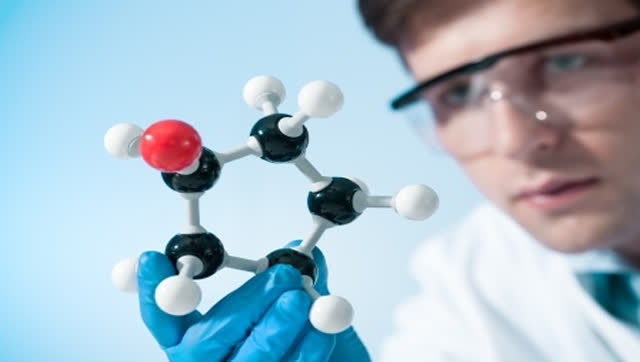
In November, at the Chinese Diabetes Congress, Professor Zhu Dalong, President-Elect of the Chinese Diabetes Society under the Chinese Medical Association, announced the Phase II clinical trial results of HMS5552, an original innovative drug for diabetes developed by Hua Medicine. The announcement energized all attendees. With tags such as “world’s first-in-class” and “China’s debut,” this milestone marks a breakthrough for China’s pharmaceutical industry, which has long been constrained by foreign R&D giants. For the first time, we have seized the initiative. The Chinese clinical trial team successfully completed the Phase II clinical study of this cutting-edge product on a global scale, signifying the successful conclusion of clinical research into this new class of oral antidiabetic agents featuring a novel mechanism of action and a new chemical structure.
Diabetes is a global chronic disease, and the development of novel therapeutics for diabetes has consistently remained a focal point in pharmaceutical R&D. How did Hua Medicine outpace global pharmaceutical giants such as AstraZeneca and Merck & Co. to become the first to complete Phase II clinical trials? What are Hua Medicine’s “secret weapons”? To find answers, our reporter interviewed Dr. Chen Li, co-founder of Hua Medicine.
In 1992, Chen Li joined Roche, gradually transitioning from a scientist to a manager. During his 18-year tenure at Roche, Chen became thoroughly familiar with the new drug development process. He possesses a systematic understanding of the entire workflow, ranging from elucidating disease mechanisms and addressing unmet clinical needs, to target identification and small-molecule drug selection, initiating clinical studies, and advancing industrialization during Phase III clinical trials following successful Phase II results. He also has in-depth knowledge of the key priorities, resource allocation, and technical oversight required at each stage of drug development.
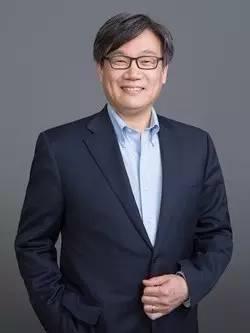
Dr. Chen Li, Founder and CEO of Hua Medicine
Chen Li revealed that he was among the earliest batch of scientific researchers to return to China. In 2004, Chen Li returned to China as the Chief Scientific Officer of Roche’s China R&D Center, where he was responsible for establishing the facility—the first R&D center in China set up by a multinational corporation. With the establishment of Roche’s R&D center in China, Chen Li’s concepts gained significant traction and widespread dissemination.
In 2011, recognizing the improving landscape for pharmaceutical innovation in China, Dr. Chen Li and Dr. Cui Shuo founded Hua Medicine, driven by their original aspiration to develop new and high-quality medicines for Chinese patients.
“Before going to the United States, I was a teacher engaged in the management and education of graduate students. You could say I had the mindset of an educator and scientist. After joining Roche, I shifted into a managerial mindset, and at Hua Medicine, I embraced an entrepreneurial mindset to fulfill the responsibilities of an entrepreneur. So, these were three distinct transitions,” said Chen Li. “Being able to develop products for diseases based on the needs of Chinese patients and following the logic of personalized treatment—I think this process is very important.”
Chen Li told reporters, “In China, a Chinese team has achieved the world’s first original clinical research innovation in the effective prevention and treatment of diabetes drugs. This is a breakthrough in the history of pharmaceutical innovation in China and is indeed an exciting development.”
China currently has approximately 110 million patients with diabetes, and nearly 20% of the population is in a prediabetic state.
“China has a large diabetic population, yet the early development of diabetes medications has largely been driven by Europe and the United States, without taking into account the specific characteristics of diabetes onset in the Chinese population,” said Chen Li.
Diabetes is, in essence, a disease characterized by the progressive decline of pancreatic islet function. Previous medications have often failed to address the specific pathogenic characteristics and underlying etiologies of the disease, thereby providing only symptomatic relief rather than targeting the root cause. To date, there are approximately 400 million diabetes patients worldwide, among whom only about 35% achieve effective outcomes with oral drug therapy.
Chen Li told reporters that the drug development process at Hua Medicine has always centered on the etiology and pathogenesis of diseases, approaching four clinical studies in a scientific and rational manner from the perspectives of precision medicine and personalized treatment.
“The future of medicine lies in providing patients with the right treatment at the right time—a concept that originated during my tenure at Roche,” Chen Li recalled.
In addition to its unique philosophy of novel drug innovation, Hua Medicine has developed a distinctive “East-meets-West, collaborative innovation” model by aligning with domestic and global R&D platforms. Chen Li told the reporter, “Chinese enterprises still have relatively weak innovation capabilities. To narrow the gap with multinational corporations, companies must first raise their own standards, build strong teams, and make effective use of international resources.”
The commercialization of innovative technologies is inseparable from the role of capital. In the United States, biotechnology (IP) companies and venture capital (VC) firms play a pivotal role in translating innovative technologies into marketable products. By integrating R&D teams with specialized expertise and capital to bring products to market, this model has given rise to landmark enterprises such as Illumina. This is essentially the “VC + IP” model. In China, biotechnology companies can collaborate with global R&D technology platform providers, known as Contract Research Organizations (CROs), such as WuXi AppTec and Tigermed, to achieve successful product development through outsourced R&D operations. This has formed an operational model of “VC + IP + CRO,” referred to as the VIC model.
Hua Medicine secured capital injection at its inception, forming a golden partnership between entrepreneurs and investors to jointly build a team dedicated to identifying global resources and technologies that address unmet clinical needs of patients. Once the necessary resources and technologies were in place, the Hua Medicine team collaborated with CRO partners to design study protocols, with the CROs organizing and conducting development and clinical trials. From project selection and operational management to clinical practice, Hua Medicine maintains strict quality (Q) control at every stage, aiming not only to realize returns for investors but also to prioritize patient benefits. Dr. Li Chen refers to this proprietary model as the VICQ model, uniquely pioneered by Hua Medicine.
“At present, early-stage angel investments, venture capital, and even financial advisory (FA) services are relatively scarce in China. Teams with the capability to assess the developability of early-stage scientific and technological innovations—such as Tonghe Capital, the investor in Hua Medicine’s current round, and its cooperating financial advisor, China Renaissance—are also quite rare,” Chen Li told reporters. “However, compared to five years ago, this already represents a leap forward.”
“Effectively integrating new technologies with capital to form a systematic industrial chain that encompasses innovation, output, and returns. The principle that ‘high standards and high quality are essential to creating high value’ is crucial,” emphasized Chen Li.
Explore and discover with the rigor of a scientist, maximize capital efficiency from a manager’s perspective, and serve society with the responsibility of an entrepreneur. Perhaps this is Hua Medicine’s “secret recipe,” and the answer that journalists seek.
In the process of building innovation capabilities, returnee talents like Chen Li have made indispensable contributions. Improvements in the R&D environment and the regulatory landscape have fostered a favorable atmosphere for pharmaceutical innovation in China, giving rise to a cohort of innovative enterprises such as Hua Medicine. These companies are patient-centric, driven by innovation, and dedicated to meeting patient needs through advanced science and technology.
Overall, China’s pharmaceutical innovation capabilities remain weak, and companies engaged in the research and development of original new drugs based on novel mechanisms and structures are still exceedingly rare. “As Heaven maintains vigor through movement, a gentleman should constantly strive for self-perfection.” It is believed that in the coming years, pharmaceutical enterprises in China’s innovation sector will experience rapid development, generating significant momentum for investment in the country’s biopharmaceutical and health industries.
A few days later, the reporter reached Chen Li again. With the weekend approaching, Chen was still on a business trip abroad. Perhaps he was working to advance the next phase of trials for a new diabetes drug, or perhaps he was seeking the next innovative therapy eagerly awaited in clinical practice. For more than two decades, this scientist dedicated to novel drug development has continued to strive for pharmaceutical innovation in China. “Developing new drugs, and good drugs, for Chinese patients,” Chen said in a calm tone. He may not consider it particularly extraordinary, yet it has remained his steadfast commitment.