

Ping An WanJia Medical Sets Industry Benchmark with New Clinic Certification Standard and Launches National 'Top 100, Top 10' Clinic Rankings
On December 2–3, Ping An Wanjia Medical Investment Management Co., Ltd. (hereinafter referred to as “Ping An Wanjia Medical”), a subsidiary of Ping An Group, launched the Wanjia Certification Standards for primary care medical institutions. This marks China’s first authoritative evaluation framework specifically tailored to the clinic sector. Concurrently, Ping An Wanjia Medical unveiled the national list of the “Top 100 and Top 10 Clinics,” representing China’s first nationwide assessment of clinic service capabilities. Registered on July 4 this year, Ping An Wanjia Medical focuses on building a primary care service platform, which has already onboarded more than 10,000 clinics.
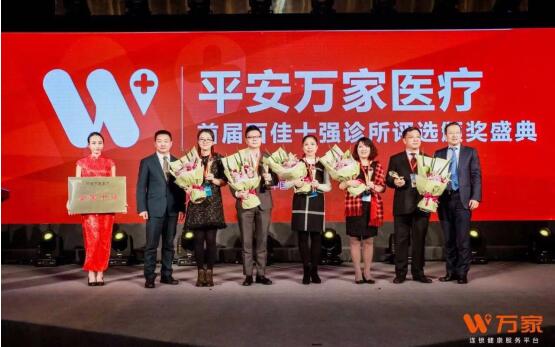
(Award Ceremony for the National Top 100 and Top 10 Clinics)
Currently, the quality of clinics in China’s healthcare market varies significantly, and there is a lack of credible evaluation standards, leaving patients with no clear basis for making informed choices. It is understood that Ping An Wanjia Medical, recognizing this need, has developed the Wanjia Medical Certification Standards (hereinafter referred to as the “Standards”) based on the principle of “International Standards, Chinese Practice.” In collaboration with internationally authoritative healthcare quality service system accreditation bodies—JCI and DNV GL—as well as the Shanghai Social Medical Institutions Association, Ping An Wanjia Medical introduced international standards, conducted on-site research, and comprehensively restructured existing frameworks to establish these Standards, thereby filling a gap in the industry.

(Ping An Wanjia Medical Chairman and CEO Fan Shaofei accepts an exclusive media interview)
Fan Shaofei, Chairman and CEO of Ping An Wanjia Medical, introduced that the Wanjia Medical certification standards are divided into two levels: preliminary assessment and professional evaluation. Following rigorous preliminary assessments, reviews, and irregular spot checks, primary healthcare institutions applying for certification will be awarded three-star, four-star, or five-star certificates. The professional evaluation criteria are patient-centered, emphasizing both standard establishment and continuous process improvement. They comprise seven components: diagnostic and treatment services, patient rights, medication management, auxiliary examinations, infection control and prevention, facility and equipment management, and staff management.
“Although the standard is merely a textual document, it serves as the纽带 for comprehensive collaboration and improvement between Ping An Wanjia Medical and clinics. Leveraging empowerment initiatives such as the Wanjia Academy and Cloud Clinic, primary healthcare institutions will have access to guidelines and concrete pathways for continuous improvement,” remarked a healthcare reform research scholar while analyzing the Wanjia certification standards.
“The standard also benefits various sectors of society. Through the implementation of standards, the government can guide clinics toward sound development and continuously enhance their service capabilities; commercial insurance companies can establish mature primary care service networks, breaking the longstanding constraint that most commercial health insurance reimbursements are limited to ‘public hospitals at Level II or above’; clinics can distinguish themselves, achieve brand premium, enable chain replication, and secure greater growth opportunities; and the public can access clinics that are convenient, high-quality, and reasonably priced, no longer blindly inferring medical quality based solely on location and décor,” commented the certification review experts present.
Leaders of the National Health and Family Planning Commission pointed out that the Pingan Wanjia certification review is pioneering. Although foreign certifications feature high standards and strict requirements, they need improvement in adaptability to national conditions, charge high fees, and have limited coverage. Building on international standards, Pingan Wanjia Medical offers free certification to hundreds of thousands of primary healthcare institutions, representing a worthwhile approach to explore.
It is reported that the annual release of Fudan University’s “China Best Hospital Rankings” and its specialty-specific lists has become a carnival for the healthcare industry. Hospitals leverage these rankings to demonstrate their industry standing, physicians take pride in them, and patients use them as a guide to seek solutions for complex medical conditions. However, there has been a notable absence of such evaluations in the clinic sector. Fan Shaofei, Chairman and CEO of Ping An Wanjia Medical, stated, “In response to the trends toward clinic branding and diversified healthcare-seeking behavior among the public, Ping An Wanjia Medical launched the ‘China Top 100 Clinic’ selection campaign mid-year. This marks the first nationwide evaluation of clinic service capabilities in China.”
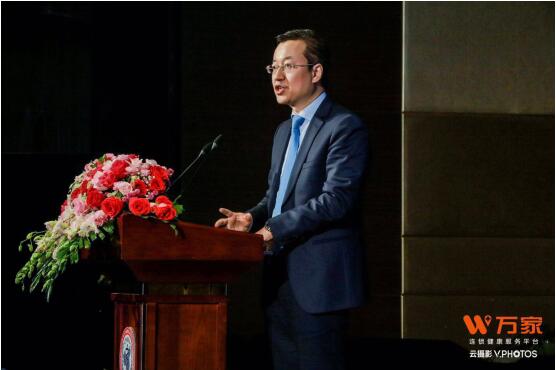
(Fan Shaofei, Chairman and CEO of Ping An Wanjia Medical)
It is reported that the selection process lasted for more than six months. Guided by the Ping An Wanjia certification standards and grounded in feedback from government authorities and experts, the evaluation fully incorporated public voting to reflect service reputation. Through comprehensive assessment and weighted scoring, the program selected the Top 10 Clinics Nationwide, the Four Best Chain Medical Institutions, and the Top 100 Clinics Nationwide from applicants across more than 30 provinces and municipalities. In addition to the prestige and enhanced brand influence, the award-winning clinics will receive a suite of significant benefits, including a comprehensive bank credit line of RMB 1.5 billion, medical liability insurance coverage worth RMB 170 million, and accidental injury insurance for medical personnel valued at RMB 50 million. The clinics will also gain access to various free training opportunities and learning resources.
Frequent New Policies for Primary Care Create a Golden Age of Development for Non-Public Primary Medical Institutions. Since the launch of the new healthcare reform in 2009, the state has vigorously promoted the development of primary care and restructured the tiered diagnosis and treatment system. A series of core healthcare reform documents have been introduced successively, including those on establishing a general practitioner system, encouraging social capital to invest in healthcare, advancing tiered diagnosis and treatment, and implementing family doctor contract services, thereby accelerating industry development. Since the second half of 2016, the “Healthy China 2030” Planning Outline, along with two draft regulations released by the National Health and Family Planning Commission—the “Measures for the Administration of Physician Practice Registration” and the “Detailed Rules for the Implementation of the Regulations on the Administration of Medical Institutions”—have further expanded the development space for non-public primary medical institutions. These measures have liberalized policies on free practice, allowed incumbent physicians to open clinics, and removed planning restrictions on individual clinics.
The primary healthcare industry is gradually maturing, emerging as a new hotspot for industrial and venture capital investment. Since the beginning of this year, various primary healthcare institutions, particularly specialized ones, have attracted significant interest from industrial and venture capital funds, sparking an investment boom. Internet healthcare startups, chain medical institutions, and large insurance groups are all actively entering the primary healthcare sector. The “Healthy China 2030” Planning Outline explicitly states, “Promote cooperation between commercial insurance companies and medical, health examination, and nursing institutions, and develop new organizational forms such as health management organizations.”
Against this backdrop, Ping An Group has leveraged its insights into policy and industry trends to establish Ping An Wanjia Medical, focusing on primary healthcare. By “building platforms, setting standards, and connecting clinics,” it has created an integrated online-offline business loop covering both basic medical insurance and commercial health insurance. Actively driving industry upgrading, Ping An Wanjia Medical initiated the formation of the Primary Healthcare Management Branch of the China Non-Public Medical Institutions Association, introduced certification standards, and launched the “Top 100 and Top 10 Clinics in China” selection campaign, thereby accelerating industry development through concrete actions.
Ping An Wanjia Medical is committed to integrating grassroots medical resources and services, achieving focused development and targeted breakthroughs, and driving the continuous advancement of the grassroots healthcare industry.
Source: Huayu Radio Network