

The Evolution of 'Light' Telemedicine in the U.S.: New Trends, Products, and Market Dynamics
Typically, we understand telemedicine as a scenario in which a small hospital encounters a complex or rare case and connects via video conference with specialists at a major hospital thousands of miles away to seek solutions. However, in the United States, the application of remote technologies in healthcare is becoming increasingly “lightweight,” shifting more toward patient–provider communication and disease-related consultations—specifically, Direct-to-Consumer (D2C) teleconsultations—which overlap considerably with China’s “light consultation” model.
In recent weeks, the U.S. telemedicine market has shown considerable activity. Notable recent developments include: telehealth provider American Well partnering with digital medical device manufacturer Tyto Care; Medici Technologies, a remote doctor-patient communication platform, raising $24 million in funding; and Remedy Medical launching a new telemedicine app equipped with machine learning capabilities. These examples represent several new variants within the direct-to-consumer (D2C) telehealth market, underscoring the sector’s growing vitality and increasing diversity of offerings. VCBeat (WeChat ID: vcbeat) shares these latest updates and provides analysis below.“Light” TelemedicineHow Exactly Does the “Transformation” Occur?
Physical devices are now also being applied to remote consultations. Founded in 2006, American Well is the first company to receive accreditation from the American Telemedicine Association (ATA). After launching the first multi-party video conferencing solution, the first remote mobile software development kit, and remote imaging reception capabilities, it has now integrated products from the home wearable company Tyto Care into its video consultation platform, enabling patients with chronic diseases and other populations to easily perform self-examinations at home. The two companies announced their partnership on November 30 local time.
Last month, a digital stethoscope manufactured by Tyto Care received FDA 510(k) clearance for medical devices in the United States. The company’s telehealth examination product line now includes a digital stethoscope, otoscope, thermometer, and remote imaging devices. These tools enable data collection from the mouth, ears, throat, eyes, and skin, as well as measurement of body temperature, heart sounds, and lung sounds. Consequently, individuals can perform self-examinations at home using Tyto Care’s devices and remotely transmit images and data to physicians on the American Well platform. The physicians then interpret multiple clinical indicators directly from their offices to assess the patients’ health status.
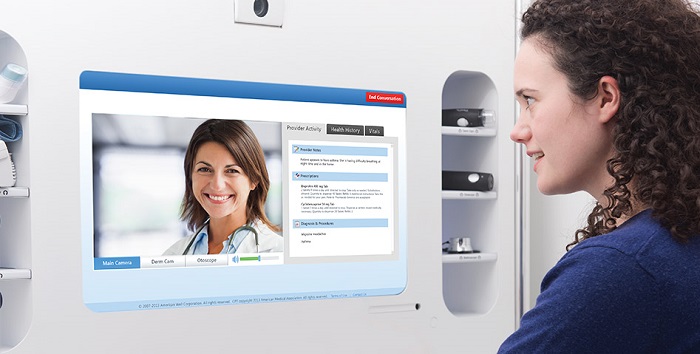
Handheld Self-Examination Devices Integrated with Telemedicine
Roy Schoenberg, CEO of American Well, stated that the partnership with Tyto enriches telemedicine offerings by enabling more comprehensive physical examination data to be captured at every stage of remote diagnosis, treatment, and disease monitoring, using devices that are both safe and user-friendly. The company’s previously launched services share similarities with the multiple digital diagnostic services once provided by HealthSpot, a telemedicine kiosk provider that ceased operations earlier this year. However, compared with HealthSpot’s model of delivering medical equipment through costly “kiosk-style clinics,” home-based examinations are significantly more cost-effective.
An increasing number of specialized medical institutions are setting their sights on the lucrative D2C remote consultation market. This year, American Well has been the most prominent player in this field, securing partnerships with numerous healthcare organizations: in January, it signed agreements with St. Luke’s University Health Network and Bon Secours Health System; in March, with Tampa General Hospital; in August, with the non-profit healthcare organization Baptist Health; in September, with Northern Arizona Healthcare; and in early November, with NewYork-Presbyterian Hospital.
According to Danielle Russella, Director of Solutions at American Well, the company’s partners have grown from just three or four to more than 50 within a few years, including major institutions such as Massachusetts General Hospital, Cleveland Clinic, and Intermountain Healthcare. With new users added this year, American Well is projected to have partnerships with over 70 healthcare systems by the end of the year, encompassing 400–500 independent hospitals and 5,000–7,000 healthcare providers.
Medici Technologies, a company founded this year and headquartered in Austin, Texas, is dedicated to making telehealth services more personalized. Through its HIPAA-compliant telemedicine app, Medici enables individuals to maintain contact with their primary care physicians, physical therapists, and even veterinarians primarily via text messaging, thereby extending offline interactions into the online realm. Medici also encourages other telehealth providers to license its software, promoting the practice of enhancing patient-provider communication through remote tools.
Clinton Philips, the founder of Medici, previously established 2nd.MD, another telemedicine platform that primarily focuses on complex cases by enabling video consultations with remote medical specialists in regions with inadequate healthcare resources. The emergence of Medici has effectively filled the gap in the consumer-facing segment of telemedicine.
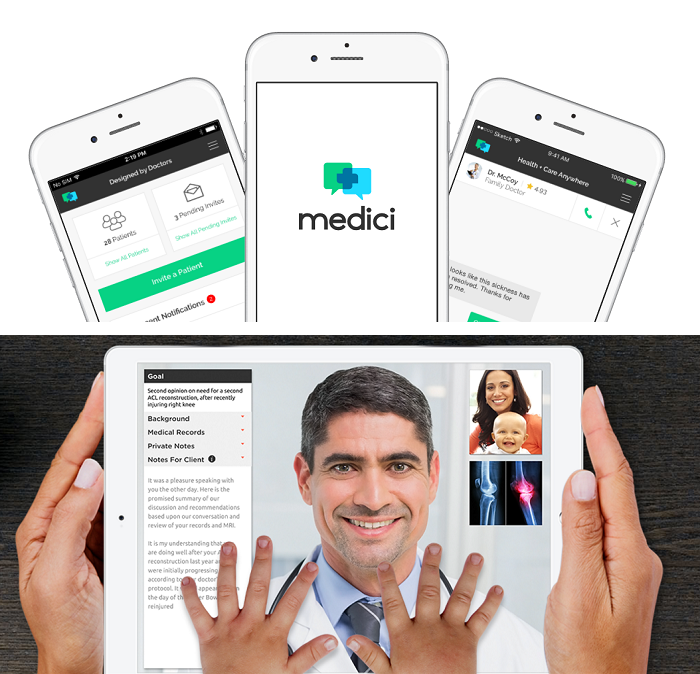
Two D2C Telemedicine Options: Medici’s Text-Based Consultations and 2nd.MD’s Video Consultations
The company confirmed recent financing news but declined to disclose the amount or investor details. However, according to SEC filings, the total funding raised in this round was approximately $24.2 million. Currently, Medici’s services are limited to Austin, Texas, and Paris, France. The company plans to use the new capital to expand its operations to other regions across the United States, as well as to Europe and South Africa, and has boldly decided to launch its services in 12 U.S. states by January 2017.
Founder Philips stated in the announcement that while $24 million is indeed a significant sum for an early-stage company like Medici, the personalized telemedicine services they are launching hold even greater promise, and Medici has only just begun.
Remedy Medical operates a patient-driven telemedicine platform that effectively integrates physicians’ prescribing expertise with the intelligence of computer software. The system features machine learning capabilities and is personified as Remy, a medical assistant that can answer basic questions, help physicians manage administrative tasks, and derive medical insights from user data.
Telemedicine Robot AssistantRemy
On Remedy, the prescription process is smarter: treatment proceeds alongside observation. For instance, a doctor might say, “Your symptoms suggest Condition X, caused by Factor Y, which should resolve spontaneously within Z days. However, I will follow up with you within 48 hours; if your condition has not improved, we will try these treatment options.” Physicians on the Remedy platform can prescribe any medication except opioids. For $30, users can consult with professional physicians (who are not their primary care providers) until their health issue is resolved. If Remedy’s treatment proves ineffective, they will also assist users in obtaining referrals to the nearest hospital covered by their insurance.
William Jack, CEO and Co-Founder, explained that although the U.S. D2C telemedicine sector has seen significant growth over the past two years, video consultations have not yet become a habitual practice for individual users, especially when compared to the more frequently utilized B2B2C scenario of remote specialist consultations. Therefore, similar to the aforementioned Medici case, Remedy opted against video-based interactions, instead adopting HIPAA-compliant messaging for communication.
Remedy secured seed funding in 2010 from Greylock Partners’ Greylock Discovery fund, with additional investment from Khosla Ventures and Alsop Louie Partners.