

China Releases White Paper on Traditional Chinese Medicine
This morning, the State Council Information Office released the white paper titled “Traditional Chinese Medicine in China” and held a press conference to introduce the white paper and the development of traditional Chinese medicine to the media and the general public. The conference was moderated by Xi Yanchun, spokesperson for the State Council Information Office. Wang Guoqiang, Deputy Director of the National Health and Family Planning Commission and Director of the National Administration of Traditional Chinese Medicine, attended the conference and answered reporters’ questions.
This white paper is the first one ever issued by the Chinese government on the development of Traditional Chinese Medicine (TCM). It systematically outlines the historical evolution and distinctive features of TCM, comprehensively presents China’s national policies and key measures for promoting TCM, and highlights its scientific value and cultural characteristics. The document, totaling approximately 9,000 words, consists of three parts: a preface, the main text, and a conclusion. It has been published in multiple languages, including Chinese, English, French, Russian, German, Spanish, Japanese, and Arabic. The Chinese and English editions have been published respectively by the People’s Publishing House and the Foreign Languages Press.
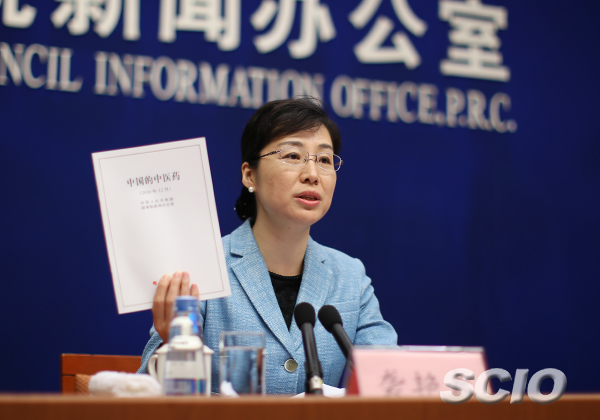
Xi Yanchun, Deputy Director of the News Bureau and Spokesperson of the State Council Information Office
Wang Guoqiang stated that Traditional Chinese Medicine (TCM) is an original medical science created by the Chinese nation. Originating in China, TCM has continuously absorbed and integrated advanced scientific technologies and humanistic thoughts from various eras throughout thousands of years of medical practice. It has achieved continuous innovation and development, with its theoretical system becoming increasingly comprehensive and its technical methods more diverse, thereby forming unique perspectives on life, health, disease, and prevention and treatment. TCM reveals the laws governing the onset and progression of health and disease from macroscopic, systematic, and holistic perspectives. Emphasizing holism, balance, and individualization, TCM highlights preventive healthcare and the concept of “treating potential diseases before they manifest.” Its application methods are simple and convenient, and it advocates the ethical principle of “great physicians possessing both excellence and integrity,” achieving the integration and unity of natural sciences and humanities. The concepts and methods of TCM for maintaining health align with the new trends in the transformation of health concepts and medical models, embodying valuable wisdom for addressing human health challenges.
National Policies and Key Measures Promoting the Development of Traditional Chinese Medicine in ChinaThe Chinese government attaches great importance to and strongly supports the development of Traditional Chinese Medicine (TCM), strategically planning and coordinating its deployment as a unique health resource, an economic resource with tremendous potential, a scientific and technological resource with original advantages, an excellent cultural resource, and an important ecological resource. In terms of management systems, the State Administration of Traditional Chinese Medicine has been established at the national level, and an inter-ministerial joint conference system on TCM work under the State Council has been instituted; local governments have likewise set up corresponding TCM administrative departments. Regarding legal framework construction, the State Council has promulgated and implemented the Regulations of the People's Republic of China on Traditional Chinese Medicine, while the National People's Congress is actively advancing the deliberation of the Law of the People's Republic of China on Traditional Chinese Medicine. In terms of policy measures, a series of significant initiatives have been introduced, including the Several Opinions on Supporting and Promoting the Development of Traditional Chinese Medicine. Since the 18th National Congress of the Communist Party of China, the CPC Central Committee with Comrade Xi Jinping at its core has placed the development of TCM in a more prominent position, adhering to the principle of "equal emphasis on Traditional Chinese Medicine and Western medicine" as one of the key guidelines for the development of health and wellness undertakings in the new era. The Outline of the "Healthy China 2030" Plan, serving as the action guide for advancing the Healthy China initiative over the next 15 years, proposes a series of tasks and measures to revitalize the development of TCM and support the construction of Healthy China. The State Council has issued the Outline of the Strategic Plan for the Development of Traditional Chinese Medicine (2016–2030).Elevating the development of Traditional Chinese Medicine (TCM) to a national strategy, systematic arrangements have been made to promote the advancement of TCM in the new era. It can be said that the cause of TCM has entered a new historical period of development.
Achievements in the Development of Traditional Chinese MedicineSignificant progress has been made in the development of Traditional Chinese Medicine (TCM). This is primarily reflected in the basic establishment of a TCM medical service system covering both urban and rural areas, the accelerated development of TCM preventive and healthcare services, and a marked improvement in the accessibility and availability of TCM services. With relatively low input, TCM has delivered a share of services disproportionately higher than its share of resources, thereby amplifying the public benefits of deepening healthcare reform. The Chinese government regards talent development as the foundation of industry growth and has established a distinctive system for cultivating TCM professionals. Positive advances have been achieved in TCM scientific research, notably exemplified by Tu Youyou’s receipt of the 2015 Nobel Prize in Physiology or Medicine for her discovery of artemisinin. The TCM pharmaceutical industry has gradually emerged as a strategic sector with strong developmental advantages and broad market prospects within the national economy and social development. The Chinese government attaches great importance to safeguarding the cultural value of TCM and actively promotes the construction of a system for inheriting and disseminating TCM culture. Currently, a new comprehensive development pattern integrating six key aspects—medical care, health preservation, scientific research, education, industry, and culture—has taken shape. This framework provides the public with TCM health services and safeguards covering the entire life cycle, from birth, growth, maturity, and aging to end-of-life. The complementary and coordinated development of TCM and Western medicine has become a distinct advantage in the advancement of China’s health and healthcare endeavors.
International Exchange and Cooperation in Traditional Chinese Medicine. China is committed to promoting the development of traditional medicine worldwide and has actively advocated for the World Health Assembly to adopt resolutions on traditional medicine. Medical teams dispatched by China to more than 70 countries basically include TCM practitioners, accounting for approximately 10% of the total medical personnel. Currently, TCM has spread to 183 countries and regions, becoming an important component of China’s people-to-people exchanges with other nations and fostering mutual learning between Eastern and Western civilizations.
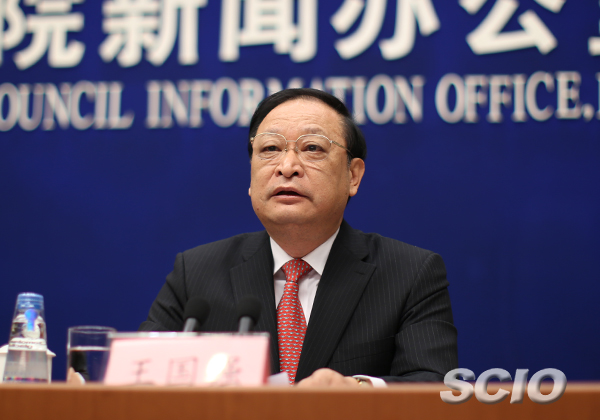
Wang Guoqiang, Deputy Director of the National Health and Family Planning Commission and Director of the State Administration of Traditional Chinese Medicine
As is well known, since Researcher Tu Youyou was awarded the 2015 Nobel Prize, she has played a pivotal role in revitalizing the development of Traditional Chinese Medicine (TCM) and inspiring enthusiasm for scientific and technological innovation among the Chinese people. As Researcher Tu stated upon receiving the award, artemisinin is a gift from traditional Chinese medicine to the people of the world. This serves as a concrete manifestation of TCM as China’s indigenous scientific and technological resource, fully demonstrating the significant meaning and value inherent in the development of traditional Chinese medicine. The advancement of TCM has not only allowed the Chinese people to benefit for millennia from the medical science bequeathed by their ancestors; more importantly, in recent years, TCM has increasingly become a distinguished emblem of China’s global presence.
Everyone noticed the cupping marks on Michael Phelps’ shoulders during the Rio Olympics, with some referring to them as “Chinese Marks.” During the G20 Summit, many foreign guests and journalists sought out traditional Chinese medicine (TCM) services. I later visited Zhejiang Province to learn more and confirmed that TCM was indeed very popular. In fact, it was not only at the Rio Olympics but also at the well-known Beijing Olympics that there was a surge of interest in TCM, with many people seeking massage and acupuncture services. Some even believed that TCM was China’s secret weapon at the Olympics. In this regard, I would like to share some news: during the 9th Global Conference on Health Promotion, which I recently attended, the TCM forum and experiential exhibition were highly popular among the World Health Organization member states participating in the conference, becoming a highlight and a shining showcase of Chinese culture. Here, I would like to announce that the Research Center for International Communication under China International Communications Group conducted the fourth Global Survey on China’s National Image this year. The survey drew upon 9,500 samples from the global sample database, covering 19 G20 member countries (excluding the European Union), and strictly adhered to international standards for online surveys. The results showed that TCM was considered the most representative element of Chinese culture, with a selection rate of 50%. In Russia, the proportion of respondents who identified TCM as a representative Chinese element was as high as 75%. In the first survey conducted in 2012, TCM did not even rank among the top ten, indicating a significant increase in international attention toward TCM.
There are two main reasons:First, our country attaches great importance to and supports the development of traditional Chinese medicine (TCM), and the influence of TCM is growing day by day.First, the Chinese people themselves attach great importance to traditional Chinese medicine (TCM), and it is widely used by the general public. I believe this constitutes an important prerequisite and foundation for enhancing TCM’s international influence.Second, the international community places greater emphasis on the value of Traditional Chinese Medicine.During my visits to various countries, many national leaders expressed their hope that China would introduce Traditional Chinese Medicine (TCM) to their nations. Awareness and acceptance of TCM continue to rise globally. Currently, we operate ten TCM centers abroad, all of which are highly popular. On a recent trip to the Czech Republic, I observed that patient appointments at the local TCM center were booked six months in advance, reflecting strong confidence in the efficacy of TCM. As the Belt and Road Initiative advances, participating countries have increasingly voiced their desire to strengthen international exchanges and cooperation with China, specifically hoping to introduce TCM to serve their own populations. They deeply recognize that TCM services are not only effective and straightforward but also relatively affordable. Cost containment is not merely a challenge for China but a global issue. To curb the rapid growth of medical expenses and ensure the sustainability of healthcare coverage, it is essential to seek simple yet effective solutions, where TCM offers valuable insights. To date, governments of 86 countries and regions have signed agreements with the Chinese government on cooperation in traditional Chinese medicine, and we are actively advancing such collaborative efforts.
Here, I would also like to share an update that I have recently learned: the development of Traditional Chinese Medicine (TCM) in China is aligned with the global advancement of traditional medicine. According to statistics from the World Health Organization (WHO), over the past decade, the number of countries formulating traditional medicine policies has increased from 25 to 69; the number of countries establishing regulatory frameworks for herbal medicines has risen from 65 to 119; and the number of countries implementing regulations for traditional medicine service providers has reached 65. This demonstrates that the development of traditional medicine is a global trend, making it entirely natural for TCM to receive increasing international attention. Thank you.
Issues regarding the quality of Traditional Chinese Medicine (TCM) herbs and the sustainability of their resources will impact the development of TCM. It is well known that the relationship between TCM theory and herbal medicine differs from that between Western medicine and pharmaceuticals; in TCM, medical practice and herbal knowledge are inseparable. A practitioner who understands TCM theory but lacks knowledge of herbal properties and compatibility cannot be considered a competent TCM physician. Likewise, an herbal specialist who does not understand TCM theory, including its principles, therapeutic methods, formulas, and medicinals, nor the rationale behind specific processing techniques and compatibility rules, cannot become a true professional in TCM herbalism. Surveys conducted in various regions have revealed that factors such as the domestication of wild herbs, cultivation of geo-authentic herbs in non-native regions, and the use of pesticides and chemical fertilizers during cultivation, along with heavy metal contamination in soil, may all affect the quality of cultivated medicinal materials. Only those materials that meet pharmaceutical standards can be classified as genuine medicinal herbs and ensure clinical efficacy. I have previously stated that,Traditional Chinese Medicine Could Be Ruined by Chinese Herbal Medicines, this is my concern regarding the quality of traditional Chinese medicine.
To address the practical challenges concerning the quality and resource availability of traditional Chinese medicine (TCM), the state issued the “Plan for the Protection and Development of Chinese Medicinal Materials (2015–2020)” last year. This plan provides a comprehensive framework for protecting Chinese medicinal material resources and advancing the industry’s development both currently and in the coming years. The National Administration of Traditional Chinese Medicine will collaborate with multiple departments, including the Ministry of Industry and Information Technology, the China Food and Drug Administration, and the State Forestry Administration, to jointly promote the implementation of the plan, resolve issues related to the quality and supply of TCM, and ensure the safety of medication for the public.
First, by promoting the fourth national census of traditional Chinese medicine (TCM) resources, we aim to thoroughly assess the nationwide baseline of TCM resources, establish a dynamic monitoring network for Chinese herbal medicine resources, and build a conservation system for TCM seed germplasm. We will strengthen the monitoring and protection of resources in major production areas of Chinese herbal medicines, thereby enhancing the capacity and level of resource conservation.
Second, we must promote the ecological cultivation of high-quality Chinese herbal medicines, adhering to the orientation of standardization, large-scale production, and industrialization. We will establish production bases for commonly used, bulk, and high-quality Chinese herbal materials, encourage the domestication of wild species, and utilize mountainous areas, forests, wastelands, and deserts to develop planting and breeding bases. This aims to ensure the supply of raw materials for clinical use and production. Upholding integrated innovation in production technologies for geo-authentic (Daodi) herbs as support, we will intensify efforts in the development of seeds, seedlings, and propagation techniques, thereby ensuring the production of high-quality Chinese herbal medicines from the source.
Third, we are actively advancing the standardization of traditional Chinese medicine (TCM). Focusing on issues such as missing or outdated technical specifications and standards across the entire production process—including the cultivation of TCM medicinal materials, processing and preparation, production of TCM decoction pieces, and quality enhancement of proprietary Chinese medicines—we are committed to optimizing technical specifications for various TCM production processes, establishing standards for TCM products, and building a traceability system for these products. We aim to improve and revise a comprehensive set of standards covering the entire TCM production workflow, strengthen methods for the supervision, identification, and authentication of TCM products, and systematically construct a support framework for TCM standardization services. These efforts will promote the cultivation, production, and manufacturing of high-quality TCM, ensuring that the public has access to safe and effective medicines. Thank you.
(This article is sourced from the official website of the State Council Information Office, with edits and abridgments.)