

CRISPR Patent Battle Heads to Final Oral Argument in Billion-Dollar Dispute
The battle for priority in scientific patents is as old as the development of science itself. However, the dispute over CRISPR-Cas9 is unusual, as it has led to a standoff between two major research institutions—the University of California, Berkeley, and the Broad Institute of MIT and Harvard—due to the stakes involved in its ownership and commercial development. In April 2015, Doudna’s lawyers requested that the United States Patent and Trademark Office (USPTO) conduct an “interference” proceeding to determine the ownership of U.S. patents related to the CRISPR-Cas9 system. This January, the USPTO formally agreed to initiate this procedure.
This Tuesday morning (U.S. time), the CRISPR patent dispute finally reached a milestone: the first and only oral arguments will be held regarding a patent with potential value in the billions of dollars. The arguments are expected to conclude within an hour. The hearing will be open to the public and is sure to attract dozens of lawyers, corporate executives (Novartis has confirmed it will send representatives), public law scholars, journalists, and even some advocates of genome editing technology.
Amid ongoing intense debate, the University of California is challenging the Broad Institute (affiliated with Harvard University and the Massachusetts Institute of Technology) over key patents for CRISPR genome-editing technology. Since April 2014, the Broad Institute, under the leadership of bioengineer Feng Zhang, has been granted 13 CRISPR patents. The University of California, however, contends that it is entitled to certain foundational patents based on the earlier work of biochemist Jennifer Doudna and her collaborator Emmanuelle Charpentier.
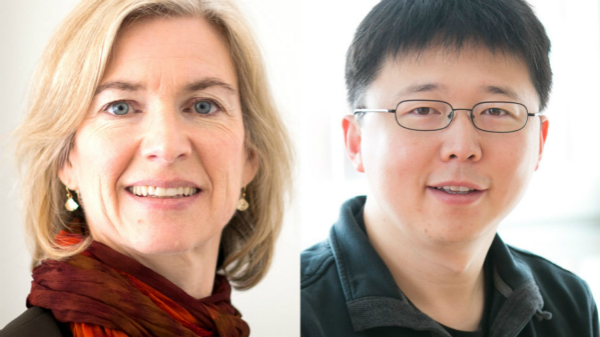
Jennifer Doudna (left) and Feng Zhang (right)
The hearing will be held at 10:00 a.m. Eastern Time in Alexandria, Virginia. Each party is allotted 20 minutes for their statements, during which three judges from the Patent Trial and Appeal Board (PTAB) of the United States Patent and Trademark Office (USPTO) will pose questions. Robin Feldman, Professor of Law and Director of the Institute for Innovation Law at UC Hastings College of the Law, noted, “Judges love to interject.” Consequently, attorneys must remain agile and swiftly alternate between their prepared arguments (presented via slides) and the judges’ inquiries.
The judge will sit before monitors to review hundreds of pieces of physical evidence and other documents cited by the attorneys. An attorney with experience before the Patent Trial and Appeal Board (PTAB) noted that judges typically maintain a poker face, making it nearly impossible to discern their thoughts or gauge which arguments—including those already submitted in writing—have captured their interest.
In the CRISPR patent war, the latest filing submitted by the defense provides a brief overview of technical and legal terminology before distilling a straightforward argument into a slightly exaggerated form:
One side argues that even a layperson could transform the basic CRISPR genome-editing technique described by University of California scientists in 2012 into a powerful technology capable of revolutionizing biology. The opposing side contends that only one scientist successfully replicated the University of California’s experiments in the race for the Nobel Prize, achieving both in vitro DNA editing and precise human DNA editing—namely, Dr. Feng Zhang of the Broad Institute.
At this point, the debate has reached a fever pitch.
In the legal documents filed this week, the University of California argued that combining Doudna’s discovery with eukaryotic biotechnology was “a straightforward matter.” In other words, Doudna’s findings quickly “gained widespread recognition.” The University of California contended that “the Broad Institute, like other research groups, merely used conventional techniques to rapidly confirm the applicability of [CRISPR] technology in eukaryotic cells.”
More importantly, scientists possessing only “conventional techniques in the field” failed to translate Doudna’s research on in vitro DNA editing into the ability to manipulate more complex cellular systems. Any discoveries regarding the application of CRISPR-Cas9 technology in eukaryotic cells “require the use of unconventional reagents or techniques, rather than yielding obvious results through conventional techniques applied in a conventional manner.”
“They argued that Doudna’s conclusion implied that any molecular biologist could achieve this in eukaryotic cells,” said Sherkow. “But the Broad Institute contended that this represented a significant conceptual and technical leap forward. It is akin to giving you a recipe for a Western-style omelet; whether you can ultimately produce a soufflé depends entirely on your culinary skills.” The University of California maintained that any server could accomplish this task, rendering any patent claims related to eukaryotic cells meaningless. In contrast, the Broad Institute asserted that only distinguished scientists like Dr. Zhang could achieve such a feat, and therefore the Institute and Harvard were rightfully entitled to the corresponding patent rights.
“It is difficult for the Patent Trial and Appeal Board judges to determine the similarities between Doudna’s in vitro DNA editing technology and Dr. Zhang’s eukaryotic cell DNA editing technology. ‘Therefore, I believe this case is far more challenging than I had imagined,’ said Sherkow.”
Feldman stated, “Although the voluminous documents submitted in the case have already clarified the full context, oral arguments can redirect the judges’ attention to the key issues and dispel any potential misunderstandings.”
Yet, no one anticipates surprises. Those closely following the CRISPR cases invariably confront three key points:
1. Should We Actually File a Lawsuit?
On January 11, the Patent Trial and Appeal Board (PTAB) granted the University of California’s request for an interference proceeding. At this stage, the PTAB determines whether two (or more) patent applications claim overlapping subject matter directed to substantially similar inventions. The University of California’s patent application, filed in March 2013, presented 155 claims related to “DNA-targeting RNA,” but did not explicitly address the use of such systems in animals, plants, or other eukaryotic cells. In contrast, the Broad Institute’s patent application, filed in October 2013, described in detail the use of [CRISPR] to edit the genomes of eukaryotic cells.
The PTAB clearly agreed with the University of California that extending Doudna’s achievements to eukaryotic cells would not have been novel to any qualified genome engineer, and therefore Broad Institute’s claims overlapped with those of the University of California. However, the Broad Institute might argue that applying CRISPR methods to plant and animal cells was by no means obvious, and thus its patent did not conflict with the University of California’s patent application; such allegations of “conflict” are entirely baseless.
As for the key patents on CRISPR genome editing, the associated disputes have entered a heated phase. In its recent Form 10-Q filing with the Securities and Exchange Commission (it has already licensed one of the aforementioned patents), Editas Medicine disclosed that, so far this year, legal fees incurred by the Broad Institute and Harvard University have cost it $10.9 million, mostly used to defend Feng Zhang of the Broad Institute in his pursuit of patent awards for the [CRISPR] invention.
This cost does not include the $4.7 million spent in 2015. Furthermore, these disputes are highly likely to persist for several years.
“Regarding patent litigation, there is one point you must understand: no matter who ultimately wins or loses, the lawyers are always the victors,” said Sherkow. “This is not because lawyers engage in any improper conduct, but because both parties pay their respective attorneys to fuel the fight. Much like any mercenary war, the employers can call off the conflict at any time if they wish. However, both sides are going all in and are determined to win. As a result, the mercenaries reap substantial profits. Moreover, when others are bearing the costs, it is hardly advantageous to halt the war.”
The Broad Institute’s legal team expects the Patent Office to issue a decision in 2017, after which both parties may file appeals with the U.S. Court of Appeals for the Federal Circuit.
If the PTAB agrees to vacate its January decision at this juncture, the dispute will come to an end. In theory, the University of California could secure patent rights for inventions involving non-eukaryotic organisms, while the Broad Institute would retain its 13 patents related to using [CRISPR] technology to edit eukaryotic cell genomes. Additionally, both parties would no longer need to bear legal costs, which have now soared to $20 million. Given that [CRISPR] technology is expected to generate the highest profits in the animal (including human) and plant sectors, this outcome represents a significant victory for the Broad Institute.
2. What exactly are we arguing about?
Currently, the disputed term of invention is “count.” Several months ago, PATB determined that “count” refers to the use of any form of [CRISPR] in any eukaryotic cell to edit the cellular genome.
The University of California might argue that such “counts” should be reduced. If the University of California could persuade the judges that within the large CRISPR patent landscape there exist numerous inventions eligible for independent patents—such as tracrRNA, sgRNA, covalently linked RNA, or Cas9 from different bacterial sources—it might be granted some of these patents. This would also constitute a major victory for the University of California.
3. Settlement: Will either party compromise?
In Alexandria, a beautiful Westin Hotel stands not far from the PTO building, but don’t count on lawyers slipping into the bar to hammer out a settlement. Judges have required the litigants to discuss settlement periodically, but a resolution remains elusive.
“The financial stakes are now too high, and the animosity between the two parties has run deep,” Feldman of Hastings candidly stated. As both the Broad Institute and the University of California have granted more than a dozen exclusive and non-exclusive licenses to their respective CRISPR technologies, she noted, “Economic interests compel both sides to pursue the same objective; so too does the entrenched resentment between them: it is a zero-sum game.”
Tuesday’s oral arguments will not be broadcast via television or online. As journalists are prohibited from using any electronic devices in the hearing room, there is no need to search for real-time tweets. However, the PTAB is expected to release the transcript on the case docket within one week after the hearing concludes.