

Zeng Boyi of Chunyu Doctor: AI Opportunities in Mobile Healthcare through Crowdsourcing, Patient-Doctor Matching, and Clinical Decision Support
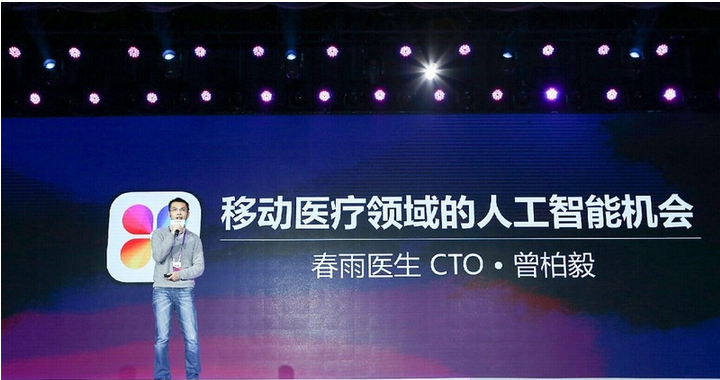
On December 7, Zeng Boyi, CTO of Chunyu Doctors, delivered a speech titled “Artificial Intelligence Opportunities in the Mobile Healthcare Sector” at the “WISE·2016 Era Summit” hosted by 36Kr.
Zeng Boyi stated that over the past five years since the establishment of Chunyu Doctors, the mobile health sector has been gradually evolving from a blue ocean into a red ocean. However, given the considerable complexity of the healthcare field, they have been continuously exploring and learning, striving to identify ways to improve the industry as a whole.
Since last year, they have been pondering one question: What changes in user experience can artificial intelligence (AI) and big data bring to the mobile healthcare sector? Accordingly, Zeng Boyi shared his reflections and practices from the past year.
Zeng Boyi believes that users expect healthcare services to be efficient and high-quality, with large-scale efficiency and quality driven by artificial intelligence and big data. In response, Chunyu Doctor has explored three areas: crowdsourcing, doctor-patient matching, and assisted diagnosis and treatment.
Among these, crowdsourcing aggregates doctors’ fragmented time to ensure that users receive answers as quickly as possible when seeking medical consultations at any time. The algorithms required for doctor-patient matching include recommendation algorithms and click-through rate prediction algorithms, which are widely used by major internet companies to enhance user experience and drive sales growth. Clinical decision support is primarily divided into three levels: auxiliary questioning to help physicians gather more information, auxiliary diagnosis to recommend treatment plans, and auxiliary therapy to monitor adverse drug events and provide supplemental treatment recommendations.
Zeng Boyi also noted that, when considering the overall user experience and platform efficiency, there are numerous opportunities to leverage artificial intelligence in the fields of mobile health and online consultation.
Below is the full transcript of the speech, as compiled by 36Kr:First, let me share a user’s story with you.In the early days of our startup, we received a note of gratitude from a former colleague at NetEase, who said that Chunyu Doctor had saved her life. At the time, she was experiencing intermenstrual bleeding but had not visited a hospital due to her demanding work schedule. Knowing that we had developed an app allowing users to consult doctors via their mobile phones, she downloaded it and described her symptoms to a physician. After several rounds of careful consultation, the doctor suspected an ectopic pregnancy and urged her to immediately cease work and seek hospital evaluation. Further diagnostic tests at the hospital confirmed the doctor’s assessment. The patient subsequently underwent surgery and made a full recovery.
We tell this story not to boast about how impressive mobile healthcare is, or how exceptional online consultations can be. In fact, we are also reflecting on the fact that this story is filled with all sorts of contingencies. For instance, the patient happened to know about Chunyu Doctor; Chunyu Doctor happened to be able to recommend a suitable physician; and that physician happened to make an accurate diagnosis and provide a prompt response. If any step in this process had gone awry, I believe the outcome would not have been favorable.
Of course, we take great pride in this achievement. We have genuinely addressed users’ needs, yet we also feel a profound sense of responsibility on our shoulders. Healthcare is an exceptionally serious industry, and we are committed to refining every detail so that we can save more lives when it matters most.
In retrospect, what kind of medical services do users truly desire? Our understanding is: highly efficient and high-quality services. While delivering such service for an individual case is straightforward, the real challenge lies in how we can provide long-term, continuous, and low-cost services to a large-scale user base.
Breaking it down, where do large-scale efficiency and quality come from? We believe that this can only be achieved through technology and machines. Let machines do what they are capable of doing as much as possible. In this way, we can achieve both efficiency and quality without significantly increasing costs. Regarding what machines can do, we have identified several key areas.

The first is crowdsourcing. This is a critical component of our entire online consultation model, which has been validated by the market over the past few years and proves highly effective in resource allocation. In this model, as long as we have a sufficient number of physicians, their aggregated fragmented availability can cover 24 hours a day, enabling us to provide prompt responses to user inquiries at any time.
However, I will not delve into the crowdsourcing process today, as it has essentially already been implemented across all online medical consultation companies. Instead, we will focus on two other critical aspects: doctor-patient matching and assisted diagnosis and treatment. These are areas we consider relatively new and where we believe artificial intelligence and technology can deliver superior performance.
Doctor-patient matching is a complex task for humans. Even in physical hospitals, only 70% of patients choose the correct department during their initial visit. For instance, determining which department to consult for headaches is not something many people get right on the first attempt, as it involves too many variables.
From a professional standpoint, physicians hold different titles and possess varying levels of experience. It is not necessary to consult the most renowned specialist for every medical condition, as doing so is not cost-effective.
From the perspective of medical needs, diseases vary in severity and urgency, meaning that the required medical services differ accordingly;
From the patient’s perspective, there are variations in economic status, ability to pay, geographic location, preference for traditional Chinese medicine versus Western medicine, and perception of hospitals.
Therefore, given the multitude of variables and the limited time and energy available to users, it is difficult to make optimal choices in a short period. However, doctor-patient matching is a forte for machines.
The algorithms required for doctor-patient matching are recommendation algorithms, as well as click-through rate prediction algorithms, which are widely used by major internet companies. Approximately 30% of Amazon’s sales revenue is attributed to its recommendation system; Toutiao, with a market valuation of $10 billion, primarily focuses on using machine learning to recommend personalized news to users; and Baidu’s search advertising is, in essence, also a form of recommendation.
It is not difficult to improve the recommended questions from a score of 0 to 60. In terms of doctor-patient matching, a score of 60 represents a basically usable level, as users have the opportunity to make a secondary selection from the options we provide. To improve performance beyond this baseline, further optimization of the algorithms is required. Additionally, once the system is operational, each user selection and physician referral will provide valuable data, enabling the machine learning models to become more intelligent over time.
Patient-Physician Matching Ultimately Yields Benefits in Two Areas:
1. The benefits in terms of user experience are reflected in the higher overall user satisfaction.
2. Increase in sales volume or purchase rate. After we leveraged artificial intelligence to transform our entire patient-physician matching process, the overall user purchase rate tripled, which is quite remarkable.

Once we have matched a patient with a suitable physician, the next step is to enhance that physician’s clinical capabilities and efficiency, which is precisely the role of clinical decision support systems (CDSS). In the field of online medical consultations, CDSS can be primarily categorized into three levels: assisted follow-up questioning, assisted diagnosis, and assisted treatment.
Its goal is to help doctors obtain more information for disease diagnosis.
We know that the biggest difference between junior and senior physicians lies in their ability to develop a rational, standardized diagnostic reasoning process, systematically identifying the patient’s underlying cause of disease like a detective.
Precisely because junior physicians often struggle with this, our system assists them by learning the consultation approaches of more experienced clinicians. Even for highly seasoned physicians, AI-assisted follow-up questioning can reduce manual input and enhance overall documentation efficiency.
Online consultations possess unique data advantages in facilitating auxiliary follow-up inquiries. For online consultation platforms, access to the complete physician-patient interaction process—including user demographics, consultation details, and the physician’s final conclusions—enables the development of a robust auxiliary follow-up system. The underlying technical architecture is similar to that of automated question-answering systems tailored for the specialized medical domain. In contrast, traditional systems are limited to physician-summarized patient symptoms, diagnoses, and prescriptions, lacking the intermediate interaction data.
In both academia and industry, there has been considerable and intriguing research and progress in automated question-answering systems. We have also seen the emergence of new AI products on the market; for instance, Baidu launched its “Baidu Medical Brain,” which incorporates functionality for assisted follow-up questioning. Recently, Chunyu Doctor has also integrated an assisted follow-up questioning feature into its physician-facing version to help doctors improve the efficiency of their initial consultations.
Once sufficient information has been gathered, the physician must ultimately make a clear determination: whether the patient needs to visit a hospital for further examination, or whether the physician has already narrowed down the differential diagnosis to a certain extent and can provide relevant recommendations. Machine intelligence can assist in this process.
The system can read all textual and image-based information from doctor-patient communications, as well as interpret laboratory test reports. It integrates and processes all this information, then cross-references it with other users’ consultation records in our backend, hospital case data we have acquired, medical textbooks, and the most authoritative clinical guidelines. Finally, it generates a final list of potential diagnoses for physicians to review, including various possible diseases, their corresponding confidence levels, and supporting evidence.
Physicians can use this evidence to decide whether to adopt it, thereby reducing misdiagnosis and missed diagnosis.
In addition to the aforementioned treatment recommendations, the system can also monitor for medication errors. For instance, if a physician inadvertently prescribes a contraceptive to a pregnant patient, the system can readily detect this error.
Additionally, supplementary treatment recommendations are particularly useful for physicians. Due to established practices in offline clinical settings, doctors often do not provide patients with highly detailed explanations regarding treatment plans, preventive measures, and precautions. In contrast, AI systems can expand upon the preliminary treatment plan provided by the physician to generate more comprehensive and user-friendly treatment recommendations.
In conclusion, the field of mobile health and online consultations offers numerous opportunities for the application of artificial intelligence. Throughout this process, we are focused on optimizing overall user experience and efficiency, as well as enhancing these aspects at every step along the way.
Source: 36Kr