

Nanjing TerryDR Transforms Smartphones into Affordable Whole Slide Imaging Scanners to Empower AI-Assisted Pathology Diagnosis
Currently, the prices of fully automated whole-slide pathology scanners on the market range from RMB 600,000 for domestically produced models to RMB 3 million for imported ones, all of which are quite expensive. Manual pathology scanners also cost between RMB 150,000 and RMB 200,000. In addition, whole-slide scanning files often exceed 2 GB in size, posing significant challenges for primary healthcare institutions in terms of data storage, data transmission, and system maintenance.
Recently, Nanjing Tailirui invented a smartphone-based whole-slide pathology scanning and analysis device,CostOnly a few hundred yuan, it not only significantly reduces the cost of scanner equipment for telepathology or digital pathology, but its mobile acquisition solution combined with cloud-based solutions also greatly lowers the barriers to entry for telepathology and digital pathology. VCBeat (WeChat ID: vcbeat) has provided follow-up coverage on this development.
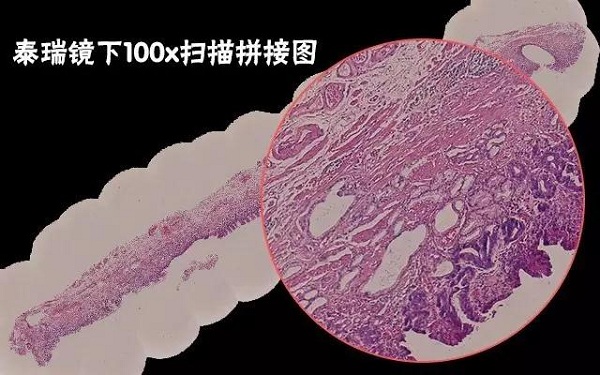
This image is a whole-slide scan captured by a smartphone using a TeliRay device. Operating the device feels slightly more complex than using a selfie stick:

Wang Tan, the founder of Nanjing Tailirui, holds two master’s degrees in Medicine and Bioinformatics. Having practiced as a physician in China for over a decade, he is acutely aware of the challenges faced by pathologists. After examining slides, most pathologists typically provide textual descriptions, which are less intuitive and more laborious for clinicians to interpret. Furthermore, the microscopic data generated during pathology examinations is not integrated with the hospital’s HIS (Hospital Information System) and PACS (Picture Archiving and Communication System), resulting in significant and regrettable data loss.
Furthermore, microscopic slide interpretation requires extensive experience. The training process for pathologists is long and arduous, with the volume of cases reviewed directly determining a pathologist’s proficiency. In the field of pathology, there are three widely recognized “thresholds”: handling over 10,000 cases qualifies one to issue preliminary pathology reports; reviewing 30,000 cases enables one to review reports prepared by junior pathologists; and managing more than 50,000 cases is necessary to resolve complex diagnostic challenges. At a rate of 20 slides per day, accumulating 50,000 cases demands ten years of undivided focus.
While other medical imaging departments have experienced rapid development with the assistance of artificial intelligence, progress in this field has remained sluggish. Wang Tan believes that the expertise of pathologists can essentially be distilled into the image recognition capabilities of computer AI applied to pathological slides. He is convinced that AI will significantly enhance both the work efficiency and diagnostic accuracy of pathologists. Consequently, Wang Tan, who had worked in the IT industry overseas for many years, decided to return to China to launch a startup focused on developing an ultra-low-cost, user-friendly pathology scanner based on smartphones and artificial intelligence.
Co-founder Huang Rui holds a bachelor’s degree in Communication Engineering and previously served as Product Director at Jiangsu Broadcasting Television Mall. Co-founder and Data Director Ma Shuoxin earned his bachelor’s degree in Communication Engineering from Southeast University; he pursued a Ph.D. in Electrical Engineering at Arizona State University in the United States, specializing in time-frequency domain signal processing, image processing, and machine learning.
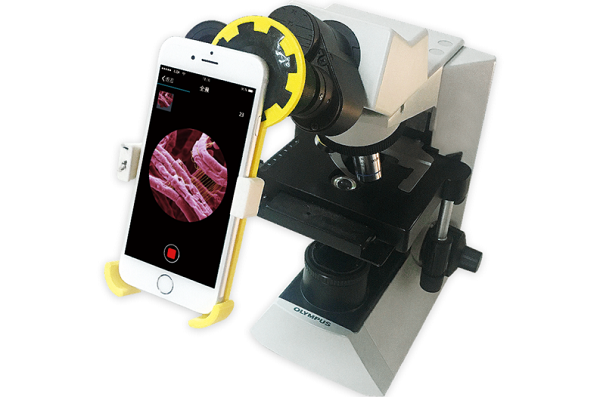
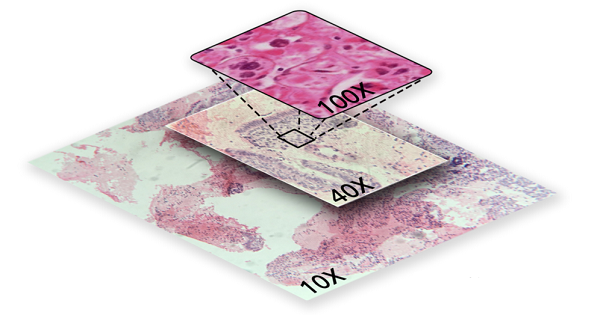
The Taili Rui Microscopic Whole-Slide Scanning System connects the microscope to a smartphone via the Xianpai Assistant app. It continuously captures microscopic fields of view using the smartphone’s high-resolution camera and, leveraging Taili Rui’s sEngine image-stitching algorithm, generates whole-slide images at low magnification (40x) and high magnification (400–1000x). The system automatically embeds localized high-magnification images into the corresponding low-magnification whole-slide scans.
The system features two core technologies: a high-performance distributed image stitching algorithm and blind correction of nonlinear image distortion.
High-Performance Distributed Image Stitching Algorithm Leveraging the Deeply Optimized sEngine Image Processing EngineThe high-performance distributed image stitching algorithm leverages the deeply optimized sEngine image processing engine to split the traditionally monolithic stitching process into two asynchronously executable components. This approach reduces the computational load on the acquisition end (app) by over 95% while ensuring accurate, real-time feedback, thereby enabling seamless operation on mainstream smartphones—a task previously feasible only on high-end desktop computers.
Blind correction of nonlinear image distortion does not require the use of dedicated distortion calibration tools during acquisition. Instead, it directly estimates the nonlinear distortion projection relationship from the captured images, solves this high-order multivariate overdetermined system of equations in real time to quantify the distortion characteristics, and then calculates the inverse transform of these characteristics and applies it to the acquired images to achieve blind correction of image distortion.
Taili Rui’s devices offer exceptional cost-effectiveness: a complete system costs around RMB 500 and is fully compatible with any microscope system and any smartphone.
Furthermore, whole-slide imaging (WSI) files often exceed 2 GB in size, posing significant challenges for data storage, transmission, and system maintenance in primary healthcare institutions. Teliway’s mobile WSI scanning solution not only substantially reduces the equipment costs associated with remote or digital pathology scanners but also provides a comprehensive end-to-end solution—combining mobile acquisition with cloud-based services—that significantly lowers the barrier to entry for remote and digital pathology in primary care settings.
In addition to the aforementioned advantages, Tailirui possesses other technical strengths. This operating system adheres to the actual workflow of pathologists ([low-magnification gross examination of slides] -> [high-magnification detailed examination of local areas]). For specimens sized 10mm x 10mm or smaller, manual scanning is often rapid, typically taking no more than 3 minutes. The resolution reaches 0.045 μm/pixel (100x), comparable to mainstream pathological scanners available on the market.
Enables flexible control over scanning key regions, significantly saving time and storage space. Low-magnification scans can quickly generate overview images to meet rapid inspection and quality control requirements, while targeted high-magnification scans cover areas of interest.
Tailirui also holds multiple software copyrights for mobile applications and hardware patents, and possesses the exclusive sEngine high-performance distributed computer vision engine.
After data collection, the system assists physicians in generating illustrated reports, thereby saving them substantial documentation time.
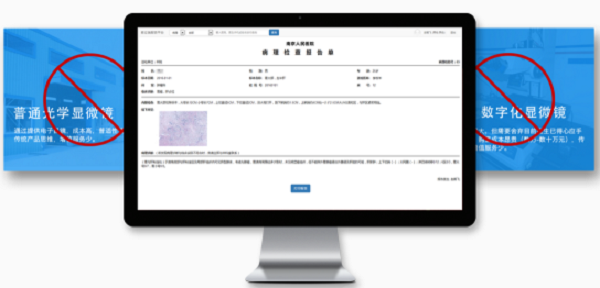
These technical advantages make the system well-suited for applications requiring high magnification, such as cytopathology, frozen sections, and thick sections. It can provide services for education, telemedicine, clinical diagnosis, and image analysis.
Wang Tan told reporters that the current pathology scanning system has matured, and the company’s potential future direction in technology is artificial intelligence. With the increasing number of tissue section images, Tailorui has already established the foundation for developing AI technologies.
In addition to this whole-slide pathology scanning system, Tailirei’s Xianpai Assistant device can also be applied to slit-lamp microscopes in ophthalmology and smartphone-based portable indirect ophthalmoscopes for fundus screening. Wang Tan stated that Tailirei will continue to deepen its focus on the niche field of microscopic imaging, driving growth through technology and generating revenue through technical and medical services.
Tairui’s whole-slide imaging scanning system has been on the market for just over two months, garnering 70–80 orders per week. The company is currently focusing its efforts on marketing promotion. After only two months of online promotion and participation in one conference, it is preliminarily estimated that 80% of pathologists across China are now aware of the system, which has been well received by pathologists.
In addition to generating revenue through hospital procurement and annual fees charged to hospitals, Tailirui has finalized the specific cooperation framework for annual partnership agreements with 91360 Portal and Huaxia Pathology Network, two leading academic service platforms in China’s pathology industry.
Tairui will also reach a cooperation intention with BGI Genomics. Tairui will contact physicians to conduct preliminary disease screening for patients. Patients diagnosed with tumors will be referred to BGI Genomics for genetic testing, followed by targeted precision therapy. In this process, Tairui will receive a commission from BGI Genomics.
In addition, Wang Tan revealed that several hospitals in Africa and North America have expressed strong interest in this technology due to its significant price advantage and are seeking further discussions on potential collaboration.
The company has applied for a Class II medical device operation license from the National Medical Products Administration (NMPA) this June and expects to receive official approval in the coming months. Wang Tan stated that the company will launch its Pre-A financing round to fund market promotion and the research and development of its AI systems. Tailirui’s angel round was funded by private investors.