

Zhongguancun Technology Leasing Files IPO Prospectus: Committed to Solving Financing Challenges for Medical Startups with RMB 3 Billion Invested and 100 Companies Served
The primary concern for healthcare startups is financing. Difficulties in securing funding and tight cash flows have caused many healthcare startups to fail during their early stages. Even after product development, the ongoing financial pressure remains a Sword of Damocles hanging over these nascent enterprises. Although many industrial parks and incubators across various regions have strengthened their support for healthcare startups, there is still a lack of targeted financial and product-service models. Zhongguancun Development Group’s technology leasing subsidiary pioneered the concept of “technology leasing,” providing tailored, comprehensive support to startups, including financial planning, equipment financing, management enhancement, policy consultation, and industrial synergy. Since the second half of 2013, it has invested a total of RMB 3 billion in the big health sector, serving nearly one hundred healthcare startups.
Recently, VCBeat (WeChat ID: vcbeat) conducted an exclusive interview with Liu Shouquan, General Manager of the Greater Health Division at Zhongguancun Science and Technology Leasing Co., Ltd., to discuss the financial service needs and investment logic of healthcare startups.
When Zhongguancun is mentioned, the first term that comes to mind is “tech companies.” A large number of tech startups have emerged here, with dozens more being established every day. The growth of these startups relies heavily on the support of industrial parks, incubators, and angel funding.
Regarding the origins of Zhongguancun Technology Leasing, Liu Shouquan stated, “Mass entrepreneurship and innovation” have become a prominent social focus, with continuous favorable developments ranging from policy support to the establishment of incubators across various regions. A wave of universal entrepreneurship is sweeping across China’s 9.6 million square kilometers, giving rise to a proliferation of industrial parks and financial services tailored to startups. Against this backdrop, the Beijing Municipal Party Committee and Municipal People’s Government took the lead in establishing Zhongguancun Development Group in early 2010. The group was designed to allocate innovative resources through market-oriented mechanisms, forming a large-scale financial conglomerate centered on several key sectors: industrial investment, technology finance, park development, regional cooperation, and overseas operations.
According to its official website, as of now, Zhongguancun Development Group has a registered capital of RMB 17.4 billion, with 17 shareholders in total. Its total assets amount to RMB 95.06 billion, and the net assets attributable to the parent company stand at RMB 21.3 billion. The group has 30 wholly-owned and holding subsidiaries and has obtained an AAA long-term credit rating for its main body.
As a key branch of technology finance, Zhongguancun Technology Leasing was established in late 2012. With Zhou Yunfan, General Manager of Zhongguancun Development Group, serving concurrently as Chairman, and He Rongfeng as General Manager, the company is a state-controlled domestic financial leasing pilot enterprise approved by the Ministry of Commerce and the State Administration of Taxation. It officially commenced operations in 2013. Over four years, it has provided financial leasing services to more than 100 startups in the medical and healthcare sector, with total capital disbursement exceeding RMB 3 billion. The company has received numerous accolades, including “Best Financial Leasing Company of 2014” from the China Financial Institutions Gold List, “Most Innovative Leasing Company of 2015,” and “Leasing Company of the Year” at the China Financial Leasing Annual Conference, earning recognition from startups and financial service evaluation agencies alike.
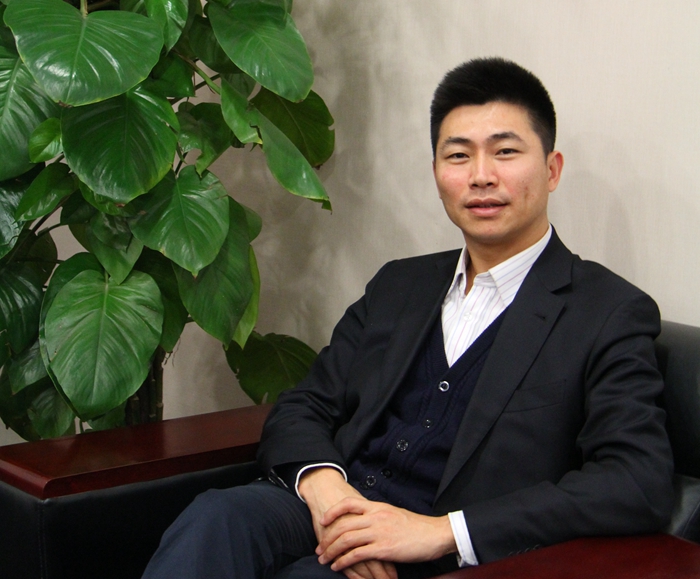
Liu Shouquan, General Manager of the Big Health Business Division at Zhongguancun Science and Technology Leasing
“Our business is closely aligned with national industrial policies, with the aim of serving innovative industries. We pioneered the model of technology leasing to address the financing difficulties faced by startups, offering an innovative debt instrument,” said Liu Shouquan, General Manager of the Greater Health Division at Zhongguancun Technology Leasing Co., Ltd.
For startups, purchasing equipment requires substantial capital investment, imposing a significant financial burden. Moreover, the funds tied up in equipment are difficult to convert into cash flow in the short term, resulting in capital stagnation and underutilization. Technology leasing services address this issue by procuring equipment based on the enterprise’s needs and then subleasing it to the startup. This allows the startup to pay in installments, thereby alleviating its cash flow constraints.
In addition, Zhongguancun Technology Leasing offers a variety of leasing solutions, including M&A leasing, venture capital leasing, and vendor leasing, to meet the diverse financial needs of technology startups and ensure their smooth transition.
“We are state-owned, applying an investment banking mindset to provide medium- to long-term debt services. We aim to alleviate corporate burdens, support the long-term growth of enterprises, respond to policy initiatives that foster startups, and help them thrive,” said Liu Shouquan.
According to Liu Shouquan, Zhongguancun Technology Leasing serves enterprises in four major sectors: big health, big data, big environment, and large-scale equipment. Big health is a key focus area, accounting for more than one-third of both the total investment amount and the number of client companies served. Of the approximately RMB 8 billion invested from the second half of 2013 to date, nearly RMB 3 billion has been allocated to the big health sector.
The strong emphasis on providing services to startups in the broader health sector stems from two main factors. First, against the backdrop of surging healthcare demand among the Chinese population, there is a large number of medical startups facing significant funding gaps, which cannot be adequately met by traditional financing channels such as venture capital and angel investment. Second, medical startups have higher requirements for equipment, and given the relatively high cost of medical devices, leasing finance is particularly well-suited to their needs.
The broader healthcare sector can be further divided into several key subsectors, including pharmaceuticals, medical devices, healthcare services, and Internet-plus healthcare.
The pharmaceutical sector encompasses new drug R&D, industrialization by pharmaceutical companies, first-to-file generics, and Class 1 innovative drugs. Liu Shouquan cited the example of GMP workshop upgrades, which involve introducing equipment and production lines and providing financial support to offer comprehensive services to startup pharmaceutical companies. This approach ensures that all needs related to new drug R&D and clinical trials are met, while the equipment leasing and financial services provided help reduce the immobilization of their working capital. The medical device sector covers various models, including large-scale equipment, small-scale equipment, and product-related services. Large-scale equipment includes CT scanners, MRI systems, and X-ray inspection devices. A particularly notable logic here is using financial support to help enterprises increase their market share—a strategy that conventional financial institutions rarely conceive. According to Liu Shouquan, this approach facilitates broader market penetration of enterprise products and promotes corporate growth more effectively than merely assisting with product R&D.
In my conversation with Liu Shouquan, what struck me most was his profound expertise. He spoke with ease about terms such as “GMP,” “Class 1 new drugs,” “CRO,” and “IVD.” This level of professionalism signifies that Zhongguancun Science-Tech Leasing will deepen its engagement in the healthcare sector, providing more practical and specialized financial services to healthcare startups.
In addition to the two aforementioned niche sectors, healthcare services and “Internet + Healthcare” have recently garnered significant attention and are also key focus areas for technology leasing. In the realm of healthcare services, there is a considerable number of startups focused on prevention, clinical care, and rehabilitation. Meanwhile, the “Internet + Healthcare” sector is primarily driven by medical big data and telemedicine. For these two fields, financial service options extend beyond financial leasing to include venture capital leasing, operating leasing, project leasing, and cluster leasing, thereby meeting the diverse financial needs of enterprises across different sectors and projects.
“The greater health sector is our primary focus. With our in-depth understanding of the medical industry chain, we provide financial services along the chain and have designed a range of financial service solutions to meet multi-tiered service demands,” said Liu Shouquan.
Overall, the financial leasing solutions provided by Zhongguancun Science & Technology Leasing to startups are characterized by “diverse financing options, rapid approval processes, and flexible repayment structures.” Regarding the approval process, traditional financing methods often require companies to provide collateral such as real estate, resulting in approval timelines that can drag on for several months, higher fee rates, and support limited to pure capital infusion. In contrast, Zhongguancun Science & Technology Leasing does not require collateral; instead, it evaluates key indicators such as the company’s cash flow, competitive advantages, and growth potential, with approval and disbursement completed in less than one month. A notable feature of its repayment structure is the equity subscription option. Unlike traditional investments that demand an immediate relinquishment of a certain percentage of equity, Zhongguancun Science & Technology Leasing agrees on a specific equity subscription right with the enterprise, which is exercised only after the company has grown. This approach prevents premature and excessive dilution of equity during the startup’s early stages.
Based on our understanding, a molecular diagnostics service company with third-party testing qualifications has adopted a business model primarily centered on co-establishing molecular testing centers with various hospitals to provide a range of cancer screening services. Although the company boasts leading technical capabilities, its expansion of molecular testing centers on a large scale has been constrained by limited financial resources. Zhongguancun Leasing entered into a strategic partnership with the company by signing a warrant agreement. Under the terms of the agreement, Zhongguancun Leasing holds the option to acquire a 5% equity stake in the company at a valuation of RMB 300 million within the next three years. Furthermore, whenever the company signs a project agreement with a hospital for a molecular testing center, Zhongguancun Leasing will procure the necessary equipment based on the center’s requirements. This continuous equipment support helps the company rapidly expand its market share.
Zhongguancun Technology Leasing also emphasizes the transition from product sales to service sales, providing financial support for certain high-value equipment through installment payments, unbundling, and service penetration. For instance, a manufacturer of medical imaging equipment, whose end users are hospitals and health checkup centers at various levels, faced significant cash flow pressure because it needed to offer 6–9-month credit terms to end users to promote sales due to the high value of its equipment. Zhongguancun Leasing partnered with this company by purchasing the equipment from its parent company and then leasing it to its subsidiary. The subsidiary subsequently deployed the equipment to end users and shared revenue based on usage frequency. This business model not only alleviated the company’s cash flow pressure but also upgraded its traditional one-time product sales model into a continuous service sales model, thereby securing long-term revenue while enhancing customer stickiness.
These “special” leasing models have been continuously developed by Zhongguancun Science & Technology Leasing in the course of serving enterprises. According to incomplete statistics, there are dozens of such categorized financial leasing models. Notable examples include sale-and-leaseback, direct leasing, venture capital leasing, operating leasing, M&A leasing, and vendor leasing. The aforementioned models can be further adjusted or combined based on clients’ business needs, ensuring the highest degree of alignment with the requirements of start-up companies.
“Our product portfolio is the most extensive!” stated Liu Shouquan. Over the next three years, Zhongguancun Science-Tech Leasing will continue to invest no less than RMB 12 billion in financial leasing services for start-ups, adding no fewer than 100 new clients annually, among which approximately 35 are expected to be from the healthcare and wellness sector.
Regarding the criteria for project evaluation, Liu Shouquan stated that assessments are generally conducted across several dimensions: product, core technology, maturity of the business model, cash flow, and future growth potential. The aim is to serve a cohort of capable enterprises with sustained expansion potential, while deeply cultivating the big health industry.
As the socio-economic landscape improves, residents are placing greater emphasis on health, leading to a surge in demand for health-related consumption. Medical startups are emerging in large numbers, a trend that owes much to the support of financial service providers such as Zhongguancun Technology Leasing. We have every reason to believe that, with their backing, medical startups will be able to forge a more solid path forward.