

Yinchuan Smart Internet Hospital Launches with Over 10,000 Doctors Registered; Haodf Online Discloses Trial Operation Data and Files IPO Prospectus
Yinchuan Smart Internet Hospital, jointly established by Haodf.com and the Yinchuan Municipal Government, officially opened on December 10, marking the completion of Haodf.com’s transformation. As China’s largest platform for medical information and doctor-patient interaction, Haodf.com has now firmly cemented its new direction. In April this year, the Yinchuan Municipal Government and Haodf.com formally signed an agreement to co-develop a high-quality internet healthcare platform based in Yinchuan, serving central and western regions, covering the entire country, and extending its reach to countries along the “Belt and Road” initiative. This platform aims to comprehensively introduce high-quality domestic and international medical resources, support hierarchical diagnosis and treatment under healthcare reform, and enable online consultations. After more than five months of preliminary preparation and three months of trial operation since April, Yinchuan Smart Internet Hospital has now officially been launched to serve patients.
Xu Guangguo, Member of the Standing Committee of the Party Committee of Ningxia Hui Autonomous Region and Secretary of the Yinchuan Municipal Party Committee; Ma Li, Vice Chairman of the People’s Government of Ningxia Hui Autonomous Region; Bai Shangcheng, Deputy Secretary of the Yinchuan Municipal Party Committee and Mayor of Yinchuan; Gao Guangming, Deputy Director of the Department of Primary Health Care under the National Health and Family Planning Commission; Ma Xiuzhen, Director of the Health and Family Planning Commission of Ningxia Hui Autonomous Region; Zhou Bing, Editor-in-Chief of Health News; Wang Wei, Member of the Standing Committee of the Yinchuan Municipal Party Committee and Head of its Publicity Department; Guo Baichun, Vice Mayor of Yinchuan Municipal People’s Government; Liu Hongtao, Director of the General Affairs Division under the Publicity Department of the National Health and Family Planning Commission; and Zhao Jing, Division Chief at the Hospital Management Center of the National Health and Family Planning Commission, were among the leaders who witnessed the launch of the Yinchuan Smart Internet Hospital on site.

The physicians at Yinchuan Smart Internet Hospital are drawn from a pool of 130,000 top medical experts from 6,800 hospitals across China, accumulated by Haodf.com over a decade. After completing the multi-site practice registration, these doctors can provide diagnosis and treatment services through the internet hospital. As of its official launch on December 10, Yinchuan Smart Internet Hospital had processed multi-site practice applications for 10,000 physicians.
Issued the First Prescription on Smart Internet Hospital
At the launch ceremony of the Smart Internet Hospital, Professor Sun Zheng from Beijing Stomatological Hospital issued the first electronic prescription, marking the official commencement of operations for the Yinchuan Smart Internet Hospital.
In early November, the patient consulted Professor Sun Zheng at Beijing Stomatological Hospital and was diagnosed with oral lichen planus. After a period of medication, the patient underwent an online follow-up consultation via Yinchuan Smart Internet Hospital. Following the consultation, Professor Sun Zheng determined that the patient’s condition had improved and advised continuing the medication for one more month. He issued the first electronic prescription since Yinchuan Smart Internet Hospital officially commenced operations, and requested the patient to return for a follow-up visit in one month.。
About Yinchuan Smart Internet Hospital
Internet hospitals mainly fall into two categories. The first type is built upon traditional large-scale hospitals, such as the Internet Hospital of the First Affiliated Hospital, Zhejiang University School of Medicine. For this type, the main entity is a traditional Grade A tertiary hospital that has undergone internet-based transformation. Patients primarily seek offline medical care, with online consultations serving as a supplement. By expanding their original scope of services through online operations, these hospitals enable patients who have left the facility or those who have not visited in person to access physicians and receive healthcare services via the internet.
The second type of internet hospital operates primarily online, with offline services playing a supplementary role. Most such internet hospitals rely on a physical hospital entity to obtain medical institution credentials before launching online operations. In contrast, Yinchuan Smart Internet Hospital has no offline physical facility; it obtained its medical institution credentials through the Yinchuan Municipal Approval Bureau. Its local physical presence in Yinchuan is a 1,000-square-meter Hospital Operations Control Center. This represents a new, asset-light model of a “future hospital” without outpatient clinics, inpatient beds, or pharmacies. The Operations Control Center serves to monitor hospital operations in real time, make timely operational adjustments based on data, and handle tasks such as physician credentialing and prescription review.
Yinchuan is the first and only city in China to adopt a top-level design for smart city development at the municipal level. It has established the country’s first city-level data operations center, aiming to enhance governmental administrative efficiency, multi-dimensional urban management, public services, and industrial integration through cross-departmental data sharing. As an integral component of this initiative, the Yinchuan Smart Internet Hospital is built upon the foundation of the Yinchuan Smart City project. Its robust infrastructure is supported by rows of high-performance servers and substantial data throughput capabilities housed within the Yinchuan Big Data Center. The display screens at the hospital’s operations center show real-time data reflecting 200,000 daily online consultations, while the central database support platform is located at the Yinchuan Big Data Center.
The Implementation of Smart Internet Hospitals Will Enable True Tiered Diagnosis and Treatment
HaoDF Online will fully leverage its decade of operational and management experience in internet healthcare, relying on the strength of its own management and technical teams to achieve comprehensive, around-the-clock, multi-scenario coverage of smart healthcare across various areas, including online triage and patient guidance, consultation and referral, electronic prescriptions, remote expert-assisted surgeries, and post-discharge follow-up.
Internet hospitals refer first-time patients to local hospitals, facilitate online multidisciplinary consultations with national experts for serious conditions, and enable follow-up visits for existing patients with their attending physicians via online platforms. Through a precise triage system, patients are assigned to appropriate physicians based on the complexity of their conditions, ensuring the rational allocation of medical resources. By establishing a model for scheduling expert surgeries across regions, patients remain within grassroots healthcare facilities. Patients from these grassroots institutions can submit surgical requests online to leading experts in major cities such as Beijing and Shanghai. These experts conduct remote consultations with grassroots physicians and travel to local hospitals to perform surgeries for specific cases. While patients receive treatment at grassroots hospitals, the experts’ diagnostic and treatment plans and professional skills are transferred to local physicians, supporting the healthcare reform goal of “managing serious illnesses within the county” and enhancing the clinical capabilities of grassroots doctors. Furthermore, internet hospitals help patients establish connections with their attending physicians, allowing them to complete follow-up visits and medication prescriptions online. Once the physician issues a prescription, medications are delivered directly to the patient’s home.
In this round of healthcare reform, tiered diagnosis and treatment is a core strategy. The state has proposed achieving the goal that 90% of serious diseases are treated within county-level hospitals by the end of 2017. To realize this objective while ensuring that major diseases can be safely cured at county-level hospitals, it is imperative to encourage medical experts to “go down” to grassroots institutions. It is foreseeable that in the coming years, an increasing number of surgeries will leverage internet hospitals to remotely allocate expert resources, conduct remote preoperative consultations, and perform centralized consultation-guided surgeries, thereby utilizing high-end expert resources with greater efficiency.
Haodf.com CEO Wang Hang Provides Detailed Analysis of Trial Operation Data
In mid-2016, as Haodf Online was making preliminary preparations and adjusting its business focus for the launch of its internet hospital, various rumors ran rampant. In an exclusive interview with VCBeat, Wang Hang, CEO of Haodf Online, specifically clarified these rumors and provided a detailed explanation of why Haodf Online was pursuing the internet hospital model, as well as the 2.0 model of internet healthcare.As the Yinchuan Smart Internet Hospital officially opened, Wang Hang appeared more confident when he sat down before VCBeat with three months of trial operation data from the internet hospital.
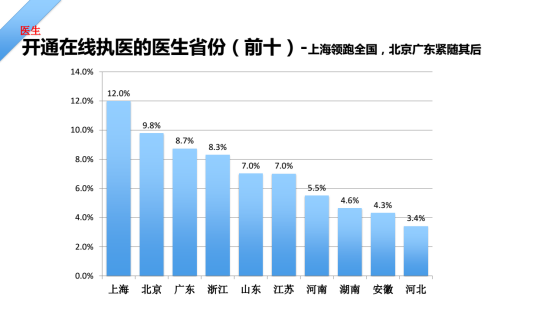
Since the trial operation began on September 15, Haodf Online has notified the 130,000 doctors on its platform that applications for the Yinchuan Smart Internet Hospital are now open. Within the first month, by October 15, the platform received multi-site practice applications from 15,000 doctors, of whom 3,000 completed registration after passing qualification reviews.As of December 10, a total of 10,000 physicians have completed the registration procedures for multi-site practice. Ninety percent of these physicians, who have applied to join Yinchuan Smart Internet Hospital, are from tertiary hospitals or above and are all attending physicians with at least five years of experience and considerable professional competence. In terms of geographic distribution, 12% of these physicians are from Shanghai, 9.8% from Beijing, and 8.7% from Guangdong Province.This ranking aligns with the current regional distribution of China’s top-tier medical and physician resources.
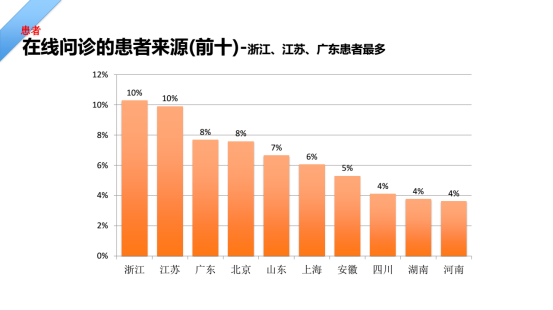
Among patients, the top three provinces of origin are Zhejiang, Jiangsu, and Guangdong, which are regions with relatively high internet penetration. Beijing and Shanghai did not make the top three, as these two municipalities have ample high-quality local medical resources. One of the advantages of internet hospitals is enabling patients in less developed areas to access better medical resources; accordingly, patients from Anhui and Henan, where medical resources are relatively scarce, rank within the top 10 in terms of patient origin.
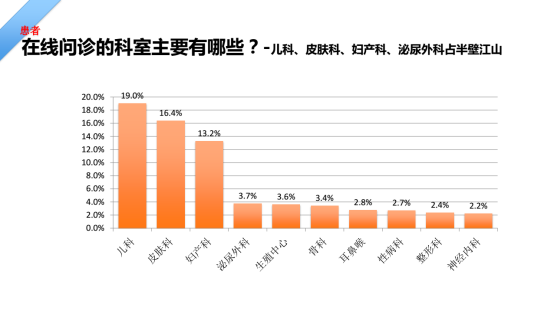
Among the medical specialties, pediatrics ranked first, dermatology second, and obstetrics third. This ranking is similar to that in the previous light consultation services, as users of these specialties are precisely heavy internet users. In terms of average consultation fees, doctors from Beijing ranked first with an average fee of 147 yuan, followed by doctors from Shanghai at 138 yuan, while doctors from Henan had the lowest average consultation fee of 34 yuan.
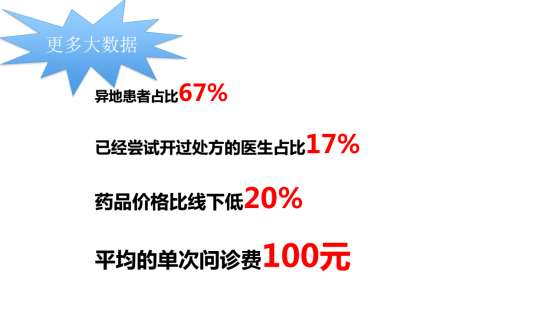
The primary change in internet hospitals compared to the era of lightweight online consultations is that physicians can now conduct diagnoses and issue prescriptions online. However, during the trial operation period, doctors remained cautious about issuing online prescriptions, resulting in a relatively low volume. Among the 10,000 practicing physicians, only 17% had attempted to write prescriptions, indicating that scale has not yet been achieved. In terms of pharmaceuticals, Yinchuan Smart Internet Hospital has partnered with qualified online pharmacies such as Haoyaoshi, Qilekang, and Jianke. After a physician issues a prescription, qualified online drug suppliers deliver the medications directly to patients’ homes. This model not only addresses the issues of incomplete drug varieties and widespread lack of new medications in remote areas of China, but also offers prices 20% lower than the market rate.
To become the Didi of internet healthcare
After sharing the data from the three-month trial operation of Yinchuan Smart Internet Hospital, Wang Hang focused on the hospital’s positioning: to become the “Didi” of the healthcare industry.
The two most prominent ride-hailing companies in China, Didi Chuxing and Shenzhou Zhuanche, operate under distinct business models. Shenzhou Zhuanche adopts a B2C self-operated model, providing transportation services through vehicles it purchases or leases. In contrast, Didi Chuxing employs a C2C sharing model, relying on private car owners to join its platform and operating with an asset-light strategy.
Across China’s vast network of primary healthcare institutions, there is a significant amount of underutilized equipment, idle hospital beds, and medical teams with insufficient workloads. These medical resources have not been effectively leveraged. Smart internet hospitals address this by adopting a model where physicians issue laboratory and imaging test orders based on online consultations. The hospital’s order distribution center then matches patients with nearby participating physicians for test completion. Patients undergo imaging examinations at these local facilities and upload the reports to their attending online physicians. This process reengineering breaks down geographical barriers, alleviates the burden of long waits at large tertiary hospitals, and fully utilizes socially idle medical resources, effectively increasing the overall medical investment in society.
Wang Hang said: “Haodf Online’s Yinchuan Smart Internet Hospital operates much like Didi Chuxing: it does not build offline hospitals, purchase medical equipment, or hire physicians. Instead, it allocates patients’ diagnostic and treatment needs—such as laboratory tests, examinations, and prescription services—through a “dispatch” model, thereby revitalizing underutilized medical resources.”
How to Strengthen the Regulation of Online Medical Consultations
Since April, Haodf Online has spent three to four months developing medical staff management protocols and standardizing operational procedures. Compared with the management workflows of traditional hospitals, those of internet hospitals are more complex. Significant challenges remain in managing physicians, prescriptions, and clinical practice behaviors.
Yinchuan Smart Internet Hospital has made significant efforts in standardized management. First, a medical administration department was established during the hospital’s preparatory phase, with the participation of multiple domestic experts in medical administration and health law. Comprehensive medical administration policies and detailed implementation rules were formulated for online medical practices at internet hospitals, with targeted adjustments made to various systems—including prescription management—to suit the context of online diagnosis and treatment. Following investigations by relevant experts from the National Health and Family Planning Commission and approval from the Medical Administration Division of the Yinchuan Municipal Health and Family Planning Commission, these policies have been implemented in daily operational management. Meanwhile, rigorous verification of physicians’ qualifications and standardization reviews of prescriptions can substantially enhance the safety of medical practices.
Meanwhile, as the regulatory authority, the Yinchuan Municipal People’s Government conducted multiple rounds of research and deliberation and formulated the “One Measure, Two Systems” framework for internet hospitals in Yinchuan, namely the Interim Measures for Promoting Internet Hospitals, the Interim Administrative System for Internet Hospitals in Yinchuan, and the Interim Supervisory and Regulatory System for Internet Medical Institutions in Yinchuan. These policies clearly define the regulatory responsibilities of various government departments to ensure the quality and information security of Yinchuan’s Smart Internet Hospital.
Through these efforts, both the regulators and operators of Yinchuan Smart Internet Hospital have achieved optimal standardized management by establishing robust institutional frameworks. Ultimately, the hospital purchased medical liability insurance, so that in the event of medical disputes, the insurance mechanism will be activated to provide compensation.
Policies for Internet Hospitals Are Gradually Improving
2016 marked the inaugural year for the establishment of internet hospitals, witnessing a surge in their creation. There was an urgent need to establish numerous management standards, and policies required clear directional guidance. Discussing the policy changes over the past year regarding internet hospitals, Wang Hang provided an example: “In the first half of the year, policies on multi-site practice across provincial boundaries were unclear. Haodf Online had been engaged in ongoing discussions with the Yinchuan Municipal Health and Family Planning Commission to assess potential risks. However, by November, the draft for public comment on the administrative measures for physicians’ multi-site practice via the internet, issued by the National Health and Family Planning Commission, already included provisions for cross-provincial practice. Both the Yinchuan Municipal Health and Family Planning Commission and the National Health and Family Planning Commission have welcomed such innovations with great enthusiasm, strongly endorsing the direction of ‘Internet + Healthcare’ and supporting the use of internet-based approaches to reconstruct the current healthcare system. Policies are rapidly keeping pace step by step. Although medical insurance coverage remains unresolved at present, it may well be integrated into internet hospitals in the near future.”
The Future Development of Smart Internet Hospitals
Yesterday, in addition to the official launch of the Yinchuan Smart Internet Hospital, four offline partner institutions were unveiled: a Consultation and Surgery Center, a Partner Laboratory Center, and a Partner Pharmacy. The Consultation and Surgery Center of the Smart Internet Hospital is housed at Yinchuan First People’s Hospital and Yinchuan Kawa Heart Center, establishing a direct “green channel” for local patients to access national-level experts. Ningxia Di’an Lejia Biomedical Laboratory Center will serve as the offline laboratory center for the Smart Internet Hospital, providing testing and examination services to patients. Xuanqi Traditional Chinese Medicine Baicaotang Pharmacy is the Smart Internet Hospital’s local offline partner pharmacy in Yinchuan, offering pharmaceutical services to patients.
In the future, an increasing number of consultation centers and surgical centers will be established across China. National-level medical experts will reach Yinchuan, western regions, and grassroots healthcare facilities through internet hospitals. Yinchuan Smart Internet Hospital will also integrate with third-party laboratory testing centers, imaging centers, and rehabilitation institutions to provide patients with end-to-end services, while creating opportunities for mutual growth among partners in the industry chain.