

Renhe Pharmacy Network Acquires 70% Stake in Yuanshengtang for RMB 16.8 Million, Advancing Its FSC Healthcare Model

On the evening of December 8, Renhe Pharmaceutical issued an announcement stating that, pursuant to the equity transfer agreement signed between its subsidiary, Renhe Pharmacy Network (Beijing) Pharmaceutical Technology Co., Ltd. (hereinafter referred to as “Renhe Pharmacy Network”), and relevant shareholders of Shanxi Yuanshengtang Pharmaceutical Chain Co., Ltd. (hereinafter referred to as “Yuanshengtang”), it has acquired a 70% equity stake in Shanxi Yuanshengtang Pharmaceutical Chain Co., Ltd. for RMB 16.8 million using its own funds. Following the completion of the equity transaction, Yuanshengtang was renamed Renhe Pharmacy Network (Shanxi) Pharmaceutical Technology Co., Ltd.
Yuanshengtang was established in 1999, with its business scope covering disinfection products, daily chemical products, health care products, products for the elderly, family planning products, and more. Renhe Pharmaceutical stated that this transaction, primarily implemented through Renhe Pharmacy Network as the main entity to layout terminal points across various regions, is a crucial step in constructing Renhe Pharmaceutical’s pharmaceutical FSC model. By integrating online and offline channels and eliminating intermediate links, Renhe Pharmaceutical aims to expand the profit margin of its product supply chain. The transaction aligns with the company’s overall strategic layout.
Renhe Pharmacy Network, formerly known as “Yaofang.com,” was established in December 2005 and became China’s first online pharmacy to obtain the Certificate of Qualification for Internet Drug Transaction Services. After its acquisition by Renhe Pharmaceutical, Renhe Pharmacy Network officially launched in April 2016, announcing a new strategic development plan: to acquire 3,000 stores nationwide over three years to serve as offline experience centers; to continue providing high-end product services centered on new drugs, specialty drugs, and imported drugs; and to launch online health and medical service initiatives focused on online consultations, telemedicine, and patient escort services.
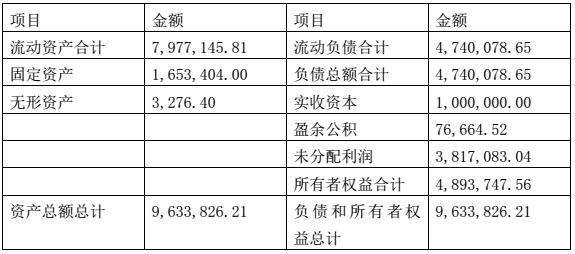
As of June 30, 2016, the audited consolidated financial statements of Shanxi Yuanshengtang Pharmaceutical Chain Co., Ltd.Assets, Liabilities, and Owners' Equity
The above transactions mainly rely on Renhe Pharmacy Network as the implementing entity to lay out terminal points in various regions, which is to build RenhePharmaceutical IndustryFSCan important component of the model. The company expands its reach by integrating online and offline channels to streamline operations and eliminate intermediaries, thereby increasingProfit Margins of Renhe Pharmaceutical's Product Supply Chain.
Renhe Pharmaceutical’s FSC Model refers to the integration of upstream product resources, midstream commercial enterprises, and downstream retail terminals, leveraging the internet and big data to shorten the supply chain and implement closed-loop management, thereby enabling drugs to be supplied directly from manufacturers to consumers through Renhe Pharmaceutical’s commercial and retail systems.
(1) Upstream, the Company will consolidate over 1,000 products with approved registration certificates held by eight pharmaceutical enterprises under Renhe Pharmaceutical. Through the OEM model of Heli IoT, the Company has allied with 212 pharmaceutical companies across China to integrate more than 1,500 product varieties. Additionally, the Company plans to acquire Dingdang Medicine, which holds exclusive agency rights for nearly 500 varieties. In the future, the number of product varieties controlled by the Company is expected to exceed 5,000, achieving integration and scale expansion in its pharmaceutical portfolio.
(2) Midstream: The company will establish over a hundred regional Dingdang Medicine companies in cities of medium size and above to ensure product allocation efficiency. Meanwhile, it will moderately increase the density of branch offices in lower-tier cities as needed.
(3) Downstream,By integrating Jingwei Yuanhua’s Jingwei Pharmacy chain and Dingdang Chain Pharmacies, the company will develop and construct 3,000 “front-store, back-clinic” retail pharmacy outlets across major cities in China, each providing comprehensive coverage within a 2.5-kilometer radius. Meanwhile, it is actively expanding into hospital pharmacy management services for public hospitals, seizing opportunities at the public hospital pharmacy terminal and pursuing chain-based development.
Under Renhe PharmaceuticalHeli IoT Platform was established in January 2015. The alliance comprises over 200 pharmaceutical companies and, by leveraging an innovative industrial internet business model, integrates resources from all parties and optimizes supply-production relationships. It has created a national B2B demonstration platform for suppliers of active pharmaceutical ingredients (APIs), excipients, packaging materials, and finished drugs, aiming to achieve an intelligent leap forward in Pharmaceutical Industry 4.0.
By leveraging this platform and introducing big data analytics and sharing, we aim to gradually achieve a procurement scale of RMB 30 billion within a few years. This will enable centralized procurement of raw materials, auxiliary materials, and packaging materials at the very front end of the industrial chain, thereby reducing overall procurement costs for manufacturing members of the alliance and subsequently lowering drug prices. By eliminating intermediate links, drugs will be supplied directly to consumers at the most favorable prices, alleviating the financial burden of medication on the public and addressing issues such as difficulty and high cost in accessing medicines, thus truly realizing “industry-to-consumer” direct supply.
Meanwhile, the standardization and unification of procurement also ensure that alliance members share high-quality raw materials, thereby guaranteeing the quality of the final products.
Furthermore, the development of similar Industrial Internet Consortiums will enhance the overall quality management standards of their members, improve the overall capital utilization efficiency of enterprises within the consortium, and reduce capital occupancy costs, thereby supporting the comprehensive transformation and upgrading of China’s pharmaceutical manufacturing industry.