

Internet Healthcare Makes Further Strides: Shanghai Medical Association Establishes Internet Healthcare Specialty Committee
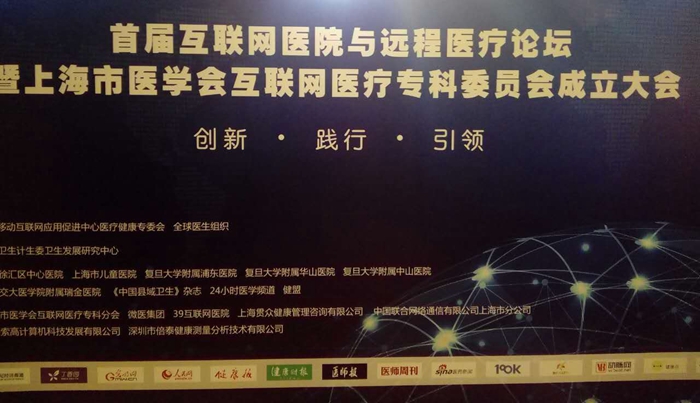
On December 10, the Internet Healthcare Specialty Committee of the Shanghai Medical Association was established, coinciding with the inaugural Forum on Internet Hospitals and Telemedicine. Participants and practitioners from national and Shanghai health commissions, renowned hospitals in East China, WeDoctor, 39 Internet Hospital, and Guanzhong Management Consulting gathered to discuss the obstacles encountered and achievements made in “Internet+ Healthcare,” internet hospitals, and smart hospitals, thereby deliberating on the development of internet healthcare in the new era.
At the year’s final internet healthcare conference, participants offered interpretations of internet healthcare based on their respective positions: some clearly identified existing problems, others calmly analyzed the essence of internet healthcare, and still others confidently looked ahead to its future. While opinions varied, most remained optimistic. As 2016—dubbed “Year One of Internet Hospitals”—drew to a close, what signals did attendees reveal about the trajectory of internet healthcare?
According to the “2016 White Paper on Internet Hospitals in China” released by VCBeat and Tencent Research Institute at the World Internet Conference in Wuzhen, the cumulative number of internet hospitals across China reached 36 by the end of November. Among them, 25 were already operational, while the remaining 11 were still under construction, indicating a nationwide proliferation of internet hospitals. Shanghai alone hosts several such facilities, including Changhai Internet Hospital, Children’s Internet Hospital, and Xuhui Cloud Hospital. It is believed that, apart from Ningxia (where Haodf Online and WeDoctor have established their internet hospital operations), Shanghai undoubtedly represents another major hub for internet hospitals. In light of this, the Shanghai Medical Association established the Specialized Committee on Internet Healthcare, aiming to form a regional, well-organized professional body dedicated to advancing the development of internet healthcare in the region.
According to Xu Jianguang, President of the Shanghai Medical Association, President of the Shanghai Physicians Association, and President of Shanghai University of Traditional Chinese Medicine, the Internet Healthcare Branch is the 92nd specialty branch of the Shanghai Medical Association. Its establishment, long in the making, has attracted considerable attention. The branch’s primary focus is on developing reimbursement mechanisms for internet healthcare, establishing industry standards, and addressing existing challenges. What are these reimbursement mechanisms? Internet healthcare and internet hospitals serve as a supplement to medical resources, aiming to meet the growing healthcare demands of the public through internet technologies and digital means. Although many enterprises and hospitals are actively engaged in internet healthcare, the industry as a whole lacks standardized regulations and has yet to form a unified system. In particular, internet hospitals vary significantly from one institution to another, which hinders regional and national standardization. Therefore, it is essential to establish professional organizations that not only promote the practice of internet hospitals but also discuss and develop standardized processes and regulatory documents. Furthermore, what are the current issues facing internet hospitals? These include unclear liability subjects, challenges in integrating with medical insurance systems, and difficulties in linking pharmaceutical services—all of which require continued exploration.
So, what is the government’s position? Niu Hongli, Deputy Director of the Legislative and Regulatory Affairs Division of the National Health and Family Planning Commission, stated that the entity operating an internet hospital must be a medical institution with proper qualifications. Only institutions recognized under the Regulations on the Administration of Medical Institutions as qualified to provide medical services are eligible to operate internet hospitals; this is a fundamental prerequisite. On the basis of meeting this prerequisite, internet healthcare should align with current healthcare reform policies—including the separation of prescribing from dispensing, multi-site practice for physicians, tiered diagnosis and treatment, and remote consultation—so as to improve the multi-tiered healthcare system.
Zhao Dandan, Deputy Director of the Shanghai Municipal Health and Family Planning Commission, also noted that whether it is the city-level medical interconnection system previously implemented in Shanghai or internet-based healthcare, the ultimate goal is to benefit the general public. The services are directed at the general public, and the key challenge lies in ensuring effective implementation.
It can be said that the policy guidelines are primarily encouraging, supporting innovation in medical services. However, the ultimate focus must remain on aligning medical resources with patient needs, striving to resolve the issue of doctor-patient resource allocation. Only then can other initiatives, such as health management and smart cities, become feasible.
Judging from the existing regulations and guidance issued by relevant ministries, this ironclad rule remains unassailable. As early as in the Opinions on Promoting Remote Medical Services in Medical Institutions, developing remote medical services was identified as a crucial means to optimize the allocation of medical resources, facilitate the downward flow of high-quality medical resources, establish a tiered diagnosis and treatment system, and address the public’s difficulties in accessing medical care. The development of remote medical service systems has been incorporated into regional health planning and the planning for the establishment of medical institutions, thereby creating a favorable policy environment for the advancement of remote medical services.
The recent local “Notice on Issues Concerning the Inclusion of Telemedicine Services in the Basic Medical Insurance Fund Payment” explicitly includes telemedicine services within the scope of basic medical insurance fund reimbursement. These measures are continuously “loosening the constraints” on medical resources, thereby innovating healthcare service delivery models and leveraging technology to transform patient access and care processes.
Yu Guangjun, President of Shanghai Children's Hospital and the First Chairman of the Specialized Committee on Internet Healthcare, shared his insights on internet healthcare and internet hospitals.
First, Yu Guangjun provided a systematic introduction to the Internet Medical Specialty Committee project. This initiative is driven by three major backgrounds. The first is healthcare reform, which mandates tiered diagnosis and treatment, multi-site practice for physicians, and telemedicine. The second is the "Internet Plus" context. A key consideration here is whether it should be framed as "Internet Plus Healthcare" or "Healthcare Plus Internet." The conclusion is that the internet is merely a tool; the critical factor lies in how this tool is utilized to facilitate the upgrading and transformation of hospitals. This includes advancing healthcare informatization and bringing medical information and services online, thereby enhancing patient accessibility and enabling more convenient access to medical services. The third background is the existing foundation of internet-based healthcare. The penetration of the internet into the healthcare sector is becoming increasingly profound, already extending into specialized areas such as online lightweight consultations, doctor-patient communication, appointment registration, drug information, medication services, chronic disease management, and healthcare big data. How to achieve synergy across these fields requires continuous exploration by institutions involved in internet healthcare and by internet hospitals.
The inaugural cohort of institutions admitted to the Special Committee includes hospital management entities, specialized hospitals, and medical information technology companies. Among these, hospital management entities encompass various capital firms and platforms; specialized hospitals include children’s hospitals and other types of specialty hospitals; and medical information technology companies range from online hospital platforms such as WeDoctor and 39 Internet Hospital, to providers and operators of internet hospital technologies like Guanzhong. By uniting these organizations and groups, the Committee aims to establish an industry-academia-research exchange platform dedicated to addressing the evaluation of internet healthcare applications and the control of medical quality. More importantly, it seeks to promote knowledge dissemination about internet healthcare, fostering a correct understanding among patients and all stakeholders, thereby driving innovation in internet healthcare on the foundation of high-quality service delivery.
Yu Guangjun also has his own perspective on internet healthcare. He explains that the initiators of internet hospitals include two main entities: commercial companies and hospitals. Together, they form a complete service chain from the commercial side to the hospital administration. However, the advancement of internet healthcare relies on the establishment of standards and policy support. It is essential to address patients’ trust issues and cultivate their habit of seeking solutions through internet hospitals. Whether it involves purely online consultations or internet-based diagnostic and other medical services, the goal is to establish internet healthcare as a patient triage channel. This can be achieved by addressing several key areas, such as integrating health insurance coverage and enhancing the diagnostic and treatment capabilities of internet healthcare platforms. In short, the aim is to alleviate patients’ concerns and encourage them to adopt this channel for medical care.
Under the new circumstances, internet-based healthcare faces emerging technical requirements. In the future, internet healthcare technologies will evolve from basic mobile applications and online medical services to more advanced domains such as wearable devices and artificial intelligence. The envisioned future encompasses the entire continuum of resident health: pre-consultation communication, remote consultations via lightweight diagnostic devices, remote diagnosis and video conferencing during clinical visits, and post-consultation monitoring and home health management. The primary objectives are to enhance the patient experience and improve the utilization efficiency of medical resources.
A common thread among the views of various industry leaders is that internet healthcare will become a critically important, if not indispensable, component of the future healthcare sector. All stakeholders must work together to identify the most suitable path for its development. We are confident that, with multi-party participation, internet healthcare will have a more promising future.