

Senyint International Oversubscribes Series C Funding Round with Commitments from Six Institutional Investors
Following9In [Month], it was publicly announced that the financing round was led by CICC Zhide and Hainan Haiyao Big Health.2Over 100 Million YuanCAfter the round of financing, SENYINT12Month9on the day of“"Leading with Intelligence, Innovating for the Future"”2016At the SENYINT Summit on Tiered Diagnosis and Treatment, the latest progress in financing was once again revealed. SENYINT has currently entered into agreements with6investment institutions have completed the signing, and it is expected that12This round of financing will officially close at the end of the month. VCBeat will continue to follow up on the latest financing developments.

“Seizing the Intelligent Initiative, Innovating for the Future”: The 2016 SENYINT Summit on Tiered Diagnosis and Treatment was guided by the National Health and Family Planning Commission’s Telemedicine Management and Training Center and the Remote Medical Care and Information Technology Branch of the China Association of Medical Equipment, and hosted by SENYINT.
Mr. Di Sen, Director of the Central and Western Poverty Alleviation and Development Fund; Mr. Geng Xianhui, Secretary-General of the China Huaxia Cultural Heritage Foundation; Mr. Li Ning, President of the Telemedicine and Information Technology Branch of the China Medical Equipment Association; and Dr. Lu Qingjun, Director of the National Health and Family Planning Commission’s Telemedicine Management and Training Center, attended the forum. They were joined by leaders from the Beijing Municipal Health and Family Planning Commission, the Langfang and Tongzhou District Health and Family Planning Commissions, the Shanghai Municipal Health and Family Planning Commission, and the Health and Family Planning Commissions of Qinghai, Shaanxi, Hebei, Henan, Anhui, and Hainan Provinces. Together with authoritative experts, leaders, and industry pioneers in the medical field from across China, they interpreted and analyzed the current status, challenges, countermeasures, and prospects of tiered diagnosis and treatment in telemedicine services and the development of internet-based healthcare from various dimensions and levels. The participants jointly explored pathways to promote the construction of a tiered diagnosis and treatment system within medical consortia and to create a new “open” ecosystem for medical services.
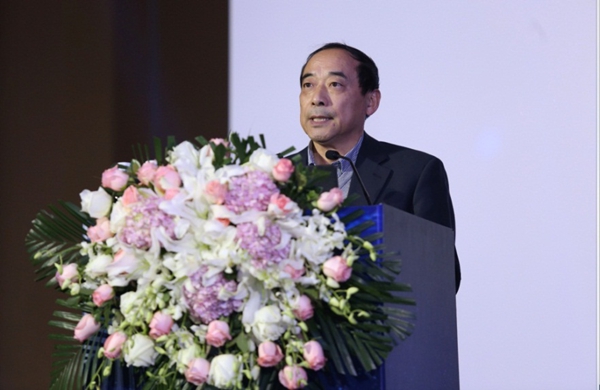
Li Ning, Telemedicine and Information Technology Branch, China Association of Medical EquipmentPresident
The Branch of Telemedicine and Information Technology of the China Medical Equipment Association, established in July this year, will shoulder the responsibility of conducting strategic research for the telemedicine industry. It will play a guiding, supervisory, and coordinating role, establish industry coordination mechanisms and self-regulatory standards, and safeguard industry rights and interests. Furthermore, it will explore the standardization and normalization of telemedicine information technology equipment, and promote innovation and adoption in telemedicine and health information technology.
The sub-branch will actively explore collaborations with third-party entities, joining forces with large hospitals, primary care institutions, and third-party organizations to jointly build a platform for academic exchange and industry coordination in the field of telemedicine. It will research and develop the workforce for telemedicine operations and management, provide support to primary care hospitals, and conduct training for primary care clinicians. These efforts aim to promote the sharing and redistribution of high-quality medical resources, enhance the clinical capabilities of primary care physicians, improve the health status of the general population, and alleviate the shortage of medical services and medications at the grassroots level.
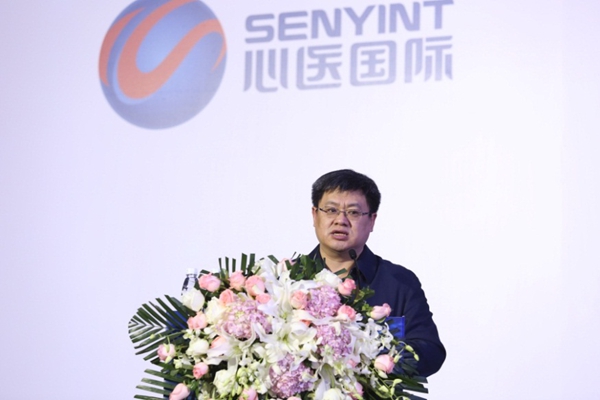
Director Lu Qingjun, National Health and Family Planning Commission Telemedicine Management and Training Center
Currently, the telemedicine platform network covers 32 provinces and municipalities, more than 2,000 hospitals, with over 60 medical specialties already conducting business on the platform.
During the demonstration process, the National Health and Family Planning Commission placed great emphasis on leveraging big data by establishing a comprehensive remote medical data management platform. This platform allows users to log in via web browsers anytime and anywhere, enabling experts to utilize their fragmented time to complete medical tasks. Furthermore, it integrates process management, quality control, and the three-tier ward round system into the remote medical platform.
Telemedicine is not merely about consultations and diagnostic inquiries, nor is it simply about providing referral guidance; more importantly, it represents an enhancement and integration of all hospital operational scenarios. Hospital disciplines—including clinical care, medical education, scientific research, and disease prevention—must be facilitated through telemedicine platforms. Only with such platforms can genuine disciplinary support and collaboration between lower-tier and higher-tier hospitals be realized.
At this forum, SENYINT announced two major initiatives.
SENYINT will collaborate with the Central and Western Poverty Alleviation and Development Fund to implement innovative poverty-alleviation telemedicine services for the construction of national-level key disciplines. Leveraging SENYINT’s extensive network covering primary healthcare institutions, its mature service system and team, and years of experience in medical informatization, the partnership will carry out targeted poverty alleviation initiatives across seven national-level key disciplines, including oncology, stroke, cardiovascular diseases, respiratory diseases, and orthopedics. By establishing a telemedicine service network and providing telemedicine solutions for county- and township-level hospitals and health centers in underdeveloped and impoverished areas, the initiative aims to enhance the quality of primary healthcare and address the issue of poverty caused or exacerbated by illness.
SENYINT, in collaboration with Lymphoma Home, YiLiu Assistant, and Honghe Lin Doctors Group, has launched the oncology initiative—the “QiWang” Program. This program will provide on-demand services tailored to specific types of cancer, organize nationwide lecture tours by oncology experts, and expand offline operations alongside existing remote online services. By integrating online and offline approaches, it aims to deliver long-term disease management for patients at primary care hospitals. Additionally, the partners will collaborate on academic research topics. Leveraging SENYINT’s robust R&D capabilities and big data analytics, the program seeks to fully realize the research value across multiple regions and terminals, thereby enhancing the academic standards of primary care hospitals.
Meanwhile, SENYINT launched two new products, the SENYINT Medical Academy and the Medical Consortium Platform, which provide physicians with diverse teaching models and customized remote consultation services.
To date, SENYINT has served 4,040 client hospitals, including 3,000 at the county and prefecture levels. It operates and provides services for 89 medical consortium projects. As of early December 2016, over 110,000 remote consultations had been conducted through the SENYINT platform, covering specialties such as oncology, neurology, cardiology, respiratory medicine, gastroenterology, cardiovascular disease, rheumatology and immunology, and stomatology. These consultation services span all 31 provinces across China.