

Yasen Technology Secures Tens of Millions in Series A Funding to Enhance Diagnostic Accuracy for Physicians
As the only domestic technology company capable of intelligent analysis in nuclear medicine and functional imaging, Yasen Technology recently completed its Series A financing round, raising tens of millions of RMB. The investors were Shunxi Fund under Zhonggu Group and Huqiu Medical Technology (Suzhou) Co., Ltd. (hereinafter referred to as "Huqiu Medical").
Following the completion of this round of financing, Yasen Technology has further strengthened its collaborative partnerships in the government and healthcare sectors and secured robust support in terms of high-quality channels and ecosystem integration. This will enable Yasen to advance more rapidly and effectively toward fulfilling its mission. VCBeat (WeChat ID: vcbeat) has provided follow-up coverage on this development.
Yasen Technology, founded in 2006, is an innovative enterprise dedicated to the intelligent analysis of medical imaging.Secured $4.5 million in angel-round financingYasen Technology employs its proprietary patented mathematical models to conduct collaborative research projects with multiple key hospitals in China, focusing on quantitative analysis of organs such as the brain, heart, lungs, and thyroid. The company develops and validates biomathematical analytical methods for specific diseases and continuously builds a database of normal population cohorts among Chinese individuals.
After years of research and experimentation, Yasen Technology has achieved precise analysis of specific organs and diseases using nuclear medicine equipment and functional MRI systems. Meanwhile, the company has begun integrating artificial intelligence into the analysis of structural imaging modalities, such as X-ray and CT. In the future, Yasen Technology aims to realize intelligent multi-modal image fusion analysis, providing effective auxiliary diagnostic support to healthcare institutions.
In 2004, Chen Hui, the founder of Yasen Technology, was still working in the field of Business Intelligence (BI), while co-founders Li Gang and Xu Yan were also gaining extensive experience in the IT industry. They aspired to build their own venture and initially planned to provide hospitals with information technology-related software and services. Their first product was a Chinese-language imaging report system. However, since this system offered limited technological value-added and the market was already dominated by established vendors, relationship-based sales strategies failed to secure a decisive competitive advantage in the existing market.
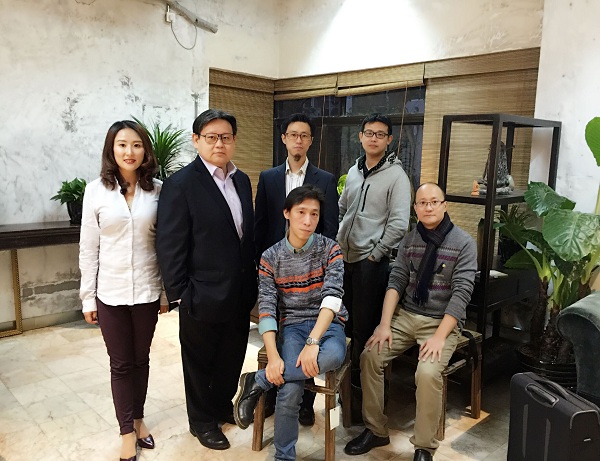
From left to right: Wang Yiying, Cai Chengzong, Gu Wei, Chen Hui (standing)
From left: Xu Yan, Li Gang (seated)
Later, through interactions and learning with nuclear medicine specialists, they came to understand the pain points physicians face in clinical practice: Nuclear medicine imaging reflects cellular metabolic activity rather than physiological structures or the morphology of lesions, leading to high rates of misdiagnosis and missed diagnoses. Consequently, there is a need for computer software to achieve precise localization and accurate quantification.
The physician also noted that abroad, there is a neuroimaging assessment software called Statistical Parametric Mapping (SPM), which can transform visually observable images into a series of hierarchical, segmented, and graded numerical values. By performing statistical comparisons with reference group data, it enables quantitative analysis—a capability that remains unavailable in China. Domestic imaging reporting systems merely assist physicians with text-and-image layout and editing, whereas what physicians truly need is intelligent analysis and computer-aided diagnosis software capable of addressing their specific clinical pain points.
Research has shown that there is extensive demand and a wide range of applications for medical image analysis, including the diagnosis of pulmonary embolism, cerebral blood flow assessment, cardiovascular disease (such as determining stent placement), thyroid disease diagnosis, detection of whole-body bone metastases from cancer, early tumor diagnosis, and diagnosis of psychiatric disorders. At that time, only PMOD from Switzerland and NeuroQ from Japan were engaged in research in this field abroad, and holographic image analysis was exceedingly rare both domestically and internationally. Thus, we beganFocus All Efforts on Intelligent Analysis of Nuclear Medicine Imaging。
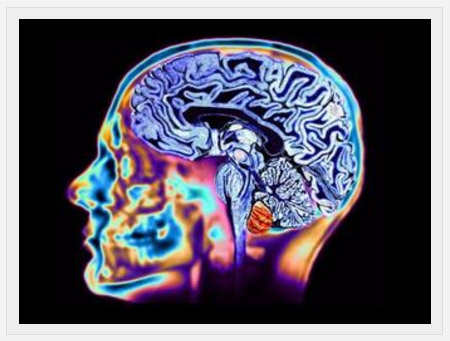
Brain Quantitative Analysis Function
Image processing technology, mathematical algorithms, and a metabolic database of the normal Chinese population are Yasen Technology's three core technologies.By employing various mathematical algorithms and statistical principles, post-processing analysis of imaging data is performed. Through benchmarking against a database of the normal Chinese population, this approach enables precise disease detection, severity assessment, prediction of disease progression, and guidance for medication.
It is worth mentioning that Yasen Technology'sMetabolic Database of the Normal Chinese PopulationEstablishing a nuclear medicine imaging database for the normal population is a highly challenging endeavor, as healthy individuals are generally unwilling to spend thousands of yuan on PET scans. Data for normal control groups cited in most literature typically comprise only around 20 cases. Through the dedicated efforts and extensive data acquisition initiatives of Yasen Technology, its database currently contains approximately 1,500–2,000 cases from healthy individuals.
Compared with the previous empirical judgments based on unanalyzed and unprocessed images, after applying Yasen Technology’s system: physicians can make rapid and precise diagnoses based on abundant, quantitative data and control groups.
Currently, Yasen Technology has two main revenue streams: one is providing diagnostic analysis services to hospitals, and the other is sharing a certain percentage of testing fees with hospital health examination centers. Based on the installed base and pricing of SPECT, PET-CT, and fMRI in China, the company’s revenue reached RMB 1.8 billion by 2020.
Additionally, during our marketing efforts, we found that recognition of our product by renowned experts at Grade A tertiary hospitals mainly stems from its ability to improve diagnostic efficiency. In contrast, physicians at primary healthcare institutions have shown greater enthusiasm for our product, as it addresses the long-standing challenge of inaccurate diagnoses.
ThereforeFuture grassroots medical institutions will be the key focus of Yasen Technology's promotion efforts.。
“Enhancing the precision of imaging examinations to achieve intelligent, automated auxiliary diagnosis will significantly reduce the incidence of misdiagnosis and missed diagnosis, thereby improving physicians’ work efficiency. Accurate determination of disease types and severity, along with effective monitoring of medication and postoperative therapeutic efficacy, will elevate the overall standard of healthcare. Most tangibly, it will reduce out-of-pocket medical expenses for patients. This is the goal that Yasen Technology set for itself when determining its strategic direction for transformation.”Chen Hui, CEO of Yasen Technology“Integrating big medical data and leveraging artificial intelligence to enable equitable access to disease evaluation and analysis through data technology for all, thereby improving human health, is the mission of Yasen Technology.”