

Yi Qing Tang: Building a Standardized TCM Chain with Offline-First, Light-Entity Strategy Powered by Internet+
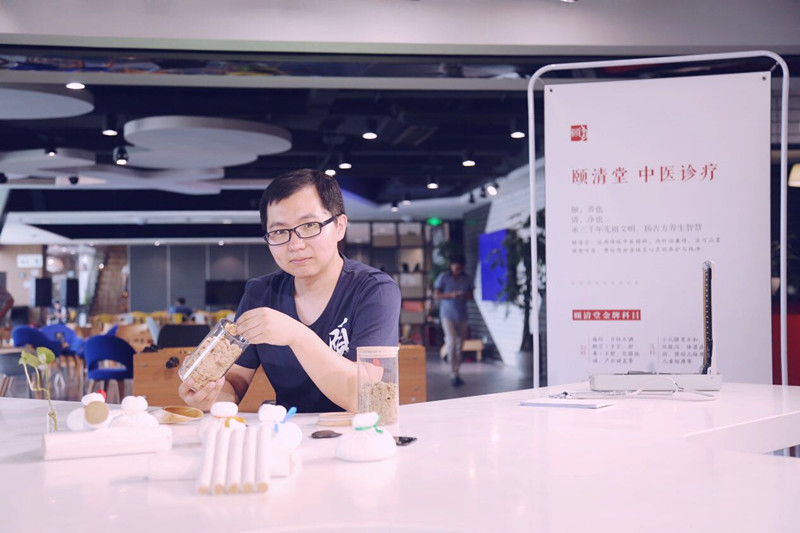
Founder of YiqingtangLiu Ziyuan
“The internet is light, while healthcare is heavy. Applying pure internet thinking to healthcare is avoiding the hard parts and focusing on the easy ones. Yiqingtang, by contrast, adopts a ‘heavy-first, light-later’ approach: it first secured offline medical licenses before launching its internet-based services.” — Liu Ziyuan, Founder of Yiqingtang
Yi Qing Tang is positioned as a chain of general practice traditional Chinese medicine (TCM) clinics. Offline, it primarily provides diagnostic, treatment, and conditioning services by integrating traditional TCM with herbal decoctions, diaphoretic therapy, gua sha, and fumigation therapies. Online, its services—including remote consultations, appointment scheduling, a member community, and home delivery of medications—are mainly delivered through the WeChat platform.
In 2013, Liu Ziyuan moved from Beijing to Chengdu to establish a traditional Chinese medicine (TCM) clinic. He believed that Chengdu had a high level of acceptance for TCM, a certain market capacity, and lower operating costs. To date, he has opened four chain self-operated TCM outpatient clinics, with approximately 10,000 online users.
From Offline to Online: How Does Liu Ziyuan’s “Internet + TCM” Model Work?
“The essence of medical professionalism lies not in knowing which diseases you can treat, but in recognizing which ones you cannot,” said Liu Ziyuan.
In the field of Traditional Chinese Medicine (TCM), many startups have initially entered the market through online channels, with common service models including online consultation, offline transaction services, and home delivery of medications. However, internet-based approaches alone cannot fully address all medical needs. Consequently, companies such as Kan Zhongyi and Jin Huatuo are actively establishing offline TCM clinics. An increasing number of internet healthcare companies are also building their own clinics, joining the trend of integrating online medical services with offline care. Conversely, some enterprises, such as Gushengtang and Junhetang, have expanded into internet healthcare from their foundation in offline TCM clinics. Chengdu Yiqingtang TCM Clinic has similarly adopted this latter approach.
Only by providing attentive services through brick-and-mortar stores can the Yiqingtang brand truly resonate with consumers. There was once an 18-year-old female patient studying abroad who experienced unexplained amenorrhea. Upon returning to Chengdu, her parents hoped she could undergo conditioning through Traditional Chinese Medicine (TCM) therapies; however, she had only one month before needing to return to her studies. The girl visited the Yiqingtang TCM Clinic. After pulse diagnosis, the physician determined that she likely suffered from qi and blood deficiency. He prescribed various herbal medicines to tonify qi and nourish blood, adopting a combined approach of external application and internal regulation. She visited the clinic three times per week, and after one month, her menstruation resumed on schedule.
For patients like these, Yiqingtang has treated countless individuals over the past three years. Liu Ziyuan feels deeply gratified each time he sees a patient’s health issues resolved. In his view, word-of-mouth referrals are the cornerstone of building a medical brand. He is committed to providing professional Traditional Chinese Medicine (TCM) services and currently operates four directly-owned clinics in Chengdu. Each clinic covers approximately 200 square meters and employs four full-time physicians. This small-scale single-store model is well-suited for rapid expansion. Yiqingtang aims to ensure that users can reach the nearest Yiqingtang clinic within a 10-minute walk, primarily adopting a “directly-operated plus franchised” business model.
Liu Ziyuan stated that the company will cautiously adopt the franchise model to ensure effective management of franchised stores and prevent a scenario where clinics are affiliated in name only without unified operational control. Meanwhile, Yiqingtang plans to open offline traditional Chinese medicine (TCM) outpatient clinics in Beijing.
In terms of its revenue model, Yiqingtang primarily generates offline income from traditional Chinese medicine (TCM) outpatient services and pharmaceutical sales, while its online business mainly focuses on home delivery of medications. It is reported that Yiqingtang currently has approximately 10,000 online users.
Most online users are acquired through partnerships with Dianping.com, which directs individuals seeking traditional Chinese medicine (TCM) therapies to brick-and-mortar clinics. The majority of these clients belong to the middle class; due to their busy work and personal lives, they are less likely to visit hospitals for minor ailments, making TCM wellness care an attractive alternative. “We combine the clinical expertise of a TCM clinic with the service experience of a premium wellness spa,” said Liu Ziyuan.
 Yiqingtang Team
Currently, the Yiqingtang team comprises approximately 18 members. Founder Liu Ziyuan has a background in architecture and later transitioned into the traditional Chinese medicine (TCM) industry after being exposed to TCM practices. The other co-founder comes from a family with a long heritage in TCM, previously served as the deputy director of a Tier-2 hospital, and has nearly a decade of experience in the TCM field. His professional background encompasses TCM-related product research and development, sales, agency representation, third-party services, and outpatient clinical practice. In the future, Yiqingtang plans to develop its own mobile application.
The future expert panel will select the best specialists for online services based on medical conditions, enabling online consultations, offline diagnosis and treatment, and home delivery of medications. Liu Ziyuan revealed to reporters that Yiqingtang will develop a store management SaaS system to replace its existing Hospital Information System (HIS), integrate with its WeChat official account, and launch its own mobile app at an appropriate time. This will ensure seamless integration between front-end clinical services and back-end management. Leveraging telemedicine and its chain of clinics, Yiqingtang will allow patients to choose self-care regimens after online consultations or visit any Yiqingtang location within 15 minutes to experience professional, efficient, and effective Traditional Chinese Medicine (TCM) diagnostic and therapeutic services.
Yi Qingtang CEO Liu Ziyuan brings extensive experience in online marketing and offline event management within the field of Traditional Chinese Medicine (TCM), while COO Ye Han hails from a fifth-generation TCM family and possesses substantial clinical expertise in TCM treatments. According to Liu Ziyuan, Yi Qingtang’s competitive advantages are primarily reflected in three areas. First, the team is currently developing its proprietary SaaS platform tailored to daily operations, which will significantly enhance operational efficiency. Second, Yi Qingtang’s repository of TCM prescriptions provides a solid foundation for standardized TCM treatment protocols. Third, Yi Qingtang adopts an asset-light physical presence model, keeping individual store sizes under 200 square meters, enabling break-even within three to six months.
“Despite three years of development, Yiqingtang has not yet initiated its fundraising process. Liu Ziyuan stated, ‘Investors have approached us, but at that time, our business model was still undergoing trial and error and had not been fully validated. Premature fundraising might not have been beneficial for our customers, brand, or investors. We plan to launch the next round of financing after completing our online layout, in preparation for future expansion.’”
This year marks Liu Ziyuan’s tenth year in the traditional Chinese medicine (TCM) industry. Initially, he led his team through exploratory efforts spanning R&D, production, sales, and clinic operations. A decade of experience in the TCM sector has convinced Liu that the true value of this profession lies in bringing one’s own products and technologies directly to patients to provide treatment and save lives.
Thus, in 2013, Liu Ziyuan led his team from Beijing to Chengdu, starting with brick-and-mortar stores. Over the course of three years, they opened more than ten outlets of varying sizes. Factors such as store area, location, and business model all had a certain impact on store performance. Through continuous trial and error, Yiqingtang ultimately developed a growth model that balances “lightness” and “speed.”
Yi Qing Tang’s model is described as “light and fast” due to its combination of “standardized processes, small-scale clinics, and rapid replication.” Unlike other internet healthcare brands that focus primarily on online services with offline support, Yi Qing Tang has taken the opposite approach. It operates four TCM clinics offline, specializing in comprehensive treatment through internal regulation and external therapies. By applying the eight methods of TCM external therapy—sweating, emesis, purgation, harmonizing, dampness-resolving, clearing, dissolving, and tonifying—in conjunction with TCM herbal decoctions, the clinics achieve favorable therapeutic outcomes for joint-related conditions (such as neck, shoulder, waist, and leg disorders), internal medicine issues related to visceral imbalance, and various comprehensive conditions in pediatrics and gynecology.
Liu Ziyuan and his Yiqingtang team are leveraging internet technologies to distill a decade of store operations and management experience, aiming to standardize traditional Chinese medicine (TCM) services and integrate non-standardized offerings into a cohesive system. Subsequently, through a combination of direct ownership and franchising, they plan to expand their network extensively, establishing a 15-minute TCM diagnosis and treatment service circle.
For Yiqingtang, beyond its product formulations, the most critical competitive barrier lies in the team’s decade of experience in the traditional Chinese medicine (TCM) industry. Liu Ziyuan stated, “Over the past ten years of offline operations, we have learned numerous hard lessons and taken many detours. We understand which brick-and-mortar store models can operate more efficiently and with greater agility, enabling rapid replication—a capability that many entrepreneurs lack.”
Moving forward, Yiqingtang will expand on the foundation of its existing stores to continue addressing users’ core diagnostic and treatment needs in depth. Liu Ziyuan stated, “I hope to transform TCM diagnosis and treatment—often viewed with trepidation by the general public—by integrating it into daily life. Our goal is to combine clinical care with service, ensuring that healthcare is delivered with high-quality service while making such services more professional. This has been our consistent endeavor.”
In terms of physician resources, Yiqingtang primarily features a medical team dominated by young and middle-aged practitioners. Senior TCM physicians are few in number; they focus on complex and refractory diseases, oversee clinical operations, and pass down technical expertise. Mid- and junior-level TCM physicians, despite lower income within the hospital setting, benefit from abundant resources. They concentrate on common and frequently occurring diseases and possess an internet-oriented mindset.
Yiqingtang: By applying the model of a traditional medical institution to reverse-engineer an internet-based approach, it may open another door for Traditional Chinese Medicine.