

Oxford Nanopore Secures $126 Million Funding Following First Human Whole Genome Sequencing with Pocket-Sized Device
December 12, 2016,Oxford Nanopore Announces $126 Million in New Funding. Just two weeks after announcing that its handheld sequencer had completed the first human whole-genome sequencing, the company secured another round of financing.Oxford Nanopore has recently been highly prominent.
Time returns to the first Thursday of December, this isOxford NanoporeA Busy Day.200Numerous industry insiders and external experts gathered on Fifth Avenue in New York, USA, at the82Avenue, Metropolitan Museum of Art, attendOxford NanoporeNanopore Community Exchange Hosted by New York UniversityJane CarltonProfessor, Ph.D. from St. George's UniversityTariq Sadiq, PhD from Aberystwyth UniversityArwyn Edwardsand other expert professors presented based onOxford NanoporeMiniONResearch findings from sequencers span multiple disciplines, including infectious diseases, environmental science, and microbiology. Moreover, the Wellcome Centre for Human Genetics at the University of Oxford and gene analysis companiesGenomics PlcAlso announced the first use ofOxford NanoporeThe handheld sequencer has completed whole-genome sequencing and analysis of multiple human genomes, paving the way for large-scale adoption of nanopore sequencing technology.
Over the years, Oxford Nanopore has gradually grown and strengthened its position despite Illumina’s dominant monopoly. The company currently employs more than 280 people, including scientists, engineers, and bioinformaticians, and has attracted substantial talent from the manufacturing and commercial sectors. Headquartered in Oxford, UK, the company has branches in Cambridge (UK), as well as in New York and Boston (US). Yet just 11 years ago, it was merely a research project at the University of Oxford.
In 2005, with the support of IP Group’s seed fund, Hagan Bayley, Professor of Biochemistry at the University of Cambridge, and Dr. Spike Willcocks co-founded Oxford Nanopore. A few months later, Gordon Sanghera joined the team as CEO. His arrival brought valuable expertise in integrating biology with electronics, laying the foundation for the company’s future commercialization.
In 2008, the addition of Dr. John Milton and Clive G. Brown brought with them their prior technical expertise from Solexa. In 2009, the company’s team continued to expand, officially relocating to the Oxford Science Park, and in 2011, it opened a new intelligence outpost in Cambridge.
At the company’s annual meeting in February 2012, Oxford Nanopore presented a series of data related to nanopore-based DNA sequencing and protein analysis, and provided an overview of the software and hardware systems for the subsequently released GridION and MinION platforms. These data included the forward and reverse strands of small DNA molecules sequenced using the company’s technology, comprising millions of base sequences. This marked the first public release of nanopore sequencing data worldwide since the theoretical concept of nanopore sequencing was proposed in 1996.
MinION
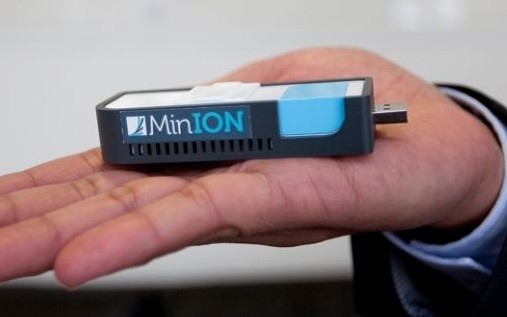
MinION Handheld Sequencer
In the spring of 2014, the MinION Access Programme (MAP) was launched. By joining MAP and paying $1,000, customers could obtain a MinION MkI device and a starter kit, which included three flow cells, two kits, software, and regular free consumables. A few months later, as performance and operational workflows continued to improve, MinION’s technology began to gain prominence in technology-related journals.
Some media outlets have described how MinION revolutionized the concept of gene sequencing applications during the MAP period. Known as a pocket sequencer, MinION is only 4 inches long, roughly the size of a standard USB flash drive, and consists of a sensor chip, an application-specific integrated circuit (ASIC), and a fluidic system required for complete single-molecule sensing assays. Compared to previous instruments that were as large as refrigerators, the compact and portable MinION offers a much broader range of application scenarios. Some media even believe that MinION will disrupt gene sequencing, enabling rapid identification of pathogenic viruses, Ebola virus monitoring, environmental monitoring, food safety monitoring, antibiotic resistance surveillance, analysis of cancer structural variations, haplotype genotyping, fetal DNA analysis, and other applications.
MinION employs a novel nanopore sequencing method, with each nanopore capable of reading an average of 90 nucleotides per second. However, MinION’s error rate has led many to view it as underwhelming; during the early trial phase in 2014, the error rate was approximately 30%. Oxford Nanopore is well aware of MinION’s shortcomings and has continuously upgraded the product to control its error rate. By 2016, the latest R9 version had reduced the error rates for various types of DNA sequencing to 2–13%. The R9.4 version, officially released in October 2016, further enhanced the overall performance of the product.
In May 2015, the inaugural Nanopore Sensing Conference was held, bringing together MinION technology users and participants of the MAP program for exchange and discussion. It was also at this time that MinION began its commercialization journey, while MAP gradually evolved into the Nanopore Community Meeting. In December, the first Nanopore Community Meeting for MinION users convened.
PromethION
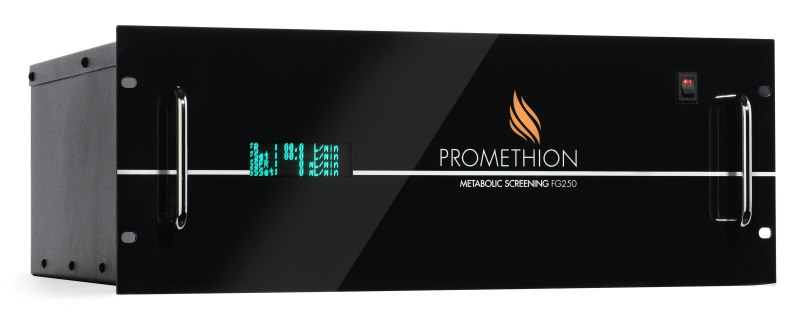
PromethION Benchtop Sequencer
At the American Society of Human Genetics (ASHG) Annual Meeting in October 2016, the company unveiled the PromethION sequencer for the first time. In fact, Oxford Nanopore had earlier launched the PromethION Access Programme (PAP) in July 2015, mirroring the release strategy used for the MinION.
The PromethION is a benchtop sequencing instrument, slightly larger than an iPad, equipped with 144,000 nanopores for sequencing multiple independent samples. This device retains the MinION’s hallmark features of simplicity, intuitive software, and minimal sample preparation, delivering low-cost, scalable, long-read sequencing to better meet the needs of users requiring greater workflow flexibility.
Oxford Nanopore has also introduced the concept of “Run until.” The PromethION device allows users to run experiments until a sufficient volume of data is obtained, or until data of sufficiently high quality meets the predefined experimental endpoint. In contrast, other analytical systems operate with fixed run times, yielding a fixed batch of data at the end of each run. In such cases, users are compelled to design their experiments to accommodate the instrument’s performance constraints.
In contrast, by leveraging the properties of nanopore sensing and rapid electronic basecalling, users can instruct PromethION to monitor its own data output in real time and identify application-specific results. Using these results, users can adjust or optimize instrument performance on the fly, or halt the run once experimental completion is confirmed.
Voltrax
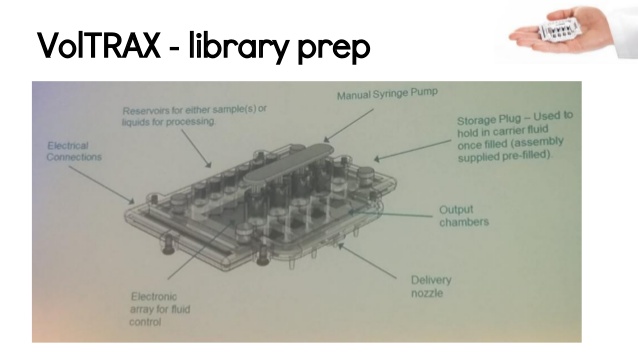
Voltrax Automated Sample Preparation System
In addition to portable sequencing instruments, Oxford Nanopore is also seeking new sequencing experiences in other areas.
At the London Calling conference on May 16, 2016, the company unveiled a series of new products. Among them, the presentation by Chief Technology Officer Clive Brown drew the most attention. Attendees described it as a “game-changing” launch, likening the atmosphere to that of Apple’s iPhone debut in 2007.
Clive Brown stated that their goal is to reduce sample preparation time to 10 minutes. To achieve this, Oxford Nanopore Technologies launched Voltrax, an automated sample preparation system. The new product retains the portability feature of its predecessors and is programmable, with 6–12 sample input ports. Although it is a disposable device, attendees agreed that the era of real-time sequencing has truly arrived.
It is understood that Voltrax can convert raw biological samples into a form ready for immediate sequencing without manual intervention. It can directly interface with MinION or PromethION sequencers. In October 2016, the VolTRAX Introduction Programme announced the opening of registration.
SmidgION
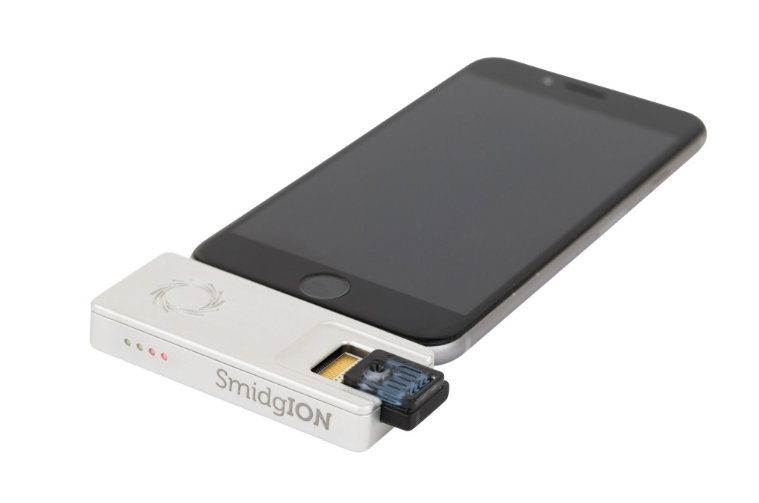
SmidgION Mobile Sequencing Concept Product
At the same London Calling conference, Oxford Nanopore also announced the SmidgION project. SmidgION is a brand-new conceptual product from Oxford Nanopore that leverages the same technology as MinION, with the added highlight of being compatible with mobile phones. The product is currently under development; if realized, genetic sequencing could enter the era of mobile phone-based sequencing.
Compared with Roche and Illumina, Oxford Nanopore appears more youthful. It is not only engaged in the production of sequencing products but also achieves conceptual breakthroughs. All of the company’s products are based on nanopore sequencing technology and maintain portability, with the ultimate goal of enabling real-time sequencing, thereby greatly expanding the application scenarios of gene sequencing.
However, Oxford Nanopore’s development has not been smooth sailing; the most vexing challenge for the company has undoubtedly been its protracted legal dispute with Illumina.
In February 2016, Illumina simultaneously filed lawsuits with the U.S. International Trade Commission and the U.S. District Court for the Southern District of California, alleging that Oxford Nanopore infringed upon its U.S. Patent Nos. 8,673,550 and 9,170,230. These patents pertain to the application and commercialization of MSP nanopores and related technologies. As the owner of these two patents, Illumina has granted exclusive licenses only to the University of Alabama at Birmingham Research Foundation and the University of Washington to use this technology. Illumina stated that the litigation would primarily target Oxford Nanopore’s MinION and PromethION systems.
This was not the first time the two companies had faced off in court. As early as 2009, during their collaboration, they engaged in litigation over the commercialization of Oxford Nanopore’s exonuclease-based nanopore sequencing strategy. As the losing party, Oxford Nanopore abandoned the use of this exonuclease-based nanopore sequencing approach in its MinION and PromethION systems, which also led to the termination of the commercial agreement between the two companies.
In August 2016, the U.S. International Trade Commission recently released a document stating that the lawsuit between Illumina Inc. and the UK-based Oxford Nanopore has been settled out of court. Oxford Nanopore agreed to cease exporting or selling products containing amino acid sequence nanopores and to destroy its current inventory. This patent dispute over nanopore technology has finally come to an end.
However, the document also clearly states that these restrictions will not affect Oxford Nanopore’s use of CsgG.
Despite persistent challenges, Oxford Nanopore has never ceased its technological exploration. As its horizontal product portfolio gradually expanded, the company began to pursue vertical integration.
Oxford Nanopore has been committed to establishing the concept of the “Internet of Biology,” an idea that originated from the “Internet DNA” concept developed in a bioinformatics laboratory in Santa Cruz, California. In a 2015 article in Wired, Clive Brown, CTO of Oxford Nanopore, stated: “In the future, Oxford’s sensing devices will be connected to cloud-based analytics platforms, freeing them from the constraints of wired equipment and limitations of time and location.”
For insights into the concept of “Internet organisms,” refer to a 2015 paper by Yaniv Erlich, which envisions a future where genomics is ubiquitous. Erlich notes in the article, “Integration with sequencing sensors could disrupt many current devices, including air conditioners and water quality monitoring systems.” Regarding health-related applications, he points out, “Rapid sequencing can be used for monitoring infectious disease pathogens at airports and provide medical assistance to already infected passengers. Similarly, a portable sequencer can offer physicians more precise diagnostic support. This is particularly valuable in humanitarian crisis settings, as it eliminates the need to send samples to laboratories, thereby saving significant time.”
In July 2016, a MinION sequencer was launched to the International Space Station aboard SpaceX CRS-9. This marked the first time Oxford Nanopore’s technology truly went into space.
The primary objective of this mission is to validate the performance of MiniON in microgravity and to prepare for subsequent exploration. It has been suggested that NASA could employ DNA sequencing in space to monitor environmental microbial changes, assess various physiological responses of humans during spaceflight, or even detect extraterrestrial DNA-based life forms.
During this mission, astronauts aboard the International Space Station successfully performed sequencing on samples brought from Earth—including bacteria, bacteriophages, and rodents—using the MinION sequencer in space. Researchers on Earth evaluated the performance of the MinION under various environmental conditions. Furthermore, this MinION sequencer will remain on the International Space Station as a research instrument, potentially supporting a broader range of scientific studies in the future.
Illumina’s dominance in the global gene sequencer market is well-deserved. For Illumina, Thermo Fisher, Pacific Biosciences, and QIAGEN have only touched the periphery of the genomics market and do not pose a significant threat. However, although accuracy has long been a persistent issue for Oxford Nanopore, it is highly likely to be resolved as research progresses, making it a more direct threat to Illumina.
Oxford Nanopore is well aware that Illumina is a formidable competitor, and that breakthroughs in sequencing technology alone may not be sufficient to capture market share under Illumina’s dominant reign. Seeking conceptual breakthroughs and continuously exploring the path of real-time sequencing is precisely where Oxford Nanopore’s strategic ingenuity lies.
The investors in this round include GT Medical, China Pan-Asia Fund, IP Group, and existing investor Woodford Investment Management. CEO Gordon Sanghera stated that the funds will be used to expand commercial operations, including in the Asian market.