

Zhongshan Capital's Lu Dongcheng: From 1,000 Medical Projects in 2016, We Selected Only 20
In 2012, Chongshan Capital was officially established and has since completed the fundraising for two funds. The first fund focused on healthcare and consumer sectors, while the second is a specialized early-stage healthcare fund, namely the Chongshan Yuanzhi Healthcare Venture Capital Fund.
This year, Chongshan Capital has invested in nearly 20 healthcare companies, including well-known industry players such as Shenzhen Bode Jialian Doctor Group, which holds China’s first medical group license; Paiyipai, a medical big data enterprise; and Ji Jiankang, a health management platform. As 2016 draws to a close, VCBeat invited Dr. Lu Dongcheng, Founding Executive Partner of Chongshan Capital, to summarize his investment logic and forecast future investment directions.
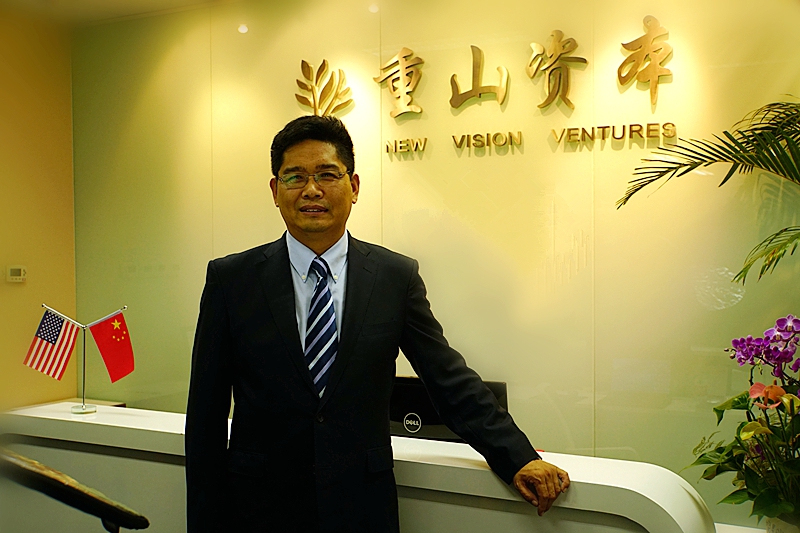
Lu Dongcheng, Partner at Chongshan Capital; MBA from Yale School of Management; M.D. from Peking University Health Science Center; Cardiologist
To date, has managed USD-denominated funds totaling RMB 400 million and RMB-denominated funds totaling RMB 3 billion.
Chongshan Capital is a venture capital fund focused on the healthcare and medical sector (pre-Series B). Early-stage funds often struggle to accurately evaluate healthcare projects; without deep professional expertise and industry insight, the quality of invested projects is inevitably compromised. The medical and financial backgrounds of Lu Dongcheng and his two other partners serve as a safeguard for Chongshan Capital’s investment direction.
Chongshan Capital is not merely a venture capital firm; in terms of its positioning, it functions more as an industrial ecosystem. Within this ecosystem, companies do not exist as isolated entities but rather engage in collaborative synergy. This mutually beneficial and symbiotic model enables each enterprise to access the maximum available resources for growth.
Chongshan Capital’s partners primarily fall into three categories. The first category consists of limited partners (LPs), most of whom come from the healthcare industry, such as hospital chains, pharmaceutical companies, medical device manufacturers, payment processors, and insurance companies. They serve not only as LPs but also as mentors to startup enterprises.
The second category comprises corporate entities, primarily sourced from Chongshan Capital’s partners. These enterprises often have urgent demands for innovative technologies, while startups generally lack resources in traffic acquisition and marketing. If a company seeks to promote its innovative technologies, integrating them into the platform through industry leaders such as Ciming Health Checkup, Changsheng Biology, E-Linkwell, and Renhe Pharmaceutical can foster a virtuous collaborative synergy. Building independent systems for each enterprise would be excessively costly and inefficient; with strategic partners, the process becomes significantly easier.
In addition to resource-complementary collaborations, companies invested in by Chongshan Capital also provide valuable technology sharing. For instance, Paiyipai’s data mining technology has offered substantial technical support to Chongshan Capital’s portfolio companies and its Limited Partner (LP) collaborators. Consequently, Chongshan Capital is building an ecosystem for healthcare and wellness that spans prevention, treatment, and rehabilitation, while also incorporating currently prominent AI technologies. In this way, Chongshan Capital has formed a medical ecosystem centered around diagnosis, treatment, and prevention. Within this ecosystem, no company needs to develop every capability from scratch; instead, each can simply identify suitable partners. This reflects a major global trend toward industrial collaboration, extending beyond China to the rest of the world.
The third category comprises industrial funds and large venture capital funds, which generally do not invest in early-stage projects. By establishing partnerships with early-stage funds such as Chongshan Capital, these collaborative funds often take over equity stakes and participate in later-stage financing rounds as portfolio companies backed by Chongshan Capital mature into their later development phases.
By partnering with another company through investment firms, enterprises can establish a trusted collaborative relationship, thereby securing a “green channel” for future exit strategies. For instance, Lejin Health, a listed company, invested in Yinglian Technology, a firm specializing in remote imaging diagnostics and health record management. As Lejin Health had technological weaknesses, its services were enhanced and refined through the technical support provided by Yinglian Technology.
Lu Dongcheng stated, “Early-stage projects often require substantial resources for support; only with such resources can these portfolio companies grow. Furthermore, in the future exit phase, the participation of listed companies, pre-IPO companies, and other limited partners (LPs) and strategic partners will help form a comprehensive and efficient synergistic ecosystem within the industry, enabling all parties involved to achieve sustainable and healthy development.”
Years of clinical medical experience have made Lu Dongcheng and his partners highly attuned to the development trends in the healthcare industry. Where lay the emerging opportunities? When Chongshan Capital established its fund last year, they had already clarified their strategic direction. Over the past year, Chongshan Capital has made extensive investment allocations across sectors ranging from multi-site physician practice and physician groups to medical imaging, laboratory testing, pathology, elderly care, and rehabilitation. The series of policies successively issued by the state in these fields appears to validate their judgment.
From Lu Dongcheng’s perspective, selecting a sector and capitalizing on emerging trends is not particularly challenging; the true difficulty lies in choosing the right entrepreneurial team and business model, and leveraging platform resources to accelerate growth.
Over the past year, the Chongshan Capital team reviewed nearly 1,000 investment opportunities, ultimately selecting only 20 companies. These 20 enterprises are all aligned with high-growth market trends, including Dakang Medical in the hemodialysis chain sector, Bodijia United Doctors Group in medical services, Mifu Medical in dermatology services, Yinglian Technology in medical imaging, and Yihe Yunchuang in remote pathology consultation.
In terms of new technologies, such as AI, OCR, cloud storage, and security technologies, Chongshan Capital has invested in PaiYiPai, Shusheng Cloud, and ZMT. In the fields of rehabilitation and insurance, Chongshan Capital has invested in Shankang Technology. In the sector integrating medical care with elderly care, Chongshan Capital has invested in Fuzhi Zhijia.
Discussing the downturn in mobile health this year, Lu Dongcheng’s response was candid: “I believed last year that the mobile health sector was overly impetuous and riddled with significant bubbles.” Chongshan Capital’s philosophy is to invest in and deeply explore the healthcare sector. Opportunities in healthcare lie in decentralizing resources; therefore, the true focus should be on county-level markets rather than pursuing a purely high-end strategy. Otherwise, companies will inevitably become disconnected from reality, lack a solid foundation, and suffer painful failures due to overreach. While a high-end positioning may bring temporary prestige, it limits market volume, ultimately leading to a dead end.
Furthermore, establishing an offline presence is absolutely critical; relying solely on online channels makes it difficult to sustain long-term growth. However, expanding into the offline sector does not necessarily require heavy-asset investment; companies can also enter the market through asset-light models, with the key lying in their management and operational strategies. Ultimately, healthcare investment must center on serving people; only then will financial returns serve you.
In addition to mobile health, internet hospitals, which have gained significant popularity this year, are not viewed favorably by Chongshan Capital. Lu Dongcheng believes, “Currently, internet hospitals still deviate from the core of healthcare. The essence of medical treatment lies in providing better care for patients, which is the central focus. Internet hospitals can at most be considered a technological tool. True internet-based healthcare remains far removed from our daily lives.”
Regarding industry forecasts for next year, Lu Dongcheng identifies several key opportunities:
First, the biopharmaceutical sector will see even greater momentum next year. Monoclonal antibody drugs and targeted therapies for cancer treatment have already sent strong signals, as evidenced by the recent IPOs of domestic startups founded by returnees, such as Beta Pharma and Innovent Biologics. However, valuations for these companies are excessively high, warranting cautious investment.
Second, remote pathology and third-party imaging diagnostics will become a major hotspot next year, pending the full opening of national policies.
Third, physician groups will become more mature next year. With national policies explicitly allowing the establishment of independent legal entities, a legal pathway has been opened for many physicians and medical technologies. Although many physicians aspire to leave the public healthcare system, the hype-driven public discourse of the past two years, coupled with various practical failures, will lead the physician community to adopt a more rational approach, thereby further demonstrating their professional value.
Fourth, rehabilitation and elderly care integrated with artificial intelligence. AI applications in rehabilitation are yielding tangible results that are being implemented in clinical practice. Chongshan Capital is optimistic about the potential of artificial intelligence; however, it emphasizes the critical importance of practical implementation. Our core principle is that regardless of how advanced a technology may be, its true value lies in its ability to be effectively applied within specific medical domains and to genuinely serve clinical needs.
Where there is a trend, there is bound to be a bubble. According to Lu Dongcheng’s assessment, precision medicine may become a bubble next year. This is because, at present, “precision” lacks a clear definition, encompassing areas such as genetic testing and gene sequencing. Some early-stage companies invested in these fields are likely to fail in the coming year.
When it comes to entering the healthcare sector, Lu Dongcheng chose to focus on a vertical niche rather than pursuing a broad, all-encompassing approach. Chongshan Capital concentrates on specialized areas within healthcare, as he and his partners believe that physician organizations in vertical sectors operate with greater efficiency, following a clear top-down structure.
Each medical specialty targets a distinct patient population, making market development in vertical niches relatively easier. In contrast, a comprehensive, all-encompassing platform inevitably offers a heterogeneous mix of medical services. For startups, maintaining quality control across all service touchpoints is exceedingly difficult; in essence, such platforms function merely as large-scale brokerage firms.
Therefore, we prefer to view Chongshan Capital as a platform. Each of the companies invested in by Chongshan Capital operates in a specialized vertical; by aggregating them, Chongshan Capital becomes a “super hospital.”
How to Determine Whether a Company Is Good or Bad? Lu Dongcheng Held Up Three Fingers.First, it must operate within a sector we recognize. The assessment of such sectors should be based on the relaxation of national policies and the essential needs of the general public.
Secondly, this is what determines an excellent team. In every sector, there are countless competitors; for instance, in the field of rehabilitation, there are intelligent rehabilitation solutions,Many apps and other rehabilitation services claim to offer rehab but operate on the periphery; therefore, it is essential to identify companies that truly address the core of rehabilitation.
Third is operations and management. Enterprises sought by Chongshan Capital are generally required to generate revenue in their first and second years of establishment, and typically achieve profitability by the third year. This profitability need not be substantial, but it must stem from a sound, sustainable model capable of iterative expansion and replication. By integrating market sector, team, and operations, a complete business model is formed; these three elements constitute the core criteria for evaluating the quality of an enterprise.
For entrepreneurs, Lu Dongcheng offered two pieces of advice: Entrepreneurs entering the healthcare industry must adopt a healthcare-oriented mindset. Some failed companies attempted to launch ventures in healthcare with an internet-centric mindset. Others had promising ideas but lacked adequate resource support; without the backing of “air force” and “artillery,” it is difficult for “infantry” to prevail. Once the hype around their concepts subsided, these companies ultimately failed.
Entrepreneurs in the healthcare sector must be prepared to endure solitude, as healthcare is not yet a fully market-driven industry. Therefore, for founders, securing support from resource-backed investment firms such as Chongshan Capital is more critical than achieving a high valuation. Several companies in our portfolio exemplify this scenario. Despite having strong teams, these businesses were struggling; however, following Chongshan’s intervention, strategic adjustments, and infusion of resources, they have all delivered strong performance this year.
With extensive resources and a solid platform, companies can ensure their survival. The healthcare industry differs from other consumer-oriented businesses that frequently generate novel concepts, which may achieve widespread popularity across the country within just two months but often fail to deliver sustainable outcomes. Healthcare demands a grounded, methodical approach to building corporate competitive moats step by step. Once a company establishes a strong foothold and carves out a distinct niche in a specific segment, it becomes remarkably resilient to disruption.