

RayVio Files for IPO to Bring Medical-Grade Germicidal UV-C LED Technology to Mass Consumer Markets
Approximately 3 million people worldwide die each year due to water pollution, air pollution, and bacterial infections. RayVio is leveraging its patented deep-ultraviolet (DUV) LED technology to develop health-focused microchips, offering a cleaner and digitally controllable sterilization solution. This approach addresses the limitations of current mercury lamp-based sterilization methods, such as fragility, generation of harmful chemicals, bulky size, short lifespan, and lack of digital control. Furthermore, it aims to improve health and hygiene for populations still affected by bacteria, water pollution, and air pollution. In light of this, VCBeat (WeChat ID: vcbeat) interviewed Paul, RayVio’s Business Development Manager for China, to gain a comprehensive understanding of the company.
Humans have long utilized ultraviolet (UV) rays from sunlight for sterilization. Scientists both in China and abroad have been studying UV radiation for over 200 years. Since Dr. Heraeus of Germany invented the first UV germicidal lamp, UV sterilization technology has been widely applied in medicine, drinking water, food, and other fields, particularly in air disinfection, surface decontamination, and water treatment.
During the SARS outbreak, these devices began to enter various public spaces and even households. Some of them look very similar to household fluorescent lamps from the outside. Currently, a significant number of ordinary families are purchasing them.
Scientific Principle of Ultraviolet Disinfection: It primarily acts on the DNA of microorganisms, disrupting its structure and thereby impairing their ability to reproduce and self-replicate, achieving sterilization and disinfection. Ultraviolet sterilization offers the advantages of being colorless, odorless, and leaving no chemical residues, and is increasingly replacing traditional chlorine and bleaching powder disinfection methods in the field of water treatment. Since Canada commissioned the first practical ultraviolet water treatment plant in 1982, this technology has been widely adopted in the United States, Europe, and India.
Mercury lamps (also known as mercury vapor lamps), while having made significant contributions to disinfection and sterilization, have several drawbacks: First, they are prone to breakage, and the released mercury can cause harm to humans. Second, they are bulky and not portable, require a certain warm-up time, and offer limited design flexibility. Additionally, mercury lamps emit ozone during operation, which poses a risk to human health.
In the mid-20th century, the Japanese city of Minamata experienced a severe mercury pollution incident caused by illegal industrial wastewater discharge, leading to Minamata disease and resulting in hundreds of deaths. In January 2013, 92 countries worldwide, including China, signed the international treaty known as the Minamata Convention in Kumamoto, Japan. Under the provisions of the Minamata Convention, signatory countries are required to ban the production, import, and export of mercury-added products by 2020, such as certain batteries, specific types of fluorescent lamps, and mercury-containing medical devices like thermometers and sphygmomanometers.
Therefore, there is a market demand for compact, portable, stable, durable, and customizable healthy UV disinfection technologies that do not produce harmful chemical byproducts such as ozone. Ideally, these systems should feature digital control via microchips to activate UV lamps for disinfection at required times, with adjustable parameters including disinfection duration, distance, and power output.
When Dr. Liao Yitao, founder of RayVio, was pursuing his Ph.D. at Boston University in the United States, his research focused on deep ultraviolet (DUV) LED technology. During his doctoral studies, Dr. Liao developed a novel semiconductor material and fabrication process.This approach enables the production of deep-ultraviolet LED chips with higher power output and lower costs, making it possible for this technology to enter the consumer market.Moreover, RayVio has the capability to integrate chip growth, epitaxy, and packaging, establishing a high technological barrier.
After completing his Ph.D., Liao Yitao initially joined Philips as a Senior Scientist. However, he consistently sought opportunities to leverage his expertise in launching a startup. Around 2011, he began seeking investment, during which time he met Dr. Rober Walker, the company’s current CEO.
At the time, Robert was a partner at Sierra Ventures, a well-established venture capital firm in Silicon Valley. “I was optimistic about the commercial prospects of this technology. Moreover, its applications in areas such as water purification would be highly beneficial to society.”
In a news interview, Robert stated that he has over 20 years of experience in the LED industry. Prior to entering venture capital, he founded a large-scale LED manufacturing company. He expressed great enthusiasm about Liao’s technology, which enables the application of deep ultraviolet (UVC) LED sterilization in consumer markets, and agreed to join RayVio as CEO. Recently, Matthew Lloyd, former Vice President of GAP Inc. and former Chief Marketing Officer (CMO) of Misfit Wearables, also joined RayVio as CMO.
In November, RayVio launched its first consumer-oriented product on Indiegogo, a renowned U.S. crowdfunding platform: Ellie, the world’s first portable sterilizer for baby items leveraging its core TRUVIOLET deep ultraviolet technology, designed to create a cleaner and more hygienic environment for infants and toddlers in outdoor and mobile scenarios. The campaign reached its funding goal within two days. To date, it has attracted nearly 700 backers, raising $74,000.
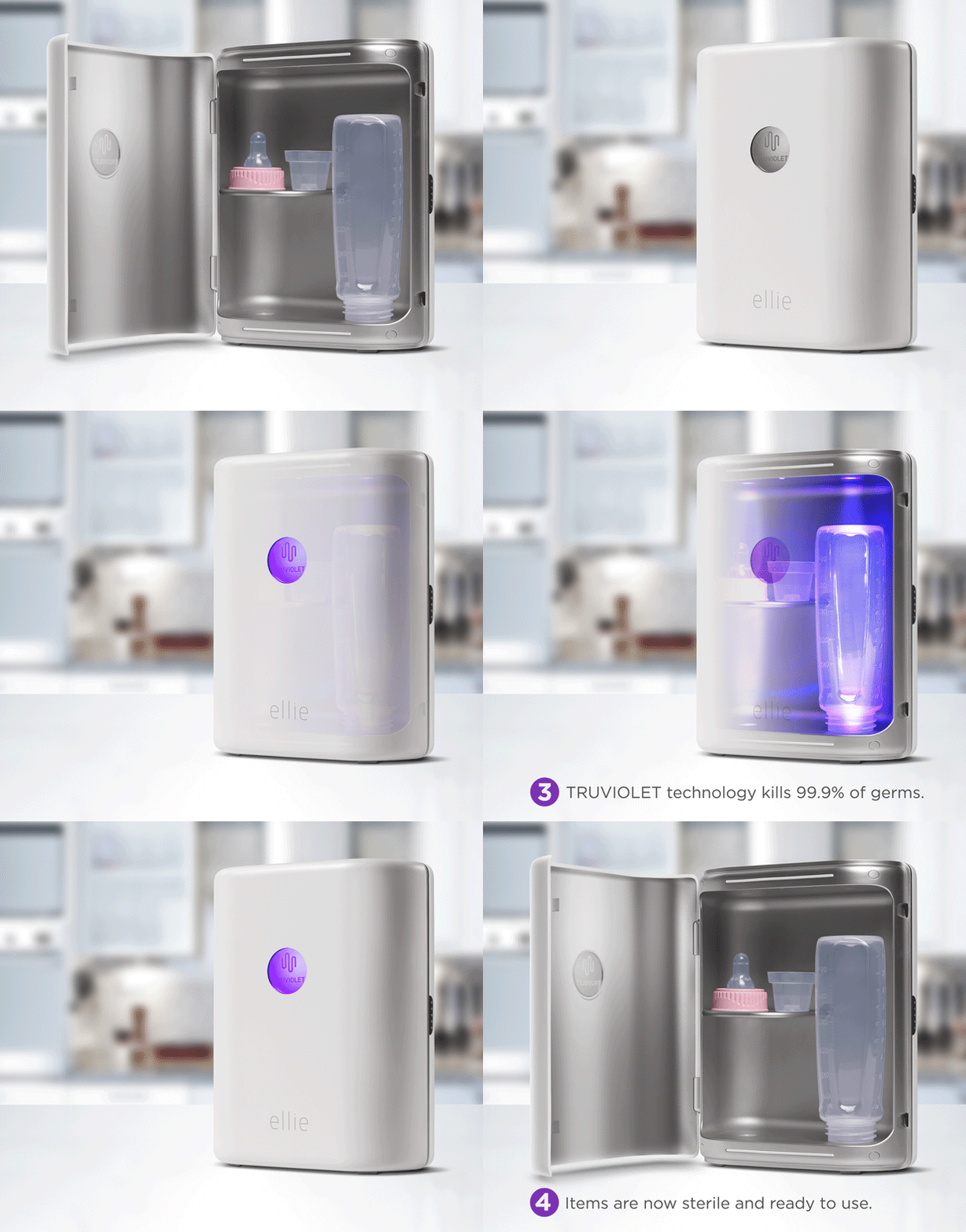
Let us examine a specific application scenario of this technology to better understand its practical value. The animated image below illustrates the process of disinfecting infant and child care products using this technology. Paul introduces that this sterilization and disinfection process takes only 60 seconds, which is just 1/30th of the time required by traditional boiling methods, thereby saving both time and effort. Its portability also effectively addresses the challenges parents face when attempting to boil and disinfect children's items in non-home settings, such as outdoors or during family trips.
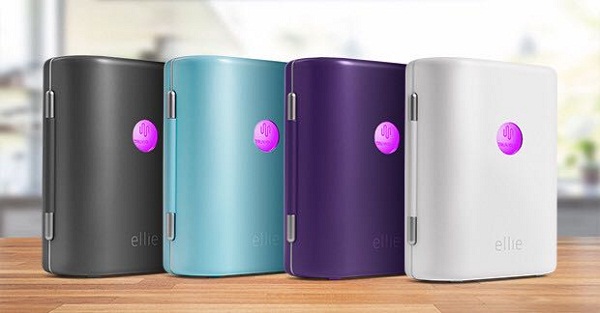
Ellie measures roughly the same length and width as an iPad, with a depth of 9.4 cm and a weight of 0.9 kg, making it compact enough to fit into mothers’ travel bags. It eliminates 99.9% of bacteria on baby bottles within 60 seconds, including pathogens such as Salmonella, Listeria, and E. coli, which can cause illness or even death in infants. The product retails for $129, and a single charge lasts up to one week with 20 uses per day. It is currently available at www.ellieduv.cn.The official Chinese website is offering pre-sales at a discounted price of $99.
In addition to disinfecting small everyday items, RayVio’s TRUVIOLET technology can also be used for water and medical equipment disinfection, as well as disease treatment.. Robert stated in his introduction to the company’s future business plans that RayVio may intend to leverage its cost advantage to replace the existing UV disinfection equipment currently used by large institutions such as hospitals. Additionally, the company has plans to expand into the field of dermatological treatment.
Water purification is set to become the next key focus area. The company’s vision is to see this technology more widely adopted in developing countries and impoverished regions, where the lack of infrastructure means that drinking water and food contaminated with bacteria and viruses directly threaten the health of local populations, particularly infants and children. To address this, the company plans to launch a sterilizing water cup equipped with built-in LED chips.
Currently, only four companies worldwide can provide LED deep ultraviolet (UVC) light sources: Nikkiso (Japan), LG Innotek, Seoul Semiconductor, and Asahi Kasei. None of these companies have resolved the issues of cost and production capacity, so such chips are limited to applications in high-unit-cost industrial purification systems or precision instruments.
Extensive research has been conducted on applying deep ultraviolet (DUV) light sources to civilian disinfection, but with limited success. In contrast, DUV LED chips manufactured using RayVio’s patented technology offer a cleaner and healthier disinfection solution free from harmful chemicals. These chips are compact in size and customizable. Furthermore, declining costs have made it feasible to introduce this technology into the consumer market.
RayVio chips have already entered mass production in Silicon Valley, USA, with an annual capacity of 3 million units. These chips are currently available for purchase in both the Chinese and U.S. markets.RayVio’s business model primarily relies on leveraging its patented technology to reduce the cost of medical-grade sterilization, thereby enabling its application in the consumer market. On the B2B side, it mainly sells RayVio-produced deep ultraviolet (UVC) chips and promotes their adoption across various application fields. On the B2C side, it has launched Ellie, a product line targeting the maternal and infant care market.
RayVio is currently in its Series B financing round, having raised $26 million from two investment firms: Tsing Capital and InnoVenture Capital. Previous investors included U.S.-based institutions such as DCM Ventures, Applied Materials, New Ground Venture, and Capricorn Investment Group. The company’s total funding to date amounts to $40 million.