

Linjia Haoyi Files for IPO: Empowering Primary Care with 'Mini Clinics' and Integrated Family Doctor Services
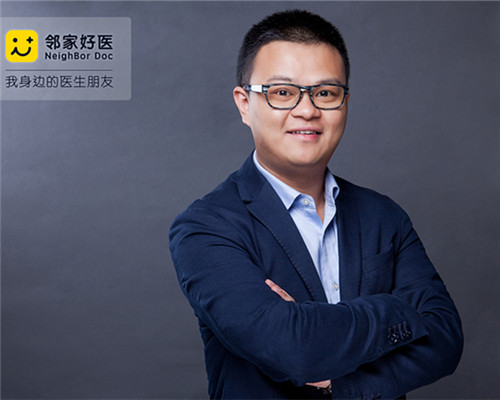
Founder & CEO of Linjia Haoyi
Under the broader framework of tiered diagnosis and treatment, primary healthcare services and family doctor services have been elevated to new heights of importance. Although the concept of family doctors was initially introduced for consideration in 1993, and policy measures to promote their adoption have been issued this year, China’s family doctor system remains in an exploratory phase. Nevertheless, there is no doubt that state encouragement will spur vigorous entrepreneurial activity in the family doctor sector.
On February 19, 2016, Luo Lin founded Linjia Haoyi in Shanghai. The platform currently employs both specialists and general practitioners, serving tens of thousands of users. Furthermore, Linjia Haoyi has secured financing; unlike other startups in the family doctor space, it has already identified a clear path for development.
China’s healthcare system is fraught with contradictions, largely due to the weakness of its primary care market. Although primary care institutions are abundant, shortages of medical personnel and medications compel most patients to queue at tertiary hospitals rather than seek treatment at nearby facilities.
The general public has a poor healthcare experience and exhibits low trust in primary care physicians and grassroots medical services; meanwhile, some primary care physicians lack the motivation to enhance their professional competencies and upgrade service quality. To improve the current healthcare environment, it is imperative to elevate the standard of grassroots medical services.
With the introduction of policies such as increased government efforts to promote family doctor enrollment and greater investment in primary healthcare, a new dawn has emerged for grassroots medical services. Before founding Linjia Haoyi, Luo Lin worked in sales management at Pfizer, later becoming the founder of the East China team for Haodf Online and co-founder and COO of Mingyi Zhudao. He believes that only by effectively serving as health gatekeepers can we truly contribute to China’s healthcare system, ultimately enhancing public confidence and trust in primary care and alleviating the current healthcare challenges.
As shown on the Linjia Haoyi app, Linjia Haoyi provides users with online services such as rapid voice consultations, text-and-image medical consultations, in-person visits, and referrals. The platform’s physician network includes specialist experts at the level of attending physician or above from Grade 3A hospitals, as well as general practitioners engaged in primary care and community-based clinical practice.
According to Luo Lin, founder and CEO of Linjia Haoyi, all collaborating physicians are part-time independent practitioners. General practitioners (GPs) are responsible for users’ routine health maintenance, consultation and home visits for common and frequently occurring diseases, as well as triage and referral of complex and challenging cases. Specialists, in addition to providing consultations and in-person diagnoses, accept referred patients and provide training to GPs. “We aim to be the first point of contact for users with minor ailments. For complex and challenging conditions, we can ensure accurate triage and referral.”
To help both physicians and the platform build their own brands, Linjia Haoyi has established the Linjia Haoyi Family Physician Group for its partner physicians. Linjia Haoyi also selects physicians with strong service orientation and high-quality care capabilities, providing them with focused brand development. Meanwhile, Linjia Haoyi collaborates with educational and training institutions in Hong Kong and Taiwan to offer training programs for general practitioners. Furthermore, to safeguard physicians in delivering both online and offline services, Linjia Haoyi has partnered with Yong’an Property Insurance and Hannover Re (Germany) to provide medical malpractice liability insurance.
In terms of user acquisition and retention, Linjia Haoyi conducts online “Famous Doctor Classroom” sessions and organizes offline public welfare activities—such as expert free clinics and at-home pediatric health checkups—in partnership with Caocao Mobility and Qingsong Mama. In addition to its B2C model, Linjia Haoyi plans to expand into the SME segment. Specifically, enterprises can purchase bulk subscriptions to Linjia Haoyi’s online services for their employees, and Linjia Haoyi will establish a dedicated service channel for the staff of these corporate clients.
Merely having doctors is not enough; therefore, Luolin has established “mini-clinics” in enterprises, pharmacies, and communities, enabling users to access family doctors in both their work and daily lives, thereby bridging the last mile of family doctor services.
Unlike Hezheng Guangxing, which operates “large and comprehensive, yet few and refined” chain family doctor clinics, Linjia Haoyi has adopted a “small and lightweight, numerous and widespread” model of chain family doctor “mini-clinics.”
“By establishing ‘mini-clinics’ in enterprises, pharmacies, and communities, users can easily access nearby quality medical care where they work, live, and reside, thereby having their own ‘family doctor,’” said Luo Lin. He noted that these “mini-clinics” primarily operate through collaborations with enterprises, pharmacies, and community organizations.
Taking enterprises as an example, Linjia Haoyi’s “Mini Clinic” prioritizes partnerships with companies employing over 1,000 staff. Under the collaboration model, the enterprise provides and renovates the premises, along with basic medical facilities such as medications. Linjia Haoyi assigns a resident nurse, whose salary is paid by Linjia Haoyi. If the enterprise requires on-site physician consultations, it must pay consultation fees on a per-visit basis (or as a bundled package for long-term collaborations). The consultation revenue is shared between Linjia Haoyi and the physician.
Luo Lin revealed that Linjia Haoyi has established partnerships with companies including Geely Holding Group, Caocao Chuxing, and AsiaInfo. Currently, there are 50 clinics engaged in deep cooperation, a number expected to reach hundreds by 2017.
“Based on existing collaborations, corporate acceptance and employee trust remain high,” said Luo Lin. For companies, Linjia Haoyi’s “Mini Clinic” functions more like an infirmary, which is highly valuable. It provides emergency care for common ailments such as colds and fever, conducts routine health education, and even offers lactation rooms and guidance for new mothers. Previously, the state had explicit requirements for large state-owned enterprises to staff infirmaries; however, these mandates are no longer compulsory due to policy adjustments.
The collaboration between Linjia Haoyi’s “Mini Clinics” and property management companies follows a similar model, with partnerships already established with several firms, including Gemdale Zizaicheng. However, the cooperation with over 10 pharmacies, such as Hangzhou Zhixin Pharmacy and Yiwanjia, differs slightly. Linjia Haoyi will not initially station full-time nurses in these pharmacies, as they already have their own service staff. Nevertheless, Luo Lin believes that few current pharmacy employees are truly licensed pharmacists; most are sales guides, creating an urgent need for the integration of medical resources. Linjia Haoyi has obtained approval from local authorities to establish an internet hospital and may qualify as one in the future. Partnering physicians can issue online prescriptions through Linjia Haoyi, allowing patients to pick up their medications directly at the pharmacy.
Since its inception, Linjia Haoyi has built an integrated online-to-offline model that combines virtual consultations with in-person clinical services and referral capabilities. By delivering multi-dimensional medical services, it strives to maximize support for patients navigating the complexities of healthcare access. This success is driven by a dedicated team possessing both deep medical expertise and extensive industry resources. Partners Li Zhendong, Yang Duan, and Luo Lin share similar professional backgrounds, having previously held positions at Pfizer, Haodf Online, and Mingyi Zhudao. CTO Wu Xinsheng is the former co-founder and CTO of Hangzhou Yundou Technology, and has also worked at Sunyard, Webex, and AsiaInfo Technologies.
Luo Lin also revealed that the heads of operations and offline store expansion are partners with six years of operational experience at Haodf Online and experience in self-operating more than ten pharmacies and clinics, respectively. Luo Lin hopes that Linjia Haoyi will become the healthcare service provider people think of first when they have medical needs.
On the other hand, Linjia Haoyi is also actively deploying big data capabilities. Luo Lin aims to leverage these big data resources and an information-based management platform to deliver professional and comprehensive health management services. These services range from vaccine consultation and management to daily care for chronic diseases such as hypertension and diabetes. Additionally, personalized services will be provided based on users’ individual health conditions, while high-quality offerings—including pharmaceuticals, medical examinations, and insurance—will be delivered through strategic partners.
Luo Lin believes that the future of healthcare in China lies in strengthening primary care, and the hope for strong primary care rests on empowering grassroots medical institutions and physicians. In 2017, Linjia Haoyi will focus on empowering primary care providers, continuing to collaborate closely with doctors and medical institutions to deliver accessible, warm, and trustworthy healthcare services to users.