

Orbita Launches Voice-Enabled Home Health Tool on Amazon Echo to Support Medication Adherence and Care Coordination
Orbita is a technology company in the home care industry, currently undertaking a bold initiative: integrating Amazon Echo and the intelligent voice assistant Alexa to provide patients with voice-interactive services such as medication reminders.
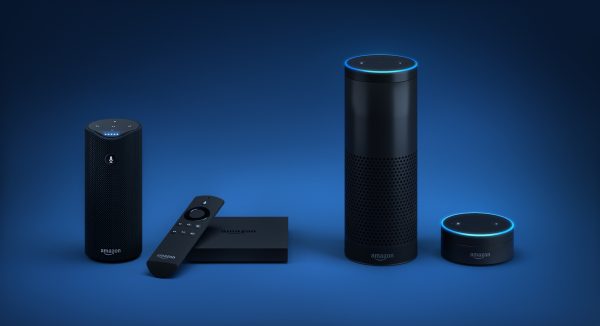
Amazon Echo serves as a smart home control device and a portable speaker. Alexa, the personal virtual assistant pre-installed on Amazon Echo, can receive and respond to voice commands. Alexa can be regarded as Amazon’s counterpart to Apple’s Siri voice assistant.
At the Connected Health Conference (formerly known as the mHealth Summit) on December 12 (U.S. time), Orbita announced its Voice Experience Designer solution, a graphical tool that now offers API access, enabling healthcare organizations to build voice assistants to improve patient care at home.
This past September, Nathan Treloar, Co-founder and President of Orbita, revealed the company’s partnership with Amazon Alexa. At the time, Orbita collaborated with a New England-based care provider to develop a program leveraging the voice interface of Amazon Echo, enabling home health aides to streamline their workflows and better care for patients with complex needs. The initial application of Echo focused on low-risk, voice-activated medication adherence reminders.
Orbita primarily focuses on two areas: streamlining the home visit process for care agents, and providing intelligent transportation guidance for patients who need to travel to clinics or grocery stores. For instance, when a patient asks, “I need a ride to my clinic,” Amazon Echo manages the conversation and recommends third-party transportation services, such as Uber. For home care agencies, Echo can handle 20%–50% of common home care inquiries and facilitate urgent coordination when clinical intervention is required.
“We provide connectivity services, orchestrating data into collaborative applications according to specific logic to facilitate communication between caregivers and patients,” said Nathan Treloar, Co-founder and President of Orbita. “We aim to advance care plans to the greatest extent possible.” Potential future applications include medication adherence, pain management, patient monitoring, and coordination among caregivers.
Treloar also disclosed the partner healthcare organizations for the first time, announcing that starting next year, they will collaborate with Commonwealth Care Alliance in Boston to deploy the Voice Experience Designer in patients’ homes. “Using Echo, objective data such as blood pressure readings will be reported to patients via voice, and there will also be interactions involving subjective data, such as ‘I don’t feel well today,’” Treloar added.
As for why Echo was chosen instead of mainstream smartphones, Treloar explained that in the home care sector, where most users are elderly individuals with limited mobility, Echo can transform communication through smart voice interaction, especially given the relatively small screens of smartphones. Of course, this technology also has some drawbacks, such as issues with high levels of ambient noise.
Although Orbita showcased a solution in partnership with Amazon Alexa at the conference, Treloar stated that its voice assistant will support additional software platforms next year, including Google Home, Apple Siri, and Microsoft Cortana. The related products are expected to launch before the HIMSS17 conference in February of next year. At that time, the Voice Experience Designer will undergo significant updates and upgrades, alongside the release of new tools for patient journey management, care coordination experiences, and a novel care path manager.