

Oral Healthcare in 2016: Chain Clinics and SaaS Platforms Emerge as Dominant Business Models Centered Around Dentists and Practices
As 2016 draws to a close, VCBeat’s flagship annual event, the “Top 100 Future Healthcare Companies List,” is arriving as scheduled. The selection process is currently in full swing, but the excitement doesn’t end there. Prior to the unveiling of the Top 100 list, VCBeat has meticulously curated a series of year-end review specials focused on specific healthcare subsectors. Targeting the hot healthcare niches of 2016, these reviews systematically analyze the current landscape of companies, key events, and development trends within each sector over the past year, delivering a rich and engaging feast of content for our readers.
Public data shows that China sees approximately 250 million dental visits annually. Given its large population and the rising overall consumption levels among urban residents, dentistry, as a widely accessible component of healthcare, holds significant untapped potential for consumption growth. Clearly, at this scale, it undoubtedly represents a market worth hundreds of billions of yuan.
From the perspective of the industry chain, the dental sector is a highly marketized, mature, and deeply developed vertical segment of consumer healthcare. It features not only listed companies specializing in dental services, such as Topchoice Medical, but also large-scale national dental chains like Bybo Dental. On the other hand, the markets for dental implants, clear aligners, consumables, and medical devices—spanning both manufacturing and distribution—are substantial. While high-end demand is on the rise, foreign brands currently hold absolute advantages in brand recognition and technology; however, domestic brands are steadily building momentum. Notably, biological 3D printing is poised to be among the first technologies to achieve commercial application.
In the capital market, since 2010, investors have shown a strong preference for dental enterprises, with particular focus on chain dental clinics and internet healthcare. The former urgently needs to address treatment quality, service standards, and profitability, while the latter prioritizes the internet as a key channel for patient acquisition. Starting in 2013, consumer-oriented dental medical services began to see strategic deployment by information aggregation platforms. Our data review indicates that this sector experienced a concentrated boom in 2015. After aggregating and cultivating outstanding dentists with personal brands, the greatest challenge for the entire internet dental healthcare sector lies in integrating offline medical resources to deliver high-quality medical service experiences to users.
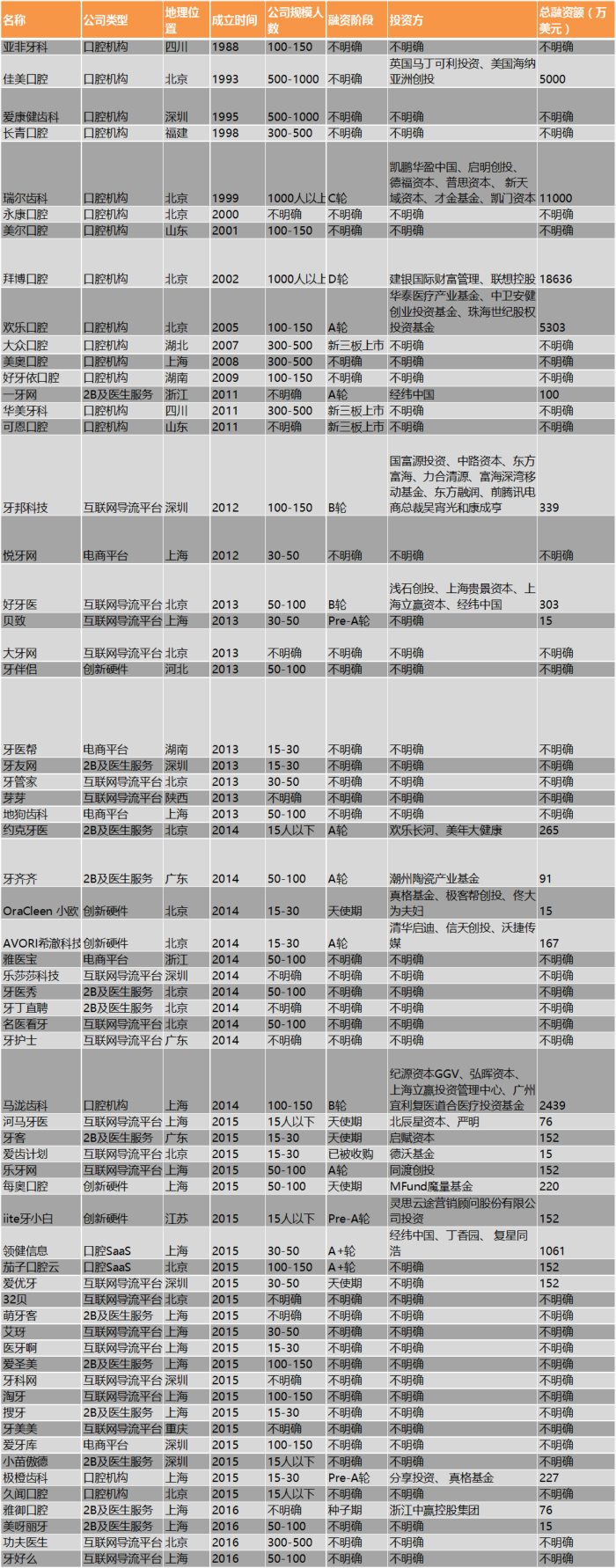
Therefore, this review will focus on internet healthcare (includingDental Clinic SaaS, Internet Traffic-Generation Platforms, B2B and Physician Services, Innovative Hardware, and E-commerce Platforms) and companies associated with chain dental institutions. We compiled statistics on 63 dental-related enterprises, reviewing them by project name, founding date, geographic location, and financing history, with data current as of November 2016.
Data Source: VCBeat, VCBeat Database
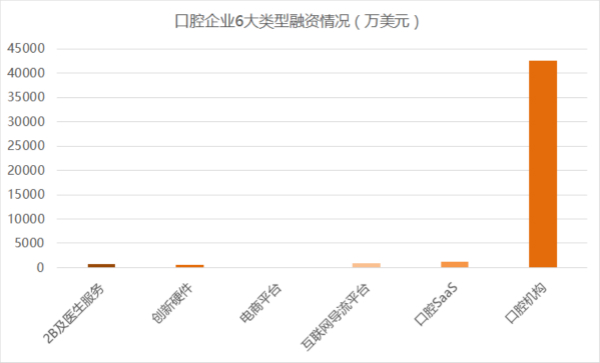
The dental companies covered in this inventory exhibit diverse business models. Based on their target customers and product types, we categorize them into six major groups: dental institutions, dental clinic SaaS providers, internet traffic-referral platforms, B2B and physician services, innovative hardware manufacturers, and e-commerce platforms. Among these, dental institutions undoubtedly constitute the primary tier for capital attraction within the oral care industry. In terms of funding volume, the total amount raised by the dental medical institutions listed has reached USD 426.05 million (due to limitations in the statistical base, the actual total financing in the market is even higher). Although entry points into the dental market vary, they can ultimately be traced back to three underlying factors.
Growth in Per Capita Disposable Income.There is a clear correlation between the growth in national income and the rise in demand for dental care, particularly for high-value-added treatments with superior outcomes, such as dental implants. As domestic consumption levels continue to upgrade, more people are prioritizing oral health, driving the dental industry toward greater specialization, higher efficiency, improved quality, and lower costs. The longstanding issue of high prevalence but low treatment rates for dental diseases is expected to improve in the future. Coupled with the challenges of an aging population, this vast consumer base represents a significant market opportunity.
"Internet+" Oral Healthcare.Persistent pain points in the dental consumer healthcare sector—such as inconsistent service quality, low levels of informatization in outpatient management, information asymmetry, infrequent doctor-patient interactions, and difficulties in user decision-making and physician brand building—remain unresolved. The integration of the internet, leveraging technologies like big data and cloud computing, helps achieve cost reduction and efficiency improvement, enhance team collaboration, and foster cross-industry synergy, gradually forming an efficient system that spans the entire dental care value chain.
The proficiency level of dentists needs to be improved.According to data from the National Bureau of Statistics, China had a total of 114,000 licensed dentists in 2014, indicating an insufficient supply. Furthermore, the demographic profile of these practitioners skews young and junior-level, suggesting substantial room for improvement in professional competency. Coupled with the deepening privatization of dental services, which facilitates multi-site practice for dentists, the demand for dental professionals has risen significantly. Consequently, enterprises, particularly chain dental institutions, are urgently required to accelerate the pace of dentist training. In the subsequent industry analysis, we will discuss each segment in detail.
Data Source: VCBeat, Eggshell Research Institute Database
In terms of financing scale, among the companies included in this statistics, dental medical institutions have received a total financing amount of $426.05 million, making them by far the most favored by capital. The financing details for other categories are as follows: dental SaaS at $12.13 million, internet referral platforms at $8.85 million, B2B and physician services at $6.99 million, innovative hardware at $5.54 million, while e-commerce platforms remain unclear.
Currently, dental institutions in China can be broadly categorized into four types: dental departments within general hospitals, public specialized dental hospitals, private dental hospitals and chains, and individual clinics. Dental departments in general hospitals and public dental hospitals still hold a significant market share; however, constrained by institutional frameworks, they lack sufficient incentive mechanisms and market sensitivity. Furthermore, as minor departments within general hospitals, dental units are prone to marginalization, making their future development prospects less promising.
In contrast, private dental institutions are numerous, small in scale, and widely distributed, effectively meeting the public’s need for accessible care. Their flexible management mechanisms and operational models enable strong market adaptability and rapid revenue generation, thereby attracting substantial capital investment and leading to the continuous emergence of dental institutions with diverse ownership structures. However, challenges persist: the industry as a whole lacks adequate regulation, and individual clinics often suffer from disordered operations and inconsistent hygiene standards. There is an urgent need for standardized management systems, as well as technical and service specifications, within the market.
Data source: VCBeat, Eggshell Institute database
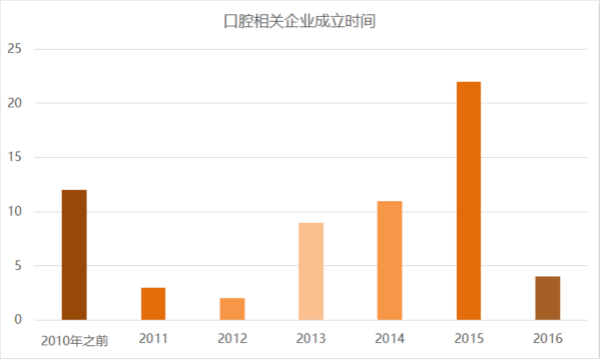
In terms of establishment dates, the dental industry began to grow steadily from 2013, with nine companies founded that year. In 2014, 11 companies were established. The year 2015 marked a period of concentrated explosion, reaching 22 newly founded companies. These covered a diverse range of categories, including B2B and physician services (five companies), innovative hardware (two companies), e-commerce platforms (one company), internet traffic-referral platforms (ten companies), dental SaaS providers (two companies), and dental clinic enterprises (two companies). The development trajectory of enterprises in the dental industry closely aligns with that of “Internet Plus Healthcare.” The year 2014 was the inaugural year for Internet Plus Healthcare, witnessing the emergence of various business models and intensifying competition. In 2015, several unicorn companies emerged, such as LinkCare Information, which specializes in dental SaaS. By leveraging internet technologies, these companies have significantly reduced communication and marketing costs among dentists, patients, and dental medical institutions, while integrating the entire industrial chain, thereby improving efficiency and lowering costs across the sector. Under the capital “winter” of 2016, the explosive growth in the dental industry gradually returned to a rational state, with only four companies established that year.
The company has a large scale.
Data source: VCBeat, VBInsight database
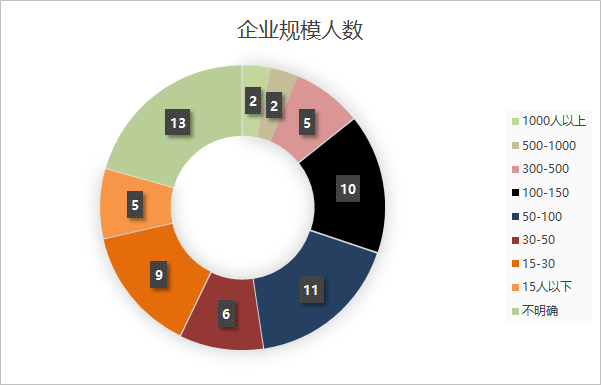
In addition to the large scale of chain dental institutions, most companies in the dental industry have fewer than 100 employees, with the largest group (11 companies) employing between 50 and 100 people. Nevertheless, in terms of workforce size, the dental sector is considered a relatively labor-intensive consumer segment, which is closely related to the complexity of demand across the dental industry chain. Data indicate that these companies are primarily concentrated in B2B services, physician support services, and internet-based patient referral platforms—i.e., those directly connecting dentists with patients. Consumers often visit dental clinics not necessarily due to dental diseases, but for orthodontic treatments, braces, or even more premium services such as dental implants, reflecting diverse and complex demands. For dentists, statistics from the National Health and Family Planning Commission on hospital admissions show that dental hospitals rank fourth in revenue and first in profit margin, demonstrating strong profitability. Dentists sometimes assume multiple roles; beyond addressing professional competency, they must also secure patient flow. Consequently, the dental industry chain is deeply vertically integrated, requiring specialized personnel at every stage.
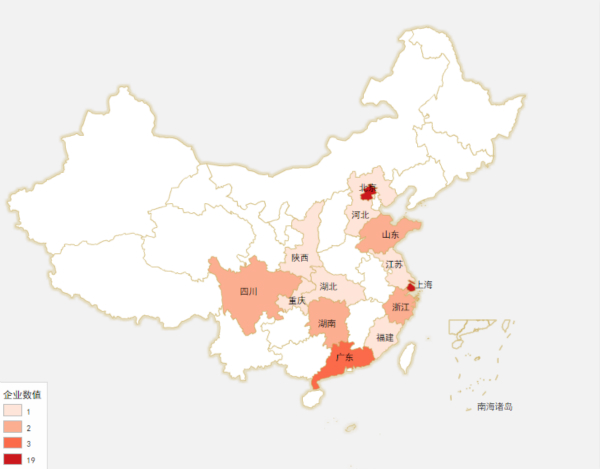
Data Source: VCBeat, VBInsight Database
Among all the companies surveyed, Beijing, Shanghai, and Shenzhen ranked in the top three, with 19, 19, and 8 companies respectively. This is particularly evident in the dental care sector, where most chain brands are concentrated in these three cities, while inland cities have relatively few. This distribution is attributed to the abundant medical resources in these metropolitan areas, especially the high number of premium hospitals. An analysis of founders in the dental industry reveals that many come from traditional large-scale dental chains and renowned dental hospitals, bringing rich industry experience. Additionally, a significant number hail from internet companies such as Tencent and 58.com. The favorable entrepreneurial environment, supportive policies, and talent advantages in these three cities have made them fertile ground for the rise of dental enterprises.
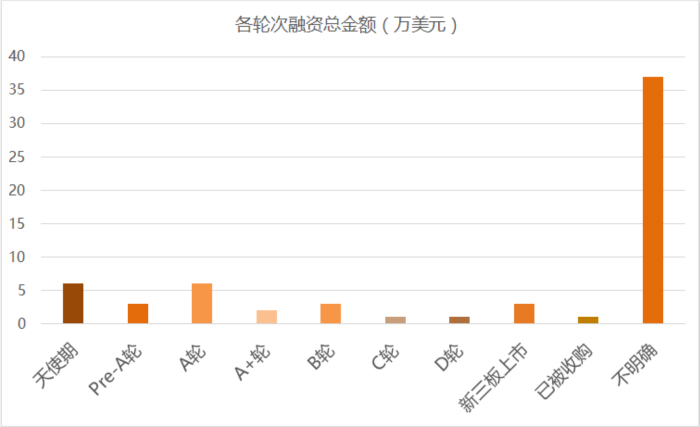
Data source: VCBeat, Eggshell Research Institute database
Among the 63 companies, 22 have explicitly secured financing, and three are listed on the National Equities Exchange and Quotations (NEEQ), namely Dazhong Dental, Ke’en Dental, and Huamei Dental. Most companies are concentrated in the angel and Series A rounds; there are three companies in Series B, one in Series C (Arrail Dental), and one in Series D (Bybo Dental). As mentioned earlier regarding financing status, dental institutions raised $426.05 million, dental SaaS companies raised $12.13 million, internet referral platforms raised $8.85 million, and B2B and physician service providers raised $6.99 million. It is worth noting that Linkcare Information is the only company, apart from dental institutions, with total financing exceeding $10 million. Other companies have raised relatively smaller amounts, primarily concentrated in the B2B and physician services and internet referral platform sectors.
This also clearly restores a panoramic view of the dental market: on one side, dental institutions are aggressively expanding and merging to build chain clinic networks; on the other, there is an urgent need after expansion to improve service quality, reduce costs, train dentists, and drive patient acquisition. All these challenges have been alleviated by the application of new dental SaaS technologies. Dental SaaS transforms the dental healthcare industry through information technology, connecting hospitals, clinics, doctors, patients, data, third-party services, and supply chains. It provides patient-centric solutions with dentists and dental institution managers as the primary users, making capital injection unstoppable.
In January 2016, York Dentist received RMB 7.5 million in angel-round investment from Meinian Onehealth Healthcare. In August, it completed a Series A financing round worth tens of millions of RMB, with Happy Changhe Fund as the investor. York Dentist aims to provide a professional platform for dentists, dedicated to enhancing their work efficiency and clinical expertise, thereby facilitating independent practice by enabling better time management, patient care, and freelance functionality. The latest round of funding will be allocated to product development, attracting dentist traffic, and accumulating substantial doctor-patient data and relationships on the York Dentist platform, thereby fostering strong user stickiness among dentists.
In March 2016, Yaqiqi, a dental clinic alliance, completed an RMB 5 million Series A financing round. The round was led by a medical chain institution, with co-investment from the Chaozhou Ceramic Industry Fund and Chen Jiabin, founder of 58.com’s technology division. Initially focusing on remote consultations for orthodontics, Yaqiqi later restructured its core team and business strategy, abandoning its positioning as a telemedicine platform in favor of training as its entry point. Following the financing, Yaqiqi plans to assist these clinics in achieving standardized and branded operational management through store renovation services, referral channel development, and supply chain financial services, thereby laying the groundwork for a tiered diagnosis and treatment system in dentistry.
In April 2016, Hippo Dentist, a mobile platform for oral health, secured RMB 5 million in angel-round investment from Beichen Xinhe and Yan Ming. Through the “Hippo Dentist” app, users can book clinic appointments, with the platform connecting them to professional dentists. Prior to the actual visit, “Hippo Dentist” sends patients reminders along with medical instructions, clinic addresses, and doctor profiles. Following the financing, the company primarily focuses on helping clinics standardize their services, identify precise potential customers, provide educational outreach to these prospects, and convert them into paying clients. In the future, it also plans to build a B2B procurement platform for these clinics.
In April 2016, MALO CLINIC China completed an RMB 85 million Series B financing round, led by GGV Capital, with participation from Shanghai Liying Investment Management Center, Guangzhou Yili Fuyidaohe Medical Investment Fund, and Hui Capital, the exclusive investor in its Series A round. In July 2014, after securing nearly USD 10 million in Series A funding from Hui Capital, MALO CLINIC had already established 11 clinics and two dental prosthetics processing centers in China. This latest financing will support MALO CLINIC’s continued focus on the premium segment, leveraging technological leadership as a competitive advantage and driver for expansion, thereby achieving a nationwide strategic layout and rapid growth.
In July 2016, Yake completed an angel financing round of nearly RMB 10 million, with Qifu Capital as the investor. The angel funding was primarily used to enhance its online presence. Yake adopts internet community engagement strategies by collaborating with WeChat groups of dentists established by institutions such as universities, hospitals, and dental clinics across major cities in China. It shares knowledge on oral healthcare through simultaneous live-streamed courses broadcast across hundreds of groups. Currently, Yake has comprehensively upgraded its course curriculum, progressively achieving specialization and systematization, with the aim of strengthening interaction among dentists and improving the efficiency of knowledge acquisition.
In July 2016, Meiyali Dental completed an investment of several million yuan, with funds sourced from a healthcare fund.Meiya Liya, established in 2016, is a professional orthodontic platform operating on an O2O (Online-to-Offline) model. It integrates medical device manufacturers, research institutions, and dental clinics through a direct internet-based operational model. By reducing costs, Meiya Liya has cut the price of orthodontic treatment by half. In the next one to two years, the company aims to achieve coverage in major cities across China and establish an orthodontist group.
In August 2016, Haoyayi (Rongtong Xinlian) completed a Series B financing round amounting to tens of millions of RMB. The lead investor was Shanghai Guijing Capital, which possesses extensive resources in the pharmaceutical industry, while participating investors included Shanghai Liying Capital and Matrix Partners China, the Series A investor. Haoyayi is committed to building a transparent and efficient comprehensive mobile healthcare service platform for patients and dentists. The company has undergone three stages of development: a doctor-patient platform, a dental assistant service, and dental clinics, with a consistent focus on accumulating business-side (B-end) resources. Following this financing, Haoyayi plans to expand into the consumer-side (C-end) market, aiming to provide patients with a superior dental care experience while enabling outstanding dentists to increase their income during this process.
In August 2016, Happy Dentistry announced that it had secured RMB 350 million in Series A financing, led by Huatai Healthcare Industry Fund, Zhongwei Anjian Venture Capital Fund, and Zhuhai Century Equity Investment Fund. Happy Dentistry stated that it would transform into a healthcare service platform and establish a novel “Dentist Group,” shifting its business model from traditional offline chain clinics to providing services to dentists and medical institutions, thereby generating revenue through service fees. Following the receipt of this round of funding, Happy Dentistry will focus on enhancing the quality of medical services, building specialized dental departments with distinctive advantages, innovating healthcare management and operational models, strengthening primary care diagnostic and treatment capabilities, and exploring collaborative models with public hospitals.
In September 2016, Yayou Dental completed a RMB 5 million seed funding round, with Zhejiang Zhongying Holding Group as the investor.YuKouQiang aims to invest in and manage dental healthcare services while integrating operations across the entire dental industry chain. Its business framework includes direct management of dental clinics, establishment of a customer service system for dental chains, professional training for dentists, and strategic mergers and acquisitions related to dental medical equipment and consumables. Following financing, the company plans to integrate more than 50 high-quality small- and medium-sized dental clinics and hospitals in first- and second-tier cities across China over the next three-plus years through acquisitions, trusteeships, and self-built facilities. By establishing a professional development system for dentists, it seeks to create a distinctive branded chain operation model that addresses the fragmentation prevalent in current clinic operations.
In September 2016, iite Ya Xiaobai, a mobile internet company focused on children's oral health, completed its pre-A round of financing, raising tens of millions of RMB. The investment was made by Linksus Cloud Path Marketing Consulting Co., Ltd., with the collaboration between iite Ya Xiaobai and Linksus Cloud Path facilitated by the Beijing Bank Maker Center. Founder Qiu Jinguo is a serial entrepreneur in the field of smart hardware, while Linksus Cloud Path is a comprehensive big data marketing company specializing in digital marketing. The partnership between the two parties is expected to yield mutual benefits.
In September 2016, LinkCare Information, a service company specializing in the dental sector, announced the completion of its Series A+ financing round, with Fosun Tonghao Capital, under the Fosun Group, as the investor. Earlier this January, LinkCare had just closed a Series A financing round worth tens of millions of RMB, led by DXY.com. Through this partnership, LinkCare and DXY.com provide recruitment services to dental clinics. The combined funding from the Series A and Series A+ rounds exceeded RMB 70 million. LinkCare is a third-party service platform dedicated to connecting clinics, dentists, patients, and data within the dental industry, with clinics and dentists being its two primary service targets. Its four core business segments include Customer Relationship Management (CRM), Practice Management System (PMS), Electronic Medical Records (EMR), and Marketing Center. Currently, LinkCare serves thousands of dental clinics, predominantly private practices. The proceeds from this Series A+ round will be allocated to product innovation, enhancing integrated services, and expanding e-commerce capabilities. As the lead investor in the Series A round, DXY.com can also provide corresponding dentist resources to support LinkCare’s growth.
In September 2016, Jicheng Dental announced the completion of a tens-of-millions-level Pre-A financing round led by Fenxiang Investment. Jicheng Dental adopted an “asset-light, management-intensive” model for its clinics, operating a small number of self-owned stores while partnering with a large number of affiliated clinics. Following this round of financing, Jicheng Dental planned to establish one self-owned flagship store and 15 partner clinics in Shanghai. Through a 4×4 layout strategy, it aimed to achieve comprehensive coverage of the main urban areas and ensure service availability within a 3-kilometer radius for each clinic. After completing its deployment in Shanghai, the company intended to replicate this model nationwide.
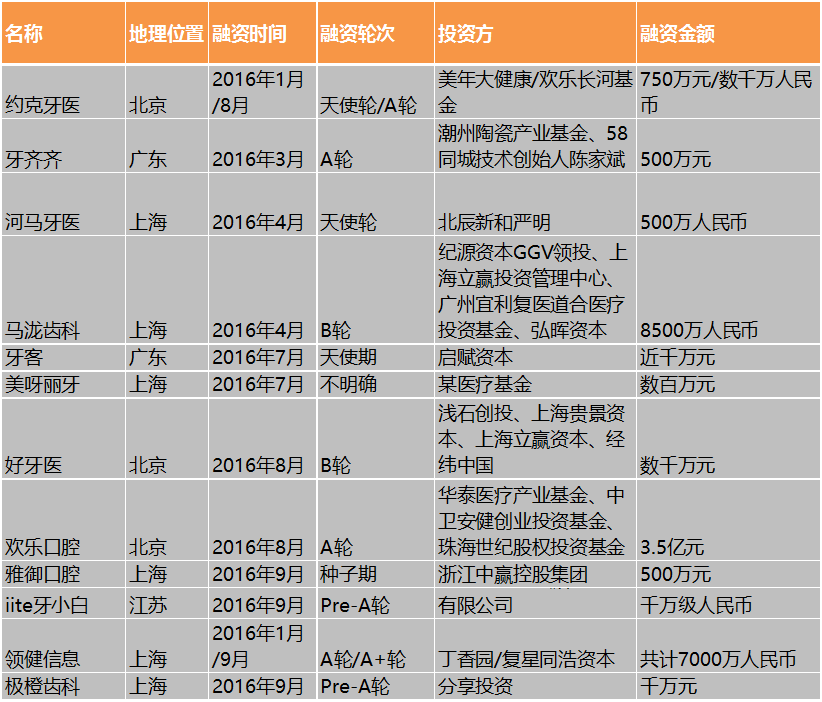
Data Source: VCBeat, VCBeat Database
On January 12, 2015, the National Health and Family Planning Commission issued the “Several Opinions on Promoting and Regulating Physicians’ Multi-Site Practice,” which clearly stipulated the following mandatory conditions for physicians engaging in multi-site practice: clinical, stomatological, and traditional Chinese medicine (TCM) physicians are permitted to practice at multiple sites. By relaxing requirements, simplifying procedures, and optimizing the policy environment, physicians are encouraged to engage in multi-site practice at grassroots institutions, remote areas, regions with scarce medical resources, and other healthcare facilities in need.
Unlike previous regulations, the new policy replaces the former requirement of “obtaining written consent from the primary practice location” with “obtaining consent from the medical institution at the primary practice location.” This means physicians need only fulfill notification and filing procedures with their primary practice institution, allowing them to engage in multi-site practice without requiring approval from their employing hospital. Additionally, the cap on the number of medical institutions where physicians can practice simultaneously has been abolished.
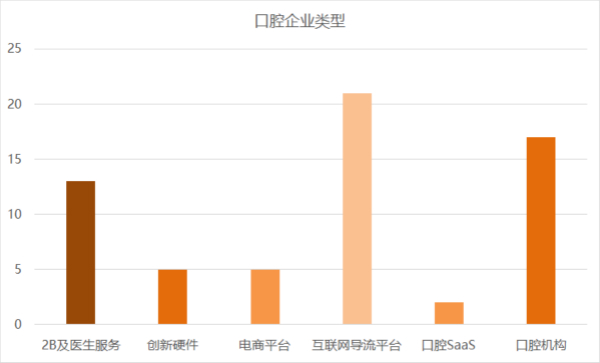
Data Source: VCBeat, VCBeat Database
We have categorized them into six major groups based on service recipients and product types: dental institutions (17 companies), dental clinic SaaS providers (2 companies), internet patient-referral platforms (21 companies), B2B and physician services (13 companies), innovative hardware manufacturers (5 companies), and e-commerce platforms (5 companies), thereby covering the predominant forms of dental enterprises in the market.
Among these, internet traffic-referral platforms are the preferred entry point for many internet companies seeking to break into the dental care sector. After all, two persistent challenges remain unresolved in this field: where to acquire patients and how to deliver high-quality patient care. Once patient acquisition is secured, a promising future is well within reach.
Regardless of scale or financing volume, dental institutions are the vanguard in the dental sector. In particular, private dental institutions have seen significant development, with a large number of privately established clinics achieving outpatient volumes that approach those of public hospitals. Since 2011, the level of standardization in the private dental sector has gradually improved; however, it still faces two core challenges. First, industry concentration remains very low. According to incomplete statistics, there are 65,000 dental clinics across China, over 95% of which are individually owned practices, while fewer than 5% are chain operations. Second, these private clinics lack unified standards for regulation, whether in terms of technical proficiency or service quality.
To address the aforementioned challenges, dental healthcare organizations have made considerable efforts and pursued diverse strategic paths. Generally, they choose to break through from three aspects: 1. Adopting a high-end and boutique strategy, typified by MALO CLINIC China, which leverages technological leadership as its competitive advantage and expansion model to achieve nationwide strategic layout and rapid growth. 2. Implementing an “asset-light + management-intensive” model, characterized by operating a small number of flagship stores independently while partnering with a large number of affiliated clinics; this approach focuses on establishing a regional model before expanding nationwide. 3. Innovating business models, such as introducing advanced management systems and physician evaluation frameworks, establishing professional training mechanisms for dentists, and extending mergers and acquisitions into medical equipment and consumables to reduce costs and enhance the quality of medical services. For instance, Huanle Medical has begun transitioning from a chain of dental clinics to a comprehensive healthcare service platform.
Dental Clinic SaaS Has Emerged as a Top Trend of the Year, Facilitating Intelligent Transformation for Traditional Clinics and Institutions. So, What Problems Does It Actually Solve? The backdrop is that the level of informatization in management across China’s vast number of dental clinics and outpatient institutions is generally low, resulting in inefficiency. Dental SaaS not only provides services such as basic treatment management, electronic medical record documentation, physician management, billing management, and financial statistics, but also stores patient medical data, integrates with third-party applications externally, participates in controlling medical costs, standardizes service processes, and connects upstream with dental laboratories and downstream with patients, thereby truly realizing an integrated online-offline ecosystem platform. Consequently, this year, LinkCare successfully completed two consecutive rounds of financing, totaling RMB 70 million.
From the current development perspective, each platform has its own focus. For instance, Qiezi Dental Cloud has developed an outpatient management software that integrates pharmacy management, pricing and billing, electronic prescriptions, and financial statistics, targeting small and medium-sized clinics, township health centers, infirmaries, and community health service stations. Meanwhile, LinkCare Information serves thousands of dental clinics, primarily focusing on larger mid-to-high-end private dental institutions, which indicates that its product maturity and user experience are quite strong.
There are a total of 21 internet-based patient referral platforms, accounting for one-third of the listed companies. They are: 32 Bei, Ai Ya, Ai Chi Plan, Ai You Ya, Bei Zhi, Da Ya Wang, Kung Fu Doctor, Hao Ya Yi, He Ma Ya Yi, Le Sha Sha Technology, Le Ya Wang, Ming Yi Kan Ya, Tao Ya, Ya Bang Technology, Ya Guan Jia, Ya Hao Me, Ya Hu Shi, Ya Ke Wang, Ya Mei Mei, Ya Ya, and Yi Ya A. In terms of financing rounds, only Ya Bang Technology and Hao Ya Yi have completed Series B financing. Regarding their establishment dates, most were founded in 2014 and 2015, coinciding with the boom period of "Internet + Healthcare." These companies primarily focus on connecting patients with doctors, dental institutions, and clinics. Their business scope covers treatment experience, dental practice management, doctor-patient interaction, doctor-patient matching, online doctor search, oral health management, dental news and information, patient community engagement, medical consultation seeking, expert appointment scheduling, dental disease consultation, and direct billing models for dental insurance.
Although they accounted for the largest number of companies, their total financing amount did not lead. Moreover, while compiling the list, we observed that some enterprises had undergone multiple business transformations. For instance, Haoya Yi (Good Dentist) successively experienced three development stages: a doctor-patient platform, a dentist assistant service, and dental clinics. In the face of the internet era, how to chart the right course and achieve monetization of business models remained a process of exploration for many.
Dentists are the core focus of dental enterprises. A total of 13 companies revolve around dentists and their related services, namely Ai Shengmei, Meiyaliya Dental, Mengyake, Souya, Xiaomiao Aode, Yading Zhipin, Yake, Yaqiqi, Yayixiu, Yayou Network, Yayu Stomatology, Yiya Network, and York Dentist. Among them, three have completed Series A financing: York Dentist, Yiya Network, and Yaqiqi, with relatively small financing scales. In terms of establishment dates, these companies were mostly founded in 2014 and 2015, the years when internet startups surged. Their business scopes cover dentist training, dentist communication, dentist networking, dentist recruitment, digital dental services, orthodontics, private dental clinic platforms, dental management software, doctor-patient diagnostic collaboration, and the construction of customer service systems for dental chains. After all, for dentists, besides patient referral needs, the greatest demand is for training and learning new skills.
Focusing on oral health management, five companies have entered the innovative hardware sector for dentistry: AVORI Xiche Technology, iite Ya Xiaobai, OraCleen Xiao Ou, Mei’ao Oral Care, and Ya Banlv (Tooth Partner). These companies generally adopt a model combining smart toothbrushes with mobile app management. This approach not only enables adults and children to brush their teeth more effectively but also helps cultivate healthy brushing habits through features such as brushing reminders, recommendations for cleaning locations and duration, time tracking, and vibration mode selection.Across various sectors, hardware ventures typically require substantial investment, involve high technological content, and yield returns slowly. The innovative oral care hardware field is also capital-driven, with four of these five companies having secured financing. Notably, OraCleen Xiao Ou received investment from Xu Xiaoping and the couple Tong Dawei and his wife. This combination of celebrity investors and celebrity endorsers has built momentum and provided credibility for future business expansion. Currently, many of their products are available on e-commerce platforms such as JD.com.
E-commerce platforms generally operate as B2B online marketplaces specializing in the procurement of dental supplies, covering dental instruments, consumables, equipment, and more.Including iDental Library, Digou Dental, Yiyibang, Yayibao, and Yueya Network, foreign brands still hold an absolute advantage in the primary market for equipment and consumables, whether for dental implants or clear aligners. However, there is a significant price disparity among products sold online due to differences in materials, ergonomics, and other factors. While e-commerce platforms have indeed streamlined the distribution chain for medical devices and reduced costs, this sector, like pharmaceutical e-commerce, faces regulatory policy constraints. During their development, some companies have explored new business models; for instance, Digou Dental allows qualified third-party institutions to establish a presence on its platform.
Business Models in the Dental Industry: An Inescapable Core Question—Should Patients, Dentists, or Clinics Be Prioritized? Is it better to first aggregate C-end patients and cultivate their consumption habits, or to start with dentists and clinics to generate revenue from the B-end?
In 2014, when internet-based dental companies were just emerging and the O2O concept was gaining significant momentum, many enterprises embarked on a path commonly pursued by others.of“The old path of ‘buying users’—whether for dental appointment scheduling, doctor-patient interaction, or remote consultations—relies on various incentives to attract patients to download apps or use products and platforms. Clearly, this approach results in low user retention and engagement, making the business model unsustainable. While navigating uncharted waters, some companies have repositioned themselves and embarked on a transformation toward serving business clients (B-end).”
Typical successful dental platforms first address dentists' needs by providing an entry point for practitioners, thereby solving two critical pain points: patient acquisition and professional training. They then establish a standardized service system for dental clinics. With a solid foundation on both the dentist and clinic sides, offering services to patients becomes significantly easier. Yaqiqi has shifted away from positioning itself as a telemedicine platform, instead using dental training as its entry point to build a tiered diagnosis and treatment system in dentistry. Yake aggregates doctor resources online to enhance their influence and brand recognition, then integrates offline medical services to achieve a closed-loop healthcare ecosystem. In the broader oral health sector, starting with the needs of clinics and dentists and subsequently extending services to patients or connecting with upstream manufacturers of dental devices and consumables is undoubtedly a viable path to profitability.
The hottest topic in the dental sector this year is dental SaaS. Indeed, progress in every industry is inseparable from advancements in new technologies. This trend is vividly reflected in financing activities, driven by the urgent need to upgrade the informatics infrastructure of China’s vast number of dental clinics. Simultaneously, dentists must enhance both service quality and efficiency. Dental SaaS can truly integrate the entire industry chain, enabling efficient clinical management, improved user experience, better cost control, and secure storage of patient data. It is foreseeable that more clinics will undergo intelligent upgrades in the future.
Dentistry is one of the most market-oriented sectors within the healthcare industry. In addition to established dental chains such as Topchoice Medical, Bybo Dental, and Arrail Group, health checkup providers like iKang Guobin and Meinian Onehealth are expanding into dental services through self-built facilities, partnerships, and acquisitions. Looking ahead, the trends toward chain operations, premiumization, and digitalization in dental care institutions are expected to persist.
Policies permitting physicians to practice at multiple locations are becoming increasingly open across various regions. Compared with physicians in other specialties, dentists enjoy greater flexibility and find it easier to engage in multi-site practice. Whether through technological and service upgrades in dental clinics, the expanding channels in the dentist training market, or the maturation of patient referral platforms, these factors have the potential to increase dentists’ income. In the future, pursuing freelance practice is expected to be a viable and attractive option for dentists.
Although dental SaaS solutions can enhance clinic digitalization, assist with brand marketing, and improve management efficiency, some companies targeting dentists offer practice consulting, career planning, advisory, and headhunting services, while also enhancing individual professional skills through vocational training. However, there is a shortage of outstanding dentists, and prominent dentists lack the time for online doctor-patient interactions. Furthermore, internet platforms fail to provide a sufficient patient base, and no highly mature patient referral model has yet emerged. Consequently, the appeal to dentists remains limited, meaning that information asymmetry between doctors and patients persists in the dental industry.
Copyright Notice
This report is produced by VCBeat. All text, images, and tables contained herein are protected by applicable trademark and copyright laws. Some of the text and data have been collected from publicly available sources, with ownership retained by the original authors. No organization or individual may reproduce or distribute this report in any form without the prior written consent of our company. Any unauthorized commercial use of this report shall constitute a violation of the Copyright Law of the People's Republic of China, other relevant laws and regulations, and applicable international conventions.
Disclaimer
This research report is based on information that VCBeat considers reliable and currently publicly available. VCBeat strives for, but does not guarantee, the accuracy and completeness of such information. Due to limitations in research methodologies, sample sizes, and the scope of data collection, the data presented herein reflects only the basic conditions of the surveyed population during the survey period and serves solely the current research objectives, providing a general reference for the market and clients. Furthermore, VCBeat does not guarantee that the views or statements contained herein will remain unchanged; at different times, VCBeat may issue reports with information, opinions, and projections inconsistent with those presented in this report.
VCBeat does not consider recipients as clients merely by virtue of their receipt of this report. This report is distributed only where permitted by applicable laws and regulations, solely for informational purposes, and shall not be construed as advertising in any manner. Under no circumstances shall the information contained herein or the opinions expressed constitute investment advice to any person. Where permitted by law, VCBeat and its affiliates may hold equity interests in the companies mentioned in this report and may provide or seek to provide capital raising, financial advisory, or other related services to such companies.
Note: I am Gao Daolong, an author at VCBeat. If you are an investor interested in the dental sector or a dental startup founder seeking media coverage, please feel free to contact me. We also welcome any leads on relevant companies. WeChat: lylonexiaohuhu; Email: gao.dl@vcbeat.top