

The Future of Digital Healthcare: Big Data Sharing as a Key to Bridging the Medical Divide
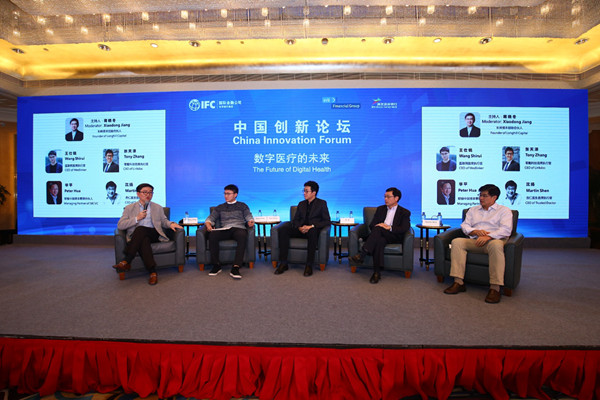
On December 12, 2016, the China Innovation Forum, hosted by the International Finance Corporation (IFC), a member of the World Bank Group, was held at the China World Hotel in Beijing. The forum brought together senior investors from the science and technology innovation sector, entrepreneurs, and executives to exchange insights on emerging technologies and their market opportunities, and to discuss topics such as how venture capital can drive the sustainable development of China’s venture investment ecosystem. During the panel discussion on “The Future of Digital Health,” Mr. Jiang Xiaodong, Founding Partner of Changling Capital, served as moderator and engaged in a discussion with Wang Shirui, CEO of YiLianWang; Zhang Tianze, CEO of LinkDoc Technology; Hua Ping, Managing Partner of SoftBank China Capital; and Shen Yang, CEO of Xingren Doctor, exploring the substantial opportunities embedded within the healthcare sector.
Jiang Xiaodong:We extend our gratitude to the IFC and SVB (Silicon Valley Bank) for creating this opportunity, which has enabled us to invite iconic figures from the entrepreneurial and investment communities in China’s internet healthcare sector to participate in this interview.
The first question for our panelists: We previously stated that our shared vision is to leverage the Internet to transform the current state of healthcare in China, and that improving doctor-patient relationships begins with changing the working and living conditions of Chinese physicians. The reality today is that while China is home to approximately 18% of the world’s population, it accounts for 40% of global cases in major disease areas such as cancer—including lung cancer and gastrointestinal tumors—and 50% of the world’s Parkinson’s disease patients. Thus, we face not only a large population but also a disproportionately high disease burden. Moreover, only one out of every six medical school graduates chooses to practice medicine, resulting in a severe imbalance. In this context, what exactly can the Internet do to improve the professional and personal well-being of doctors? Based on your accumulated experience over the past few years, what changes have occurred that lead you to believe it is necessary to redefine the model and relationship between physicians and healthcare services?
Wang Shirui:There is a stark contrast in the compensation and treatment of doctors in China versus the United States. While Chinese doctors are fully competent in terms of education and clinical skills, their remuneration and social status tell a different story. A key reason for my return to China to start a business was my realization that national policies were beginning to loosen, particularly with the introduction of multi-site practice permissions for physicians. This gave me a glimpse of market-oriented dynamics. Furthermore, capital investment in the healthcare sector surged in the second half of 2014, with nearly 1,000 new healthcare companies emerging within just six months. However, those who truly control China’s medical resources remain the Tier-3 Grade-A hospitals. Even if these doctors are not direct government employees, they are still employed by these hospitals, which maintain strong administrative control over them. From our perspective, hospitals serve as the primary offline traffic gateway in China, and their patient screening systems are highly effective. Nevertheless, all companies face a critical question: Should traditional interest structures be disrupted outright? Can coexistence be achieved, and is there a viable mechanism for symbiosis? Only after clarifying these issues can we collectively pursue future development.
Shen Yang:Since 2014 and 2015, I have witnessed the emergence of numerous apps designed for physicians. As professional partners to doctors, we aim to help every physician achieve a better career future. In the market-oriented healthcare sector, four key stakeholders are critical: hospitals, commercial insurance providers, physicians, and the industry supply chain. Regarding hospitals, we are all aware that the government has introduced various supportive policies, including tax deductions for social insurance contributions. For physicians, the government has issued 118 relevant policies to date. The latest policy, released by the State Council on October 1, allows physicians who have registered for multi-site practice within their home province to practice in other regions without additional registration. Therefore, future transformations will align with the direction of healthcare reform. For investors, physicians represent an optimal opportunity. Although physicians currently account for the smallest share of healthcare GDP among these four stakeholders, healthcare is fundamentally a service industry. Globally, the proportion of resources allocated to physicians is significant and may become the largest in the future. Private physicians can not only benefit the general public but also empower doctors to truly transform China’s healthcare system.
Jiang Xiaodong:The second question concerns the development of new medical technologies, including novel biotechnologies, therapeutic techniques, diagnostic technologies, and bioeconomics, among others. Could you both discuss the role these emerging technologies will play in the coming years? Do you believe that AI represents the primary future trend, or do you foresee tangible, substantive changes being realized?
Zhang Tianze:What clinical and medical problems can be solved with new data and new technologies? Only when a technology is driven by such questions and validated against them does it truly become meaningful or worthy of promotion, though challenges remain. One major challenge lies in the complexities of clinical data and how to effectively support hospitals in clinical practice. We have established a premier partnership with West China Hospital, covering nearly 600 oncology centers and processing over 300,000 pages of documents daily into structured data. We are exploring whether AI combined with human expertise can transform costly solutions—originally priced at thousands of yuan—into affordable and accessible ones. This constitutes our primary starting point, and we are currently collaborating with and serving research projects at China’s largest interdisciplinary center. Our second focus is diagnosis. This year, we will roll out additional features to assist physicians in predicting prognoses and complications, thereby enabling younger doctors to inherit the clinical experience of seasoned practitioners.
Warburg Pincus:All three of them are engaged in mobile healthcare. We have observed that technology is poised to significantly disrupt the future of healthcare. Technologies such as mobile solutions, cloud platforms, and integrated circuit (IC) technology enable the development of miniaturized products capable of intracranial implantation, which is also of critical importance. We have been closely monitoring economic and technological trends, recognizing them as a massive gateway to advancing technologies like precision medicine, and we have invested in numerous companies in this sector. Of course, as mentioned earlier, AI remains a key focus, and I would like to share our perspective on it. If we examine which systems are the most complex at a macro level, two stand out: the economy and the human body. Therefore, truly intelligentizing such complex systems undoubtedly presents enormous opportunities, though progress must be made step by step. The greatest challenge lies in data itself; substantial data accumulation is required to unlock its potential. Furthermore, robust protection must be ensured through policy and regulatory frameworks to facilitate secure data sharing.
The greatest challenge in China’s healthcare sector lies at the primary care level and in rural areas, specifically in how to leverage technology to bridge this healthcare gap. I find it highly commendable that one company has extended its platform from tertiary Grade A hospitals down to prefecture-level cities, county-level cities, and even into rural regions. What moves me most is our ability to generate social value, which also encompasses investment value. I am convinced that by delivering social value, we will also achieve substantial returns for us as investors.
Internet healthcare has recently become a very hot topic. The sector can be broadly divided into operations outside the hospital system and those within it. Many internet companies focus on peripheral services, with few truly penetrating the core of healthcare delivery, such as public hospitals. Public hospitals possess vast amounts of data and medical professionals, and they are also adopting "healthcare + internet" models to build platforms that leverage their big data. I would like to ask everyone here: What are your views on these types of platforms?
Wang Shirui:Why are we able to engage in comprehensive cooperation with mobile QQ, and soon with Alibaba and Tencent? It is because we are truly an insider within China’s domestic market. Our company is essentially a B2B enterprise that connects healthcare institutions and physicians. We have formally contracted with 40,000 partner physicians who provide offline prescription services and face-to-face consultations under a multi-site practice model. Additionally, we connect with 5,000 medical facilities, including private hospitals, county-level hospitals, and township health service centers. We regard these 5,000 medical institutions as curated connection points and precise entry channels for patient traffic. We advocate that if you truly aim to build a healthcare company, you must clearly understand the distinctions between “medical care” and “health.” This is our perspective.
Zhang Tianze:Challenges in the healthcare industry are partly attributable to irrational allocation of supply and demand. However, in many sectors, such as oncology, the primary issue is insufficient supply. Therefore, our approach is to strengthen supply from the inside out, thereby creating resources available for allocation. Relying solely on market platforms for allocation would only benefit wealthy patients, failing to address the fundamental problems of the healthcare industry. Our goal is to enable more people to receive treatment; thus, we favor addressing supply-side issues from the inside out.