

AI-Powered Brain Age Assessment in Seconds Could Transform Clinical Approaches to Diabetes and Schizophrenia
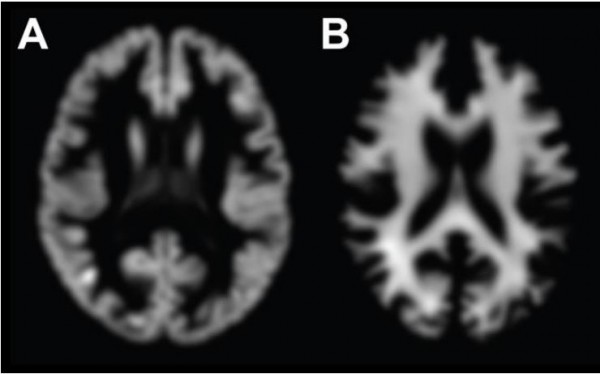
Using MRI scans to determine brain age has always been a very time-consuming process. Now, AI machines can complete the detection in just a few seconds.
Human cognitive abilities decline with age. Neuroscientists have long recognized that this decline is associated with changes in brain anatomy. Undoubtedly, brain MRI scans cannot indicate signs of aging, let alone determine “brain age.”The difference between brain age and chronological age can reveal the onset of conditions such as dementia.
However, MRI image analysis is a time-consuming process, as MRI data must undergo extensive processing before it can be used to analyze natural aging. Preprocessing steps include removing non-brain tissues such as the skull from the images; segmenting white matter, gray matter, and other tissues; and eliminating image artifacts along with applying various data smoothing techniques.
The processing time for all these data may exceed 24 hours, making it difficult for physicians to incorporate the patient’s brain age into clinical diagnosis.
And all of this is thanks to the research conducted by Giovanni Montana and his team at King’s College London.The team is using raw data from MRI scanners to train deep learning models to measure brain age.With deep learning technology, clinicians can obtain accurate brain age data within seconds. Sometimes, the results are available before the patient has even left the scanner.
This method is based on a standard deep learning technique. During the training of the deep learning model, Montana utilized MRI brain scans from more than 2,000 healthy individuals. These participants ranged in age from 18 to 90 years and had no neurological disorders that could affect brain age. Therefore, their brain age was expected to align with their chronological age.
All scan results are standard T1-weighted scans acquired using modern MRI scanners. The chronological age of each patient is annotated on every scan image.
The team used 80% of the images to train a convolutional neural network to estimate an individual’s age based on brain scans. They then used another 200 images to validate this process. Finally, they tested the neural network’s performance in estimating brain age using 200 images that the model had not previously encountered.
Meanwhile, the team also compared deep learning methods with conventional brain age estimation techniques. This approach requires extensive image processing to identify white and gray matter in the brain, followed by statistical analysis using Gaussian process regression.
The comparative results are highly intriguing.By analyzing the preprocessed data, both deep learning and Gaussian process regression accurately estimated the patients' chronological ages. The errors for both methods were less than five years.
Nevertheless, deep learning demonstrated significant advantages in analyzing raw MRI data. It yielded accurate brain age estimates with a mean error of only 4.66 years. In contrast, the standard Gaussian process regression method performed poorly in this test, providing coarse brain age estimates with a mean error of approximately 12 years.
Furthermore, deep learning analysis requires only seconds to complete, compared to the 24-hour preprocessing time required by standard methods. The data processing performed by the deep learning system is solely intended to ensure consistency across images in terms of image orientation and voxel dimensions.
This has had a significant impact on physicians. Montana and colleagues stated, “This software can help clinicians obtain age data predicted by brain age during MRI scans.”
The team also compared images from different scanners to demonstrate that the technique can be applied to images acquired by various scanners worldwide. By comparing the brain ages of twins, they further investigated the correlation between brain age and genetic factors. Interestingly, the results indicated that this correlation weakens with age, while the influence of environmental factors becomes more pronounced over time. This finding also points to a new direction for future research.
Such an impressive research finding is likely to have a significant impact on clinicians’ diagnostic approaches.Substantial research evidence indicates that conditions such as diabetes, schizophrenia, and traumatic brain injury are associated with accelerated brain aging.Therefore,A method for rapidly and accurately measuring the degree of brain aging could have significant implications for clinical therapies for these diseases.。
Montan and colleagues stated, “Brain-predicted age represents an accurate, reliable, and genetically valid phenotype that has the potential to serve as a biomarker of brain aging.”