

Don't Underestimate the Young: The Future of Biotech May Lie in These 13 Innovators
If you’re strolling around San Francisco’s Union Square, you’ll notice the biotech conference scheduled to take place here next year (January 9–11) atmosphere, while also connecting with some of the most cutting-edge figures in the industry. These individuals are intelligent and proactive; many were once students or postdoctoral researchers, but have now founded numerous hot startups. Much like in the tech sector, they aim to attract greater interest from venture capital firms.
However, the biotechnology industry operates under a different set of rules. Venture capital in this sector typically comes from more seasoned investors, often those in their 40s to 60s. Consequently, even young biomedical scientists with the most profound academic backgrounds face intense job competition: there are few openings for inexperienced professors in research institutions, while the pharmaceutical industry is highly selective, preferring candidates with years of work experience.
According to statistics from the National Research Council, the average age at which scientists now secure their first stable job is between 35 and 40. More specifically, on average, researchers are 42 years old when they receive their first peer-reviewed grant. For earlier generations of biological scientists, employment was less challenging; in the 1970s, the average age at which scientists obtained their first grant was 34. Furthermore, a 2014 Glassdoor study indicated that the biotechnology and pharmaceutical industries have the lowest efficiency in reviewing qualified applicants.
Therefore, the current state of this industry is disheartening.
Yet some young scientists are determined to tackle the problem through their own efforts. Ethan Perlstein, who studied molecular and cellular biology at Harvard University and received a postdoctoral fellowship at Princeton University, still perceived scant job prospects in the biotechnology industry. Undeterred, he founded Perlara, a company dedicated to discovering therapeutics for rare diseases, in 2014. He has also become an advocate for young biomedical scientists, aiming to raise awareness of the imbalance between labor supply and demand in the industry.
Two years later, Ethan Perlstein was pleased to see that his efforts had helped many biotechnology graduates recognize the severity of the job market, thereby motivating them to better enhance their skills in various aspects. Since only a few companies are addressing this imbalance between labor supply and demand, the onus of finding employment still rests squarely on the students’ shoulders.
Ultimately, this is a cultural issue. Ethan Perlstein believes that if you do not seek employment in accordance with your parents’ expectations, you will greatly disappoint them.
Today, I see many young people courageously breaking away from their parents’ expectations to pursue careers they are truly passionate about. They enhance themselves through various means: some create job opportunities for themselves and others by becoming entrepreneurs, while others contribute to the field by working as consultants, venture capitalists, patent advisors, and more.
Below are 13 young innovators in the biotechnology sector who continuously challenge established authorities and dare to innovate.
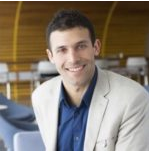
As an MIT graduate, he initially worked in the labs of Klavs Jensen and Bob Langer. He and his colleagues developed a novel “compression” method that directly delivers materials into cell cytoplasm, addressing a long-standing challenge in the pharmaceutical industry. Today, Armon Sharei serves as Co-Founder and CEO of SQZ Biotechnologies, headquartered in Cambridge. His connection with Bob Langer has helped SQZ secure significant venture capital investments; for instance, in July 2015, the company raised $5 million in its Series A financing. Such funding is rare in the biotechnology sector, particularly for companies whose CEOs are under 30 years of age.
However, Amy Schulman, Armon Sharei’s partner and co-executive chair, has alleviated many investors’ concerns, as they were reluctant to place all their bets on a young entrepreneur who might not be sufficiently cautious. A year later, SQZ Biotechnologies continued its growth, securing $2.4 million in its Series B financing round.
According to Amy Schulman, Armon Sharei’s partner, “Sharei is a uniquely outstanding young man with great drive. I remember when I first met him, I asked him about his dreams, and he said he wanted to translate his doctoral thesis research into practice and help patients. And that is exactly what he has done.””
During their final year at MIT, Vas Ramanan and Andrew Warren were among the few graduating students who recognized the supply-demand gap in the industry. Although MIT boasts an impressive track record in biopharmaceutical entrepreneurship, it lacked a comprehensive student organization to connect students with industry insiders. Consequently, Vas Ramanan and Andrew Warren joined forces with several friends to establish the MIT Biotech Group. Within weeks, the group had attracted more than 500 students and postdoctoral researchers from various research institutions. Once they realized they had an audience, they began exploring ways to serve its members. For instance, they regularly invited industry professionals to deliver talks and share their experiences, thereby providing a platform for students to engage with industry experts.
The hard work of Vas Ramanan and Andrew Warren has paid off. Vas Ramanan recently secured an advisory position at Third Rock Ventures and is now engaged in projects across various emerging biotech startups. Andrew Warren currently serves as an analyst at Glimpse Bio, a diagnostics-focused startup.
For Andrew Warren, his success in securing a job stemmed from finding the right graduate advisor and having ample channels to connect with industry insiders. “I was very fortunate to meet my advisor, who was deeply invested in his students’ academic and career development. I also had the privilege of working in a highly diverse laboratory, where I gained valuable insights into various career paths, such as consulting and startups.”
Andrew Warren’s advice to today’s biomedical students is: Make a concerted effort to step out of your comfort zone. Although it may seem daunting at first, over time the entire endeavor will prove highly worthwhile. Additionally, engage more frequently with peers and mentors who share similar perspectives, seek their input, and do not hesitate to reach out—for instance, by sending polite emails with specific questions.
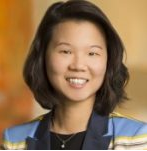
Chang earned her Ph.D. in biophysics from Harvard University while simultaneously pursuing her medical degree at Harvard Medical School. Through her dedication, she is now serving as a resident physician at the Massachusetts Eye and Ear Infirmary. Over time, Chang realized her deep interest in the broader biomedical industry, yet she remained uncertain whether it was the right career path for her. Consequently, she took a step common among many professionals: she joined Boston Consulting Group (BCG) as a consultant. In this role, she engaged with a diverse range of clients within the industry and addressed various related challenges. “This may sound trivial, but the most important skill you learn as a consultant is practical competence—a problem-solving ability. In other words, whenever and wherever a problem is presented to me, I analyze it and devise appropriate solutions, even if I lack specific theoretical background in that area. As we all know, if you ask the right questions, you will find the answers.”
This accumulated experience enabled Chang to secure a suitable position in the biotechnology venture capital sector—a field with particularly scarce job openings—especially in the aftermath of the 2008 financial crisis. In fact, two years earlier, Chang had already joined 5AM Ventures, a venture capital firm headquartered in Menlo Park, California.
“At venture capital firms, you will encounter a wide array of challenges and ultimately need to explore many domains about which you may have had no prior knowledge. In this process, you might spend considerable unnecessary time and even lose your sense of direction. However, as a consultant, you will learn to self-adjust, identify the areas where mastering essential skills is imperative, and continuously draw knowledge from others when necessary. This accumulation of expertise is an ongoing process.”

Rachel Haurwitz made headlines in STAT magazine with a captivating title: “At 31, Rachel Haurwitz Runs the Hottest Biotech Company in China.”
Rachel Haurwitz is one of the most outstanding individuals of her generation. After completing her postdoctoral work in Jennifer Doudna’s laboratory at the University of California, Berkeley, CRISPR gene-editing technology surged in prominence. Consequently, Haurwitz considers herself exceptionally fortunate to have founded Caribou Biosciences. The company has raised over $40 million in investment and aims to apply CRISPR technology to agricultural production. However, insiders indicate that Haurwitz’s success is by no means attributable to luck alone; it is widely acknowledged that her combination of diligence and innate talent has made her such a successful entrepreneur.
Before earning her Ph.D. in biochemistry from the University of Maryland in 2011, Miriam Boer worked at PepsiCo as a flavor and color chemist. In her laboratory, entrepreneurship was not considered particularly glamorous.
“I was deeply interested in starting a new company, but I knew I might not receive the necessary support. Therefore, I had to deceive my advisor when I wanted to leave the lab to attend entrepreneurship sharing sessions held by the university.” Today, Miriam Boer is the founder and CEO of Sonify, a biotechnology company dedicated to using low-intensity ultrasound to treat skin cancers such as melanoma.
“My original plan after graduation was to work in the industry for a while, gain some experience, and then start my own company. However, when I graduated in 2011, job opportunities for PhDs in biochemistry were scarce. I was ‘forced by circumstances’ to establish my own company. Given that the frustration of being unable to find a job was already bad enough, I believed that even if my entrepreneurial venture failed completely, my life could not get any worse. Moreover, I felt that it was better to take the risk and try than to do nothing at all.”
Raising capital is no small challenge for any newly established company. Beyond that, Miriam Boer has faced even more formidable obstacles, such as gender discrimination. As a female CEO, she shared many instances of the gender bias she encountered on her entrepreneurial journey at the STAT Conference this May.
Despite numerous setbacks, Miriam Boer’s company is gradually getting back on track and has now completed pilot production of some preliminary instruments. These devices combine ultrasonic heating with microwave sensing, a technology also used by NASA to measure the temperature of distant, unknown celestial objects. Consequently, this technology can be employed to develop equipment for treating skin cancer, as the microwaves can be focused on a small area of tissue while providing real-time temperature feedback.

After earning his Ph.D. in neurobiological research from Harvard Medical School, Sebastian Kraves continued with postdoctoral studies. Thus far, there was nothing unusual about Sebastian Kraves’s trajectory. He subsequently joined BCG as a consultant, where he worked for six years, engaging with numerous global health projects during this period. These experiences facilitated his transition into entrepreneurship. In 2013, Sebastian Kraves and his partner Zeke Alvarez founded miniPCR at the Harvard Innovation Labs, driven by an ambitious vision to “make advanced genetic and DNA sequencing analysis accessible to everyone.”
Recalling his departure from academia a decade ago, Sebastian Kraves admitted that he was uncertain about the path ahead. He once wrote: “I had always envisioned myself becoming an esteemed professor. However, at times, academia could no longer satisfy my higher professional aspirations. Although I was working in one of the best laboratories alongside outstanding colleagues, I often felt that I was merely repeating myself rather than discovering new technologies or skills. Moreover, my partner also came from an academic background. It was then that I decided to forge my own career path and demonstrate my capabilities in practical applications. As an added bonus, I could earn significantly more money than before—why not seize such an opportunity?”

Most biotech venture capitalists fall into the category of white men over the age of 40. Therefore, it is hard to imagine that anyone in this field would be dedicated to developing future “tampons” designed for women, and even harder to believe that this area could represent a valuable business opportunity. However, Ride Tariyal, an engineer with an MBA from Harvard Business School, saw it as an excellent opportunity to explore the valuable diagnostic information contained in menstrual blood. Together with his partner Stephen Gire, he founded NextGen Jane, a company impossible to ignore, within the comprehensive genomic research application platform Illumina Accelerator.
Ginkgo Bioworks, headquartered in Boston, was founded in August 2008—a month fraught with doom as the financial crisis nearly stripped entrepreneurs of their ventures—by four MIT-trained biologists and their professor, Tom Knight. Undaunted, these four young individuals were determined to establish a comprehensive biology company, regardless of the circumstances.
Many prominent biotech venture capital firms dismissed the company founded by these four young entrepreneurs, which is hardly surprising, as most VCs tend to overlook startups established by recent graduates. However, Y Combinator, a startup incubator, invested in the company without hesitation during its early stages—a decision that has since yielded substantial returns. This July, Ginkgo Bioworks secured a $100 million investment from the Bill & Melinda Gates Foundation. Ginkgo Bioworks aims to use these funds to engineer living cells for professionals in the food, fragrance, and flavor industries.
Ginkgo Bioworks considers itself a purely organic company. As one of its founders, Jason Kelly, stated in an interview with Forbes magazine this July, “As a sustainable society, we must stop manufacturing everything and start cultivating everything.” This is no small ambition for a startup that faced numerous setbacks in its early days.

Anasuya Mandal is pursuing graduate studies in chemical engineering at MIT, with the aim of making significant contributions to improving human health. She is dedicated to researching a microneedle device to enhance vaccine design, thereby enabling more efficient monitoring of how the human immune system develops immunity in response to these vaccines. A native of India, Anasuya Mandal previously contracted dengue fever and thus understands that this technology can bring substantial benefits to patients suffering from infectious diseases.
However, researching a new technology and promoting it are two entirely different things; the latter falls within the realm of industry. Anasuya Mandal realized that she did not fully understand how the biotechnology and pharmaceutical industries operate. Last spring, when Anasuya Mandal began her doctoral program, she interviewed many people but found that she still lacked proficiency in industry knowledge.
At that time, a friend of Anasuya Mandal’s at Harvard Business School recommended that she read Temmerman magazine. Anasuya Mandal followed through on this advice and also subscribed to every issue of STAT and the Signal Podcast. Amid the 2017 graduation surge, Anasuya Mandal sought to prepare more comprehensively for the next round of job competition. In this process, the supplementary knowledge she had previously acquired in the biotechnology sector opened up numerous opportunities for her, ultimately leading to a position at a cutting-edge life sciences consulting firm.
These 13 young individuals are merely representative of the growing number of young people today who aspire to contribute to the biotechnology industry. An increasing number of them are no longer confined to pure academic research; instead, they are taking a longer-term view, honing their skills through hands-on experience within the industry while building their professional networks. Such examples bring to mind Darwin’s oft-quoted adage: “Natural selection, survival of the fittest.”
All data in this article are sourced from publicly available online materials, compiled by VCBeat, including STAT, Timmerman Report, and others.