

KuaiYiJian Files IPO Prospectus: Ex-SF Express Executives Build a Capital-Efficient Platform Serving 4,000+ Grassroots Clinics with Medical Testing Logistics
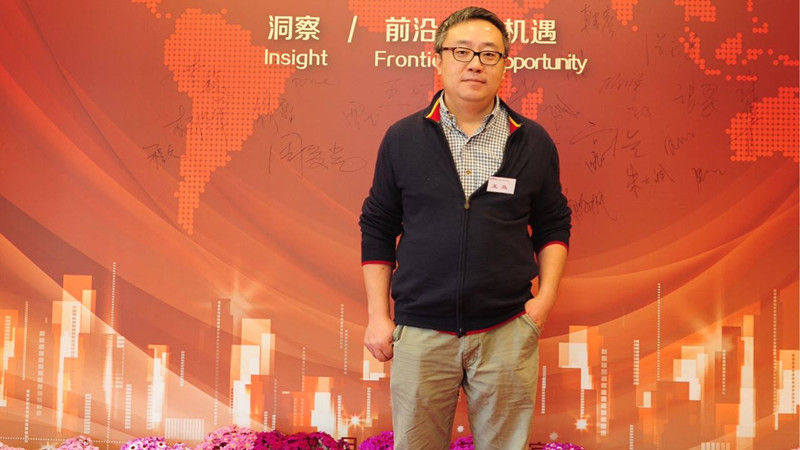
Wang Zheng, CEO of KuaiYiJian
In March 2015, Wang Zheng resigned from SF Express, relinquishing his prestigious executive position to join the ranks of internet entrepreneurs focused on grassroots healthcare. He previously served as the National Sales Director at SF Express, where he was fully responsible for sales management and spearheaded the establishment of SF Express’s Pharmaceutical Logistics Division. With 20 years of experience in the logistics and express delivery industry and 15 years in large-scale enterprise management, Wang brings extensive expertise to his new venture.
“Seeing the potential in the primary healthcare market, I left my job to found KuaiYiJian,” Wang Zheng told VCBeat. Subsequently, Wang Zheng and another senior executive from SF Express resigned together, deciding to enter the primary healthcare sector from a logistics perspective.
With over 20 years of experience in logistics and management, they founded KuaiYiJian by gaining an in-depth understanding of the pain points of primary healthcare from a market perspective. They aim to leverage their extensive expertise in the logistics industry to support tiered diagnosis and treatment, adding “speed” to the development of primary healthcare.
One Year Later, KuaiYiJian Advances from Angel Round to Series ABusinessRevenue has grown nearly 20-fold, and product gross margin has increased—all without relying on subsidies. What is the secret behind this success? How did they leverage their expertise from the logistics industry to cross over into grassroots healthcare? And how have they woven a network connecting rural clinics, patients, and third-party laboratories to deliver medical services?
The most fundamental and grassroots level of the healthcare system is composed of township health centers, village clinics, private clinics, community health centers, and community health stations.
High-GradeHospitalUsually, the testedProjectOutsourced to third-party testing laboratories, such as blood tests, urine tests, stool tests, and histopathological examinations,They rely on a well-developed logistics system and after-sales service,This marketPastA period of rapid development.
Take this as an example,Primary healthcare also requires thisSpeciesSystem services. For grassrootsfor physicians,Laboratory testing is required toAccurateAssessmentPatientthe patient's condition, to achieve the goal of correct treatment。
Therefore, at its core, many grassroots startups currently have not identified a suitable entry point or a viableContinuousbusiness model. Archimedes once said, “Give me a fulcrum and a lever long enough, and I can move the Earth.”
Wang Zheng’s Reflection: Perhaps logistics can link these three entities, building a bridge for rapid medical consultation and diagnosis among primary care clinics, third-party laboratories, and patients.
In fact, approaching the grassroots healthcare market from a logistics perspective hits precisely at its most critical vulnerability. Major logistics companies are mostly in a wait-and-see mode, deterred by the highly fragmented nature of grassroots delivery points and the high costs of establishing cold-chain logistics. While the government advocates for tiered diagnosis and treatment, there are virtually no profitable internet-based startups that can effectively serve grassroots healthcare. Given that grassroots healthcare is both arduous and unprofitable, few are willing to engage in this sector.
However, compared to e-commerce logistics, the requirements for cold chain logistics in medical testing are extremely stringent. First, delivery must be rapid; although specimens are collected at primary care clinics, they must be delivered to third-party testing laboratories on the same day to ensure sample integrity, with test reports reaching physicians by the following day.
Second, personnel responsible for specimen collection must understand the pre-analytical status of each specimen and guide physicians on proper specimen acquisition. For instance, certain tests require separation of serum and plasma, while others do not. Consequently, this role demands a high level of expertise, requiring companies to invest considerable time and effort in training.
Third, protection of specimens during transportation. Throughout the entire transport process, a continuous cold chain must be maintained; the temperature and humidity within the refrigerated container must meet the standards for specimen transport, otherwise the test results will be meaningless.
Just from the storage box, one can clearly see the effort Wang Zheng has put into logistics and his professional attitude. The box features a shockproof and pressure-resistant exterior design, with an interior divided into three zones—frozen, refrigerated, and ambient temperature—to maximize the preservation of specimen quality.
“We are able to collect 100% of testing samples on the same day and deliver them to the laboratory on the same day; 90% of test reports are available the next day and can be returned to primary care physicians within that day. For complex or challenging test results, our medical consultants provide professional interpretations to assist primary care physicians in making accurate diagnoses and treatment decisions,” said Wang Zheng.
Currently, the logistics team comprises more than 10 members, with logistics costs accounting for 5%–6% of the project’s overall operational expenses. To enhance the management standards of medical cold-chain logistics, Wang Zheng is actively developing a cold-chain system. The goal is to enable future capabilities such as splitting and merging logistics orders by volume and segment to generate work orders and optimize vehicle routing; automatic recording, tracking, and uploading of temperature data throughout the cold chain; precise GPS positioning for real-time monitoring of transport vehicles; a professional logistics information management platform, information portal, and EDI exchange center for synchronized data exchange with regulatory authorities and clients; support for direct software integration and Excel import/export; and the use of RF handheld terminals, among other features.
Among internet entrepreneurs serving grassroots healthcare, KuaiYiJian pioneered the integration of mobile internet and professional pharmaceutical cold-chain logistics to provide medical testing capabilities to rural primary care clinics. By strategically entering the grassroots healthcare market through routine blood tests—an underserved segment—the company rapidly established efficient sales channels and logistics networks within its service areas. This approach created a seamless online-to-offline pathway for high-quality upstream medical resources to reach village-level healthcare markets, laying a unique infrastructure foundation for future expansion into services such as drug procurement, medical devices, smart hardware, and appointment-based referrals.
Although Wang Zheng is an expert in logistics, he is unable to handle medical laboratory testing. Therefore, he considered collaborating with third-party testing institutions.
KuaiYiJian has secured partnerships with leading domestic testing institutions such as KingMed Diagnostics and Adicon. Since these laboratories require a steady supply of specimens, KuaiYiJian serves as a vital link between primary care physicians and testing facilities, facilitating communication and service coordination while meeting the needs of both parties. Consequently, these institutions offer preferential pricing to KuaiYiJian, enabling it to generate revenue from the price differential.
Headquartered in Guangzhou, KingMed Diagnostics was formally established as Guangzhou KingMed Medical Laboratory Center Co., Ltd. in 2003, building on the core management team’s extensive experience in exploring outsourced medical laboratory services since 1994. The company currently specializes in medical laboratory testing, clinical trials, and food hygiene testing. It offers more than 2,200 test items for clinical and research purposes, provides outsourced medical laboratory services to over 19,000 healthcare institutions, processes nearly 40 million specimens annually, covers regions inhabited by more than 90% of China’s population, and issues laboratory reports recognized in more than 50 countries and regions worldwide.
Another collaborative third-party testing institution, Adicon Medical Laboratory Center Co., Ltd., was established on January 8, 2004. It is the first cross-regional chain-operated independent third-party medical laboratory in China. The company currently operates five central laboratories, including clinical, pathology, reproductive genetics, drug clinical, and metabolic disease & physicochemical analysis laboratories, along with 20 specialized clinical sub-laboratories. It offers over 1,400 testing items, including more than 300 specialized tests covering hepatitis, hematological disorders, oncology, obstetrics, and pediatrics. Adicon has established partnerships with over 10,000 medical institutions nationwide, providing standardized and rigorous test reports to more than 100,000 individuals daily through its accessible local services.
From the patient’s perspective, the total laboratory testing costs incurred through the “Kuai Yi Jian + Clinic” care model are comparable to those at tertiary Grade A hospitals. The key advantages of seeking care at primary clinics include time savings, more prudent prescribing practices by physicians, and smoother doctor-patient communication.
For third-party testing laboratories, this eliminates the cost of building their own logistics networks and enables them to serve a larger customer base. Therefore, they are more inclined to partner with KuaiYiJian than with other agency or intermediary firms. This is because KuaiYiJian maintains direct contact with customers, allowing it to gather feedback on satisfaction with test results while returning specimens. In contrast, intermediaries or agents are often disconnected from end users, leading to poor user experiences that can damage the company’s brand.
Leveraging professional logistics capabilities and partnerships with leading domestic clinical laboratory companies such as KingMed Diagnostics and Adicon, KuaiYiJian’s medical specimen delivery service enables patients in rural grassroots clinics and health stations to access blood testing services equivalent to those offered by Grade 3A hospitals. This effectively facilitates the downward distribution of high-quality medical resources and enhances the utilization efficiency of healthcare resources.
Since August 2015, KuaiYiJian has served tens of thousands of residents in rural grassroots communities. While helping to raise public health awareness, it has also assisted primary healthcare institutions in identifying and diagnosing tens of thousands of cases across various disease categories, including endocrine, respiratory, digestive, and cardiovascular/cerebrovascular disorders. Additionally, more than 50 suspected cases of malignant tumors were detected. This initiative has not only enhanced the diagnostic and treatment capabilities of primary healthcare institutions but also ensured that patients with these conditions received timely diagnosis and therapy. As a result, KuaiYiJian has gained recognition from partner organizations andPatientconsistent affirmation.
While rapidly expanding its market presence, KuaiYiJian has continuously improved service quality and enhanced customer experience. Since April 2016, it has collaborated with selected partner clinics to launch the “Affordable Health Checkup Packages.” This initiative allows residents to access up to nine free laboratory tests close to home, with results delivered free of charge via WeChat. Since its launch, the program has garnered widespread acclaim for KuaiYiJian.
As of the end of November 2016, KuaiYiJian had expanded its service coverage to Fuzhou, Xiamen, Zhangzhou, Quanzhou, Putian, and Ningde in Fujian Province, as well as Shenzhen and Dongguan in Guangdong Province. It had partnered with 4,000 primary care clinics, completed over 200,000 laboratory tests, and served nearly 100,000 patients, functioning as their mobile virtual clinical laboratory.
In the course of serving grassroots physicians, Wang Zheng has been continuously exploring which laboratory tests are truly needed by them. From over 1,000 items offered by third-party clinical laboratories, he has screened out more than 400 and currently promotes just over 100 as core offerings, including complete blood count (CBC), urinalysis, liver function tests, hepatitis B virus markers, and tumor markers, thereby enhancing healthcare accessibility for patients.
“The team currently has around 85 members, with 45 of them engaged in grassroots promotional services at primary care clinics. Although it took a long time to explore this sector, it is a highly interesting market characterized by limited competition and abundant opportunities.”
“By leveraging blood testing and logistics, we have established sales channels and networks. For instance, we partner with major pharmaceutical manufacturers to supply medications to primary healthcare institutions. Generally, large pharmaceutical companies are reluctant to enter the primary care medication market because building their own sales channels is prohibitively expensive, and drug distribution tends to be fragmented. ‘I have an existing network in primary healthcare. Based on user data from our platform, we provide pharmaceutical companies with precise marketing solutions and enable on-demand delivery to local primary care clinics,’ said Wang Zheng.”
In the future, medical devices can also be integrated with artificial intelligence. For instance, tertiary hospitals have low adoption rates for AI, as it is not a critical need; this is because physicians at these institutions possess high levels of clinical expertise, and their medical devices offer high detection accuracy. However, for primary healthcare facilities, which suffer from shortages of both medical personnel and supplies, artificial intelligence canAssistanceThey diagnosed,Better ServicesPatient.
“KuaiYiJianForPrimary healthcare institutions such as clinics and community hospitals,Establishing a virtual clinical laboratory represents a market gap.. Meanwhile, the company collaborates with renowned domestic clinical laboratories such as KingMed Diagnostics and Adicon.To ensure the accuracy of test resultsOn the premise of reliability and stability,Avoid Self-DevelopmentLaboratory, with an asset-light model,FastLeveraging the Primary Healthcare Market.“said Liu Yikun, Investment Director at Chende Capital.”
From the angel round to Series A, KuaiYiJian’s business has grown 20-fold, with the gross margin of its entire service steadily increasing.AgainBecause the company has increased clinic revenue, improved patients' healthcare experience, and also increasedofThird-Party PartnersThe business volume of the clinical laboratory represents a highly healthy market practice, completelyNoRelying on capital subsidies.
Currently, KuaiYiJian is undergoing Series A financing.The financing amount is RMB 20 million to 30 million.