

MedFollow CEO Yang Feng, Former Microsoft Veteran and Diabetic Patient, Pioneers Hardware-Free Diabetes Management Platform
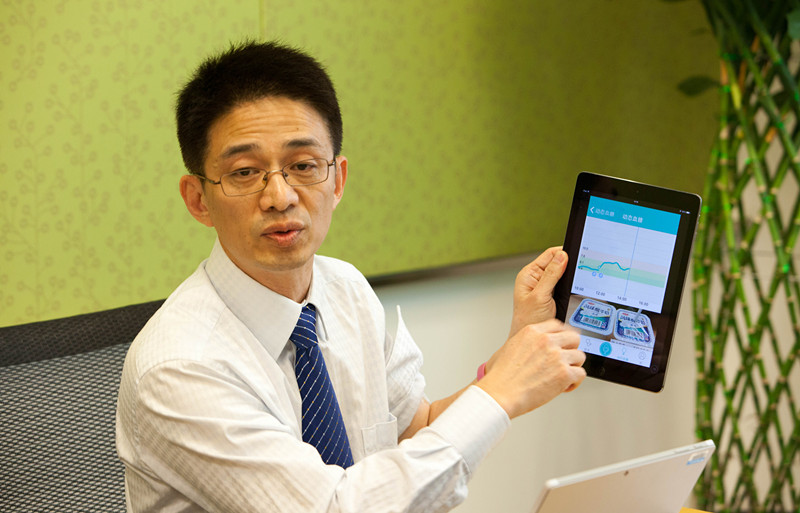
Yang Feng, CEO of YiSuifang
According to data from the seventh edition of the IDF Diabetes Atlas published by the International Diabetes Federation (IDF), approximately 415 million people aged 20–79 worldwide have diabetes, with an additional 318 million at high risk of developing the disease. Once diagnosed, diabetes is a lifelong, irreversible condition.
“On one hand, traditional diabetes management is primarily based on single-point-in-time testing, where physicians can only prescribe medications based on blood glucose levels measured during clinic visits. This model clearly fails to reflect the patient’s overall glycemic status, particularly its dynamic fluctuations. On the other hand, medical resources are limited; it is optimistically estimated that there are fewer than 20,000 endocrinologists nationwide in China, meaning each physician serves an average of 7,500 patients. With only a few minutes allocated per consultation, doctors can do little more than attempt to prevent extreme glycemic events. Furthermore, China lacks a family physician system, making it impossible to develop personalized management strategies based on a thorough understanding of patients’ lifestyle habits and physical conditions,” said Yang Feng.
Yang Feng founded Yi Suifang in 2013, dedicating himself to the study of chronic diseases, with a primary focus on diabetes. He has extensive experience in the healthcare sector, having led data integration projects at Peking Union Medical College Hospital, participated in pilot programs for the Ministry of Health involving GE and Microsoft in rural areas, and developed the mobile patient portal for United Family Healthcare.
Transitioning from IT to healthcare, Yang Feng dedicated over three years and accumulated more than 20,000 hours of intensive research to invent the “Glucose Metabolic Kinetics Management Model.” This year, further empowered by Microsoft’s “machine learning” technology, he has officially begun providing self-management and precision medicine solutions for China’s 110 million diabetes patients.
Before embarking on his entrepreneurial journey, Yang Feng served as the Chief Software Architecture Consultant for Microsoft Greater China. During his 12-year tenure at Microsoft, he transitioned from an engineer to a consultant, and ultimately to Chief Software Architecture Consultant. In 2008, at the age of 42, he launched his own venture.
Yang Feng’s transition from the IT sector to the healthcare industry was far from smooth. In the early stages of his entrepreneurial journey, he collaborated with friends to research and develop China’s new generation of healthcare information systems. After three to four years of exploration, he gained comprehensive insights into various domains within the healthcare sector and ultimately chose to focus on diabetes management. After using his self-developed technological product to monitor and manage his own blood glucose levels, he discovered that he was already in the early stages of diabetes.
Consequently, he began to study himself. According to available data, diabetes management emphasizes the “Five Carriages” model: patient education, medication, monitoring, diet, and exercise. In correspondence with this framework, Yang Feng proposed a “New Five High-Speed Trains Model” for diabetes management, comprising glucose metabolic dynamics, pharmacokinetics, dietary dynamics, exercise dynamics, and patient self-motivation. This approach aims to transform vague indicators into quantifiable data, thereby guiding patients in effective self-management.
“Shift the responsibility back to patients, enabling them to instantly understand how their food choices determine their blood glucose levels, rather than imposing a blanket ban on high-sugar foods. In reality, individuals respond very differently to various foods. For instance, while some people can eat bananas without issue, their blood sugar may spike immediately after consuming oranges; others may not be able to eat many apples. Given such significant individual variability, diabetes management remains an empty promise without personalized, real-time monitoring.” To address this, Yang Feng and his team developed a wearable blood glucose monitoring device and a glucose metabolism dynamics management platform. This system uploads data every three minutes—generating 480 data points per day and 3,360 over seven days—making it possible to obtain continuous blood glucose profiles for patients.
Data monitoring, data analysis, pattern recognition, and recommendation provision constitute a complete closed-loop system for the precise management of diabetes.
Yang Feng stated, “Compared to the traditional approach of a three-minute consultation with a physician followed by immediate prescription based on same-day test results, this represents an evolution from ‘blind men touching an elephant’ to ‘Pao Ding dissecting an ox’—a metaphor for moving from fragmented, superficial understanding to precise, comprehensive mastery. Analytical results, such as blood glucose prediction curves, blood glucose alerts, and recommendations for exercise and diet, are pushed to the app downloaded and installed by patients. Both patients and physicians can view relevant data or receive recommendations through the application, thereby facilitating preventive measures or therapeutic interventions.”
“After a patient wore the monitoring device, he remained sedentary on the first day, engaged in light exercise on the second day, and performed moderate-intensity exercise on the third day. Through data analysis using Microsoft’s machine learning algorithms, it was revealed that slow walking was insufficient to impact his blood glucose recovery; only after jogging for 20 minutes and entering an aerobic state did his blood glucose levels begin to decline,” explained Yang Feng. “Many individuals wear the device during social engagements. Upon observing the real-time data curves transmitted to the mobile app, they proactively choose to abstain from alcohol, akin to having traffic lights installed for their own bodies.”
Currently, patients can view a large amount of real-time monitoring data through the mobile app provided by Jianan Huaxia; however, the results of big data analysis are not yet delivered in real time. Although data is transmitted to the cloud platform in real time, it requires professionals to conduct analyses using specialized tools. The personalized analysis for a single patient takes approximately 4–5 hours. Consequently, reports can currently only be issued after the seven-day wearing and monitoring period has concluded.
To this end, Yang Feng has partnered with Microsoft to leverage Microsoft’s intelligent cloud service, Azure Machine Learning, for machine learning purposes. This enables the system to continuously learn from real-time monitored data and corresponding manual data analysis results, thereby developing its own “intelligence” for diabetes management. The next step is to gradually automate the currently required manual analysis, further enhancing the efficiency of big data analytics and system intelligence.
Yang Feng’s algorithm has also gained recognition from Yu Ying, a “Weibo Influencer,” and the two parties have reached a cooperation agreement to jointly manage diabetes patients.
Yu Ying,Left the public sector in 2013 to joinAmcare General Outpatient Center, launching her private clinic. Previously,SheOn Weibo, with"The Superwoman of the Emergency Department"in the name of,Gaining online fame for his incisive commentary on hot-button issues such as medical science popularization and doctor-patient disputes, he now boasts over 3 million followers.
In Yu Ying’s view, diabetes management is not merely about blood glucose control; it is a complex, comprehensive management process. The core issue in diabetes is metabolic disorder. Under normal physiological conditions, oxygen and glucose are transported via the bloodstream throughout the body after digestion. However, due to insufficient insulin or reduced insulin sensitivity, cells are unable to effectively absorb these nutrients. As a result, only a portion of blood glucose is taken up by cells, leaving excessive glucose circulating in the bloodstream, which leads to hyperglycemia. Simply lowering blood glucose levels may not yield optimal therapeutic outcomes.
Yang Feng believes that diabetes management should be patient-centered, focusing first on identifying risk factors and addressing pain points. First, it is crucial to accurately assess risks, as some patients experience sudden death due to hypoglycemia. Second, a patient’s overall diabetes management level, including their glycated hemoglobin (HbA1c) levels, is correlated with mortality rates. Simply lowering blood glucose levels does not necessarily improve health outcomes, a fact that has been internationally validated.
According to relevant data, only 10.2% of patients in China achieve treatment targets, while the majority do not. We aim to assist those who have not yet reached these goals. The strategy is to first bring patients’ conditions under control to meet targets, and then delay disease progression and reduce medication dosage. For instance, continuous glucose monitoring (CGM) is employed. This approach evaluates not only preprandial and two-hour postprandial glucose levels but also intraprandial glucose fluctuations. In fact, by adjusting treatment plans based on individual patient data, we can optimize management and ensure every aspect of care is properly addressed.
Therefore, according to Yang Feng, the functions of the Yi Suifang (MedFollow) APP are mainly divided into two parts: first, collecting patient information via mobile phones to provide guidance; second, enabling patients to manage their blood glucose levels over the long term with the assistance of physicians. Consequently, Yi Suifang has introduced a long-term physician responsibility system. Regarding the number of physicians and patients, Yang Feng candidly acknowledged that the platform is currently in an exploratory and small-scale pilot phase, with plans to expand in conjunction with future marketing efforts.
Furthermore, Yang Feng chose to partner with Saint Medinno for the monitoring devices of continuous glucose monitors (CGMs). This product features the following characteristics: it employs a minimally invasive approach, using a very fine needle to take measurements every three minutes, thereby yielding highly accurate data.
The general practitioner group model with Yu Ying and the pilot of Ciming’s high-end health checkup model are both progressing very smoothly. Patients have shown strong acceptance, with doctor stickiness and compliance exceeding expectations.”Just as patients undergo CT scans, our diabetes algorithm functions like the CT scanner itself and will become a critical basis for physicians to determine whether a patient has diabetes.”。
Currently, the Yi Suifang team comprises more than 20 members and is predominantly technical in nature. He has not placed excessive emphasis on profitability models at this stage; future revenue streams may include a family doctor model funded through medical insurance or patient fees, or payment via other product and service offerings. However, Yang Feng indicated that fundraising initiatives have already been launched in recent months.
In the future, he will remain focused on resolving technical challenges, developing superior products, and conducting small-scale validations of business models to help more diabetes patients, thereby addressing the predicament of “100 million people with diabetes and 500 million at risk.”
In fact, many people are unaware that their bodies are already in the early stages of diabetes, only seeking medical attention when symptoms become pronounced. With such convenient devices and analytical platforms, individuals at risk for diabetes can initiate preventive measures earlier, while those already diagnosed can achieve self-management and control at a lower cost.
Currently, financing negotiations are underway...