

Re-Calibrating Digital Health: A 2016 Retrospective by Leading U.S. Medical Observer David Shaywitz
In 2016, several key points were once again emphasized in the field of health technology: First, biological science is more complex and intractable than any nightmare; second, data technology does not equate to scientific insight; third, achieving meaningful impact in healthcare—whether through developing new drugs or effectively improving people’s health behaviors—is extremely challenging; and fourth, most encouragingly, patients’ firsthand feedback indicates that the healthcare industry has made tangible and perceptible progress.
Here are several key takeaways distilled from David Shaywitz’s 2016 Summary of Medical Advances. Shaywitz is the Chief Medical Officer at DNAnexus, a cloud-based DNA database company, as well as a healthcare observer and contributor. Below, join VCBeat (WeChat ID: vcbeat) in taking a detailed look at the 2016 landscape of tech-enabled healthcare through the eyes of this commentator on genomics and digital health, in the hope that it offers you some inspiration.
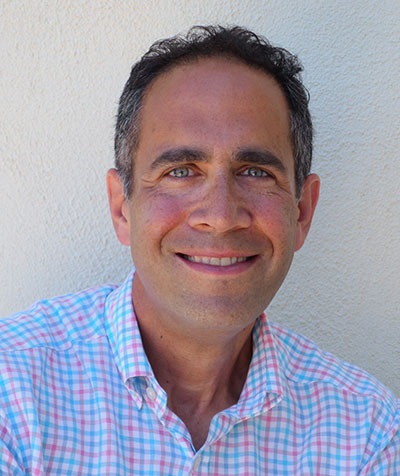
David Shaywitz, Chief Medical Officer of DNAnexus
Advances in healthcare encompass many aspects; here, we highlight changes in two key areas:
The first is the breakthrough in genomic medicine driven by data processing technologies. To achieve the goal of improving healthcare standards, researchers have continuously decoded the genetic "book of life," leading to the development of next-generation sequencing (NGS) and cloud-based data management technologies.
The second is the digital visualization of healthcare. The rapid development of wearable technologies, such as activity trackers and smartphone apps, has revealed the immense potential inherent in digital health. People are increasingly aware that, beyond what occurs within hospital walls and the somewhat cumbersome process of seeking medical care, a more critical component of “healthcare” lies in daily health maintenance.
These emerging technologies have sparked increasingly vigorous discussion in recent years, particularly after President Obama announced the Precision Medicine Initiative in early 2015. This initiative seems to reveal that a highly anticipated, highly personalized, and fully digitized future of healthcare has quietly approached us, or perhaps has already arrived.
The remarkable transformation underway in technological healthcare cannot be overlooked. In the field of genomics, this profound change is already evident: children suffering from rare and undiagnosed severe diseases are finding treatment options; couples planning to have children are using genetic testing to assess their future offspring’s risk of disease; individuals with hereditary cancer susceptibility are receiving early cancer risk assessments and preventive recommendations; and organ transplant recipients can soon be monitored for signs of rejection. All of this can be achieved through simple blood tests. Furthermore, the meticulous integration of genomic data with medical records is fundamentally enhancing the ability of pharmaceutical pioneers to develop new drugs.

Digital health companies are also maturing: most have finally recognized the importance of clinical validation. Several companies stand out—Omada Health, which manages diabetes risk through health behavior management, and Propeller Health, which focuses on managing respiratory diseases with high dependence on inhalers, such as asthma and chronic obstructive pulmonary disease (COPD).
Several companies in the digital health sector that directly leverage digital technologies for medical assessment have also achieved significant success, such as Evidation Health and Koneksa Health. This field has garnered substantial support from numerous academics, including Brennan Spiegel, Director of Medical Translation Research at Cedars-Sinai Medical Center, and Joel Dudley, Director of the Institute for Next Generation Healthcare at the Icahn School of Medicine at Mount Sinai, who have applied their profound insights from clinical research and data science to new medical technologies.
Every advance in each new medical field is genuine and hard-won. Moreover, David Shaywitz is confident that even more exciting breakthroughs in medicine will emerge in the near future.
Some individuals at the forefront of technology have veered toward an extreme that places technology as the ultimate end, significantly overestimating its capacity to transform healthcare. They hope to achieve comprehensive health monitoring and lifestyle modifications through simplistic digital health solutions, or to cure all diseases with immature gene technologies, aiming to revolutionize the global medical landscape akin to the impact of the polio vaccine.

It was precisely the disillusionment stemming from these unrealistic expectations that made 2016 a year of urgent “recalibration” for the health-tech sector: bridging the widening gap between overstated technological promises and tangible medical advancements. Let us return to reality—precision medicine remains largely idealistic, while healthcare digitalization, touted as a panacea, is more akin to an aspiration yet to be fully realized.
Geneticist Eric Lander, Director of the Broad Institute, predicted this summer that scientific and technological advances over the next 30 to 40 years would transform most cancers into manageable chronic diseases. However, many critics argued that he was too pessimistic, believing such progress would not take that long. These scientific radicals may reason that, given the remarkable technological breakthroughs achieved worldwide in just the past decade, medical advancements should not require such an extended timeframe. Yet they have overestimated the pace of medical progress; indeed, Lander’s prediction may even be overly optimistic.
Two physician-investors, Bijan Salehizadeh and Vishal Gulati, have each stated in episodes of the digital health podcast Tech Tonics that the evolution of digital health is incremental but excruciatingly slow—a pace that is frustrating for physicians and scientists, yet a life-threatening ordeal for patients and their families.
Other critics, however, have somewhat overcorrected. Observing that technological healthcare is not as miraculous as hyped, they dismiss the blueprint for precision medicine as a castle in the air or worry that digital health will spiral out of control and stray from its original intent. Yet Shaywitz believes such concerns are excessive. Admittedly, people are easily dazzled by novelty, overlooking immediate challenges; nevertheless, the power of emerging technologies should not be underestimated, even though identifying their optimal applications in healthcare will take time. The key is to remember that the priority lies in extracting value and solving problems from new developments in the medical field, rather than pursuing innovation for its own sake—a tendency akin to “neophilia,” as described in the book Antifragile.
For 2017, David Shaywitz held the following expectations: that biomedicine and digital health would continue to accelerate; that broad-spectrum healthcare investors and passionate entrepreneurs would keep driving their development; and that sharp-eyed critics would continue to dispel unrealistic fantasies through skepticism. Meanwhile, the demands of patients—past, present, and future—will continually propel advances in medical technology.