

PatientBank Secures $2.2M in Seed Funding to Democratize Access to Medical Records for Just $30

PatientBank is a Y Combinator-backed company that provides online medical record storage and retrieval services. Founded in 2014, it secured $120,000 in seed funding from YC this August. With YC’s endorsement, the company raised an additional $2.2 million in seed funding just four months later, on December 15, led by General Catalyst and Khosla Ventures, with participation from ten institutional investors. Other investors included SV Angel, Spectrum 28, and Data Collective, all of which are frequent investors in the healthcare sector.Review of VCBeat’s Analysis of Y Combinator’s Portfolio: A Survey of 66 Healthcare Companies Invested in by Y Combinator (Part I): From Early Focus on Healthcare IT to Current Strategic Emphasis on Artificial Intelligence
$30 for Medical Record Data Sharing
Everyone may encounter a healthcare pain point in their lives: how can users quickly access their medical records? They may be asked by doctors, insurance companies, lawyers, or researchers to provide their medical records, which can turn into a lengthy 30-day process involving faxes, in-person conversations, or phone calls, making it inefficient.
PatientBank aims to alleviate this pain point. As each hospital has different policies and procedures for accessing medical records, PatientBank is dedicated to standardizing this process. To date, the company has completed over 11,000 medical record requests, covering 2,500 different hospitals.
From a business model perspective, PatientBank enables individuals to collect and share medical records online. Users can schedule appointments with any doctor or hospital, regardless of provider network or health plan restrictions, by informing PatientBank where they are receiving care and providing an electronic signature. In this way, the company gradually collects and digitizes data, allowing users to easily share their records. Currently, the cost per record sharing transaction is $30. All stored information is consolidated into a summary, facilitating mutual access and sharing among patients, healthcare providers, and researchers, although the primary use case remains sharing with physicians and family members.
“We have optimized the user experience for record requests,” said Paul Fletcher-Hill, founder and CEO of PatientBank, in a statement. “PatientBank’s record request process is standardized for any doctor or hospital in the United States; we have developed a suite of tools to collaborate with hospitals. We employ various methods to access records, such as mail, electronic communication, and even fax if necessary. This flexibility is crucial to expanding the number of participating hospitals.”
Doctors and hospitals are the target customers, with a future focus on consumer-grade applications.
In fact, the idea for founding PatientBank first took root when Fletcher-Hill was still a student at Yale. At that time, he already envisioned creating a website for visualizing medical data.
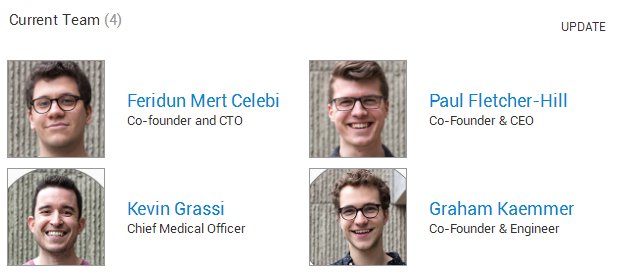
PatientBank Team
“I had assumed that hospitals would have some APIs or integration systems in place, or that I could at least receive my medical records via email promptly. When I called my doctor to inquire, I was told that I had to fax a written request,” Fletcher-Hill highlighted this pain point once again. “What I didn’t expect was that 30 days passed, and I still hadn’t received my medical records. If it takes a month just to access paper copies of medical records, how can anyone expect innovation in this field?”
Consequently, Fletcher-Hill and his colleagues launched a website to assist doctors and hospitals in preparing all necessary authorizations and documentation for the release of medical records. In contrast to traditional procedures for obtaining medical records—which often require in-person visits to hospitals or telephone appointments—PatientBank aims to leverage online platforms to store patients’ medical records at a significantly lower cost.
Although hospital staff and patients were the target users of the initial product, after receiving Y Combinator’s seed funding, the PatientBank team decided to expand the product’s consumer-facing applications, shifting its focus to consumers. “We believe that developing a consumer product is the best way to achieve rapid scaling, as individuals often ultimately serve as the bridge for collecting or sharing records among physicians and other providers,” said Fletcher-Hill.