

Plume Labs Secures $4.5M to Expand AI-Powered Air Pollution Forecasting Platform
What Wonders Unfold When Artificial Intelligence Meets SmogPlume Labs, a Paris-based startup dedicated to combating smog and enabling people to breathe fresh air, was founded in 2014. The company recently secured $4.5 million in funding from undisclosed investors. With this capital, Plume Labs will continue to deepen product development for its air pollution services, aiming to leverage cutting-edge artificial intelligence technologies to improve respiratory health.
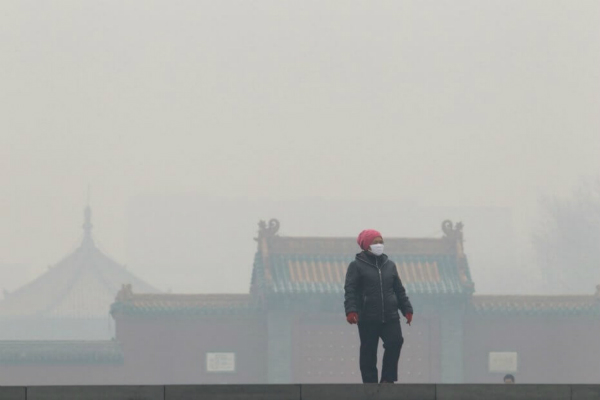
Air pollution is a global issue; for instance, Beijing recently issued a red alert for severe air pollution.
Plume Labs offers three products: Air Report (a mobile application), Air Sensor (a sensor device), and Air Cloud (a cloud-based database). Plume Air Report is a mobile application compatible with both iOS and Android platforms, enabling users to assess levels of severe air pollution and access pollution forecasts. Given that air quality can fluctuate within hours, the app displays real-time air quality status. By being informed of the air quality conditions to which they are exposed, individuals can make informed decisions about when to go outdoors, thereby mitigating adverse health effects. This is particularly important as data indicate that air pollutants contribute to the development of lung cancer, which remains one of the most lethal cancers worldwide, especially in China.
The service currently integrates government-operated, publicly accessible pollution data and air quality monitors, leveraging artificial intelligence algorithmic models to track and predict safe pollution levels. Beyond France, it boasts a substantial user base across 350 cities worldwide.
Romain Lacombe, CEO and Co-founder of Plume Labs, stated that following this round of financing, the company will expand the reach of its air prediction platform to 60 countries and open the Plume Air Cloud API to third-party organizations interested in data mining.
How to Achieve the Most Precise Detection of Pollutants? This is where Air Sensor comes into play. It is a compact air-quality monitoring hardware device equipped with 35 sensors, capable of accurately detecting airborne components such as carbon dioxide. Due to its lightweight design, numerous innovative applications have been explored. In March 2016, Plume Labs outfitted a flock of pigeons in London with “backpack” air-quality sensors to help track atmospheric pollution in the city and compare the findings with data from the World Health Organization (WHO).

Air sensors can be attached to pigeons to measure pollutant components.
Additionally, during the 21st United Nations Climate Change Conference (COP21), Plume Labs released the first global air quality map, illustrating the scale of worldwide pollution in a novel way, and announced plans to conduct micro-level local pollution mapping through a hardware-supported data platform. Currently, Plume Labs is developing unique predictive models based on the latest data science technologies, capable of accurately forecasting traffic indices and the absolute concentration levels of key pollutants. The company also plans to hire more environmental and data scientists.
While some governments provide citizens with partially visible information, Plume claims it can deliver all information and data in real time. More importantly, the analytical tools developed by the company can offer unique recommendations. Air pollution is one of the most preventable causes of death worldwide and a major global epidemic. Romain Lacombe stated that companies in the consumer technology sector have the capability, as well as the moral obligation, to take a leadership role in addressing this crisis.