

WeDoctor's CEO Liao Jieyuan: Primary Care Centers Bridge Online and Offline Services to Support Tiered Healthcare Delivery
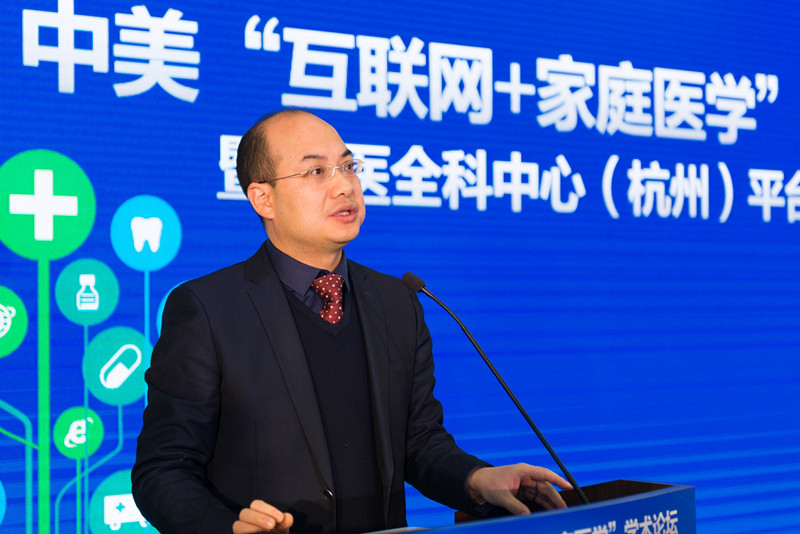
Liao Jieyuan, Chairman and CEO of WeDoctor
In December 2015, WeDoctor Wuzhen Internet Hospital was established, excluding initial consultations. By connecting doctors and patients across China via the internet, it became an internet-based medical service platform that achieved large-scale online follow-up visits, electronic medical record sharing, online medical advice, and online prescriptions, pioneering a new model of “Internet+” healthcare.
In December 2016, the WeDoctor General Practice Center was established in Hangzhou, focusing on primary care at the grassroots level. It mainly provides services such as online consultations, remote specialist consultations, and offline medical care. The center houses departments including General Practice, Obstetrics and Gynecology, Pediatrics, Dentistry, Traditional Chinese Medicine, Dermatology, Psychology, Clinical Laboratory, and Medical Imaging, delivering comprehensive, continuous, and family-oriented healthcare and health maintenance services.
“In just one year, Wuzhen Internet Hospital started from scratch and now handles over 31,000 patient visits per day—twice the daily volume of Peking Union Medical College Hospital. Additionally, it has obtained internet hospital licenses in 11 other provinces. With the recent establishment of offline physical general practice centers, WeDoctor has created an online-to-offline closed loop covering both initial and follow-up consultations, moving steadily closer to the core of healthcare delivery,” said Liao Jieyuan with great enthusiasm.
Liao Jieyuan, Chairman and CEO of WeDoctor, has transitioned from a pure IT professional to internet healthcare, and then to physical healthcare. Although each step was taken aggressively, he remained full of confidence.
What strategic significance does the establishment of the General Practice Center hold within WeDoctor’s overall layout? What are the future plans? What are the distinctive features of the General Practice Center? Liao Jieyuan provided answers in an interview with VCBeat.
Looking back on the establishment, development, and achievements of Wuzhen Internet Hospital, Liao Jieyuan was filled with deep emotions.
To implement the policies of the CPC Central Committee and the State Council on “Internet+” healthcare reform, Wuzhen Internet Hospital was established as a platform for model innovation and has received widespread acclaim. “The number of visitors to Wuzhen Internet Hospital now rivals that of a railway station during the Spring Festival travel rush,” said a WeDoctor staff member.
In March this year, Wuzhen Internet Hospital launched the “Million Consultation Point Expansion Plan.” As of October 2016, more than 10,000 pharmacy-based consultation points had gone live across China, evolving from simple medication sales outlets into integrated hubs for appointment scheduling, remote consultations, diagnostic testing, and electronic prescriptions.
Currently, 17 provincial and municipal internet hospitals have been launched in Ningxia. President Yang of Ningxia General Hospital serves as the Dean of these internet hospitals, which boast a user base exceeding 20 million, extending even to Central Europe.
“We have standardized the various services offered by our internet hospital, as well as their pricing, enabling rapid replication,” said Liao Jieyuan.
A new smart healthcare service platform has been established, using Wuzhen Internet Hospital as a model to connect hospitals, doctors, patients, pharmaceutical systems, and medical insurance across China via the internet. This platform has played a significant role in balancing the allocation of medical resources and addressing challenges in healthcare reform, serving as a window for China to showcase to the world how “Internet Plus Healthcare” improves the patient experience.
In the future, all hospitals may leverage the power of the Internet to break down their traditional barriers, engaging specialists from various disciplines across China and even internationally, thereby delivering professional healthcare services and systems to the public with greater efficiency.
However, the core value of healthcare lies not in treating diseases, but in helping people manage their health to prevent illness. The fact that Wuzhen Internet Hospital does not conduct initial consultations means it cannot truly reach the grassroots level to help individuals or families achieve effective health management. How to bridge the “last mile” with users has become the key determinant of whether genuine medical services can be delivered at the grassroots level.
When discussing his impressions of general practice, Liao Jieyuan said, “Having grown up in a rural area, I learned that for major matters we turned to the village party secretary, while for actual medical care we relied on village doctors. Despite twenty years of substantial progress, and although healthcare overall has advanced significantly, the development of primary care has lagged far behind.”
General practitioners, also known as family physicians or family doctors, provide general practice medical services and serve as the primary providers of health management services. Possessing unique attitudes, skills, and knowledge, general practitioners are qualified to deliver continuous and comprehensive medical care, health maintenance, and preventive services to every member of a family.
In Europe and the United States, 80% of initial consultations are conducted by family physicians, who serve as gatekeepers. In other words, when you fall ill, your family physician is best positioned to identify the causative factors of your condition. Referrals to hospitals are then issued by the family physician as needed.
However, the core of all medical services must be “medical care,” particularly those grounded in offline settings, centered on user health, and involving genuine face-to-face interactions with users. Although internet-based services, leveraging data, can provide continuous, proactive, and health-centric care, they still have inherent drawbacks.
“It took only five months to plan, prepare, and implement the hardware infrastructure for general practitioners, whereas the software infrastructure required over a year of preparation. This includes systems such as the family doctor service framework and the cloud-based Hospital Information System (HIS) for general practitioners. This HIS system is accessible to every clinic outlet, ensuring consistent quality and standardized server configurations across all locations, thereby laying the groundwork for subsequent nationwide expansion.” So how can online and offline services be integrated to form a closed-loop healthcare delivery system?
“With online internet hospitals and offline WeDoctor General Practice clinics, a closed-loop system is formed, offering hope for achieving our goal of becoming the health gatekeepers for the general public.” For ordinary people, they do not wish to spend time searching for hospitals on their own, nor do they know how to find doctors suited to their needs. They strongly desire a family doctor who has a thorough understanding of their own and their family’s health conditions, which places significant demands on the professional competence of family doctors.
Take daily clinical consultations as an example: the facility features both standard outpatient clinics and internet-based consultation rooms. If patients require access to domestic and international family physician teams, they can be connected within 35 seconds to one of 7,200 expert teams across China. These 7,200 expert teams are predominantly led by the nation’s foremost discipline leaders, encompassing both domestic and international specialists who assist general practitioners with case consultations. This convergence and interaction in medicine have eliminated barriers of time and space, exemplifying a typical internet-enabled primary care center.
Another key feature is convenience and peace of mind. Contracted users are not required to visit the General Practice Center daily, as their assigned physicians maintain comprehensive knowledge of their health reports and medical records. Through video consultations, physicians can provide face-to-face guidance on lifestyle habits and medication management for children, pregnant women, and elderly family members at home, with general practitioners continuously monitoring the users’ health status.
“Starting with internet hospitals, we help the public bridge the gap between hospitals and patients through online platforms; today, beginning with WeDoctor General Practice, we are committed to implementing this vision step by step, aiming to serve as health gatekeepers for Chinese families and enterprises,” Liao Jieyuan gestured.
As more people become aware of preventive healthcare and visit general practice centers, these centers evolve into large-scale tiered diagnosis and treatment platforms. They precisely match patients with specialists and tertiary hospitals, thereby forming a network that connects online and offline services, integrates professional medical care and resources, and serves as a critical link between primary and advanced levels of the healthcare system.
Continuing from above: First, tertiary Grade A hospitals,All internet-based medical experts are specialists from Grade A tertiary hospitals. Currently, beyond Wuzhen, the collaborative platforms for internet hospitals established by WeDoctor in each province have formed synergy centers with representative hospitals.
Transition: There are three key points, namely community health centers, pharmacies, and health centers in communities and office buildings.Generally, only one General Practice Center is deployed within a given area to support the service quality of three types of outlets. In other words, a three-tiered system is formed, spanning from tertiary Grade-A hospitals to general practices, and further to nearby community outlets. It is with this three-tiered structure in place that we can truly serve as health gatekeepers for both enterprises and families. Health gatekeepers must be positioned at the doorstep, readily accessible to provide services at any time. Much like Starbucks, which is visible and available whenever you need it, WeDoctor’s general practice services offer the same level of accessibility.
“N” refers to WeDoctor’s General Practice Centers. WeDoctor plans to establish a chain of 100 general practice centers across China within three years, aiming to become the “Starbucks” of the healthcare industry.
“X” refers to community health centers distributed across China. With support from local governments, WeDoctor General Practice Centers will serve as regional hubs for technology, training, and clinical education, leveraging both internet-based and on-site practices to assist and enhance grassroots community health centers.
First, there is a significant shortage of general practitioners.According to statistics from relevant authorities, China faces a shortfall of nearly 100,000 general practitioners in urban community health service institutions alone, not to mention the more severe scarcity of medical resources in rural areas. Only by addressing the supply of healthcare professionals can we make significant progress toward implementing a tiered diagnosis and treatment system.
Second, the timing for accessing liability insurance is crucial.The following conditions must be met:
First, an offline service system is essential. It is not a single point but a network. Second, robust online services are necessary to achieve true high efficiency and user convenience. Finally, a professional team is required—specifically, a comprehensive medical service team spanning from general practice to specialized care, complemented by a health management team.
Only with these three foundational frameworks in place can one serve as a health gatekeeper and launch liability medical insurance. Without high-quality services, a team, and a system for controllable costs, it cannot be done well.
Third, regarding medical and health services, the primary consideration is supply capacity.When high-quality care is available, word-of-mouth spreads rapidly among the public, ensuring a steady stream of patients. In fact, when the General Practice Center opened, local residents and entrepreneurs alike were delighted to finally have a trusted partner to whom they could entrust the health of their families and teams.