

"Capital Winter" Not So Cold: Major Financing and Investment Highlights in China's Healthcare Sector in 2016
In 2016, wave after wave swept through the startup ecosystem. As the dividends of online traffic from mobile internet dwindled, the once-all-powerful internet industry found itself in dire straits, with a “capital winter” seemingly becoming the “main theme” of the internet venture capital and entrepreneurship circle in 2016. Having experienced the “breakout year” of 2014 and navigated the “capital scramble” of 2015, the internet healthcare sector approached the end of 2016. What changes occurred in the healthcare venture capital and entrepreneurship landscape during this period? Did it likewise succumb to the capital winter? VCBeat will review the investment and financing activities in the healthcare sector for 2016 (data as of December 29, 2016; the statistics focus primarily on primary market transactions, excluding mergers and acquisitions, private placements, and initial public offerings).
In January 2016, Xingshulin secured $32 million in Series C financing, with $30 million coming from Tiancheng Industrial, a subsidiary of Joincare Pharmaceutical Group. The post-money valuation exceeded $200 million. Xingshulin has grown into China’s largest community and collaboration platform for physician professional development. Currently, Xingshulin has expanded into overseas markets.It is foreseeable that more mobile health enterprises with outstanding innovation capabilities will also accelerate their internationalization process.
In January 2016, the pharmaceutical e-commerce platform Jianke.com secured $100 million in Series A financing from the U.S. dollar fund “Kaixin Capital,” marking the largest financing deal in the pharmaceutical e-commerce sector in 2016.Currently, policies related to pharmaceutical e-commerce have not yet been fully liberalized, and patients remain skeptical about purchasing medications online. However, with continued capital investment, user education will accelerate, and the sector is poised for explosive growth once regulatory restrictions are lifted.
In March 2016, Alibaba Health issued an announcement stating that it had acquired a 25% stake in Wanli Cloud, a medical imaging company under the listed entity “China Resources Wandong,” for RMB 225 million. Concurrently, China Resources Wandong also released an announcement regarding the introduction of Alibaba Health as a strategic investor in Wanli Cloud. Wanli Cloud will provide remote medical imaging services to Alibaba Health’s users.Alibaba’s strategic move this time is not only aimed at leveraging Wanli Cloud’s strengths in the medical imaging cloud platform, but more importantly, at tapping into the resources of China Resources Wandong, which owns the world’s second-largest manufacturing base for imaging equipment. This represents Alibaba’s comprehensive layout across the entire medical imaging industry chain.
In April 2016, iCarbonX, a health big data platform, announced that it had recently secured Series A funding amounting to nearly RMB 1 billion. Following the completion of this financing round, iCarbonX’s valuation approached USD 1 billion. The investors in this round included Tencent, Vcanbio (a listed company in the stem cell industry), and Tianfu Group, among others.This round of financing will be primarily used for production and data collection, building data analysis capabilities, and developing artificial intelligence models for data analysis. iCarbonX will deepen its engagement in four fields: precision aesthetics, precision nutrition, precision health, and precision medicine. A unicorn in the field of health big data is beginning to take shape.
In April 2016, Dr. Zhang Qiang’s Doctor Group completed its Series A financing round. The actual amount raised in this round was $15 million, with Fenxiang Investment as the investor. Due to bottlenecks encountered in the professional development of physicians in China, doctor groups possess strong endogenous momentum. However, constrained by factors such as public perception, medical laws and regulations, and the health insurance system, doctor groups also face significant exogenous resistance.It remains to be seen how physician groups will enhance physicians’ work efficiency and effectively address healthcare challenges.
In May 2016, Gushengtang held its Series C financing press conference in Shenzhen, announcing that it had secured $70 million in funding led by the Starr Foundation from the United States, with Ping An Insurance participating as a co-investor. Previously, Gushengtang had received tens of millions of dollars in Series A investment from New Enterprise Associates (NEA), the world’s largest healthcare-focused venture capital firm, as well as $30 million in Series B financing from Fidelity International Limited (formerly Fidelity Asia). Gushengtang projected that it would operate 100 clinics across China by 2018, achieving a market valuation exceeding RMB 10 billion.This is the largest single round of financing in the field of Traditional Chinese Medicine (TCM) to date. With the promulgation of the "Law on Traditional Chinese Medicine," TCM is poised to become the next major growth sector.
In May 2016, following Lufax, which was valued at $18.5 billion, another “unicorn” emerged from the internet sector of the Ping An Group. Ping An Good Doctor, its O2O healthcare service platform, officially announced the completion of a $500 million Series A financing round. Investors included prominent overseas private equity funds, large central state-owned enterprises ranked among the Global Fortune 500, state-owned financial institutions, and internet companies.Following the completion of this funding round, the internet-plus-healthcare company, which is less than two years old, has reached a valuation of $3 billion, setting new records for the largest single fundraising amount and the highest Series A valuation among global digital health startups.
In June 2016, Chunyu Yisheng completed a $1.2 billion pre-IPO financing round. In 2015, its online consultation business generated actual revenue of RMB 130 million and a profit of RMB 30 million, with plans to spin off and list the business as a packaged entity.Chunyu Doctor has transitioned from a startup to a more mature stage of development. However, it has yet to establish a complete commercial loop. How Chunyu Doctor will strategically position and balance its online and offline operations in the future remains to be seen.
In June 2016, Maimai Elderly Care announced the completion of its Series A financing round of RMB 30 million, led by China Merchants Venture Capital. Maimai Elderly Care is an “Internet+” startup specializing in the customized development of smart care solutions for mid-to-high-end elderly care institutions. Focusing on smart care services, the company addresses pain points such as the shortage of caregiving resources in the elderly care industry by providing comprehensive hardware and software smart care solutions to elderly care facilities.Smart elderly care is poised to bring about revolutionary changes to the development of eldercare by addressing various issues inherent in existing service models through measures such as transforming methods of information exchange and transmission, strengthening the allocation and integration of resources, and enhancing the efficiency of service management.
In July 2016, BabyTree completed a financing round of over RMB 3 billion, led by Fosun Group, with participation from TAL Education Group, Matrix Partners, Chenshan Capital, China Merchants Wealth, Zhaojin Investment, Binchuang Investment, and Danfu Investment. In November 2016, BabyTree announced that it had integrated resources with strategic investors such as Fosun Group’s healthcare and financial insurance sectors, as well as TAL Education Group in the education sector, to build a comprehensive family ecosystem.In this investment round, what attracted numerous investors was not how large a maternal and infant platform BabyTree could become, but rather their belief that it would serve as an entry point to a future ecosystem of diverse business lines. This shift from product sales to user operations is the core reason why BabyTree secured such substantial financing.
In August 2016, Neusoft Xikang publicly announced that it had completed its second round of financing, introducing strategic investors such as People’s Property Insurance Company of China and Alps Electric Co., Ltd., with a total funding amount of US$64 million.This round of financing targets strategic industrial investors from the commercial insurance and health wearables sectors, marking a further advancement in Neusoft Xikang’s strategic deployment to integrate health management with commercial insurance and sensing technologies. Meanwhile, it stands as the largest single financing deal in the healthcare informatics sector this year.
In August 2016, Meiyou completed a Series E financing round of RMB 1 billion, with investors including Cathay Capital Private Equity, Xianfeng Changqing, and Matrix Partners China. At the same time, it announced the completion of the dismantling of its VIE structure, formally seeking to list on the domestic capital market.To date, Meiyue has launched multiple applications, including the Meiyue Period Tracker, Youbaobao Pregnancy & Parenting, and Youzijie, covering every aspect of women’s daily health care and consistently ranking among the top apps on iOS. With this, Meiyue has solidified its leading position in the female assistant market.
In August 2016, Gengmei App held a strategic press conference in Beijing to announce its Series C financing round. Investors in this round included Chao Hong Ji Group, Suning Universal, Tencent, China Securities Co., Ltd., Fosun Pharma, and Legend Capital, with the total funding amounting to RMB 345 million. Following the completion of the Series C financing, Gengmei not only launched medical aesthetics financial services such as installment payment plans and insurance but also continued to deepen its product offerings.The competitive landscape of the online medical aesthetics industry has largely been established, making it increasingly difficult for late entrants to survive, and competition within the sector will continue to intensify.
In September 2016, Chunyu International, a cross-border internet healthcare platform, completed its Series A and Series A+ financing rounds, with successive investments from Shanxing Capital and Huayao Capital. The total funding exceeded RMB 50 million. The proceeds will be used to further upgrade its internet-based products, enhance online brand marketing, and establish direct collaborations with additional overseas medical resources.From traditional referral programs that send Chinese patients to overseas medical institutions, to the increasingly popular medical services in recent years such as cosmetic procedures and health check-ups, and to emerging offerings like overseas remote consultations driven by advancements in hardware technology, the overseas healthcare market has quietly opened more doors. We look forward to the emergence of more “Internet Plus” overseas healthcare service platforms that can link China’s medical demands to the rest of the world.
In November 2016, VCBeat learned that Beijing Novogene Co., Ltd. had entered into a strategic cooperation agreement with CMB International, SDIC Innovation, and Fanghe Capital, securing RMB 500 million in investment and completing its Series B financing round. Novogene’s business spans three major areas: scientific services, oncology genetic testing, and hereditary genetic testing, with its scientific services segment ranking first in market share within the Chinese domestic market.This was the largest financing deal in the genetics sector in 2016. In that year, there were already seven financing rounds exceeding RMB 100 million in China’s genetic testing field, signaling from a capital market perspective that genetic testing has entered a period of robust growth.
On the evening of December 28, 2016, VCBeat learned that Burning Rock Biotech held a signing ceremony for its Series B financing round, officially announcing that it had secured a total of RMB 300 million in Series B funding. The investors included Sequoia Capital China, OrbiMed Asia Partners, CMB International, and Legend Star.In the newly released VCBeat Top 100 Future Healthcare Companies list, Burning Rock Biotech ranked 26th, with a valuation of RMB 2.5 billion. In China’s genetic testing sector, the competition for the NITP market has largely subsided. Today, tumor genetic testing has become a fiercely contested battleground, owing to its substantial commercial value and market potential. However, the overall tumor genetic testing market remains in its cultivation phase, with a long road still ahead.
Regions with Active Financing in China's Healthcare Sector in 2016
In 2016, the top three most active regions for investment in the healthcare sector remained Beijing, Shanghai, and Guangdong, while Jiangsu and Zhejiang saw vigorous development in healthcare entrepreneurship. Meanwhile, driven by the emergence of new incubators and strong government support, Sichuan, Hubei, and Shandong ranked among the top ten in terms of activity.
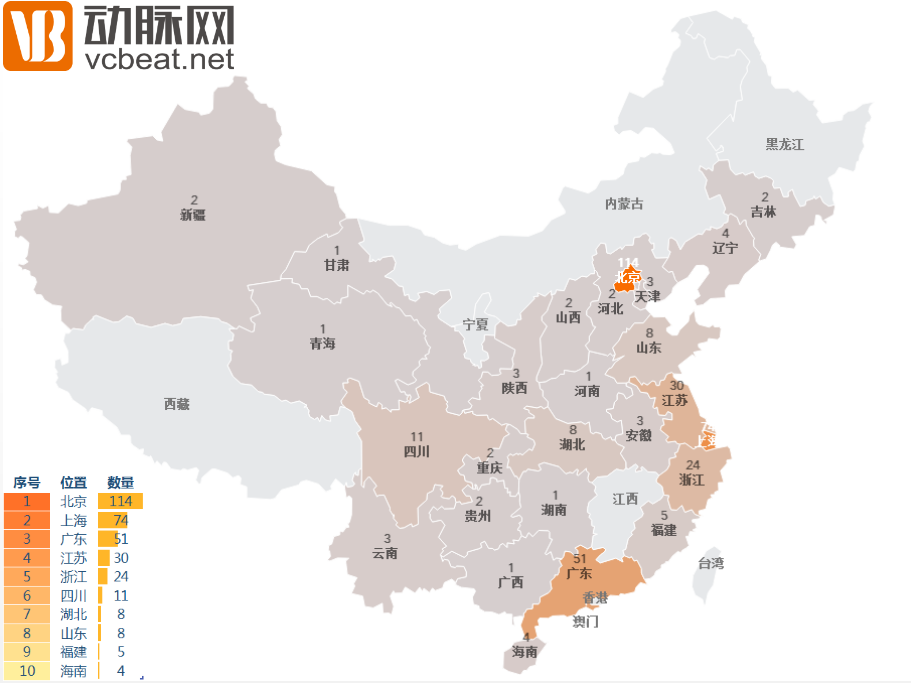
Data source: VCBeat, Eggshell Institute database
Top 20 Financing Deals in China’s Healthcare Sector in 2016
In 2016, Ping An Good Doctor topped the list of financing deals in China’s healthcare sector. Valued at $3 billion less than two years after its establishment, this “Internet Plus Healthcare” enterprise set two global records for internet healthcare startups: the largest single financing round and the highest valuation in a Series A round. From the perspective of financing sectors, asset-heavy companies such as pharmaceutical manufacturers and pharmacy chains secured substantial funding amounts. Within the internet healthcare domain, beyond online consultation services, consumer healthcare segments—including medical aesthetics, dentistry, and personal care—have attracted significant capital attention.
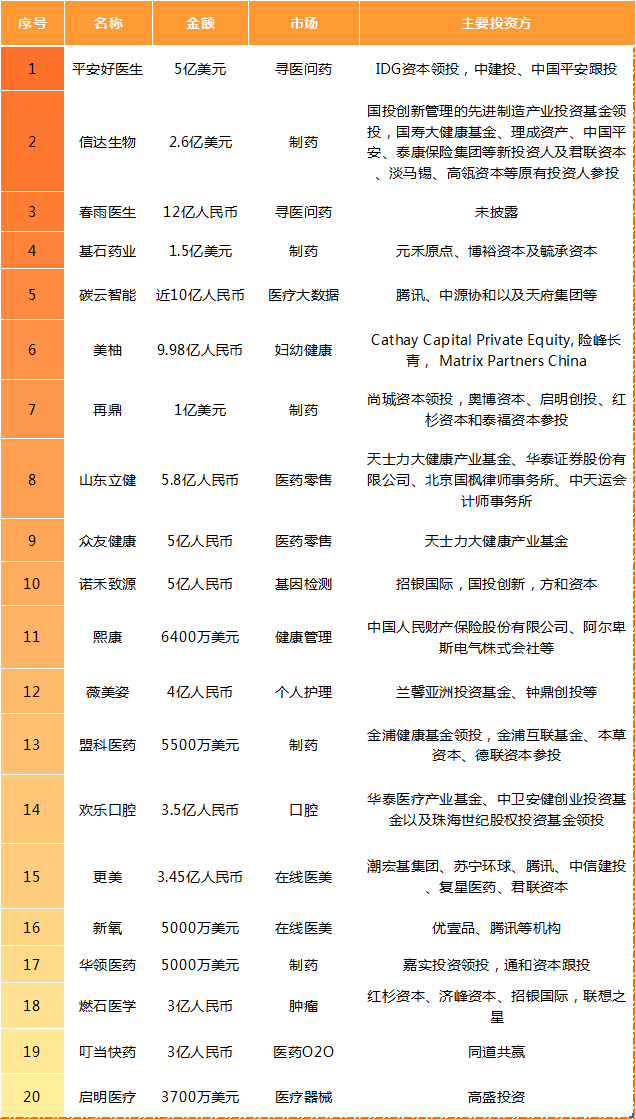
Data source: VCBeat, VBInsight database
Investment Round Activity in China's Healthcare Sector in 2016
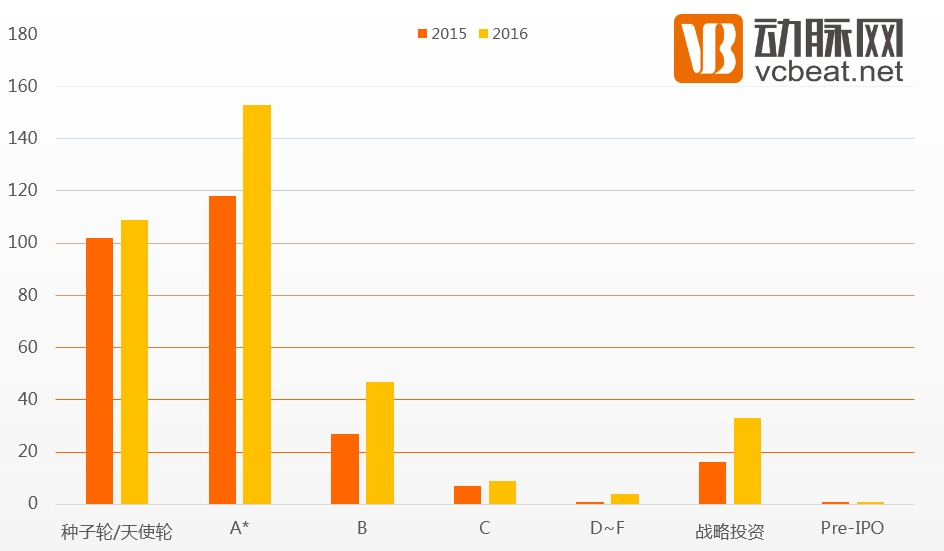
Data Source: VCBeat, VCBeat Database
In 2016, the number of investments across early-stage, growth-stage, and expansion-stage categories all surpassed those of 2015. The number of seed/angel financing rounds remained largely flat compared to 2015, while the volume of Series A*, Series B, and strategic investments increased. In 2016, Series A financing events exceeded angel/seed rounds by more than 30%, and the number of deals beyond Series A also rose, indicating that capital placed greater emphasis on business models and profitability in 2016. Nevertheless, the transformation of the healthcare industry remains in its early stages overall.
Active Investment Institutions in China's Healthcare Sector in 2016
In terms of the number of investments in the healthcare sector, the most active investment firms in 2016 were Legend Star, Junlian Capital, Matrix Partners China, and Sinopharm Capital. Notably, Sequoia Capital China, which was the most active investor in 2015, made fewer investments in the healthcare sector this year.
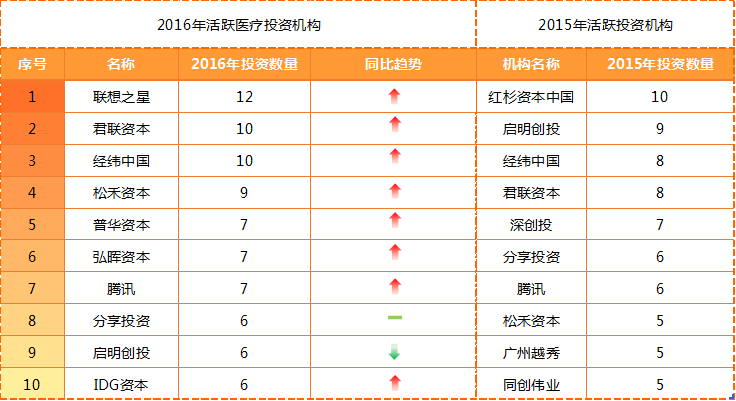
Data source: VCBeat, VCBeat database
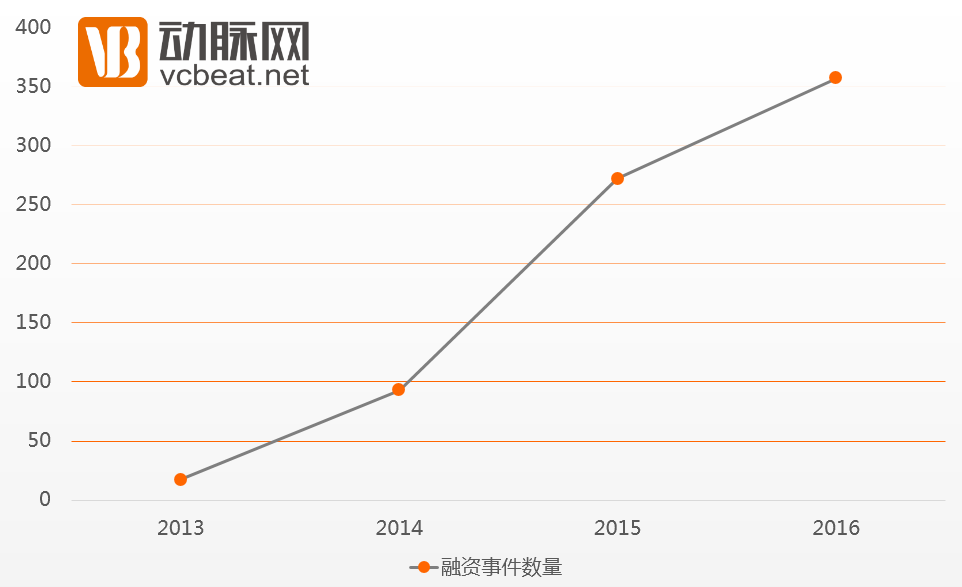
Changes in the Number of Investments in China’s Healthcare Sector, 2013–2016
In 2016, the number of investments in the healthcare sector continued to rise. The number of investment deals in healthcare reached nearly 20 times that of 2013 and more than three times that of 2014, indicating that capital market interest in healthcare remained strong. From this perspective, there is no “capital winter” in the healthcare sector.
Data source: VCBeat, VCBeat Database
Copyright Statement
This report is produced by VCBeat. All text, images, and tables contained herein are protected by applicable trademark and copyright laws. Portions of the text and data have been sourced from publicly available information, with ownership retained by the original authors. No organization or individual may reproduce or distribute this report in any form without prior written permission from our company. Any unauthorized commercial use of this report shall constitute a violation of the Copyright Law of the People's Republic of China, other relevant laws and regulations, and applicable international conventions.
Disclaimer
This research report is based on information that VCBeat considers reliable and currently publicly available. VCBeat strives for, but does not guarantee, the accuracy and completeness of such information. Due to limitations in research methodologies, sample sizes, and the scope of data collection, the data presented herein only reflects the basic conditions of the surveyed population during the survey period. It serves solely the purpose of the current research and provides basic reference for the market and clients. Furthermore, VCBeat does not guarantee that the views or statements contained herein will remain unchanged. At different times, VCBeat may issue reports with information, opinions, and projections inconsistent with those contained in this report.
VCBeat does not consider recipients of this report as its clients by virtue of their receipt thereof. This report is distributed only where permitted by applicable laws and regulations, solely for informational purposes, and shall not be construed as advertising in any manner. Under no circumstances shall the information contained herein or the opinions expressed constitute investment advice to any person. Where permitted by law, VCBeat and its affiliates may hold equity interests in the companies mentioned in this report and may provide or seek to provide capital raising, financial advisory, or other related services to such companies.
Note: I am Wang Guanglong, an author at VCBeat. If you are an investor interested in the healthcare industry or engaged inHealthcareStartups seeking media coverage are welcome to contact me. We also welcome tips on relevant companies. WeChat: touchlife1; Email: wang.gl@vcbeat.top