

WeDoctor's First Full-Service Clinic CEO He Chao: Integrating Education, Clinical Practice, and Research to Become the 'Starbucks of Healthcare'
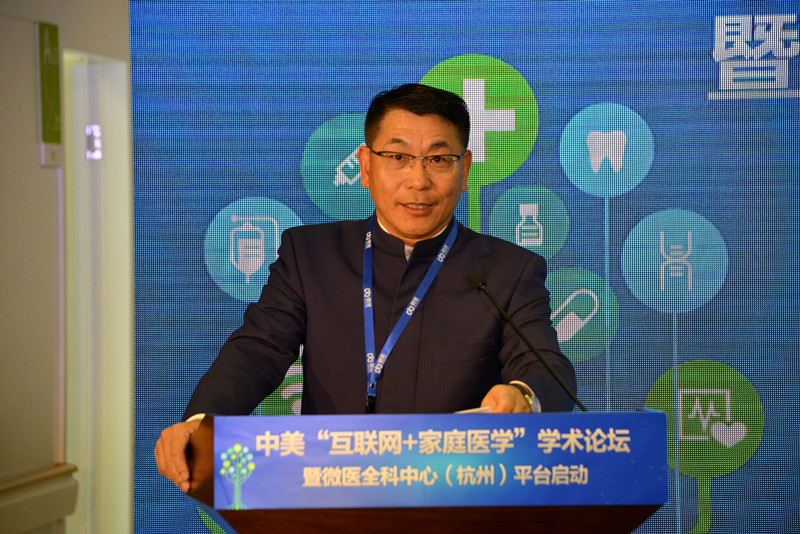
He Chao, Senior Vice President of WeDoctor and CEO of WeDoctor Medical Investment Management (Hangzhou) Co., Ltd.
On December 17, 2016, the WeDoctor General Practice (Hangzhou) Center was officially established. With an investment of nearly RMB 20 million, the two-story facility spans 2,400 square meters and is an 18-minute drive from the Hangzhou Civic Center. A visit by reporters revealed that the center’s location selection, renovation, and interior design do not resemble those of a traditional hospital; instead, every detail exudes warmth and care.
WeDoctor General Practice Center is a physical medical institution under WeDoctor. It took exactly five months from preparation to opening. Unlike other physical hospitals, the Hangzhou General Practice Center has no infusion room or inpatient department; instead, it separates the health zone from the medical treatment zone. The consultation communication style has shifted to a friendly, conversational approach between doctors and patients. Additionally, the center features dedicated pediatric consultation areas, mother-and-baby rooms, built-in cribs, and bottle warmers.
At the same time, this facility brings together a Chinese-American medical team established in accordance with Joint Commission International (JCI) standards for hospitals. It serves as a vital component of WeDoctor’s online diagnosis and treatment, remote consultations, and offline closed-loop medical operations, providing comprehensive health maintenance and medical services that cover the whole person, the entire care journey, and the whole family.
According to statistics from relevant authorities, China’s urban community health service institutions alone face a shortage of nearly 100,000 general practitioners, not to mention the even scarcer medical resources in rural areas. The core issue in enabling more people to access medical services at general practice centers is whether there is an adequate supply of talent.
“The General Practice Center not only provides medical services but also cultivates general practitioners,” said He Chao, Senior Vice President of WeDoctor and CEO of WeDoctor Medical Investment Management (Hangzhou) Co., Ltd.
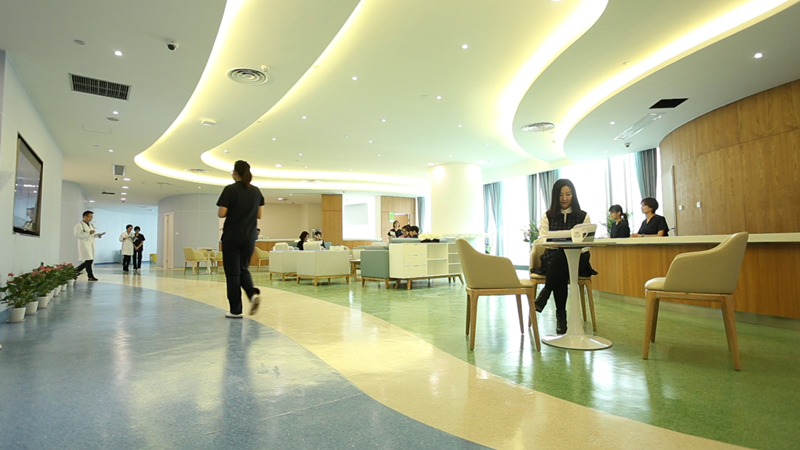 WeDoctor General Practice Center
In April 2016, Zhu Shanzhu partnered with WeDoctor to jointly establish the WeDoctor Academy of General Practice, which falls under the category of continuing education. Aimed at professionals seeking further learning by leveraging WeDoctor’s online platform as well as the intellectual property and talent resources of Professor Zhu’s team, the WeDoctor General Practice Center and the Academy of General Practice strive to become hubs for the training and dissemination of general practice technologies, knowledge, and talent, as well as centers for providing guidance on norms and standards.
Zhu Shanzhu is the Director of the Department of General Practice at Shanghai Medical College, Fudan University, and the Chairperson of the Chinese Society of General Practice under the Chinese Medical Association. She has long been engaged in clinical practice in general practice, standardized training for general practitioners, continuing medical education for general practitioners, faculty development for general practice instructors, and theoretical research in general practice. She has completed and undertaken projects funded by the China Medical Board (CMB), key discipline construction projects under the Three-Year Public Health Action Plan of the Shanghai Municipal Health Bureau, and multiple research grants from the Shanghai Municipal Science and Technology Commission. She has published more than 60 academic papers and monographs. She served as editor-in-chief for several medical textbooks and works, including Introduction to General Practice, a national planned textbook for higher education institutions published by the Ministry of Health; Clinical Practice for General Practitioners; and Development of Clinical Competencies for General Practitioners, which are part of the series of planned textbooks for standardized training and job-transfer training for general practitioners issued by the Ministry of Health.
“Training materials for general practitioners must be both standardized and homogeneous, yet also differentiated. As early as 2006, we completed training programs across 243 provinces, municipalities, and autonomous regions,” said Zhu Shanzhu.
For instance, in rural areas, where the patient population is predominantly elderly, there is a need to strengthen the management of chronic diseases. In western regions, particularly in mountainous areas, obstetric training is highly rigorous, as residents cannot travel to county hospitals for childbirth due to excessive distances. Training for urban community physicians focuses on enabling them to diagnose and treat common and frequently occurring pediatric conditions. In mountainous regions, healthcare providers must be capable of managing emergency cases, given the considerable distance to county-level people’s hospitals.
In Shanghai, standardized residency training has essentially achieved quality enhancement, standardization, and normalization. Regarding the training of “rural physicians,” more than 4,000 township doctors in western Yunnan Province were trained over a two-year period. Commissioned by the Shanghai Charity Foundation, the project adopted three teaching modalities: online instruction, face-to-face lectures, and on-site training (with outstanding participants invited to Shanghai for further training).
During the training of rural doctors, given the sheer size of this group, training efficiency is paramount. Zhu Shanzhu partnered with WeDoctor to leverage internet technology, enabling 10,000 physicians to participate in simultaneous instruction with two-way interaction and Q&A capabilities. This approach allows more doctors to receive education, pass national licensing examinations, and become licensed practitioners.
“During the training process, I can monitor participants via the internet to ensure training quality if attending physicians are seen playing on their mobile phones, playing cards, or cheating on exams.”
“The School of General Practice and Dean He’s department operate independently yet in close coordination. The School trains talent not only for Dean He’s General Practice Center but also supplies general practitioners to hospitals across China.”
For internet healthcare companies, the sufficiency of medical talent is a necessary and sufficient condition that determines how far a project can go. WeDoctor’s General Practice Center comes with its own talent development capabilities, demonstrating a far-sighted strategy in crossing over from internet-based healthcare to physical medical services. So, how are the services provided by the General Practice Center?
WeDoctor General Practice Center comprises departments including General Practice, Obstetrics and Gynecology, Pediatrics, Dentistry, Traditional Chinese Medicine, Dermatology, Psychology, Clinical Laboratory, and Medical Imaging. By establishing personalized health records for family members through customized assessments, and leveraging information technology platforms and mobile health technologies, the center provides comprehensive, continuous, integrated online-and-offline family healthcare services, encompassing disease diagnosis and treatment, health maintenance, chronic disease follow-up, and rehabilitation management.
WeDoctor General Practice Center features a Children’s Health Center, Women’s Health Center, Elderly Care Center, and General Practice Service Center. By integrating with the high-quality and abundant medical resources of WeDoctor Internet Hospital, it delivers holistic, family-wide, and end-to-end healthcare services.
“We provide remote consultation services with domestic and international experts via the internet, as well as text-and-image and video consultations, enabling patients to have ‘face-to-face’ interactions with renowned physicians across China through the Wuzhen Internet Hospital platform,” said He Chao.
For He Chao, the transition from a specialist to a general practitioner is essentially a return to the original mission of medical care. “For every patient, the goal is safety and meeting their needs.”
In terms of operational models and management, the first step is aligning philosophies. As general practitioners, our expertise is not demonstrated merely by treating patients when they are ill; rather, it is reflected in managing their health when they are well, helping them maintain optimal health status. This requires a different professional attitude and approach from physicians.
In the process of doctor-patient communication, general practitioners (GPs) are required to have a deeper understanding of patients’ family or occupational environments compared to specialists. While specialists can focus on observing changes in specific organs, GPs must examine the social context surrounding these physiological and pathological conditions. This demands enhanced skills and the ability to communicate effectively with individuals in various states. Previously associated with the role of “social workers,” GPs are sometimes perceived as being overly inquisitive—asking about family circumstances, dietary habits, and social status—but such information is crucial for providing optimal patient care. Consequently, the focus of GPs differs significantly from that of specialists.
Currently, the WeDoctor General Practice Center has a staff of over 30, including 10–15 specialist physicians, 20–25 nurses, and several technical personnel. The center is also actively recruiting, with the goal of expanding its operational team to approximately 60 members.
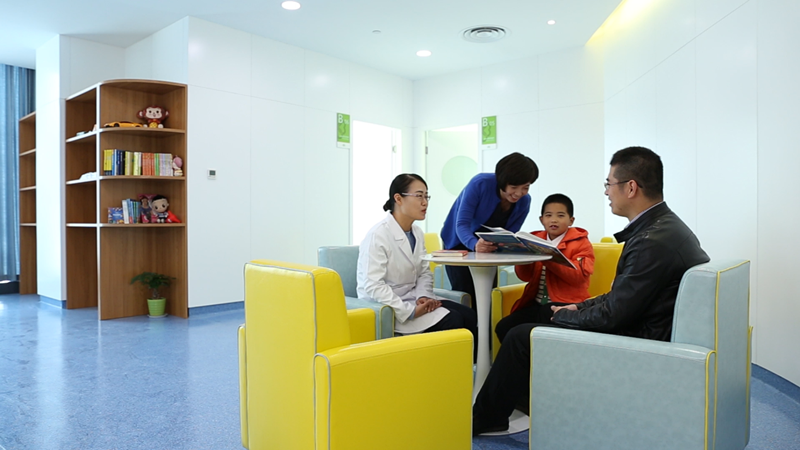
Doctor-Patient Communication
Starbucks’ global footprint is a testament to its exceptional service. So, what exactly is the “Starbucks-style” service in healthcare that He Chao proposes?
From the perspective of service recipients at the General Practice Center, services are provided to individuals, families, and enterprises, offering tailored solutions for each group. For individuals, for example, exclusive private physicians are assigned to members, delivering comprehensive, whole-person care that spans health promotion to disease diagnosis and treatment, all at a moderate cost.
Family medicine refers to family doctors who provide long-term, regular services to families, establish comprehensive health records and medical histories, guide family members in healthy living and exercise practices, promote their physical and mental well-being, and foster harmonious relationships and mutual support among family members.
By deploying on-site health assistants and online corporate physicians, employee health stations can provide basic disease prevention and health management services to corporate employees. They also serve as coordinators for accessing further medical care, thereby helping to improve the overall health level of the enterprise and enhance operational efficiency.
In terms of operational model, WeDoctor General Practice Centers operate under the “(1+N)*X” model. Leveraging the WeDoctor Academy of General Practice, it helps primary care physicians and family doctors across China receive standardized training and professional development. By establishing a comprehensive service and software infrastructure for general practice centers, the company plans to launch 100 chain general practice centers nationwide within three years. Driven by both services and technology, these centers will extend their coverage to community health centers throughout China. With support from local governments, WeDoctor General Practice Centers will serve as regional hubs for technology, training, and clinical education, empowering and enhancing primary community health centers through a combination of internet-based solutions and on-site practical guidance.
First, continuously engage with service recipients through the “General Practice Center” app.
Second, proactively provide on-site medical and health services to companies and households, with 24/7 responsiveness.
Third, by establishing health records, it is possible to effectively analyze the type of assistance needed under different conditions, ensuring that support is provided proactively, promptly, and in a highly appropriate manner.
Fourth, for regional medical centers, serve as the liaison and referral support provider to deliver precise medical services.
Fifth, train family members. If a family member falls ill, other family members should acquire the necessary skills, knowledge, and information to become the strongest supporters at the patient’s bedside.
You could say that a general practitioner is always by your side, unlike doctors at large hospitals where you need to register, wait in line, and then have a consultation. Once you establish a relationship with a general practitioner, it’s like having us manage your health for you.
“For example, I am a surgeon and my wife is an internist; together, we are equivalent to a general practitioner. If someone in our family falls ill, we will definitely spend less time seeking medical care than others.”