

WeDoctor's Primary Care Centers Positioned as Key Hubs for Tiered Diagnosis and Treatment, Says Mao Qun'an
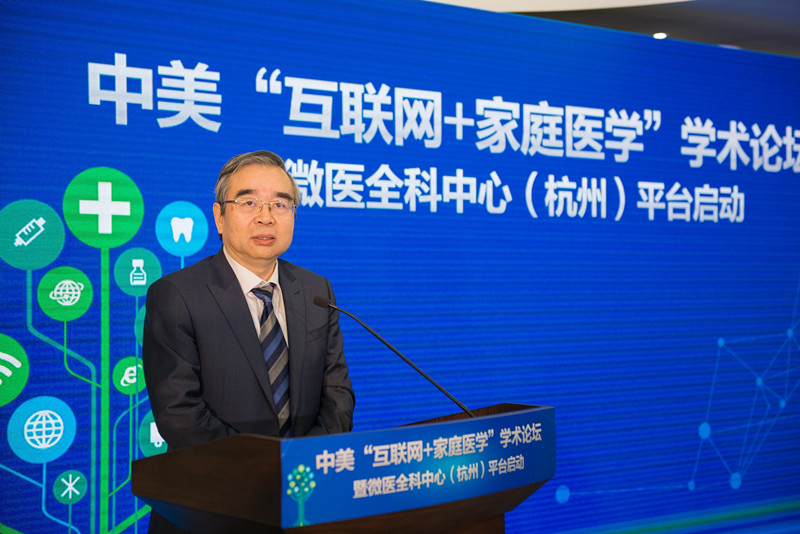
Mao Qun’an, Director of the Department of Propaganda, National Health and Family Planning Commission
“‘General Practice Center’ is not a new term. Through on-site inspections, WeDoctor’s General Practice Centers have been found to offer an idealized model of general practice services. Under the current policy framework, transforming this innovative service concept into a scalable model presents a challenge for WeDoctor,” said Mao Qunan, Director of the Propaganda Department of the National Health and Family Planning Commission, in an interview with reporters.
On December 17, 2016, after attending the launch ceremony of the “WeDoctor Hangzhou General Practice Center,” Mao Qunan stated in an interview with reporters that future general practice centers should operate like automotive 4S dealerships. Just as car owners instinctively take their vehicles to a 4S shop for repairs rather than returning them to the manufacturer, these centers should serve as referral hubs within a tiered diagnosis and treatment system, representing a key measure in implementing the role of health gatekeepers.
Although there is a widespread call to deepen healthcare reform and strengthen primary care, and despite the significant efforts made at the grassroots level, the public does not feel a strong sense of gain from these reforms. The issue lies in the “last mile”: how can we ensure that people experience thoughtful, accessible, and personalized medical and health services?
The emergence of general practice centers may have addressed this shortcoming.
This year, the State Council issued the “Outline of the Healthy China 2030 Plan,” which proposes healthcare coverage for the entire population across the full life cycle. “The WeDoctor General Practice Platform we are witnessing today is indeed designed to build a health service system that serves the entire population throughout their entire life cycle. Guided by this philosophy, we aim to enhance and refine our services.”
WeDoctor General Practice Center is a physical medical institution under WeDoctor, established by Chinese and American medical teams in accordance with the Joint Commission International (JCI) accreditation standards. It serves as a crucial component of WeDoctor’s integrated operational model, which encompasses online consultations, remote multidisciplinary consultations, and offline medical services, thereby providing comprehensive health maintenance and medical care for individuals, across their entire healthcare journey, and for their families.
“The WeDoctor General Practice Center, by leveraging the internet to establish an internet hospital, effectively maximizes the utilization of high-quality medical resources, revitalizes primary healthcare services, and integrates online and offline care. Furthermore, this platform extends its reach through technical training and dissemination. Therefore, we look forward to seeing the WeDoctor General Practice Center platform flourish across China, ushering in a new era for primary healthcare services.”
Currently, most people find it difficult to access medical care, a sentiment that is widely shared. Major hospitals are indeed overcrowded. In contrast, primary healthcare institutions see fewer patients and suffer from low resource utilization. Surveys have found that 35% to 45% of outpatients could readily receive care at lower-tier medical facilities. However, due to a lack of trust in primary healthcare providers, patients tend to flock to large hospitals for both minor and serious conditions.
“The human body is akin to a car. After purchasing a vehicle, people buy various insurance policies to ensure safe travel and immediately take it to an authorized 4S dealership for repairs when malfunctions occur, rather than returning it to the factory. A consensus has been reached regarding automobile maintenance at 4S dealerships: they are convenient and reassuring.”
General practitioners deliver primary healthcare services and are also known as family physicians or family doctors, serving as the principal providers of health management services. Equipped with unique attitudes, skills, and knowledge, general practitioners are qualified to provide continuous and comprehensive medical care, health maintenance, and preventive services to every member of a family.
General practitioners are typically versatile clinicians who manage common diseases, frequently occurring illnesses, and general acute conditions in an outpatient setting. Another characteristic of community-based general practice is the provision of home visits; general practitioners often attend to patients at home, establishing individualized home hospital beds and medical records tailored to each patient’s specific circumstances. This approach offers patients convenient and personalized access to medical care.
Definition of Family Physicians by the American Academy of Family Physicians (AAFP): A family physician is a doctor who has undergone specialized training in the broad field of family medicine. Due to their background and interaction with families, these specialists are best qualified to serve every patient and act as coordinators for all health-related matters, including the appropriate utilization of consultant physicians, health services, and community resources.
General practitioners are characterized by providing continuous, comprehensive, and personalized care and services to users, with a focus on early detection and management of diseases, disease prevention, and health maintenance. They emphasize uninterrupted management and service delivery for patients within community settings, coordinating the use of other resources both inside and outside the community as needed.
WeDoctor General Practice Centers plan to open 100 community health centers across China within the next three years. With support from local governments, these centers will serve as regional hubs for technology, training, and clinical education, leveraging both online platforms and on-site practice to assist and enhance primary care community health centers.
“In other words, the layout of community general practice centers addresses the ‘last-mile’ experience issue for users, truly serving as the health gatekeeper for both enterprises and families. Health gatekeepers must be positioned at the doorstep, readily accessible to provide services at any time. Much like Starbucks, which is visible whenever you desire it, WeDoctor’s general practice services follow the same principle,” said Liao Jieyuan, Chairman and CEO of WeDoctor.
As more people become aware of preventive healthcare and visit general practice centers, these centers evolve into large-scale tiered diagnosis and treatment platforms, serving as referral hubs to higher-level hospitals. They precisely match patients with specialists and tertiary Grade A hospitals, thereby forming a network that integrates online and offline services, connects professional medical expertise with resources, and delivers healthcare services to users.
In fact, for patients, if you fall ill and seek registration at a Grade 3A hospital, it is often difficult to determine which department and which specialist you should consult. Even after securing an appointment, if your condition requires repeated monitoring, you may be seen by different specialists on different days, each proposing a different treatment plan. Ultimately, this leaves you confused and uncertain.
Take pediatrics as an example. Many parents rush their children to pediatric hospitals at the first sign of illness, often with three family members accompanying a single child. The high volume of daily hospital visitors means that bacteria and viruses are abundant in limited spaces. Consequently, a child who was not initially ill may contract an infectious disease simply by visiting the hospital.
“Therefore, we advise parents not to rush their children to overcrowded tertiary hospitals at the slightest sign of a cold or fever. Not only are these facilities crowded, but they also pose certain risks. If patients first visit a general practice center for an initial consultation and require a referral, they can be promptly connected with pediatric specialists. Wouldn’t this alleviate everyone’s concerns?” said Mao Qun’an.
Therefore, the General Practice Center model not only offers convenience to the public and ensures quality medical care, but also focuses on health across the entire lifecycle, truly serving as a nearby “health gas station” for you.