

Awaiting the New President's Move: The Future of U.S. Healthcare in 2017
The 2016 presidential election concluded last month, with the entire U.S. healthcare sector closely monitoring every move of the Trump administration. In the upcoming year of 2017, both the medical industry and the general public are likely to experience significant changes. The stakes are high, concerning not only the core of the Affordable Care Act—ObamacareAffordable Care Act (ACA) may undergo major revisions, and Medicare), the Medicaid program, and even the entire healthcare regulatory environment are highly likely to undergo changes. However, as Trump is currently in the presidential transition period, he has not yet been able to focus on healthcare reform.
The Outlook for U.S. Healthcare Remains Clouded: Stakeholders Must Keenly Monitor Policy Trends, Anticipate Their Impact on the Industry, and Remain Prepared to Adapt. VCBeat (WeChat ID: vcbeat) provides an analysis of President Trump’s evolving healthcare agenda and examines in detail how his presidency will affect the U.S. healthcare sector.
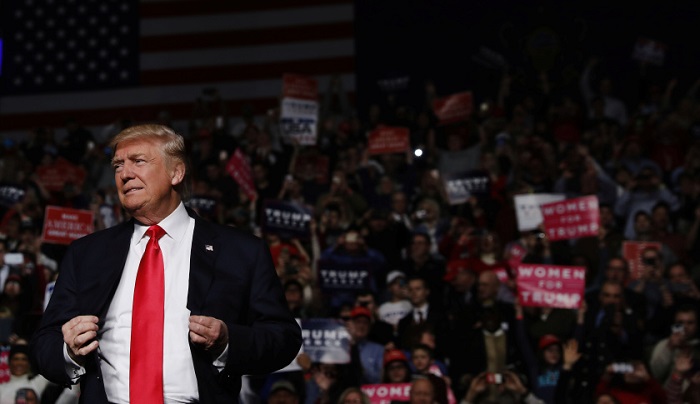
Initially, during his campaign, Trump proposed a healthcare reform plan under the slogan “Make America Great Again,” with an initial stance that nearly called for the complete repeal of Obama’s landmark national healthcare reform. After winning the election, however, his next steps remained uncertain, and most of the promises he made during the campaign would require legislative action through Congress.
Later, however, Trump changed his stance, stating that he would “revise” the Affordable Care Act by retaining certain provisions rather than repealing and replacing it in its entirety. During his campaign, he also mentioned preserving the provision that “prohibits insurers from denying coverage to individuals with pre-existing conditions,” and continuing the Obama-era policy that “allows young Americans to remain on their parents’ health insurance plans until age 26.” This approach aligns with one of the healthcare proposals put forward by House Republicans.
Trump recently met with Obama. Obama specifically advised him to retain certain provisions of the healthcare law, and Trump stated that he would “carefully consider his advice out of respect for Obama.” In an interview on CBS’s “60 Minutes,” Trump indicated that the repeal and replacement of the law would occur simultaneously, ensuring no gap in insurance coverage for individuals. He explained, “The healthcare landscape will become better—much better—and more affordable.”
Trump has also shifted some of his other positions on healthcare to better align with the core ideology that Republicans have championed in recent decades. For instance, on his presidential transition website, GreatAgain.gov, he issued anti-abortion statements, reversing his previous stance in favor of legal abortion.
There are signs that the monthly subsidies previously provided to enrollees under the Affordable Care Act (ACA) will likely be eliminated by the time Trump initiates healthcare reforms. According to the Republican perspective, although direct health insurance subsidies would be discontinued, tax cuts would serve as an equivalent replacement. However, critics argue that this approach disproportionately disadvantages low-income individuals, who already bear a minimal tax burden and would therefore receive negligible “compensation” following the removal of subsidies.
Some speculate that health insurance coverage may differ significantly from the past, with certain types of healthcare and medical benefits no longer available. This has even prompted some anxious individuals to debate whether they should urgently stockpile medications for long-term use. However, experts advise against hoarding prescription drugs, noting that even if the Affordable Care Act (ACA) were repealed, states and healthcare organizations would implement corresponding measures to ensure continued convenient access to essential and costly medications.
There are even more extreme cases. After Trump took office, social media was rife with advice urging women to get intrauterine devices (IUDs) inserted before he eliminated coverage for family planning services, “taking advantage of the period when IUD insertion is still free.” For the past six years, the Affordable Care Act (ACA) has required health insurance plans to cover preventive care costs, allowing women to undergo contraceptive procedures at no cost. However, the unpredictable Trump has shifted from advocating reproductive freedom to supporting legislation that bans abortion. Rumors also suggest that preventive care expenses may no longer be covered, meaning that not only would family planning costs no longer be subsidized, but obtaining an abortion after becoming pregnant could become illegal. This has sparked widespread outrage online. The digital media outlet Quartz further warned that the Trump administration is threatening women’s reproductive rights.
Although Trump has not commented on this matter, his increasingly firm anti-abortion stance has generated considerable fear. Moreover, Vice President Mike Pence has consistently expressed strong opposition to abortion in nearly all circumstances. Technically, Trump does not even need Congressional approval to eliminate insurance coverage for contraception. The U.S. Department of Health and Human Services could simply redefine the scope of preventive care coverage, thereby directly excluding contraceptives from insured benefits.
Previous views held that national life sciences research would change after Trump took office, as he might not continue the previous president’s plans and instead reduce the U.S. budget for scientific research funding.Nature magazine even predicted that the blueprint President Obama had laid out for the NIH (National Institutes of Health) might face an uncertain future: the “BRAIN Initiative” (Brain Research through Advancing Innovative Neurotechnologies) could be retained, the “Precision Medicine Initiative” would be at risk, and the “Cancer Moonshot” was almost certain to fall short of its expected funding.
HoweverOn December 13, President Obama finally signed the 21st Century Cures Act, which passed with overwhelming support in both the Senate and the House of Representatives. Key initiatives—including the “Cancer Moonshot,” research on substance abuse, the “BRAIN Initiative,” and “Precision Medicine”—were ultimately codified into law and secured funding. As he neared the end of his presidency, Obama’s signing of this forward-looking medical legislation may well contribute to life sciences research in the United States and even for all of humanity.
Following Trump's assumption of office, the appointed Department of Health and Human Services (Tom Price, Secretary of the Department of Health and Human Services, has brought hope to the increasingly vibrant health tech sector. A former orthopedic surgeon, Price has been a staunch opponent of the Affordable Care Act since its inception under the Obama administration. It is reported that many orthopedic surgeons in the United States are at the forefront of adopting mobile health technologies and novel medical devices—a trend exemplified by Price, who has repeatedly championed the integration of internet technologies into healthcare.
As mentioned above, Trump’s approach of using tax measures to offset subsidies is highly detrimental to low-income populations. So, in the wake of widespread amendments and repeals to the Affordable Care Act (ACA), which states have health insurance policies that are most favorable to low-income individuals?
For a rough assessment, one may refer to how various U.S. states have historically handled healthcare coverage. For instance, Massachusetts began using federal subsidies allocated to state governments to reduce in-state healthcare costs even before the Affordable Care Act (ACA) took effect nationwide. Even if the ACA were repealed, it is highly likely that the state would continue its prior approach.
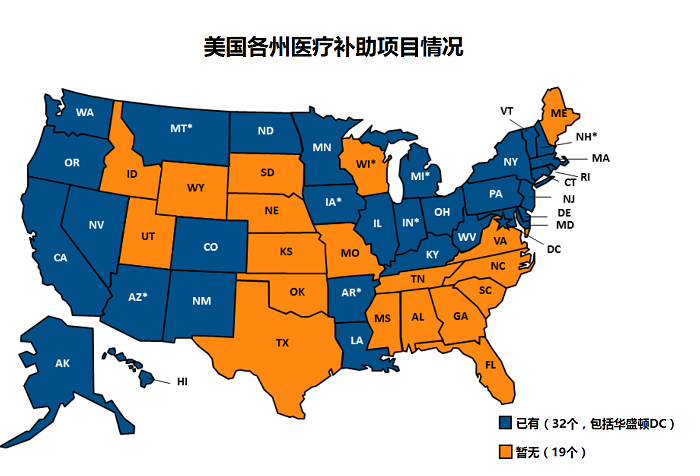
Another approach is to identify which states operate their own health insurance marketplaces and have expanded their Medicaid programs under the Affordable Care Act (ACA). In some cases, individuals whose incomes fall below the national Medicaid eligibility threshold may still qualify for coverage in certain states, as their policies are designed to enroll more people in health insurance. The figure below highlights states with expanded Medicaid programs (source: Kaiser Family Foundation, as of October).
If the ACA provisions were indeed repealed on a large scale, how quickly would the existing marketplace health insurance plans become void? It is hard to say, but there are clues for speculation. According to a bill to repeal the ACA that legislators sent to Obama earlier this year (they also knew that Obama would definitely not sign it), they would need two years to achieve a complete transition from Obamacare to the new healthcare policy, in order to pass and refine the new laws. However, many facts suggest that two years may be an optimistic estimate.
Market-based health insurance plans under the Affordable Care Act (ACA) have entered their fourth year. The open enrollment period for this cycle runs from mid-November 2016 to January 31, 2017. Individuals who enroll during this window will remain covered under the ACA’s health insurance framework through the end of 2017. Under the existing law, eight out of ten enrollees receive government subsidies for their premiums, a situation that is unlikely to change immediately upon President Trump’s assumption of office. According to data from the U.S. Department of Health and Human Services, there was an upward trend in ACA plan enrollments in the three days following the election results, indirectly reflecting public skepticism toward the future Trump administration’s healthcare reforms.
In 2014, the health insurance marketplace www.healthcare.gov, established under the Affordable Care Act (ACA), was introduced to the public. Through this online platform, insurance companies offer a wide variety of health insurance plans, enabling individuals and small businesses to purchase coverage that meets their needs. According to data from the U.S. Census Bureau, approximately 214 million Americans are currently enrolled in private health insurance, with about 11 million of them obtaining coverage individually rather than through employers. Any abrupt termination of coverage or shutdown of the health insurance marketplace would inevitably provoke strong public outcry.
Trump has repeatedly complained that the Affordable Care Act (ACA) is terrible and has vowed to repeal it. But what is his own plan, and what feasible alternatives has he proposed to replace the existing law? If the ACA were repealed outright without a replacement, an estimated 20 million people would immediately lose their health insurance coverage—a matter not to be taken lightly.
First, as mentioned above, Trump will not completely repeal the ACA, and it is speculated that he will retain some costly but popular provisions. However, other provisions, such as 100% coverage for preventive medical services and the prohibition on insurers setting annual or lifetime maximum premiums, may not necessarily be retained.
Trump has indeed come up with some alternatives to the ACA, partly drawn from bills introduced in recent years by congressional Republicans—including House Speaker Paul Ryan—that have yet to be enacted into law. The following are several proposals Trump has expressed support for, as previously mentioned in earlier articles by VCBeat:
· Advocate for high-deductible health insurance plans and Health Savings Accounts (HSAs);
· Amend tax laws to comprehensively reduce premiums for individually owned health insurance;
· Allow the interstate sale of insurance services to strengthen competition in the insurance market;
· Promote price transparency throughout the entire healthcare process;
· Convert Medicaid into a block grant to state governments;
· Allow the importation of prescription drugs to foster greater competition in the pharmaceutical market. (This was mentioned on his campaign website but not on the Presidential Transition Team’s website.)
The new healthcare reform bill must deliver greater results than the Affordable Care Act (ACA) to fulfill Trump’s previous promises. Although the ACA was costly to implement, it successfully reduced the proportion of uninsured Americans significantly. Several proposals previously considered by Trump have raised concerns about the future of U.S. healthcare: for instance, reverting to a pre-ACA practice that allowed insurers to classify individuals with poor health as high-risk groups and offer them different coverage—a approach that proved ineffective at the time.
How Medicare reimbursement rates will change has sparked intense debate among economists. To understand why this question is so difficult to answer, one must first examine health insurance prices before and after the enactment of President Obama’s Affordable Care Act (ACA).
Prior to the Affordable Care Act (ACA), individual premiums rose at an annual rate of 10%, while insurers could deny coverage to individuals with pre-existing conditions, thereby generating higher profits. After the ACA prohibited this practice, the rights of more patients were protected, and the prices of certain benchmark insurance plans even decreased by 10%–20% compared to pre-ACA levels. Over time, health insurance premiums have risen again, but it remains undetermined whether this increase was caused by the ACA.
The key point is that most people who purchase insurance on the health insurance exchange receive ACA subsidies, yet Trump has not disclosed whether he would provide similar subsidies or achieve better outcomes than Obamacare through other means.
There is also considerable debate surrounding the outlook for the U.S. healthcare economy. Nevertheless, despite differing viewpoints, most people believe that Trump’s healthcare policies will cause many individuals to lose their health insurance coverage.
According to an analysis by the U.S.-based RAND Corporation, if Trump’s previous statements were implemented, 20 million people would lose health insurance within the first year of his presidency, exacerbating the fiscal deficit by $6 billion. In contrast, the Center for Health and Economy, a nonpartisan organization, estimates that approximately 18 million people would lose health insurance during Trump’s first year in office, but the fiscal deficit would be reduced by $583 billion between 2017 and 2026. Meanwhile, calculations by the Committee for a Responsible Federal Budget indicate that repealing the Affordable Care Act (ACA) would double the number of uninsured individuals, leaving 21 million people without health coverage and increasing healthcare expenditures by $550 million over the next decade.
In summary, Trump’s healthcare objectives are quite similar to those of the Affordable Care Act (Obamacare), but the means of achieving them differ significantly. Trump aims to introduce greater free-market forces into healthcare and reduce federal government control over the sector. Nevertheless, both Obamacare and Trump’s proposed healthcare reforms face substantial obstacles within the healthcare system.
Some sources for this article:
http://www.jdsupra.com
http://fortune.com
http://www.pbs.org
https://www.washingtonpost.com