

Nature's 10: Pioneers in AI, Zika Research, and CRISPR Shape the Future of Science
On December 19, Nature magazine announced its annual list of the Ten People Who Mattered in Science. This selection highlights ten individuals who have had a significant impact on the scientific community this year. Representing a diverse group, these individuals played pivotal roles in ten key areas: the detection of gravitational waves, the discovery of Proxima b, the threats posed by the Zika virus, the artificial intelligence program AlphaGo, the birth of “three-parent” babies via mitochondrial replacement therapy, the creation of gene drives using CRISPR-Cas9, as well as issues related to ocean climate, gender discrimination, and scientific publishing. VCBeat (WeChat ID: VCbeat) has compiled and introduced these figures for you.

1.GABRIELA GONZALEZ
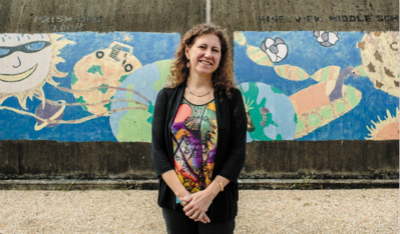
Einstein predicted the existence of gravitational waves, but no one had ever detected them before, nor had anyone conducted large-scale data analysis on gravitational waves. Gonzalez and her extensive team of more than 1,000 scientists spent nearly five months analyzing gravitational wave data obtained from the two Laser Interferometer Gravitational-Wave Observatory (LIGO) detectors in Washington State and Louisiana, USA.
Gonzalez is affiliated with Louisiana State University. She initially pursued a theoretical focus during her graduate studies before transitioning to experimental physics, where she demonstrated remarkable aptitude. In 2008, she became the first female professor in her department. As the head of the LIGO Scientific Collaboration, she is responsible for coordinating research teams distributed around the globe and facilitating data sharing, including with researchers working on the Virgo interferometer near Pisa, Italy.
In addition, she helped lead the data analysis team and persuaded gravitational-wave researchers and conventional astronomers to collaborate in the joint search for phenomena that emit both gravitational waves and electromagnetic radiation. Rainer Weiss, a physicist at the Massachusetts Institute of Technology and one of the founders of the LIGO project, stated that Gonzalez never made important decisions unilaterally without consulting her colleagues, and her leadership has been widely praised. Her term as LIGO spokesperson runs until March 2017; upon its conclusion, she will not seek re-election and instead plans to return to a full-time research position.
2.DEMIS HASSABIS
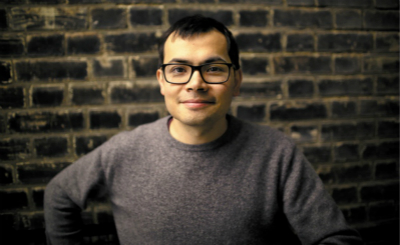
When discussing artificial intelligence, one cannot fail to mention AlphaGo and the DeepMind team. As a co-founder of DeepMind, Hassabis has demonstrated to the world the power of machine learning technology. He hopes to leverage this technology in the future to create AI systems with human-like general intelligence. Hassabis himself is also an accomplished board game player. He is typically very humble and full of enthusiasm.
After earning his Ph.D. in cognitive neuroscience, he founded DeepMind in 2010. Four years later, Google acquired the company for £400 million. Researchers at DeepMind have applied insights from neuroscience to a diverse array of high-profile AI projects, ranging from speech synthesis and London Underground navigation to cancer diagnosis and treatment. DeepMind’s AI has progressed from learning how to perceive and respond to its environment to leveraging this information for planning and reasoning.
DeepMind generally keeps its ongoing work confidential. Some data privacy advocates have expressed concerns about the collaboration between Google DeepMind and the UK’s National Health Service (NHS). Currently, DeepMind is also employing technologies such as blockchain to safeguard data privacy.
3.TERRY HUGHES
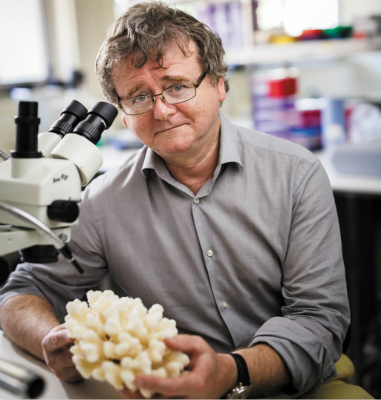
Hughes is the Director of the ARC Centre of Excellence for Coral Reef Studies in Australia. His research is set against the backdrop of a widespread catastrophe affecting coral reefs across the Pacific, exemplified by the severe damage inflicted on 81% of the reefs in the northern section of the Great Barrier Reef—the most severe bleaching event recorded there to date. Tracking studies conducted in October and November revealed that 67% of shallow-water corals had died along the 700-kilometer stretch of the northern Great Barrier Reef.
This year, coral bleaching has spread to Australia, Japan, and other regions of the Pacific. Researchers state that as climate change drives rising temperatures, bleaching events will strike coral reefs with greater frequency. In some cases, frequent bleaching will render most corals unable to survive.
A strong El Niño warming pattern in the tropical Pacific triggered this disaster. Elevated water temperatures caused corals to expel their symbiotic zooxanthellae, which provide most of their food and their vibrant colors. Some corals died following bleaching. This crisis has overturned some established notions. According to Hughes, the traditional view of bleaching was that corals would slowly starve to death after expelling zooxanthellae. However, water temperatures this year were excessively high; “many corals died before they even began to starve—they were effectively killed by heat.” Global warming serves as a stark warning of deteriorating climate conditions, and the U.S. National Oceanic and Atmospheric Administration (NOAA) has declared coral bleaching a global event.
4.GUUS VELDERS
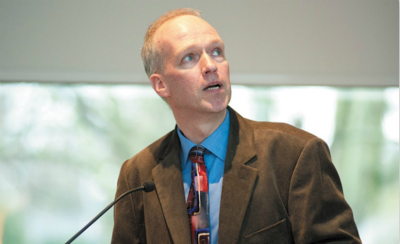
Velders is a world-class expert in the field of hydrofluorocarbon (HFC) emissions. This October, he participated in international negotiations held in Kigali, the capital of Rwanda, where representatives from various countries sought to agree on a phase-out of HFC production and use. The outcome was that most nations agreed to an ambitious schedule for significant HFC reductions, while India and a few other countries secured a four-year delay.
To achieve a global agreement, he previously undertook substantial work. Collaborating with colleagues in the scientific community, he helped transform the Montreal Protocol, an international treaty signed in 1987 to protect the ozone layer, into a tool for combating global warming. Velders’ team also demonstrated that the Montreal Protocol’s contribution to controlling global temperatures was actually greater than that of the 1997 Kyoto Protocol. More recently, his team estimated the potential warming impact of hydrofluorocarbons (HFCs) over the course of this century, laying the groundwork for an agreement on chlorofluorocarbons (CFCs) that became an amendment to the Montreal Protocol.
5. CELINA M. TURCHI
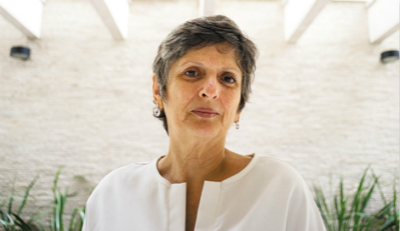
In 2016, the Zika virus raged globally, with Brazil, the first country in the Americas to experience an outbreak, at the epicenter of panic. Turchi, a physician and infectious disease specialist, once served on the front lines of the Zika epidemic in northeastern Brazil, striving to unravel this medical mystery.
Last September, as a researcher at the Aggeu Magalhães Research Center in Recife, she was dispatched by the Brazilian Ministry of Health to investigate the significant increase in cases of microcephaly (abnormally small head and brain) among newborns in her home state of Pernambuco. She soon became convinced that Brazil was facing a public health crisis. Consequently, she immediately assembled an expert team comprising epidemiologists, infectious disease specialists, pediatricians, neurologists, and reproductive biologists.
Turchi stated that the challenges they faced were daunting: there was no reliable laboratory test for the Zika virus, and there was no consensus on the case definition of microcephaly. However, her proactive efforts to establish collaborations paid off: Turchi and her colleagues ultimately gathered sufficient evidence demonstrating an association between Zika virus infection during the first trimester of pregnancy and microcephaly in newborns. Nevertheless, Turchi emphasized that the mysteries surrounding the Zika virus are far from resolved. She and her team of experts continue to innovate new approaches to investigate its underlying causes.
6.ALEXANDRA ELBAKYAN
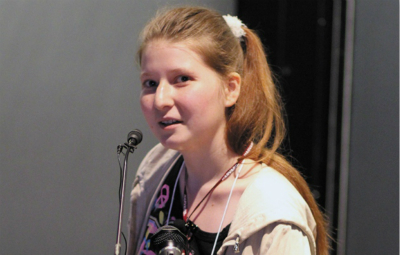
Elbakyan is the founder of Sci-Hub, a pirate website that provides unauthorized access to paywalled academic papers. In 2009, while still a graduate student preparing her thesis research project in Almaty, Kazakhstan, Elbakyan needed to read a large number of academic papers but was unable to afford the exorbitant fees, which left her deeply frustrated. Consequently, she established Sci-Hub, a pirate website that scrapes paywalled papers and makes them available to anyone who requests them. According to data provided by Elbakyan, Sci-Hub currently hosts approximately 60 million papers. Downloads in 2016 were projected to exceed 75 million, up from 42 million the previous year, estimated to account for about 3% of all downloads from global scientific publishers.
This constituted large-scale copyright infringement, bringing Elbakyan herself notoriety, criticism, and a lawsuit. During the initial years of Sci-Hub’s operation, things remained relatively quiet, but as its scale continued to grow, subscription-based publishers could no longer ignore its existence. In 2015, with broad support from the publishing industry, the Dutch publisher Elsevier filed a lawsuit against Elbakyan in the United States on grounds of copyright infringement. A U.S. court ordered the shutdown of Sci-Hub, but the platform resumed operations under different domain names.
Nevertheless, both critics and supporters agree that even if Sci-Hub ceases to exist, its influence will endure, prompting publishers to consider transitioning to open-access models. Elbakyan stated that she would continue to develop Sci-Hub, particularly by expanding its archive of older literature. She argued that the difficulty in accessing scientific literature constitutes a significant injustice, which she has resolved through her initiative.
7.JOHN ZHANG
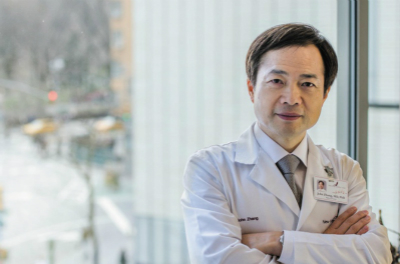
This September, Zhang Jin announced that he had used the controversial “three-parent” technique to bring about the birth of a healthy baby boy. Zhang, who works at the New Hope Fertility Center in New York, performed the procedure at the center’s clinic in Mexico. The technique is designed to prevent infants from inheriting mitochondrial diseases. However, due to ethical and safety concerns, the United States prohibits such procedures without prior approval. Currently, opinions on this technology are mixed, with both criticism and praise.
As early as the 1990s, he collaborated with Jamie Grifo, a reproductive endocrinology specialist at NYU Langone Health, to develop a reproductive technology designed to help older women conceive by replacing aged mitochondria with those from younger eggs; however, the effort was unsuccessful. After U.S. regulators banned the technique in 2001, Zhang Jin and his collaborators in China took over the work. In 2003, Zhang’s team created multiple embryos and implanted them into a woman. Following miscarriages of all the fetuses, China also prohibited the technology. Nevertheless, Zhang, who is accustomed to pushing the boundaries of science and ethics, remains optimistic about the future. Many other families at risk of mitochondrial diseases have expressed interest in his procedure, and he hopes to perform it in other countries.
8. KEVIN ESVELT
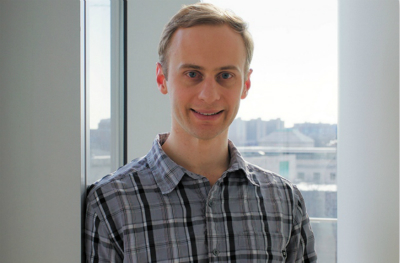
Kevin Esvelt is a promising young biologist. As one of the pioneers of the controversial gene drive technology, he rose to prominence less than a year after establishing his laboratory at the MIT Media Lab. His approach leverages the CRISPR–Cas9 gene-editing system to bypass natural evolution, forcing genes to spread rapidly through populations. This technology holds potential for eradicating mosquito-borne diseases such as malaria or eliminating invasive species; however, it also carries significant risks, including the potential to trigger unintended ecological cascade effects or be weaponized for biological warfare.
In 2013, Esvelt suddenly conceived the idea of CRISPR gene drives while studying the Cas9 enzyme. He has also been striving to address ethical concerns before conducting experiments. This year, his advocacy has finally come to fruition. Researchers and policymakers worldwide have engaged in discussions on this technology, and the US National Academies of Sciences, Engineering, and Medicine has released a report urging the continued advancement of gene drive research, albeit with caution.
9.GUILLEM ANGLADA-ESCUDE
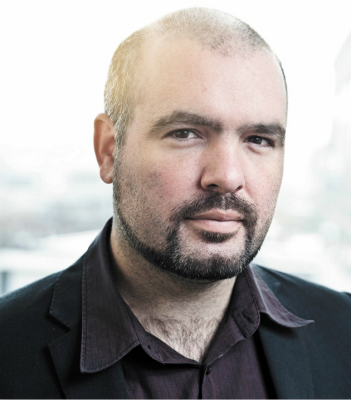
Anglada is an astronomer at Queen Mary University of London and a science fiction enthusiast who firmly believes that an Earth-sized planet orbits Proxima Centauri. As the closest star to the Sun, Proxima Centauri lies just 1.3 parsecs (4.2 light-years) away. He and his colleagues have long sought to establish a foothold in the field of exoplanet detection, and the discovery of this planet around Proxima Centauri has confirmed they are on the right track.
His connection with astronomy began with data simulations for the European Space Agency’s Gaia mission, which aims to map one billion stars in three dimensions. Later, he applied his data processing techniques to the search for exoplanets. He developed a method to extract faint planetary signals from data collected by HARPS (High Accuracy Radial velocity Planet Searcher), the world’s first ground-based instrument dedicated to planet hunting, located at the La Silla Observatory of the European Southern Observatory in Chile.
Using HARPS data, Anglada began a public search for planets orbiting Proxima Centauri, which ultimately led to the discovery of Proxima b. With a mass at least 1.3 times that of Earth, it orbits Proxima Centauri every 11.2 days. Although Proxima b is close to its host star, it resides within the habitable zone, where liquid water could potentially exist on its surface. This means that not only is it the closest exoplanet among the more than 3,500 confirmed to date, but it is also a planet that could potentially harbor extraterrestrial life. As a next step, Anglada plans to observe whether Proxima b exhibits transit phenomena—that is, whether it passes in front of its host star as viewed from Earth.
10. ELENA LONG
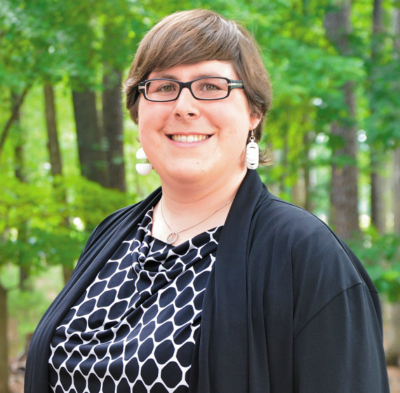
Elena Long is a nuclear physicist who has been working to make the field of physics more inclusive of sexual and gender minorities. In 2009, she began pursuing her Ph.D. at the Thomas Jefferson National Accelerator Facility in the United States, where employee protections and healthcare benefits were lacking. Without an LGBT support network, she felt isolated and unsupported.
Consequently, she established the LGBT+ Physicists Support Group to advocate for greater awareness of LGBT issues within the American Physical Society (APS). Ultimately, the APS formed a committee to collect data on discrimination against LGBT individuals. She noted that many physicists did not even understand the necessity of such research. Nevertheless, thanks to the efforts of Long and her colleagues, the physics community has become a model within the broader scientific community for addressing these issues. Meanwhile, Long received two prestigious early-career scientist awards from her laboratory and became co-leader of two new accelerator experiments. Currently, Long is assisting the APS in establishing a member group centered on diversity and inclusion, with the hope that it will help scientists from other minority groups thrive and grow.
Data sourced from websites such as Nature and BioExplore.