

State Council Approves the '13th Five-Year Plan for Health and Wellbeing', Emphasizing Expanded Application of Internet Healthcare
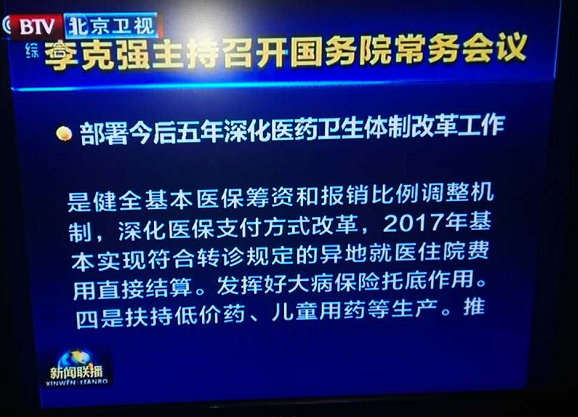
On December 21, Premier Li Keqiang of the State Council presided over an executive meeting of the State Council, at which the “13th Five-Year” Plan for Health and Wellness was approved, and arrangements were made to deepen the reform of the medical and healthcare system over the next five years. The meeting also determined measures to accelerate the strengthening of weak links in post-disaster water conservancy and to enhance urban drainage and flood prevention and control capabilities, thereby promoting improvements in people’s livelihoods and ecological restoration. Additionally, the review results of the 2016 National Science and Technology Awards were approved.
The meeting pointed out that developing health and wellness undertakings is a fundamental component of the CPC Central Committee and the State Council’s efforts to advance the Healthy China initiative, and a crucial measure to improve the supply structure and better meet the urgent needs of the public. In accordance with the Outline of the 13th Five-Year Plan for National Economic and Social Development, the meeting adopted the 13th Five-Year Plan for Health and Wellness, clarifying the main tasks:
First, strengthen the prevention and control of major diseases by conducting risk assessments for high-risk populations with chronic conditions such as hypertension, diabetes, and stroke, and promoting early diagnosis and treatment of key cancer types. Enhance the prevention and control of major infectious diseases, mental disorders, endemic diseases, and occupational diseases, and implement an expanded National Immunization Program. Accelerate the training of scarce healthcare professionals in pediatrics, psychiatry, geriatrics, and nursing.
Second, prioritize strengthening primary care and clinical service capabilities, shift the focus of medical services to the grassroots level, and allocate diagnostic and treatment resources downward, thereby improving health service delivery for key populations such as the elderly, persons with disabilities, migrant populations, and impoverished households.
Third, accelerate the approval and market launch of innovative drugs and varieties urgently needed for clinical use. Actively promote the inheritance, innovation, and development of traditional Chinese medicine.Promote the broader application of "Internet + Healthcare".Improve the tiered diagnosis and treatment system.
Fourth, to adapt to the new demands arising from the implementation of the universal two-child policy, public service resources in maternal and child health care, education, and social security should be rationally allocated.
Fifth, accelerate the development of the health industry, support non-governmental entities to participate in health services through various forms, promote the deep integration of medical care, elderly care, and tourism, and increase the effective supply of medical and elderly care resources.
The conference identified the key tasks for deepening healthcare system reform during the 13th Five-Year Plan period. The main tasks are:
First, guided by the principle of initial consultation at the primary care level, we will vigorously promote family doctor contract services on a voluntary basis for residents. Next year, we will launch pilot programs for multi-tiered diagnosis and treatment in various forms in more than 85% of prefecture-level cities.
Second, comprehensive reforms will be fully rolled out across public hospitals of all levels and types next year. Vertical medical alliances and medical consortia will be established to reduce prices for pharmaceuticals, medical consumables, and diagnostic tests and examinations, while curbing unreasonable growth in medical expenses. Prices for services that reflect the value of technical labor—such as diagnosis and treatment, surgery, rehabilitation, nursing, and traditional Chinese medicine—will be reasonably increased to incentivize healthcare professionals.
Third, improve the mechanisms for stable and sustainable financing of basic medical insurance and for adjusting reimbursement ratios. Comprehensively implement reforms to the medical insurance payment system, with diagnosis-related group (DRG) payment as the primary method combined with multiple other payment models. By 2017, achieve direct settlement of inpatient expenses for cross-regional medical care in accordance with referral regulations. Better leverage the safety-net role of critical illness insurance and other such systems.
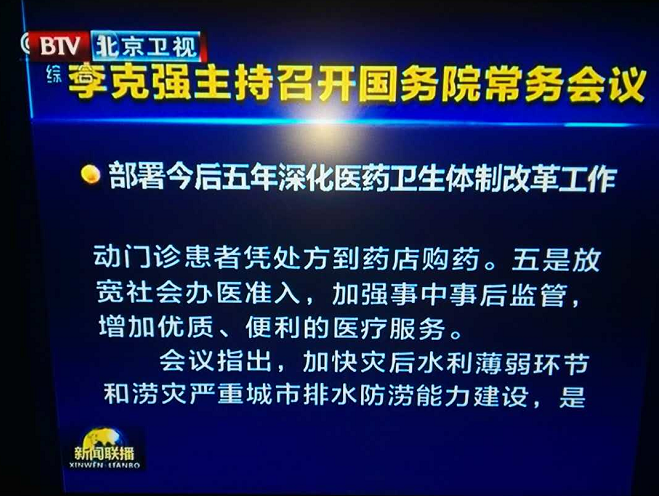
Fourth, improve the drug supply and guarantee system, and support the production of low-priced drugs, orphan drugs, and pediatric medications. Accelerate the implementation of policies allowing hospital outpatients to purchase prescribed medicines at retail pharmacies. Fifth, innovate comprehensive regulatory mechanisms, relax market entry requirements for social capital to establish medical institutions, and strengthen interim and ex-post supervision. Promote the construction of a Healthy China by providing higher-quality and more accessible medical services.
It is foreseeable that, under the guidance of policy, areas such as family physicians, chronic disease management, primary care, rehabilitation and nursing, tiered diagnosis and treatment, pediatrics, and maternal and child health willInternet-based startup projects will experience rapid growth, and the profitability dilemma will gradually ease.