Top 10 Internet Healthcare Milestones of 2016: Annual Review

Shenzhen Ningyuan Technology
Integrated Internet Healthcare Service Platform
As 2016 draws to a close, it has proven to be an extraordinary year for internet healthcare. From healthcare reform policies to the emergence of internet hospitals and mobile payment integration with medical insurance.The internet healthcare ecosystem has taken a significant step forward, becoming an important component of the healthcare economy. We believe that the future of internet healthcare is promising.VCBeat Recaps the Top 10 Major Events in Internet Healthcare of the Year
Ping An Good Doctor Secures $500 Million in Massive Series A Funding, Ushering in the Era of Asset-Heavy Mobile Healthcare
Keywords: Healthcare Heavy Assets
On May 19, 2016, Ping An Good Doctor, under the Ping An Group, officially announced the completion of its $500 million Series A financing round. Following this round, Ping An Good Doctor’s valuation reached $3 billion, with all raised funds fully in place. This achievement set two new global records for internet healthcare startups: the largest single financing round and the highest Series A valuation. Reportedly, investors participating in this round included well-known overseas private equity funds, large central state-owned enterprises ranked among the Fortune 500, state-owned financial institutions, and internet companies. After Lufax, which boasts a valuation of up to $18.5 billion, another “unicorn” has emerged from Ping An’s internet sector.
As the industry continues to evolve, bottlenecks facing internet healthcare companies have gradually come to light. In 2016 alone, numerous internet healthcare firms sought transformation by establishing offline internet hospitals or medical clinics. Most internet healthcare startups began with asset-light models; however, after approximately three years of development, many joined the wave of transformation due to the inability to identify viable business models. It is likely that asset-heavy or hybrid (asset-light and asset-heavy) models will become the mainstream in the internet healthcare sector.
Click to view the VCBeat report
【Ping An Good Doctor Completes $500 Million Series A Financing, Reaching a $3 Billion Valuation】

Click to view the VCBeat report
【Ping An Good Doctor Completes $500 Million Series A Financing, Reaching a $3 Billion Valuation】
Keywords: Pharmaceutical O2O
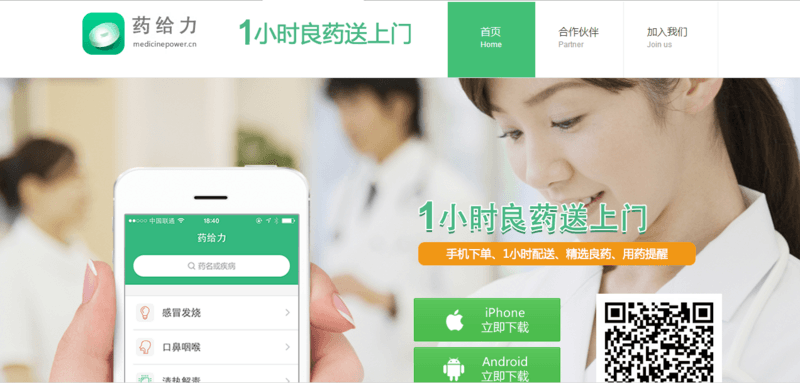
On May 18, 2016, Yaogeili, a pharmaceutical O2O company that prominently featured “one-hour medication delivery to your door,” announced the suspension of its related business operations. The two core reasons behind this outcome were: failure in securing financing and disagreements among the founding team regarding the company’s development and positioning. In fact, these are also the two most common causes of failure for many startups. How can startups avoid such pitfalls? Lian Jiaxing, Marketing Director at Yaogeili, mentioned in an article published on his personal WeChat account: Do not place undue trust in term sheets (TS), and do not pin all hopes of securing investment on a single institution; additionally, avoid losing strategic direction.
“Yaogeili” officially launched in January 2015. Currently, it has nearly 1 million registered users and approximately 400,000 transacting users. Judging by these figures, Yaogeili’s operational team has performed quite well. Yaogeili’s business model is clear but also easily replicable, causing the entire industry to fall largely into the “quagmire” of homogeneous competition. The primary competitive strategies in the pharmaceutical O2O sector are price wars and subsidies. However, subsidies are not a sustainable long-term solution. How to maintain high user engagement after subsidies cease remains a challenge faced by all pharmaceutical O2O platforms.
Click to view the VCBeat report
【“Yaogeili” Suspends Operations: Where Is the Pharmaceutical O2O Sector Headed?】
Keywords: Zhang Rui
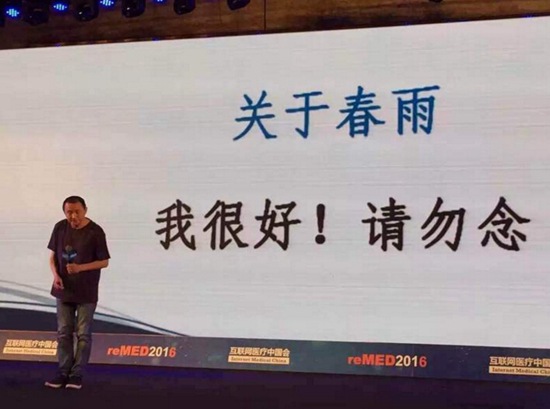
Public records indicate that prior to founding Chunyu Doctor, Mr. Zhang Rui served as Director of the News Center at Beijing Times, Deputy Editor-in-Chief at NetEase, and Founder of the NetEase News Client. This June, it was reported that Chunyu Doctor had completed a RMB 1.2 billion Pre-IPO financing round. In 2015, the company’s online consultation business generated actual revenue of RMB 130 million and achieved a profit of RMB 30 million, prompting plans for a spin-off and public listing. Regrettably, at this critical juncture, Mr. Zhang passed away during the journey toward going public, a loss that is deeply lamented.
People’s sighs reflect not only regret for the pioneers of mobile health, but also a shared anxiety and helplessness in the face of the pressures associated with internet-based innovation and entrepreneurship. The path of entrepreneurship is arduous, and the road to transformation in the healthcare industry is even more fraught with challenges, requiring joint efforts from both inheritors and innovators.
Click to view the VCBeat report
【In Memoriam: Zhang Rui of Spring Rain Doctor—Live to Freedom; Brothers Will Continue to Move Forward】
Keywords: Tengai Medical
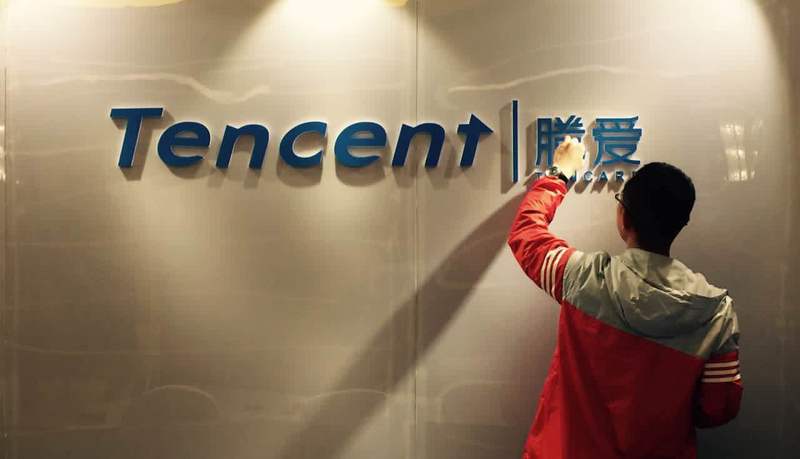
On March 25, Tencent held a press conference in Anshun, Guizhou, under the theme “Leveraging Internet Technology to Enhance Healthcare and Public Welfare Services.” In addition to announcing the achievements of the “Guizhou Chronic Disease Prevention and Control Plan” implemented in partnership with Guizhou Bailing Pharmaceutical and launching the “TengAi Doctor” app designed to help physicians build their personal brands, Tencent’s in-depth strategic layout in the internet healthcare sector was unveiled. The centerpiece of the event was the introduction of its “TengAi Healthcare” strategy.
Tencent Unveils “TengAi Medical Strategy” to Expand into Internet Healthcare. Based on the product landscape of TengAi Medical and Tencent’s prior investment activities, the company aims to connect patients, doctors, and hospitals through its platform, thereby building a new internet healthcare ecosystem. For the traditional medical industry, Tencent’s positioning as a connector can help break down barriers between groups and individuals. Tencent’s approach is to leverage its advantages in mobile internet technologies related to social networking and connectivity to link fragmented information, improve the current situation, and achieve information sharing.
Click to view the VCBeat report
Keywords: Family Doctor
The issue of whether doctors can provide medical services through home visits has long attracted significant attention. Since 2011, the family doctor system has been promoted in China, with family doctors offering in-home health consultation and guidance services to elderly individuals who are empty-nesters, have limited mobility, and are in need. However, due to incomplete supporting regulations and legal ambiguities, many family doctors remain hesitant to make home visits.
On September 6, the Beijing Municipal Health and Family Planning Commission circulated the “Notice on the National Health and Family Planning Commission’s Reply Regarding Issues Related to Home-Based Door-to-Door Medical Services,” in which the National Health and Family Planning Commission explicitly stated that providing medical services through home sickbeds and door-to-door visits constitutes lawful professional practice. On December 1, Beijing introduced six new medical insurance policies, officially incorporating door-to-door medical services and home sickbeds into the medical insurance coverage.
On November 8, the General Office of the Communist Party of China Central Committee and the General Office of the State Council forwarded the “Several Opinions of the Leading Group for Deepening Medical and Healthcare System Reform under the State Council on Further Promoting the Experience of Deepening Medical and Healthcare System Reform,” proposing to accelerate the establishment of a tiered diagnosis and treatment system by leveraging family doctor contract services and medical consortia as key instruments. Family doctor contract services constitute a major initiative within the tiered diagnosis and treatment system. Family doctors can establish health records for residents and provide health education and lifestyle interventions tailored to individual health conditions to achieve disease prevention. They are also responsible for treating minor ailments such as colds and fever, referring patients with serious conditions to specialized care, and conducting long-term follow-up and monitoring for chronic diseases.
With the advancement of legalization for home-based medical services and support from related healthcare reform policies, niche sectors such as family doctors, home-based elderly care, and online-to-offline (O2O) pharmaceutical services will usher in new development opportunities.

Click to view the VCBeat report
【Can the Family Doctor System Leverage the New Healthcare Reform?】
Keywords: Mobile Payment for Medical Insurance
On April 22, Tencent officially announced the signing of a strategic cooperation agreement with the Shenzhen Municipal Human Resources and Social Security Bureau. Shenzhen’s medical insurance beneficiaries can link their medical insurance cards to WeChat, enabling one-click online payment for both insurance-covered and out-of-pocket expenses at designated hospitals.
On May 31, China’s first mobile medical insurance payment platform, jointly developed by Alipay and the Shenzhen Human Resources and Social Security Bureau, commenced trial operations at six hospitals in Shenzhen. By linking their financial social security cards to Alipay, patients can calculate and pay for both medical insurance-covered and out-of-pocket expenses with a single click during medical visits. Data shows that since the trial launch on May 31, the number of users making online payments via Alipay-linked financial social security cards has been rising sharply on a daily basis.
On June 15, Shenzhen residents can make online medical insurance payments via a mobile app at seven public Grade A tertiary hospitals, including Shenzhen People’s Hospital, Peking University Shenzhen Hospital, and Shenzhen Traditional Chinese Medicine Hospital. Ping An announced the official launch of the pilot program for mobile payments using medical insurance cards.

Click to view the VCBeat report
Keywords: Internet Hospital
On April 6, at the press conference on Yinchuan’s Smart City initiative (the “Yinchuan Model”) and project signing ceremony, the Yinchuan Municipal People’s Government formally signed an agreement with Haodf Online (Hudongfeng Technology (Beijing) Co., Ltd.) to jointly establish the Yinchuan Smart Internet Hospital.
In late April, the Southwest Internet Hospital, jointly established by Gangling Group and Guizhou Province, officially commenced operations. Based in Puding County, Guizhou Province, it is the first internet hospital in China to directly provide online healthcare services to community-level patients and those in remote areas.
On May 24, with strong support from the health and family planning commissions at the provincial, municipal, and district levels in Guangdong Province, as well as the Liwan District People’s Government, and through the active facilitation of the Liwan District Health and Family Planning Bureau and Guangzhou Liwan District Central Hospital, the Liwan District People’s Government authorized Guangzhou Liwan District Central Hospital to collaborate with 7LeKang in jointly establishing the Liwan 7LeKang Internet Hospital.
In August, Southwest Hospital of the Third Military Medical University (hereinafter referred to as “Southwest Hospital”) announced that it would join forces with Ping An Health Internet Co., Ltd. (hereinafter referred to as “Ping An Health Internet”), a professional health internet company under Ping An Insurance Group, to collaboratively build the innovative “Southwest Ping An Internet Hospital” and establish a new O2O medical service platform.
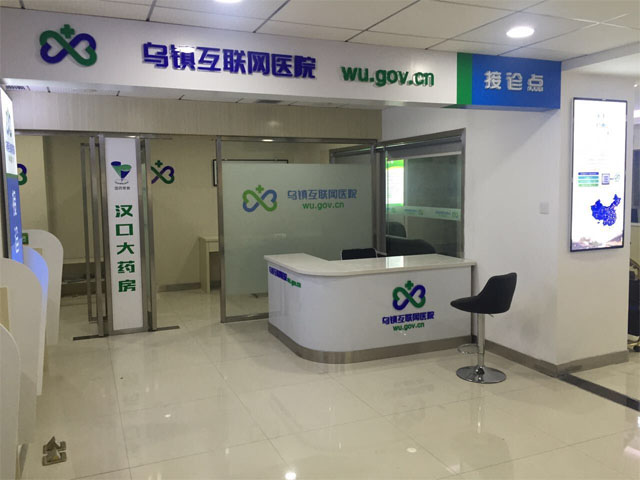
According to statistics from VCBeat, as of November 2016, the number of internet hospitals across China had expanded to approximately 36. Among these, 25 had already commenced operations (providing service access via PC or mobile app), while the remaining 11 had publicly announced signed agreements and were under construction in 2016. It is anticipated that more internet hospitals will officially launch and provide services in 2017.
Click to view the VCBeat report
【Major Release | The First White Paper on Internet Hospitals in China (2016)】
Keywords: Layoffs, Salary Freeze
On August 2, it was reported that “Jiuyi 160,” the first publicly listed mobile healthcare company in China, was preparing to lay off 300 employees. Former employees confirmed that its innovative business line had been discontinued, with all related staff having already departed. The appointment registration department, which served as the foundational business for “Jiuyi 160,” would be the most heavily affected by these layoffs. The company’s official response stated that, in light of the shift in its strategic focus, it planned to optimize its organizational structure and certain business teams, with the number of positions subject to optimization accounting for approximately one-third of the company’s total workforce.
Just after the layoff turmoil in early August, Health 160 was embroiled in a “salary freeze” controversy last night. Internal employees of Health 160 revealed that the company would implement a salary freeze, with normal pay suspensions scheduled for the end of the third quarter and throughout the fourth quarter. On August 15, media outlets successively reported news that “Xunyi Wenyao had laid off more than 50% of its staff.” The official response characterized this as personnel optimization and adjustment.
Their responses shared similarities, all pointing to reasons such as a “shift in business focus” and the “need for long-term strategic planning.” As leading mobile health companies—including Health 160, Xunyi Wenyao, and Haodf Online—successively faced layoffs, pessimistic sentiments toward the mobile health sector continued to intensify.
At its core, layoffs are a survival choice made when a company’s profit model is unclear and its self-sustaining revenue generation is weak. This is understandable and entirely normal. On one hand, the narrative of a “capital winter” has made entrepreneurs deeply embedded in the internet sector extremely sensitive. On the other hand, the bursting of myths may not be a bad thing; it could instead prompt mobile health companies to pursue profit models that more effectively address critical pain points and seek greater breakthroughs.

Click to view the VCBeat report
Keywords: Future Healthcare
On Friday, December 23, 2016, the “2016 Eye of the Storm · Top 100 Future Healthcare Forum” was grandly held in Beijing. As an annual flagship event for discussing trends in the healthcare industry, the forum featured several key segments, including the “Top 100 Future Healthcare List,” the 2016 White Paper on the Top 100 Future Healthcare Enterprises, the “Future Healthcare Industry Acceleration Program,” keynote speeches, and innovation roundtables. Centered on the theme “Gathering China’s Practices in Healthcare Industry Transformation,” the forum comprehensively explored development trends for the coming year from perspectives such as technological evolution, business models, and industrial collaboration. The event brought together more than 500 participants, including government officials, presidents of Grade A tertiary hospitals, executives from listed companies, unicorns in the medical sector, and representatives from renowned media outlets.
In a landmark inaugural release, the “Top 100 Future Healthcare Companies” list, covering 200,000 professionals across the healthcare industry chain, was unveiled. The purpose of this ranking is to identify Chinese innovative healthcare enterprises that truly represent the future of healthcare and to discover the core driving forces of China’s future healthcare industry. From the Top 100 list, VCBeat has identified the top five golden tracks: genomics, online medical consultation, consumer healthcare, maternal and child health, and healthcare informatics. Meanwhile, the conference also presented awards on-site, including the Most Influential Listed Company of 2016, the Most Influential Investment Firm, the Most Promising Enterprise, the Most Watched Enterprise, and the Most Innovative Hospital President.
The conference also unveiled the “Future Healthcare Industry Acceleration Program,” a comprehensive service initiative jointly launched by VCBeat, VBInsight, capital institutions, industrial infrastructure service providers, key payers, research institutions, and other industry support entities. The program aims to consolidate forces that support innovation-driven development in the healthcare sector, providing next-generation healthcare enterprises with support and assistance in capital matchmaking, resource integration, policy interpretation, and core competency building, thereby accelerating the growth of future-focused healthcare companies and driving industrial transformation.

Click to view the VCBeat report
【Officially Released! VCBeat Future Healthcare 100: 2016 China List / Overseas List】
Keywords: Healthy China
In March 2015, “Healthy China” was included in the Government Work Report for the first time. In October of the same year, the concept of “Healthy China” was again mentioned in the communique of the Fifth Plenary Session of the 18th CPC Central Committee. This signifies that the state has adopted a higher-level perspective on the health industry, with the concept of healthy development gaining increasing public acceptance and gradually being integrated into the governance philosophies of governments at all levels.
On August 19–20, the National Conference on Health and Wellness was held in Beijing. Xi Jinping, General Secretary of the Communist Party of China Central Committee, President of the People’s Republic of China, and Chairman of the Central Military Commission, attended the conference and delivered an important speech. He emphasized that people’s health should be placed at a strategic priority for development and that the construction of “Healthy China” should be accelerated.
In October, the Central Committee of the Communist Party of China and the State Council issued the “Outline of the ‘Healthy China 2030’ Plan.” The Outline covers the overall strategy and guiding principles for building a Healthy China, encompassing multiple aspects such as healthy lifestyles, health education, health services, health security, healthy environments, and the health industry. Strengthening cross-departmental collaboration and promoting co-construction and shared benefits have become the fundamental pathways for “Healthy China.”