

Mingyi Zhudao and CEO Su Shu: Making Quality Surgery Accessible to All Through Internet-Enabled Medical Integration
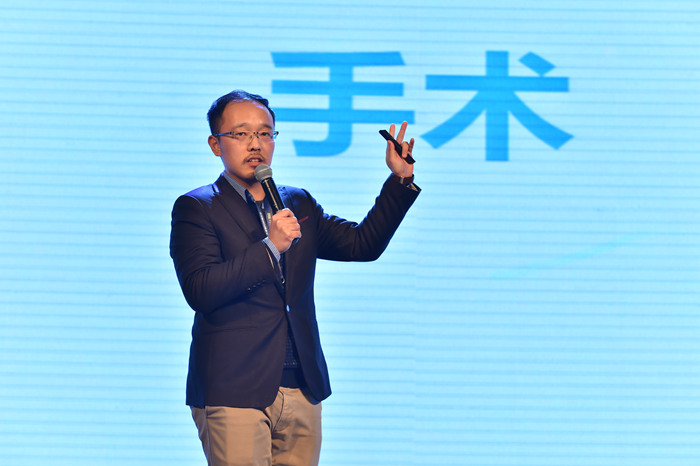
Su Shu, Founder and CEO of Mingyi Zhudao
On December 23, 2016, VCBeat hosted the year’s largest healthcare conference at the Beijing Star Base. The forum brought together more than 500 government officials, hospital presidents, industry elites, and media representatives from government agencies, Grade A tertiary hospitals, publicly listed companies, healthcare unicorns, and prominent media outlets.
At the event, Li Datao, founder of VCBeat, joined guests in unveiling the 2016 China “Top 100 Future Healthcare Companies” list, which selected 100 innovative Chinese healthcare enterprises representing the future of medical care. The initiative aims to identify and uncover the core driving forces behind China’s future healthcare industry through these 100 companies. Subsequently, awards were presented, including the Most Influential Listed Company of 2016, the Most Impactful Investment Institution, the Most Promising Enterprise, the Most Watched Enterprise, and the Most Innovative Hospital Director.
As is well known, the healthcare sector encompasses numerous treatment-related processes, such as consultations, appointment registration, patient escort services, and medication procurement. Among these, surgery represents a segment with substantial commercial value. In this surgical domain, the startup “Mingyi Zhudao” (Renowned Surgeons Lead Operations) has experienced the most rapid growth. Within just two years since its establishment, the platform has amassed over 30,000 experts and partnered with 1,000 hospitals. The expert pool primarily consists of chief and associate chief physicians, concentrated in major cities including Beijing, Shanghai, Guangzhou, Nanjing, Hangzhou, and Shenzhen. The volume of surgeries facilitated by the platform has been growing at a monthly rate of 40%, with nearly 100 hospitals serving as implementation sites for these procedures.
On the other hand, Mingyi Zhudao has also proven to be a swift and adept player in securing financing. What makes its business model so attractive? Why did it win the Most Promising Award? And what does he mean by “vertical and horizontal alliances”?
Return to the Essence of Healthcare, Stay True to Our Original Mission
2014That year, Su Shu returned to China due to his grandfather’s critical illness. In an effort to secure treatment for his grandfather, he visited numerous major hospitals in Shanghai, yet failed to schedule a consultation with any chief surgeon at a Grade 3A hospital. Witnessing his grandfather grow increasingly emaciated while awaiting surgery, Su Shu was devastated. Ultimately, because his grandfather’s condition was delayed for too long and the family resorted to desperate and indiscriminate medical interventions, his grandfather passed away.
In fact, in China, there are many people like Su Shu’s grandfather, who suffer from serious illnesses but cannot secure doctor appointments or hospital beds. With the relaxation of national policies on multi-site practice and the introduction of tiered diagnosis and treatment policies, physicians’ professional autonomy and mobility are gradually increasing.
Seizing the right moment, Su Shu aimed to help patients find the most suitable surgeons at the lowest cost and in the shortest time possible, thereby addressing their surgical needs. By leveraging an internet-based platform to integrate resources among physicians, patients, and hospital beds, he facilitated appointments with specialists at Grade A tertiary hospitals in Beijing, Shanghai, Guangzhou, and other major cities, enabling patients to travel for surgery during weekends or holidays. In the second half of that year, he founded Mingyi Zhudao.
“Looking back on the past two years of our entrepreneurial journey and the development of the entire internet healthcare industry, the original intention behind my team’s and my decision to enter the healthcare sector through surgical services has remained unchanged. Throughout this process, we have continuously reflected on how to help more patients find suitable lead surgeons. Even if we can achieve just a slight improvement in speed or quality of care during the patient’s medical consultation or the physician’s practice, we would feel deeply gratified,” said Su Shu.
Indeed, seeking medical care in China is a thorny issue. “During the time I accompanied my grandfather for his medical consultations, I took his imaging films to Shanghai Cancer Hospital to register for an appointment, but failed to secure one. I then turned to a scalper and paid 1,000 yuan to finally get an appointment, only to be dismissed by the doctor within 30 seconds: ‘There are no available beds; if you want surgery, wait three months.’”
It was only then that Su Shu realized that in China, securing an appointment is merely the first hurdle, while undergoing surgery is the most arduous part. For top-tier Grade 3A hospitals such as Peking Union Medical College Hospital, Beijing Tongren Hospital, and Beijing Anzhen Hospital, a three-month wait is considered short.
“An academician of the Chinese Academy of Engineering once told me that the two most critical aspects of diagnosis and treatment are ‘prescribing medication’ and ‘performing surgery.’ Between these two, surgery is often the more painful bottleneck.” While a large number of patients require surgical intervention every day, there is a scarcity of highly skilled lead surgeons. Consequently, patients in need of surgery flock to renowned medical experts: those in northern China go to Tiantan Hospital, while those in southern China head to Huashan Hospital; for cardiac conditions, patients in the north seek care at Anzhen Hospital, whereas those in the south may choose Ruijin Hospital.
So, what are people in China’s second-, third-, and fourth-tier cities to do? When they require similar surgeries, do they have to fly to Beijing or Shanghai, only to face the predicament of “three long waits and one short consultation” at the hospital door, be told that a bed will be available in three months, and then wait another three months before flying back to Beijing for the procedure? Or should they respond to the national call and support the policy of multi-site practice, enabling top-tier surgeons from first-tier cities to share their spare time and expertise, so that the over one billion residents in second-, third-, and fourth-tier cities can access services from the most prestigious doctors in China and even worldwide, right at their doorstep?
“This is the original intention behind our focus on the surgical field.”
From O2O to Internet Surgical Centers
Since the advent of the Internet, people have been able to access information at low cost, exchange data without spatial constraints, and benefit from rapid updates. The Internet facilitates interactive communication among individuals, allowing information exchange to substitute for the exchange of physical goods, thereby easily meeting personalized needs. Therefore, Su Shu’s initial approach was to leverage an internet platform to aggregate resources of renowned domestic and international physicians as well as idle hospital beds, and to utilize internet technologies to achieve precise doctor-patient matching and optimize the allocation of medical resources, thus addressing patients’ practical needs for “accessible and high-quality medical care.”
Currently, Mingyi Zhudao has established strategic partnerships with a number of high-quality public and premium private hospitals, including Beijing United Family Hospital, Shanghai Deji Hospital, Shanghai Tiantan Puhua Hospital, and the Second Affiliated Hospital of Nanjing Medical University, ensuring ready access to extensive bed and operating room resources.
By collaborating with numerous Grade III and Grade II public hospitals as well as private hospitals across China, the "Renowned Surgeon Platform" enables patients initially diagnosed at primary care facilities to be connected with specialists from Grade III hospitals. These patients can then undergo surgical procedures at public or private hospitals with available bed capacity, effectively alleviating challenges such as difficult access to medical care and high healthcare costs.
As an increasing number of patients book appointments with renowned surgeons through the Mingyi Zhudao online platform, surgeries are completed by integrating offline services with physical hospitals. This model not only demonstrates the value of physicians but also addresses key pain points in the patient care journey. Subsequently, Su Shu introduced a new concept: the “Internet Surgical Center,” which is analogous to the concept of Internet Hospitals.
The so-called Internet Surgery Center refers to a model that leverages the integration of surgery and the internet to fully maximize value. By addressing the highly specialized, high-cost nature of surgical procedures and thoroughly resolving critical pain points, this approach brings the value proposition to its fullest expression.
“Currently, we have jointly established the first Internet-based surgical center with the Affiliated Hospital of Yan’an University. Leveraging the hospital’s operating room resources, we connect municipal and county-level hospitals by aligning the strengths of key departments in Beijing, Shanghai, and Guangzhou with local needs, thereby serving as a critical link between higher- and lower-tier institutions and enabling the Internet-based surgical center to maximize its efficacy.”
Meanwhile, value-added services are provided across the three stages of preoperative, intraoperative, and postoperative care. In the preoperative phase, a remote consultation system enables experts from Beijing, Shanghai, and Guangzhou to conduct diagnoses and develop treatment plans before traveling to Yan’an, thereby bringing globally leading oncology treatment protocols and expert medical resources to the local population. Another partner, EDDA Technology, enables precise preoperative surgical planning; for instance, in liver cancer cases, it can determine whether 43.2% or 45.3% of the liver needs to be resected. This precision ensures complete removal of tumor cells while maximally preserving healthy tissue, thereby facilitating superior postoperative recovery. By integrating with high-quality medical devices and consumables, the intraoperative process is made more efficient and scientifically rigorous. Additionally, a rehabilitation platform is provided for patients during the postoperative phase.
“Currently, we have established internet-based surgical centers in four regions across China. We hope to extend our reach to North China, East China, South China, and the Central and Western regions, enabling people throughout the country to access top-tier surgical expertise from Beijing, Shanghai, Guangzhou, and abroad right at their doorstep.”
Launch the “Vertical” and “Horizontal” Alliance Plan
Currently, the deep integration and development of the internet and the healthcare industry have become an irresistible trend of the times, with mobile health emerging as a lucrative market. The recently released "China Internet Healthcare Development Report (2016)" shows that in 2015, the market size of China's internet healthcare reached RMB 15.73 billion, with a growth rate of 37.98%. Among this, the mobile health market size reached RMB 4.27 billion, with a growth rate of 44.7%.
“I sincerely hope to explore the future of healthcare services with every mobile health entrepreneur, aiming to unlock the trillion-dollar market of future healthcare.”
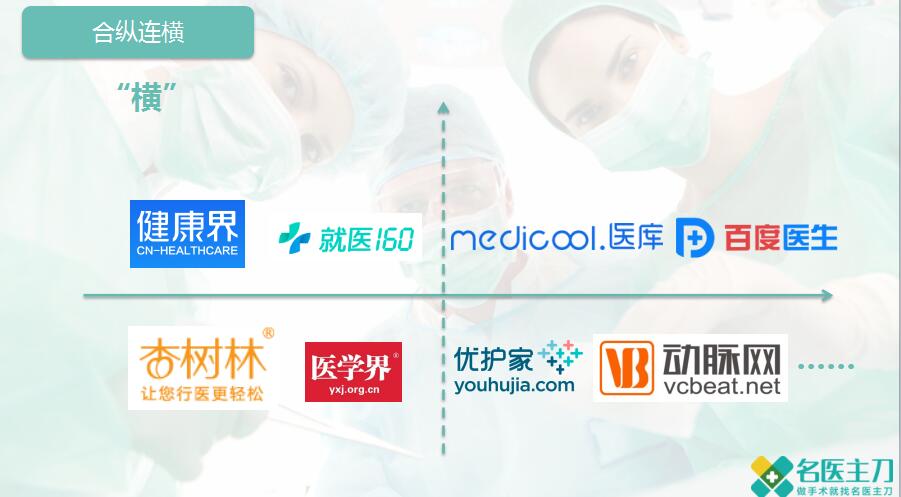
Here, “horizontal” refers to entrepreneurs of comprehensive healthcare platforms represented by Health Industry Circle, JiuYi 160, YiKu, and Baidu Doctor, covering areas such as medical consultation, rehabilitation nursing, and family doctor services.
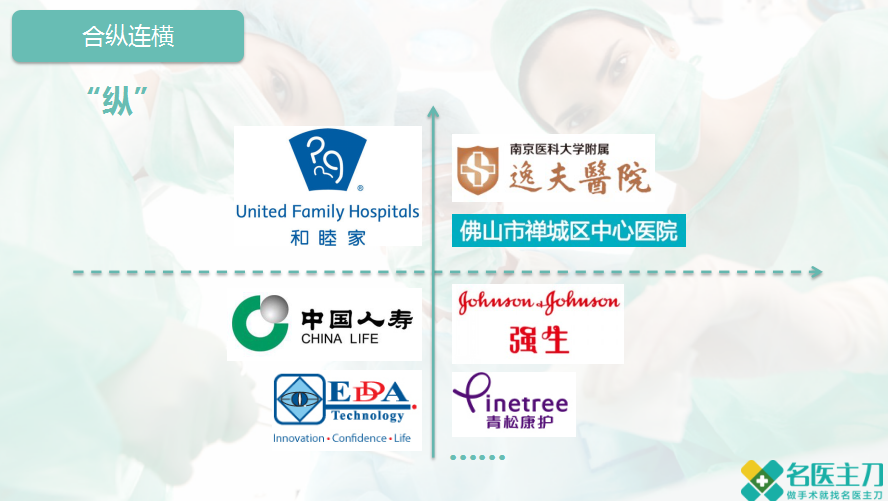
"Vertical integration" here refers to the collaborative participation of insurers and physical medical institutions to facilitate patients' access to healthcare.
“Therefore, by adopting a strategy of vertical and horizontal integration, we collectively consolidate resources and provide mutual assistance to enhance the quality of medical services. Leveraging information, traffic, and expert resources, we collaborate with our cross-regional partners—including hospitals, medical device manufacturers, insurance companies, high-tech firms, and rehabilitation and nursing care providers—so that each party contributes its share. By aggregating these incremental efforts, we work together toward the vision of making no disease difficult to treat.”